
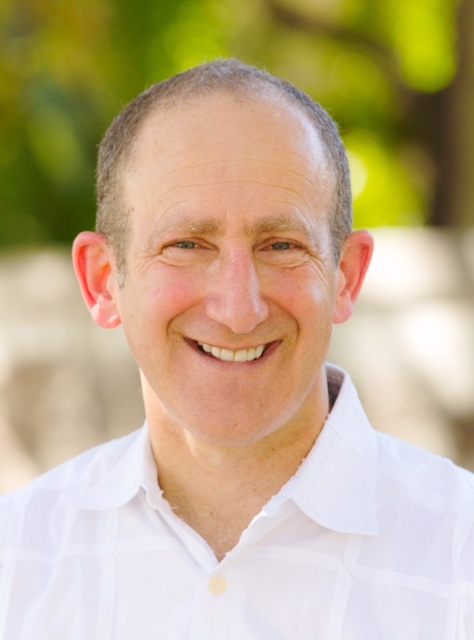
Derek Fromson has an extensive background in journalism and communications, and leads Digital Dominoes Consulting in Washington, DC, as principal. The enterprise he founded in 2016 delivers client-driven content that reflects in-depth knowledge of the target audience, brand identity, and internal and external stakeholders involved in shaping organizational perception. Derek Fromson’s world-class communications reflect contemporary narrative strategies, with storytelling tailored to each unique mission, objective, and value.
Over the years, Derek Fromson’s global client list has included the International Finance Corporation, the Council on Foundations, Korn Ferry, N2Growth, Coca-Cola, and TIAA-CREF. He has led internal and external digital communications with The World Bank Group and developed and managed the Controller’s Office’s messaging on financial open data across online social platforms. Mr. Fromson’s accomplishments included overseeing event outreach and marketing communications across various World Bank annual meetings that brought together high-level panels.
Derek Fromson earned his BA in political science with a minor in economics at the University of California, Berkeley. He completed a master’s degree in regional planning with a focus on international development and environmental issues at Cornell University and went on to receive his MBA from the University of Southern California’s Marshall School of Business.
What is your typical day, and how do you make it productive?
I generally start my day early in the morning with exercise. After breakfast, I’ll briefly catch up on emails and pay bills before diving into projects that I have for the day, either in my main communications consulting business or in my side ventures as a travel advisor or as a swim coach.
I find checklists are what help me to remain most productive!
My day is structured to maximize strategic thinking and execution. I begin early with exercise to clear my mind, followed by a focused block for deep work on my core consulting projects—whether that’s architecting a product strategy for a client or developing a new communications framework. I manage multiple ventures by rigorously prioritizing tasks using checklists, which ensures I transition effectively between roles, from advising a robotics startup to coaching an athlete, without losing momentum on any front.
How do you bring ideas to life?
I’m very much of a visual thinker, so once I have an idea that I can put into words, I then try to sketch out ideas of how I might incorporate that into action. I love Venn diagrams! They are simple yet can be such an effective visual representation of how ideas and concepts overlap or don’t.
What’s one trend that excites you?
Artificial intelligence excites me, but also makes me very nervous, especially when it comes to communications. It can be a useful tool, but not one that you can or should rely on too much.
What is one habit that helps you be productive?
Really two: exercise and making checklists.
Two non-negotiable habits form my productivity foundation. Morning exercise, often a swim, physically and mentally primes me for the deep, strategic work required in product leadership and complex problem-solving. Complementing this, the disciplined use of checklists is my operational engine; it ensures that from high-level product architecture down to daily tactical goals, nothing critical is missed as I context-switch between ventures.
What advice would you give your younger self?
Don’t be afraid to fail or take chances. When you’re young is the perfect time to experiment. Embrace failure.
I’d tell my younger self to be bolder and messier. Don’t polish that first idea into oblivion, get the prototype out there, let it be imperfect, and learn. The perfect time to take wild swings is when the stakes feel personal but aren’t existential, because those early experiments, even the ones that flop, wire your brain for the kind of resilient, creative problem-solving you’ll need to build things that really matter.
Tell us something you believe that almost nobody agrees with you on.
Not sure if almost nobody, but the prevailing sentiment is that immigration is bad and that people should be returned to their country of origin, but I believe we are all immigrants and just because my family got here before you did does not give me the right to exclude you.
What is the one thing you repeatedly do and recommend everyone else do?
Exercise every single day. It does not need to be strenuous every day, but moving is so important.
I am a fierce advocate for moving your body every single day, without exception. It does not need to be a grueling workout. Just a walk, a stretch, or a swim to clear the mental cache. That daily physical ritual is non-negotiable for me. It is the keystone habit that quiets the noise, sharpens focus, and builds the resilience needed to tackle complex problems, whether you are debugging code or navigating a high-stakes product launch.
When you feel overwhelmed or unfocused, what do you do?
Take a break. Tale a walk with the dog. Watch sports on TV.
I have a simple rule: when the mental load gets too high, I step away. I’ll take the dog for a walk, a physical reset that forces a change of scene and pace. Sometimes, the best solution is passive, like getting lost in a ballgame. It lets my subconscious untangle the knot of a product roadmap or a technical architecture while I’m not actively trying to solve it.
What is one strategy that has helped you grow your business or advance in your career?
Networking. You are your best advocate and if you can’t advocate for yourself, how can you expect anyone else to advocate for you.
What is one failure in your career, how did you overcome it, and what lessons did you take away from it?
I have had more than one failure, and I’ve learned to embrace failure. If you don’t fail, you don’t learn, and it’s better to fail first when you’re younger and more resilient than when you’re older and more entrenched in your ways.
More specifically, I try to be introspective and evaluate a project or an assignment from someone else’s perspective. Resilience is the key and not beating up too much on yourself is critical as well.
What is one business idea you’re willing to give away to our readers?
Ironically, my mind goes blank when put on the spot for one, but a concept I’ve been mulling is a “Robotics-as-a-Service” platform for small-scale urban agriculture. Imagine a modular, subscription-based system where local growers could lease compact, mobile robot units for tasks like precision seeding, weeding, and harvesting. It would democratize automation for smaller operations, allowing them to compete on efficiency without massive capital investment.
What is one piece of software that helps you be productive? How do you use it?
The Garmin app on my Garmin smartwatch. It logs all of my workouts, helps me set goals, and gives me badges for completing those goals. The badges may seem silly, but they help me to stay accountable and motivated.
What is the best $100 you recently spent? What and why?
The $100 sports bet that turned into $22,000. I like betting on sports, and I’m pretty good at it, but I only bet what I can afford to lose.
Do you have a favorite book or podcast you’ve gotten a ton of value from and why?
I love “The Daily” by the New York Times and “Hidden Brain” by Shankar Vedantam. I learn so much from each of those podcasts!
What’s a movie or series you recently enjoyed and why?
I absolutely loved “Upload” on Amazon Prime. There’s a lot of dark humor, and it’s very witty and well written. I only learned about it during its last season, so I was able to binge watch it through all four seasons. So good!
Key learnings
- Be resilient and don’t be afraid to fail—learn from your mistakes.
- Pay it forward—don’t focus on what’s in it for you, just do it and be helpful.
- Nurture your passions—if you don’t nurture them, they will wither away.
- Listen first to understand rather than focusing on how you will respond.
- Check in your ego at the door; no one will tell you, but modesty goes a long way.