
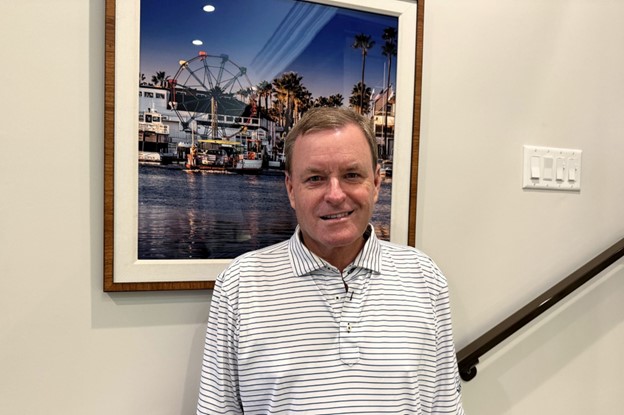
Devin Doyle of Newport Beach is the founder and owner of Response Fire Supply, a fire protection supply company with branches across California, Nevada, and Arizona. Based in Newport Beach, California, Devin has spent his career in the fire protection industry, where he’s built a reputation for combining operational discipline with a hands-on approach to customer relationships.
Before launching Response Fire Supply, Devin co-founded Reaction Supply, growing it to seven branches before exiting the business. That experience shaped the way he thinks about scale, vendor relationships, and the kind of culture that makes a supply company actually useful to the contractors it serves. Response Fire Supply was built on those lessons, with an added focus on fabrication capabilities and regional service depth across the Western United States.
A graduate of Menlo College, Devin started his career in sales right out of school. He credits those early years with teaching him the fundamentals of relationship-building that still drive how he runs his company today. He works closely with fire sprinkler contractors who are navigating tightening safety regulations, complex project timelines, and the everyday challenge of keeping jobs moving without compromising on the systems that protect lives.
Outside of work, Devin Doyle is an avid golfer who finds that the patience and strategic thinking required on the course translate directly to running a multi-state business. He lives in Newport Beach with his wife, Jill, whom he describes as the steady hand when business gets turbulent.
Devin’s broader perspective on the industry centers on a simple idea: fire protection should be proactive rather than reactive. He sees technology and better planning as the path forward for an industry that has historically been slow to modernize, and he’s positioned Response Fire Supply to lead that shift across the markets it serves.
What is your typical day, and how do you make it productive?
I’m usually up early, coffee in hand, going through emails and reviewing what’s happening across our branches before anyone else gets to the office. Mornings are for big-picture work, vendor calls, planning, and looking at where projects are stacking up. Afternoons get busier with operational stuff, walking through orders, talking to branch managers, sometimes jumping on a call with a contractor who needs something figured out fast. I try to leave space for unplanned conversations because those are usually where I learn what’s really going on. Productivity for me isn’t about jamming the calendar full. It’s about being available for the things that actually move the needle.
How do you bring ideas to life?
I talk them out with people I trust before I commit. Then I test small.
What’s one trend that excites you?
Smart fire safety systems. The industry has been waiting a long time for real innovation, and we’re finally seeing IoT-enabled monitoring that gives building owners actual data instead of just hoping their systems work when they need them. It changes the conversation from compliance to performance.
What is one habit that helps you be productive?
I write things down. Not on a phone, on paper. There’s something about the act of physically writing a list that forces you to prioritize. If everything matters, nothing matters, and a notepad makes you choose.
What advice would you give your younger self?
Trust your gut sooner. I spent a lot of years second-guessing decisions that turned out to be right the first time. Experience teaches you to recognize that little voice that says something is off, or something is right, and the sooner you start listening to it, the better. The other thing I’d say is don’t be afraid to start over. Selling Reaction Supply and starting Response Fire Supply felt risky at the time, but it was the best thing I could have done. Sometimes the second version is the one you were meant to build all along.
Tell us something you believe that almost nobody agrees with you on.
That fire protection isn’t a commodity business. Most people in this industry sell on price. I think you sell on reliability, service, and the relationship behind the order, and the price takes care of itself.
What is the one thing you repeatedly do and recommend everyone else do?
Walk the floor. Whether it’s a warehouse, a job site, or a branch office, you learn more in fifteen minutes of walking around than you do in two hours of meetings. People tell you things in person they’d never put in an email, and you see issues that don’t show up on a spreadsheet.
When you feel overwhelmed or unfocused, what do you do?
Golf, or a walk on the beach. Something physical, outside, that takes me away from the screen.
What is one strategy that has helped you grow your business or advance in your career?
Hiring people who know more than I do about their specific area and then getting out of their way. Early in my career, I tried to have an answer for everything, and it slowed everything down. When I started Response Fire Supply, I made a point of bringing in branch managers, fabrication leads, and operations people who were genuine experts in their slice of the business. My job became making sure they had what they needed and clearing obstacles, not telling them how to do their work. That shift is what let us expand across three states without things falling apart. You can’t scale a company if every decision runs through one person. You scale by building a team that doesn’t need you for the day-to-day, which frees you up to think about the next move.
What is one failure in your career, how did you overcome it, and what lessons did you take away from it?
There was a stretch at Reaction Supply where we grew too fast, and the operations side didn’t keep up. Customers started feeling it, and so did our team. I’d been so focused on the top line that I missed warning signs in the back office. We had to slow down, fix processes, and rebuild some trust with longtime customers. It was a humbling few months. The lesson was that growth without infrastructure is just chaos with better revenue numbers. When I started Response Fire Supply, infrastructure came first, expansion came second.
What is one business idea you’re willing to give away to our readers?
A subscription-based maintenance and inspection service for small commercial properties. Most small business owners don’t have time to track when their fire safety systems need to be inspected, and most providers don’t want to deal with the small accounts. There’s a real gap there for someone willing to build a tech-enabled, route-based service model.
What is one piece of software that helps you be productive? How do you use it?
Our inventory and ERP system. It’s not exciting, but knowing exactly what’s in stock at every branch, in real time, is the difference between saying yes to a customer and watching them go somewhere else.
What is the best $100 you recently spent? What and why?
A new pair of golf shoes. Sounds silly, but I spend enough time on the course that comfortable feet make the whole day better, and the course is where I do my best thinking.
Do you have a favorite book or podcast you’ve gotten a ton of value from and why?
I keep coming back to the business strategy classics. The fundamentals don’t change; they just get repackaged. The way you build trust, manage a team, and make a customer feel like they matter is the same now as it was forty years ago. New tools, same playbook.
What’s a movie or series you recently enjoyed and why?
I’m not much of a binge watcher, but I appreciate anything with a builder at the center of the story. People who make something out of nothing. That’s the kind of story I never get tired of.
Key learnings
- Infrastructure should lead growth, not chase it. Scaling without operational discipline creates problems that revenue can’t fix.
- The fire protection industry is shifting from reactive compliance to proactive, technology-driven safety, and companies that adapt early will define the next decade.
- Hiring experts and delegating authority is what allows a multi-state operation to function without becoming dependent on any single person.
- Long-term success in supply businesses is built on reliability and relationships, not price competition.
- Sometimes the strongest move is to exit one chapter and start fresh, applying hard-earned lessons to build something better the second time around.