
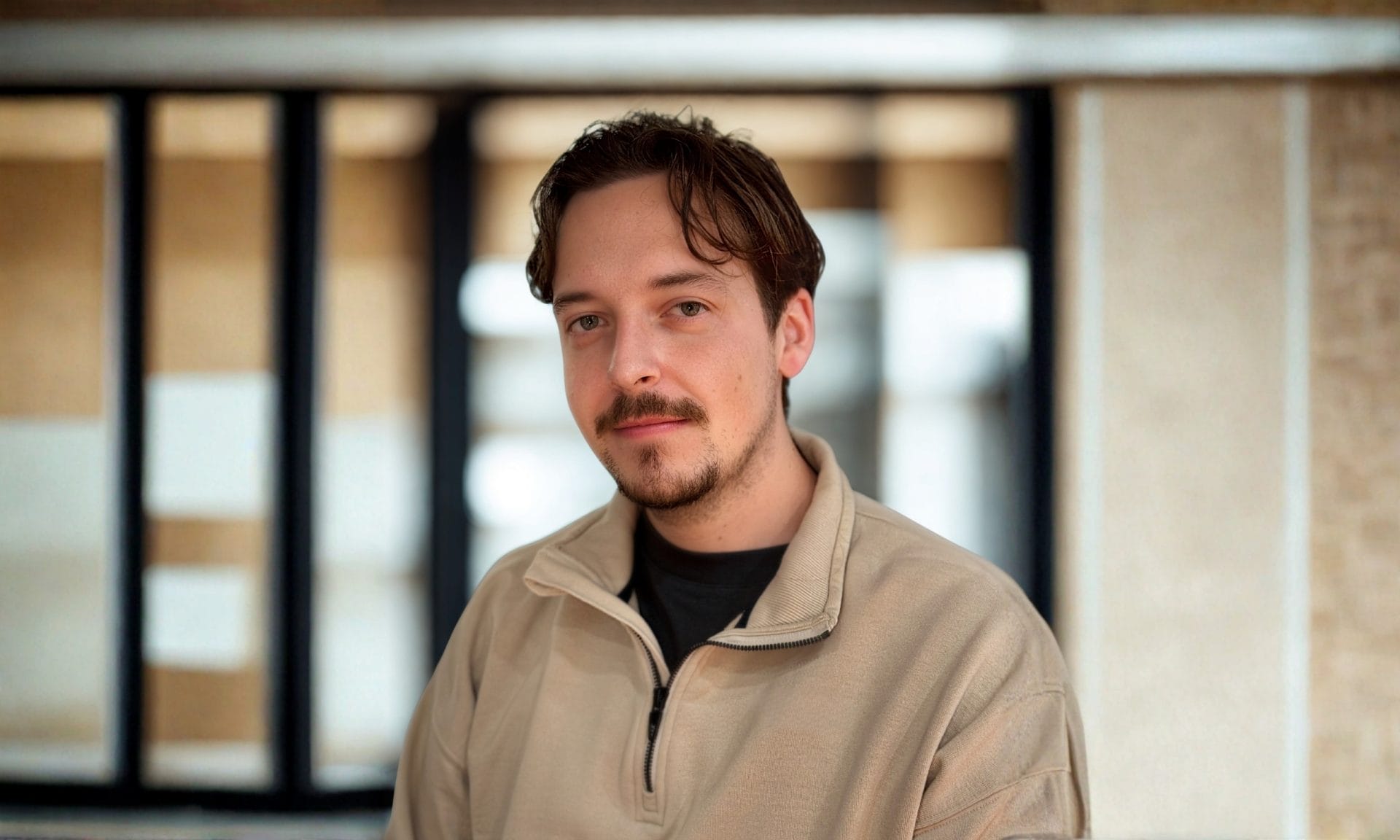
Dominic Monn is the founder and CEO of MentorCruise, a bootstrapped mentorship marketplace he started in 2019. It now runs 7,000+ vetted mentors and has supported over 100,000 mentorship engagements. Before that he worked as a software and machine learning engineer.
What is your typical day, and how do you make it productive?
My typical day has changed significantly over the last couple of months and years. It used to involve a lot of hands-on work getting our product up to speed. Now, much of what I do is more strategic and long-term. I think about how to position MentorCruise in the market, talk to my team, and set strategy for the next quarter. Much of my work has shifted from day-to-day execution to a more month-to-month focus on ensuring that the overall direction is right so that others can execute it.
How do you bring ideas to life?
It’s all about consistency. Ideas live and die by how consistent people are with executing them, so I like to reserve spaces and spots of time where I’m able to sprint toward a goal. I don’t like to multitask. I’m horrible at multitasking, so I prefer to focus on 1 thing, fully involve myself in it, avoid distractions, and execute day by day, chipping away at it. I know it’s hard to make 1 big splash, so the way I see it, if you get 1 step closer to your goal and your idea, eventually, you’ll get there.
What’s one trend that excites you?
I think people are really scared and worried about AI right now. The way I see it, if you’re someone with ideas who wants to move forward in your career, the current trend with AI is really quite exciting because it allows you not just to work more, but to do more in less time.
That is exciting because it allows you to be more present, explore more creative ideas, and do things you never would have been able to do before. For example, I had to train in software engineering for almost a decade to be able to build an app. Now, a lot of people can build apps, and they’re looking at that and thinking, “My moat is gone. What should I do now with my life?”
But my thought is, how exciting is it that everyone can learn whatever they want right now? For someone who has had an interest in software all their life, what’s opening up to me now is the opportunity to explore robotics, manufacturing, and all these interesting new topics that would have been untouchable before.
So, that’s super exciting to me.
What is one habit that helps you be productive?
Every evening, I sit down with my to-do list and plan the next day. Once I go to sleep and wake up again, I have a ready-to-use to-do list with some slack built in, since my life has become more distracting, with more people pulling me in different directions.
The gist remains the same: I can sit down, pull up my to-do list, and check off both work and personal tasks. It comes down to consistency. I’m able to sit down and execute without much thought, then look back at a given week and see that I made multiple steps toward my goal, even if I simply checked items off a to-do list.
What advice would you give your younger self?
I think to stop worrying so much, you need to enjoy the journey and make the most of it. My younger self was obsessed with milestones and targets to hit on a certain timeline. Some of these fortunately worked out, but many didn’t, and that doesn’t mean I failed. Looking back, maybe I didn’t enjoy the actual journey to get there enough.
A lot of people think, especially in entrepreneurship, that the goal is to have an exit or make a lot of money. I think especially now, if that’s your goal, you’re going to have a hard time withstanding the waves and difficulties along the way. If you’re an entrepreneur building something, you definitely need to do it because you love building, creating something that changes other people’s lives, and making an impact on the world.
Once you get into this, don’t expect to have huge success in the next 12 months. Go into it with the assumption that this is going to take a decade. How does that shape your way of living and your way of running your business?
Tell us something you believe almost nobody agrees with you.
You know how remote work used to be this niche little thing? Then it became forced upon us, and everyone was a remote worker. Now people are going back to the office.
Throughout all of this, my stance has always been that you can do just as good, if not better, work remotely. I’m holding on to that. This used to be something nobody argued about, then everyone agreed on, and now everyone is arguing about it again.
Here’s why I think so: The things we need to protect right now are creativity, taste, and attention. It literally does not matter if you can get some code out a couple of minutes quicker because you were able to walk to someone’s desk. What you need is deep creativity to find ideas that no one else finds. You need immaculate taste because you need to create products and designs that are magnitudes better than what AI can produce for you.
I think this is once again the absolute greatest time to build a remote company because you can find the best talent on the planet, bring them together, give them access to amazing AI tools, and let them do their best work.
People have different worries when it comes to the office. They worry that people might not be working for 8 hours or that they might not be able to collaborate properly. But I think this is essentially a coping mechanism to control people and avoid building a strong company culture. You can just sit everyone in an office, and things will seem to work.
Another big misconception is that remote work means nobody talks to each other. I’m a fan of async-first, but I’m not a fan of async-only. I absolutely think it’s important to share your ideas openly and message each other frequently. I’m a big proponent of hopping on unscheduled calls, brainstorming, and seeing where creativity leads you.
All of this can happen without everyone being stressed about getting to the office or sacrificing their health, personal lives, and mental energy because they need to commute for 1 or 2 hours per day.
What is the one thing you repeatedly do and recommend everyone else do?
There’s this concept of the surface area of luck, and I always tell people that they should find a way to make their own luck. People look at others and become jealous when they suddenly gain a large social media following, receive a job promotion they didn’t get, or start a business that succeeds. But the reality is that most people don’t even try.
That might be because they don’t think about creating these kinds of opportunities, or because they’re embarrassed by the possibility of failing. But this creates an incredibly small surface area for luck to catch you.
If you compare 2 people—someone who goes to work, keeps to themselves, goes home, and watches Netflix with someone who regularly attends networking events, calls and emails people, has a social media account, runs a small business on the side, and is proactive at work by developing ideas—who has the higher potential for failure, wasting time, and becoming tired? Obviously, it’s the person who does more.
But who has the greater opportunities to change people’s lives, make money, and be discovered by someone? Obviously, it’s the person who is trying to make more waves.
When you feel overwhelmed or unfocused, what do you do?
I log off, go for a walk, and maybe hit the gym. There’s really no sense in trying to regain focus when it’s gone. The best thing is to reset.
It’s the same with sleep. Whenever I can’t sleep, I try not to force it or swim against the current. I get up, have a small snack, read something, or watch a show. Eventually, I’ll fall asleep.
Work is much the same. If you need to ship a new feature but can’t get your head around it, don’t force it. It will be horrible and waste a lot of time. Go with the current and see where things take you.
That’s why I’m also a big proponent of unstructured work time. If you’re able to wake up at 7:00, work until 4:00 or 5:00, and then take off, that’s fine. But for me, I often wake up, start working, and lose focus around 11:00. It’s much easier for me to go to the gym for an hour, come back at 2:00, have another stint at work, eat dinner, and maybe work a little more afterward.
We’re working the same hours, but I’m working when I’m actually ready to work.
What is one strategy that has helped you grow your business or advance in your career?
Usually, when I don’t know how to grow my business or advance my career, it’s due to a lack of perspective. I’m not trying to sell my own service here, but what I like to do is talk to other people. MentorCruise is a great way to do that because you’re essentially able to pay an expert in your industry and have a call with them right away.
But that’s definitely not the only way. It’s about reaching out to your network, attending community calls, gatherings, and meetups, and finding a way to get connected. That being said, one of the reasons I’ve built my company this way is that I strongly believe in this. Whether it’s in your career or your business, I think a fresh perspective can always help.
What is one failure in your career, how did you overcome it, and what lessons did you take away from it?
The most unnerving moments in business are when you know you’re accountable for something but don’t really control it. These were some of the most stressful times in my life: something happened, and there was nothing I could have done about it.
One good example is compliance and banking issues. You’re running your business, and even though it’s not your first thought, your bank and financial infrastructure are the backbone of it all. That’s how you receive money, pay money, and pay your people.
Some years ago, we were wrongly flagged by one of our banking partners, and our bank account was shut down. That left $100,000 locked up in the bank. Payments weren’t being sent to the right places and were bouncing back. Our team went unpaid, our subscription services failed, and our infrastructure partners were preparing to shut us down.
This was incredibly unnerving. In those situations, it’s important to stay calm, weather the storm, and have a strategy for getting through it. Usually, you will.
When there are risks I can’t control, I like to be aware of them and control them as much as possible by having escape routes and alternatives. When something like this happens, I know it could have happened, and I already have potential ways out.
What is one business idea you’re willing to give away to our readers?
I rewatched the Iron Man movies a couple of weeks ago, and I like the idea of getting futuristic business ideas from science fiction and fantasy because, especially in large, well-known films, many of those ideas have since become reality. We have smartphones, tablets, AI, and more.
I rewatched Iron Man, and the one thing that stood out to me was how JARVIS—and later, other home assistants—were essentially local LLMs integrated with Tony Stark’s house and workflow. This is all possible right now; it’s just waiting for someone to build it.
What I mean is that, right now, all our systems, software, and even AI models are controlled by centralized companies. You sign up for ChatGPT, connect it with your SaaS tools, and everything works nicely. But what I’m looking for is the ability to spin up a home server with a local model that you can talk to and that controls your home automation system, sensitive data, and even home manufacturing, such as 3D printing—all integrated into your workflow like Tony Stark’s system.
Maybe this isn’t a great idea, but now that there’s been a bit of a SaaS apocalypse, I think we should be looking more closely at infrastructure bets. Self-hosted software and similar tools are going to have a big comeback.
The value proposition is compelling: You can either pay Anthropic $1,200 per year to run your models there, or you can buy a metal box and a software license for a one-time cost of $800. I think a lot of people are going to choose the latter.
What is one piece of software that helps you be productive? How do you use it?
Things are changing fast and constantly. Right now, I owe a lot to Cursor and Grokbot. They run many of my AI systems, but not Attio, which runs our CRM, or Hetzner, which helps us host all of our systems, Stripe.
A couple of years ago, I would have recommended different tools, but they’re replaced so quickly now that by the time this interview is published, much of my advice would already be outdated.
I’d say that a good product is no longer enough. A good piece of software might not be helpful anymore. What you’re looking for is someone who’s actually a great partner—someone who ships the right things, asks for your feedback, and is essentially part of a good company.
That’s what people are buying now: a good company that will help them, not just a software product.
What is the best $100 you recently spent?
This is a nerdy pick, but I like a good charging brick and a great USB-C cable by Anker. I used to get whatever USB-C cables and charging bricks were available, and my MacBook would constantly ping-pong between charging and not charging. I never knew why. I tried different charging bricks, including the official Apple ones—the really bulky ones—but things either wouldn’t charge, would get hot, or would charge incredibly slowly.
So I got this Anker Prime USB charging brick with a little screen, 3 USB-C outputs, and cables rated for up to 240 watts. Now, when I plug something in, I can see on the screen how quickly it’s charging. It charges in such a short amount of time that it has made me much more mobile.
I can plug in my laptop, and it’s fully charged in 45 minutes or less. That means I can unplug it, walk around with it, and take it wherever I need to go. When I get home, it can be fully charged in much less than an hour.
My iPhone is basically fully charged in 20 minutes, and any device I plug in takes 10 to 15 minutes to charge. It’s honestly really cool. It means I can have fewer cables around, use one long cable that I can wrap around wherever I need it, and enjoy generally high-quality charging.
Do you have a favorite book or podcast from which you’ve received much value?
Just last week, Jason Cohen released his book, Hidden Multipliers. Without a doubt, it’s one of the best business books I’ve read over the last couple of years. Saying that I’ve gotten some value out of it is honestly laughable because I’ve gained immense value from it. Jason is a legend in business, so I wholly recommend studying the book from front to back, going through his workshops, which are free, and repositioning your business based on that.
What’s a movie or series you recently enjoyed and why?
I didn’t think I would, but I went to the movies and watched *Obsession*. Honestly, my partner roped me into it because I don’t enjoy horror movies at all. But it was a special experience. Obviously, it’s a great movie, but it was made by a small independent team with actors who are now all breakout stars because of it—and rightfully so. It felt like witnessing a piece of history to some degree. It’s also a romantic feeling that somebody can take a little bit of money and turn it into one of the biggest movies of this decade. So, obviously, I’m rooting for that, but the movie was also amazing.
Key learnings:
- Be consistent at any cost
- Enjoy the journey, don’t chase for the outcome
- Surround yourself with good people and fresh perspectives