
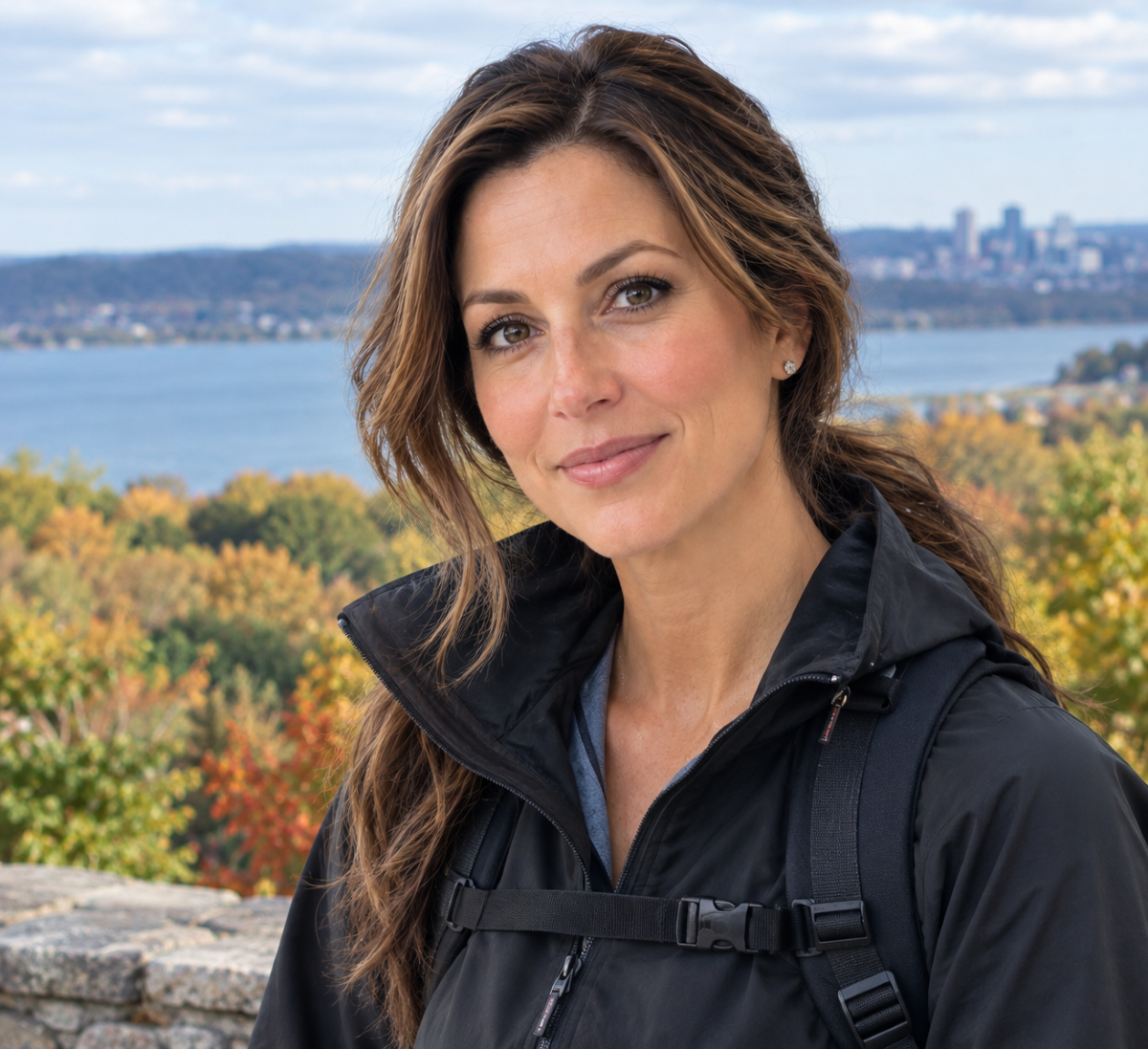
Eleanor Adams grew up in the northern suburbs of Buffalo, the daughter of an engineer and a schoolteacher. Watching a family member recover from a stroke left a mark on her as a teenager, and it pointed her toward a question she still asks every day: how does the brain heal, and how can a doctor help it along?
She studied neuroscience at the University of Rochester, then went home to Buffalo for medical school at the Jacobs School of Medicine. Training took her away for a while, a neurology residency in Pittsburgh and a vascular neurology fellowship at Cleveland Clinic, but she came back to Western New York to practice.
Since 2012, she has worked as a neurologist treating stroke, epilepsy, Parkinson’s disease, Alzheimer’s disease, multiple sclerosis, and migraines. She moved from staff neurologist to senior neurologist by 2016, building stroke assessment protocols and mentoring residents along the way. In 2021, she became Clinical Director of Neurological Services, a role that puts her in charge of patient safety work and physician mentoring as much as patient care.
Outside the clinic, she plays piano, hikes at Letchworth and Chestnut Ridge, and cooks Mediterranean food for her husband and two kids. She reads constantly, mostly historical fiction and books on neuroscience. Her week runs on structure: early mornings, patient rounds, outpatient hours, and committee work, with evenings set aside for family whenever an on-call shift doesn’t interfere.
Below, she answers questions about how she works, what she has learned, and what she would still like to build.
What is your typical day, and how do you make it productive?
I get to the medical center by about 7:30 and start with overnight admissions and urgent consults before anything else, because that information changes how the rest of the day gets planned. Mornings are rounds and exams. Afternoons split between outpatient visits, meetings, and mentoring. I keep the structure loose enough to absorb an emergency, because in neurology, one always shows up eventually.
How do you bring ideas to life?
I test them small first. When we built out stroke assessment protocols a few years back, we didn’t roll out a finished system. We tried a version on one unit, watched what broke, and fixed it before it went anywhere else. Ideas in medicine have to survive contact with a real patient before they’re worth anything.
What’s one trend that excites you?
Research into neuroplasticity, how much the brain can rewire itself after injury. It’s changing how we think about stroke recovery timelines, which used to be treated as fairly fixed.
What is one habit that helps you be productive?
Writing detailed notes, even on cases that seem straightforward. I’ve caught more than one pattern months later by going back through notes I almost didn’t bother taking.
What advice would you give your younger self?
Slow down on the differential diagnosis before you slow down on anything else. Early on I wanted to move fast to seem capable. The best neurologists I trained under moved slowly through the thinking and fast through the action once they knew what they were dealing with.
Tell us something you believe almost nobody agrees with you on?
I think a slow week in a neurology department is more dangerous than a busy one. Busy weeks keep a team sharp. Slow weeks let habits get soft, and soft habits show up at the worst possible moment.
What is the one thing you repeatedly do and recommend everyone else do?
Keep a running log of cases that puzzled you, even after they’re resolved. I still go back through mine. Patterns show up across years, not across weeks.
When you feel overwhelmed or unfocused, what do you do?
I play piano. Classical music, usually something I’ve played for years, so there’s no pressure to get it right. It resets me faster than almost anything else.
What is one strategy that has helped you grow your business or advance in your career?
Taking on mentorship early, before I had a formal leadership title. I started supervising residents informally while I was still a staff neurologist, and it’s a big reason I was considered ready for a director role later. Teaching forces you to be able to explain your reasoning, not just trust your instincts.
What is one failure in your career, how did you overcome it, and what lessons did you take away from it?
Early on, I let a handoff between shifts go undocumented clearly enough, and it cost us time on a follow-up. Nobody was harmed, but it scared me. We tightened handoff documentation after that, and I still think about it when I review new protocols.
What is one business idea you’re willing to give away to our readers?
A mobile neurological screening service for rural parts of Western New York, places too far from a specialist to get regular checkups. The equipment for basic cognitive and stroke-risk screening is portable enough now that it wouldn’t take much to run.
What is one piece of software that helps you be productive? How do you use it?
Epic, our electronic health record system. I live in it for documentation and coordinating with other providers, but I also use UpToDate constantly during consults to confirm I’m working from the latest evidence.
Do you have a favorite book or podcast you’ve gotten a ton of value from and why?
“The Brain That Changes Itself” by Norman Doidge. It’s the book I recommend most to anyone trying to understand why stroke recovery isn’t a fixed timeline.
What’s a movie or series you recently enjoyed and why?
“My Beautiful Broken Brain,” a documentary about a young woman recovering from a stroke. It’s one of the more honest portrayals I’ve seen of what recovery actually looks like day to day, past the hospital stay.
Key learnings
- Testing new protocols on a small scale before a full rollout reduces risk in clinical settings.
- Informal mentorship, taken on before a leadership title exists, can build the case for later promotion.
- Documentation gaps during shift handoffs are a recoverable but serious risk worth building safeguards against.
- Long-running case logs help clinicians spot patterns that don’t appear within a single week or month.
- Research into neuroplasticity is shifting assumptions about fixed recovery timelines after neurological injury.