
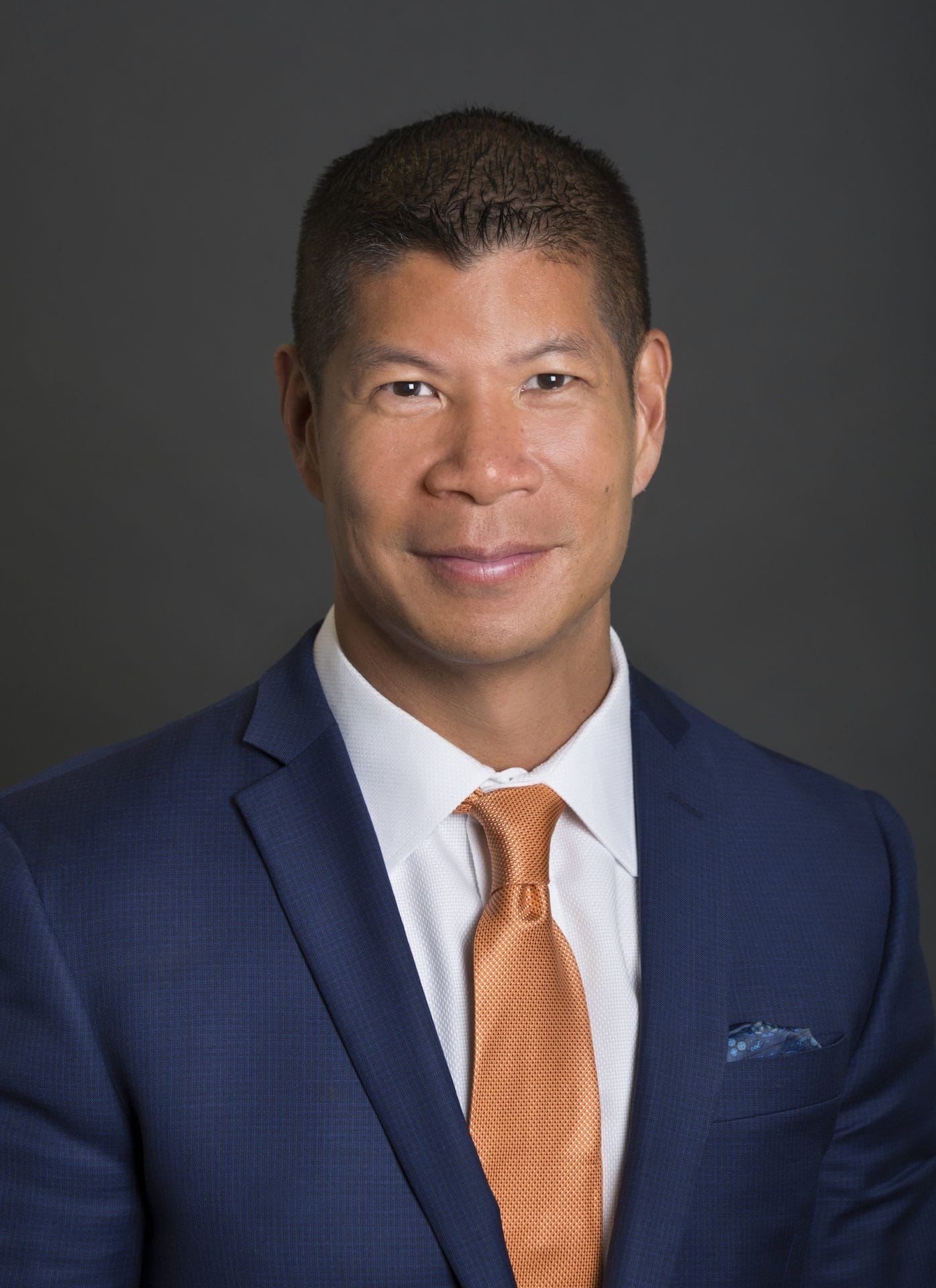
An experienced executive based in Princeton, New Jersey, Eric Poe serves as CEO of CURE Auto Insurance, leading operations, marketing, enterprise strategy, and financial oversight. Since assuming the CEO role, Eric Poe has contributed to significant company growth, both financially and in terms of number of employees and call centers.
Combining business acumen and mindful leadership, Mr. Poe ensures the company and its management team adhere to the core principles and values established by CURE’s founders. Additionally, his advocacy efforts and commitment to justice set him apart, and he has been vocal about discriminatory rate-setting practices. He was a strong and vocal supporter in favor of banning on the use of education and occupation as income proxies in the car insurance industry in New York and was a key advocate in bringing about this change in Michigan.
Eric Poe has a bachelor’s degree in accounting from the University of Colorado and a JD from Seton Hall University School of Law. He has won several awards, including the New Jersey Law Journal’s Trailblazers in 2020, NJBIZ 40 Under 40, and NJBIZ Leaders in Law in 2021.
What is your typical day, and how do you make it productive?
There is no typical day, but I try to remain focused on the meeting or project at hand, while at the same time being mindful of my schedule and those of others.
How do you bring ideas to life?
Surround myself with a core yet diverse group individuals who see the vision and use their unique talents to help develop a roadmap and drive to the finish line.
What’s one trend that excites you?
That we as a society are gravitating back to realizing that we can’t create a rose garden for society. That adversity, perseverance, and resiliency can build character and spiritual awakening for us all. Being held accountable, if it’s the right thing to do, should always be the answer, regardless of the pain.
What is one habit that helps you be productive?
Challenging myself to be uncomfortable. From my father, I learned the importance of discomfort and how stepping outside my comfort zone could lead me to even greater potential. Every day I try and make it a point to find the next “uncomfortable” path to walk.
What advice would you give your younger self?
Take a step back, see how insignificant your feelings and needs are now compared to the overall lifetime.
Tell us something you believe almost nobody agrees with you on?
The tenets of allowing suffering of people’s feelings if it’s the natural consequence of their actions. The suffering itself is a potential moment of spiritual awakening for someone and can be precisely what they need to grow. When we attempt to prevent the natural consequences, no one wins.
What is the one thing you repeatedly do and recommend everyone else do?
Practice mindfulness and meditation.
When you feel overwhelmed or unfocused, what do you do?
Meditate and/or focus on the “now” – living in the moment.
What is one strategy that has helped you grow your business or advance in your career?
My mother was always a risk taker who often said success occurs when you work hard and do it ethically. This is true whether it’s your approach to school, building a brand, or expanding an organization as a whole. Over the years, I have realized those who focus solely on the end result, or profits alone, ultimately do so at the risk of losing both customers and supporters.
What is one failure in your career, how did you overcome it, and what lessons did you take away from it?
Failure at recognizing that my passion can be seen as arrogance. When I am passionate about a position and I testify or communicate about the topic, I have found that audiences can vary and the majority of people are cautious, sensitive and not self-confident, and to I’ve had to (and still try to) realize that those people can misconstrue my passion as arrogance. This has made me learn about mindfulness and I incorporate it into my daily life.
What is one piece of software that helps you be productive? How do you use it?
The Predictive Index and the use of its behavioral and cognitive assessments in evaluating candidates and putting them in the right positions. All together, it is an invaluable tool that has helped in our company’s growth and leadership development. This same software helps with personal relationships.
Do you have a favorite book or podcast you’ve gotten a ton of value from and why?
The Power of Now, by Eckhart Tolle – It’s likely the value of living in the moment. Within this framework, I also realized from my mindfulness mentor’s teachings that vulnerability is not a trait to conceal yet one that is an essential component of effective communication and, ultimately, leadership.
What’s a movie or series you recently enjoyed and why?
A documentary on the Vietnam war on Netflix. I realize that egos and power mixed with arrogance can cause tens of thousands of people to die. The need to win an election, to appear impervious to weakness, and misunderstanding basic tenets of human rights caused a disaster that lasted years and cost countless lives.
Key learnings
- The key to a business relationship requires longstanding, well-tested trust.
- Professional relationships are built on mutual respect and shared value of each other’s businesses.
- The value of mindful leadership for company growth but equally personal, professional, and team development
- All personal growth truly begins when you leave your comfort zone.