
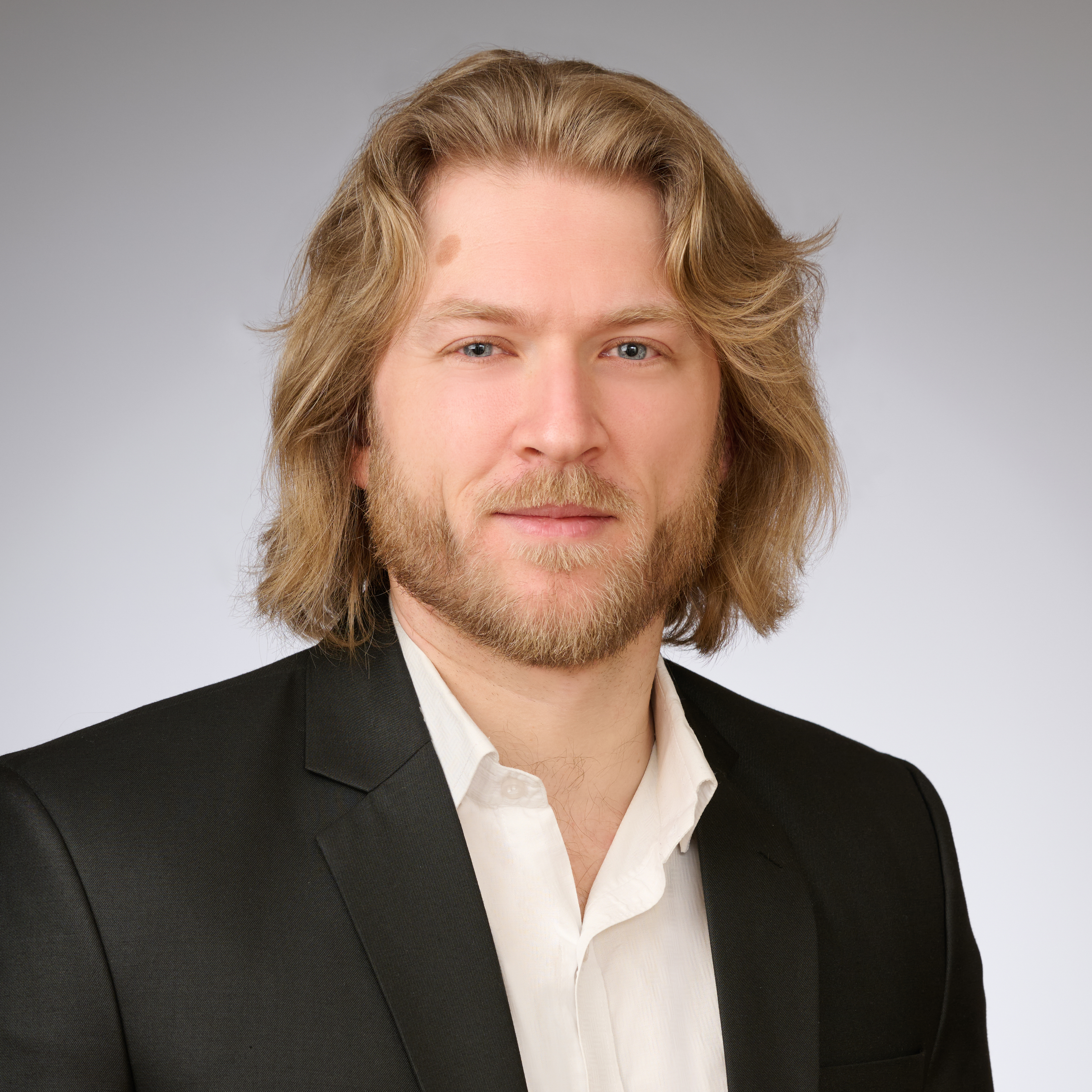
A cloud engineer with 7 years of experience in CI/CD pipelines, DevOps, and AWS infrastructure, Erik Heaney supports mission-critical systems across diverse industries, including healthcare technology, cybersecurity, finance, and scientific research. Erik Heaney is a senior software engineer at InnerOptic Technology, where he continues to advance cloud innovation by managing AWS infrastructure, supporting AI-focused prototyping, and building automated testing systems that reduce manual effort and improve accuracy and reliability across complex technical platforms.
His technical foundation includes expertise in Amazon Web Services (AWS), where Erik Heaney has worked extensively with EC2, Route53, Lambda, CloudFormation, and Terraform. He holds an AWS Certified Solutions Architect certification and has applied infrastructure-as-code principles to build and manage cloud environments for production and prototyping use cases.
Additionally, his CI/CD pipeline skills are useful for facilitating development and automation. Erik Heaney has designed and maintained pipelines using Spinnaker, Jenkins, and GitHub to support scalable backend systems. These pipelines have reduced manual work, accelerated deployment cycles, and improved system consistency across development and production environments.
Heaney, experienced in containerization and orchestration technologies, has deployed and managed Docker-based systems and worked with Kubernetes and AWS ECS to support distributed applications. His work includes building remote desktop gateway applications using Guacamole, ReactJS, Nginx, and SAML/OAuth for SSSC, deployed via Docker Compose on an EC2 instance provisioned with Ansible.
What is your typical day, and how do you make it productive?
The beginning of my day is most important. It sets the tone for the rest of the day. I like to journal or jot down ideas, reflect on my previous day, and set a to-do list for the day. That way, when I begin work, I have a clear idea of my goals and priorities. As a software engineer, especially one with site reliability experience, I like to then catch up on all communications from my previous workday. That can be emails, Slack messages, JIRA story updates, anything. Most teams now are global. So, living on the US east coast, I can expect updates from yesterday from my colleagues on the west coast, as well as this morning’s updates from my colleagues in Europe. Once I have caught up, then I can work towards accomplishing my goals for the day.
How do you bring ideas to life?
I try to start small and keep it simple. Perfectionism can be your worst enemy. It is much better to get the ball rolling, create a simple product fast, than to waste time trying to create the perfect product out the gate. Not only is perfection not possible, especially on your first pass, chasing perfection will prevent you from getting started in the first place. Once you actually create something, you can always iterate and improve on the product. This is a much more dynamic process, and you can better respond to your clients and the market.
What’s one trend that excites you?
I’m excited to see the practical value AI will provide. As with any new technology, the hype will unlikely meet the reality. However, there are certainly really exciting products and services coming to market that provide real value. For example, the work I am doing with InnerOptic to leverage AI to identify key organs on ultrasound images for laparoscopic surgeons has proven to be very useful. It will be exciting to see how surgeons and doctors use this technology more and more as we continue to train the models with more images and as the models themselves improve.
What is one habit that helps you be productive?
Your health is nonnegotiable. A good diet, regular exercise, a full night’s sleep, and sobriety help me be productive. This is not an exciting, hidden secret. But unfortunately, there are no shortcuts or hidden secrets. You need a healthy mind and body to be productive, first and foremost. From there, I like to journal, meditate, and use calming strategies to manage stress. This helps me focus on my tasks.
What advice would you give your younger self?
Stay true to yourself. Don’t try hard to impress people who don’t care about you. Follow your passions and what makes you feel satisfied. Be patient. Don’t force things; allow people and things to come in and out of your life.
Tell us something you believe that almost nobody agrees with you on.
I’m not sure if I want to share my spiciest opinions online! But here goes. I love anchovies. I think they are great with pizza. They have a bad rap, and I think that is deeply wrong, unjust even.
What is the one thing you repeatedly do and recommend everyone else do?
I try to shut off every distraction and listen to my own thoughts and emotions. This is especially important when the world becomes overwhelming. Everyone has their struggles, but character is shown in how we respond to those struggles.
When you feel overwhelmed or unfocused, what do you do?
As I mentioned before, carving out time and space to be alone with my thoughts and emotions to cool down always helps. Especially in our modern digital age, where it is easy to get overwhelmed or anxious by the devices in our pockets. A little bit of silent time is very useful.
What is one strategy that has helped you grow your business or advance in your career?
Always look for problems to be solved. People will always pay someone if they can solve their problems, whatever that may be, and they will definitely hire you if you can find the problems yourself.
What is one failure in your career, how did you overcome it, and what lessons did you take away from it?
When I was working at Rapid7, the Platform Delivery department got reorganized, and I got placed with a development team with a lot of technical debt and organizational problems. They were distrustful of people outside of their team because they had a lot of unique problems that could not be solved with generic solutions. I was the only DevOps person working with the team, and so it took me a long time to come up to speed technically, as well as earn their trust. By asking a lot of questions and trying to understand their point of view, I was able to work with them and solve a lot of their problems.
What is one business idea you’re willing to give away to our readers?
From my observations, a lot of people experience frustration in their romantic lives. A lot of young men, who are decent looking and have decent social skills, have a hard time getting their foot in the door. There has been a rise in dating coaches and dating content creators, some of whom make a lot of money. I think someone who can organize these dating and romance tips into a clear product can make a lot of money and help a lot of young people, both men and women, find happiness.
What is one piece of software that helps you be productive? How do you use it?
I am old school. I like to just open up a text document and write down my thoughts. Sometimes I use it as a personal journal. Sometimes I use it to take structured notes or a to-do list. But at the end of the day, I don’t think any shortcuts can be taken; you have to put down the effort to organize your thoughts and prioritize your actions.
What is the best $100 you recently spent? What and why?
Not quite $100, but I paid for a haircut and a beard trim. It might be vain, but looking good always helps me feel good. That confidence helps me get more in my day and take more calculated risks.
Do you have a favorite book or podcast you’ve gotten a ton of value from and why?
“Building a StoryBrand: Clarify Your Message So Customers Will Listen” by Donald Miller is probably the best book I have read on marketing, branding, and advertising. It has a very clear message to its readers. To build a brand is to be clear on the value you bring. Your audience is the protagonist, and you are the wise sage offering advice. It is a brilliant way to view marketing and something I think about a lot.
What’s a movie or series you recently enjoyed and why?
It may sound cheesy, but I rewatched “The Titanic” after not seeing for many years. It really is a great movie on every level. It is well written, well-acted, and has something for everyone. It is so much more than a romance movie; at times, it is a fast-paced claustrophobic thriller, at others it is a period piece and comedy of manners. Above all, I believe it is a meditation on death and how we make meaning from our own mortality.
Key learnings
- To bring ideas to life, keep it simple.
- It is better to start small and iterate over time than to try to be perfect on your first pass.
- Your physical and mental health are nonnegotiable.
- If you want to be employable, find problems to solve.
- When you feel unfocused, take time away from distractions to recenter yourself.