
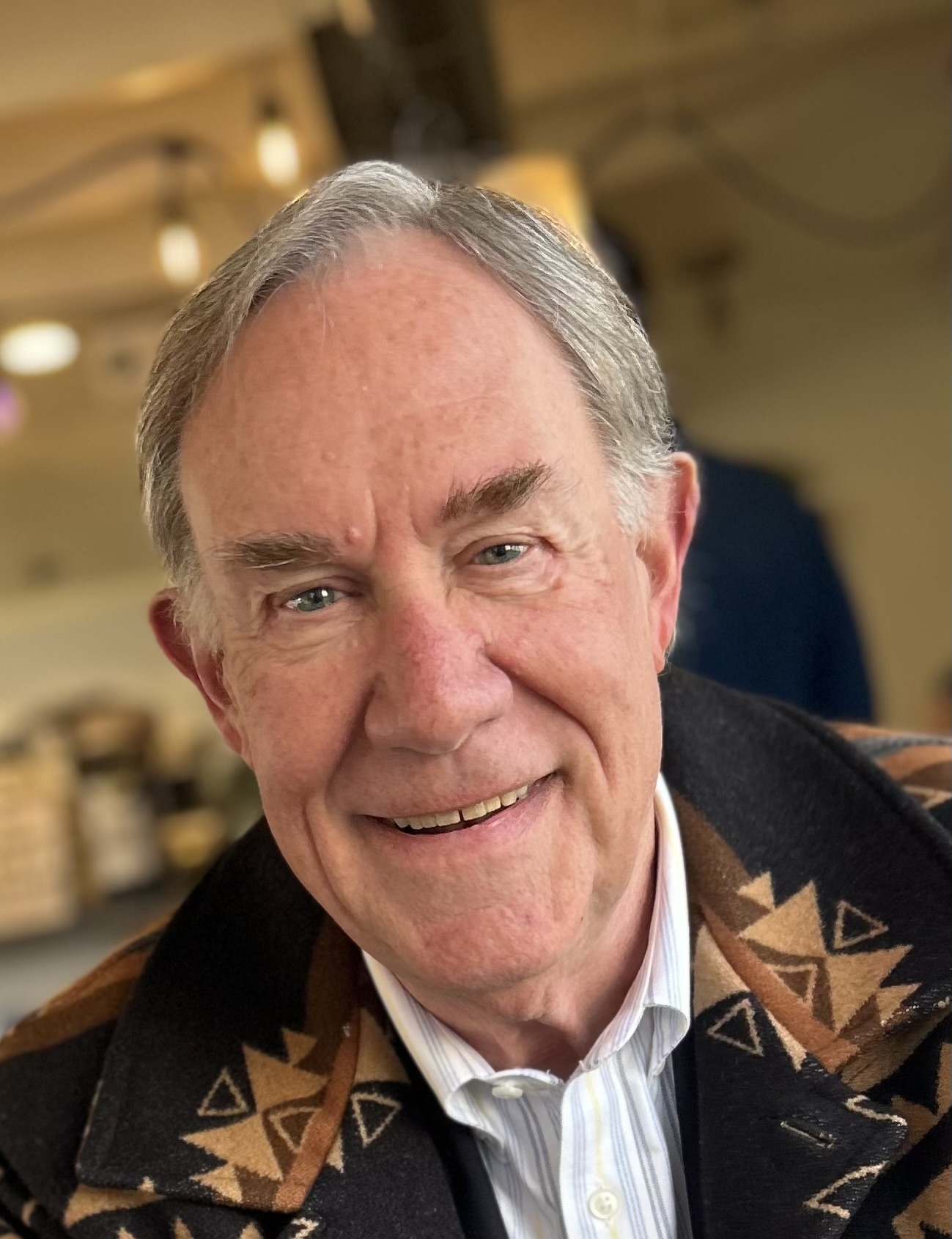
The former executive director of NW Museum of Arts & Culture in Spokane, Washington, Forrest Rodgers has built a career defined by revitalizing institutions and elevating the role of museums as cultural anchors. For instance, while at NW Museum of Arts in Spokane, Forrest Rodgers managed all the museum’s departments, developed a sustainable funding model for the institution, and personally secured several six-figure gifts for public programs.
Forrest Rodgers began his professional journey after earning a BA in English and Secondary Education from Pacific University. He later completed an MBA at Willamette University while serving as the institution’s assistant dean, creating partnerships with government agencies and international organizations.
Mr. Rodgers’ work in higher education expanded at Oregon State University (OSU), where he supported the president’s office, cultivating major donor relationships and helping OSU to open its first branch campus. He worked 10 years at Willamette University and six years at OSU. These experiences laid the foundation for his transition into museum leadership.
In 2000, Forrest Rodgers was appointed president and CEO of the High Desert Museum in Bend, Oregon. He led a transformative chapter of the museum, expanding facilities, securing major gifts, stabilizing operations, and reversing years of declining attendance. He continued shaping regional cultural institutions through leadership roles with the NW Museum of Arts & Culture and Moab Museum. At the latter, Mr. Rodgers guided the museum through an ambitious transformation that earned statewide recognition while establishing it as a benchmark for rural and regional excellence in Utah.
What is your typical day, and how do you make it productive?
Although it’s not always feasible, I strive to take roughly the first 30 minutes of the day to read any pertinent documents/correspondence to prepare for the day; review the status of major projects and set daily priority/goals. Twice a month during this process, I refresh my memory of goals for the next two quarters and following year. I’m a list maker, but at the end of the workday, I often fail to evaluate my progress to determine why I’ve not finished (or even started) tasks on the list.
How do you bring ideas to life?
Most of the ideas I’ve brought to life resulted from spotting opportunities to solve challenges and/or problems that add value to my organization and its stakeholders—or to identify ways to address issues that I believe are important. My ability to envision possible solutions comes from being intellectually curious; a keen observer of interpersonal, organizational, and cultural dynamics and courageous enough to “rethink” each issue from multiple perspectives. Bringing any new idea to life requires an understanding of the context in which I’m operating, a clear vision of action and outcomes, and the mutually respectful individual relationships required to build a strong coalition of interested parties.
What’s one trend that excites you?
A broader understanding of America’s complex history. Throughout its first 200 years, American history was studied, interpreted, and taught with an Euro-American perspective. I spent my early years in Sudbury, Massachusetts, neighboring Concord and Lexington and the site of the earliest skirmishes of the American Revolution. My fourth-grade Massachusetts history class celebrated the Pilgrims, Puritans, the first Thanksgiving, the Boston Massacre, and Paul Revere’s ride, but barely mentioned the role of the indigenous peoples and the impact of European settlement on them. In the last 50 years, more historians, and especially native scholars, have expanded the research base to produce a more accurate and comprehensive telling of America’s story. African Americans fought for both the revolutionaries and the British in the War for Independence; tribal nations had sophisticated cultural, economic, and governing practices; westward expansion overtook communities of Spanish, French, and Mexican people…and more.
I believe that our country will move toward “a more perfect union” only when there is a broader (if not shared) understanding of how its past—with all its glorious and deeply ugly moments—has shaped the American experience. South Africa’s 1996 process to move beyond apartheid featured a Truth and Reconciliation Commission to “bear witness to, record, and in some cases grant amnesty to the perpetrators of crimes relating to human rights violations, as well as offering reparation and rehabilitation to the victims.” Perhaps one of the craziest ideas for celebrating America’s 250th birthday would be to establish our own TRC to confront and move beyond our past.
“There is no better teacher than history in determining the future. There are answers worth billions of dollars in a $30 history book” (Charlie Munger, Berkshire Hathaway investor). “That men do not learn very much from the lessons of history is the most important of all the lessons that history has to teach” (Aldous Huxley).
What is one habit that helps you be productive?
To regularly reflect on my vision for the organization and my leadership responsibility to ensure that it will be stronger and healthier when my work there is finished.
What advice would you give your younger self?
Slow down…both personally and professionally. As the eldest son of a highly regarded accomplished Episcopal priest who lived the so-called “Puritan work ethic,” I inherited the “live to work” half of the phrase “work to live or live to work.” But my mission is not to “work to live” but to invest my skills, talents, time, and personal energy, to do meaningful work. In my mid-20s, I was offended when my mother “accused” me of being ambitious, which in the early 1980s meant being motivated by professional advancement, personal success, and wealth. My response then and now is that my ambition is to do good work for organizations doing good work to strengthen their communities, support their stakeholders, and inspire donors and funders to provide the financial support required to fulfill their mission. However, there have been times when my commitment to an organization has inhibited my efforts to explore new professional opportunities.
Tell us something you believe that almost nobody agrees with you on.
I believe that the idea of America always has been about the future, with too little attention to (and understanding of) how it came to be in the present. For late 15th and 16th century Europeans, North America was a “new world” to be explored and exploited—even though it wasn’t the East Indies. Whether seeking religious freedom, wealth from minerals and crops, or [escape from] poor economic conditions at home, new arrivals looked to create a future for their communities or patrons. Aside from the enslaved, many left regions of Western Europe with a sense of their cultures and family histories—but focused on the future.
As we approach the 250th anniversary of the Declaration of Independence, I’m appalled at how little Americans know about our nation’s history. Cynics would say the reason is because middle and high school history classes often are taught by football coaches. Others point to the gradual shift from discipline-specific history and civics classes to the broader category of social sciences—or that the increased mobility of families has put time and distance between multigenerational family members. Regardless of the cause, I believe that failure to understand how the US has become what it is today means that individuals, families, communities, and, especially, elected officials will fail to successfully address the human-caused problems they face. Or worse, they’ll adopt past practices with consequences the public at large is unable to imagine.
What is the one thing you repeatedly do and recommend everyone else do?
I read nonfiction books on subjects totally unrelated to my professional work and fiction books that have some personal meaning or message. As a university and museum executive, I’ve found new insights, ideas, and perspectives on life, relationships, and work—and creative ways to be more personally effective. Random examples include Only the Paranoid Survive (Andy Grove), The Lessons of History (Will and Ariel Durant), The Winds from Further West (Alexander McCall Smith), and Shooting an Elephant (George Orwell).
When you feel overwhelmed or unfocused, what do you do?
I’d like to say that I meditate, play a musical instrument, get a massage, or go to therapy to release the sense of overwhelm. Instead, I usually retreat alone to a quiet spot and let my thoughts drift. At times, this can lead to new insights about (and possible solutions to) the very issue(s) causing me to feel that I’m drowning in too many duties/tasks. I may read historical fiction purely for pleasure while listening to classical and Celtic music. When I lose focus often is caused by having too many (and often competing) demands on my experience, time, and energy. This has been especially challenging when my job combines multiple (often conflicting) roles; as a museum director, I simultaneously perform the duties of CEO, CFO, COO, CMO, and chief development officer.
What is one strategy that has helped you grow your business or advance in your career?
The central strategy to my professional advancement in university administration and museum leadership is partially addressed in my response to the question “How Do You Being Ideas to Life?” More specifically, the skill of sensing how my role and responsibilities can advance organization’s needs, shaping its response to potential new directions, goals, and human and financial requirements, then building a coalition responsible for shifting to the new/next way of doing business.
What is one failure in your career, how did you overcome it, and what lessons did you take away from it?
As a senior university executive and director of two professionally accredited natural and cultural history museums, I’ve had the good fortune to work with accomplished scholars and researchers and experienced administrators, skilled curatorial and collections staff, and governing boards of varying quality. Most of my roles have required me to be an agent of change, designing and leading the response to each organization’s strategic or financial circumstances. I believe I’ve succeed in leaving each organization stronger than it was before my arrival: rebranding and building enrollment at an upper-division, degree-granting university; elevating the profile of a young graduate school of management; guiding a cultural transformation and expansion of a land grant university; managing two museums through $20+ million capital campaigns; and transforming a rural museum operating cum tourist attraction into a professionally managed benchmark institution. Amid these accomplishments, I’ve had varying degrees of success in getting governing bodies to acknowledge and resolve the institutions’ fragile financial condition. With help from CFOs and outside experts, I’ve developed multiyear action steps to increase unrestricted income, reduce operating deficits, and retire mortgages. Instead, boards have rejected forward-thinking solutions to build financial stability without eroding the programs/services that generate revenue. My efforts to inform, educate, and demonstrate positive outcomes have failed to prevent near-term damage to the museums’ reputation, financial support, and employees. The lessons I’ve learned are that I must be more diligent in assessing a board’s effectiveness and find more persuasive strategies to coach boards into fulfilling their legal and fiduciary duties.
What is one piece of software that helps you be productive? How do you use it?
I first experienced the value of tele- and video-conferencing technology in the early 2000s (Skype), and since 2018, Zoom has become an essential tool. It allows me to be an effective individual contributor and team leader when working remotely and personalizes conversations with organizational partners, funders, donors (rarely), and other collaborators. During the Covid school shutdowns, my therapist wife was able to conduct sessions with the middle school students in her portfolio—and now is doing the same for commercial online therapy programs. Unlike our 20-something daughters, I’m not a digital native; I learned to write cursive with a plastic Schaeffer fountain pen! I’ve always preferred in-person communication with co-workers, direct reports, and supervisors. I think email and texting are just two (or more) people typing at one another. I used to be a Luddite, but becoming proficient with Zoom, smartphones, Office 365, etc. have convinced me to let the technology and software “do the work.”
What is the best $100 you recently spent? What and why?
I recently enrolled in the Mayo Clinic Diet program to gain more thoughtful control over my daily diet and lose some weight while rebuilding muscle. Through my mid-30s I was very physically active and competing in club ice hockey, high school and college varsity soccer and tennis teams, and high-quality amateur soccer. As my professional growth and development required time and personal energy and my daily activities became more sedentary, I had to shift from competitive sports that required mid-week training to individual activities like hiking and biking. Though the miracle of adoption, my wife and I welcomed three newborn babies within 14 months, the first arriving in my first month of a new job as executive director of a privately funded museum in a new town. The responsibilities of raising three children, including one with a rare and pervasively disabling genetic condition, meant little time for recreation of any kind and effective meal management. Now that each child is on their early-adult journey and my wife works from home as a mental health therapist, I’m able to focus more on my physical health and emotional wellbeing.
Do you have a favorite book or podcast you’ve gotten a ton of value from and why?
Two books from which I’ve learned a lot and continue to be personally and professionally valuable: Jim Collin’s Good to Great (with GtoG for the Social Sector monograph) and Will and Ariel Durant’s The Lessons of History.
The central tenet of GtoG is simple yet applicable to any leadership situation and in most organizational environments: confront the brutal facts. Get the wrong people off the bus. Get the right people on the bus. Get the right people in the right seats. I’ve found these to be effective steps to affect change in both universities and nonprofit museums but have learned from experience that accomplishing each step requires thoughtful attention to the organization’s existing culture, financial status, and mission/goals.
The Lessons of History condenses the Durants’ eleven-volume The Story of Civilization into chapters on the relationship between History and the earth, biology, race, character, morals, religion, economics, socialism, government, and war. Although the lessons are framed by research conducted in 1950-1960, each chapter provides a context for many of the societal changes that have influenced the world we live in today. Even though the longest of the 13 chapters is only 10 pages long, I’ve had to use Google research more than ever before to learn about the times, places, and people referenced.
What’s a movie or series you recently enjoyed and why?
The Law According to Lidia Poet is Netflix Italy’s stylized version of the life of Lidia Poet, Italy’s first female attorney. While Netflix promotes the central character as “Italy’s first female detective,” the series reveals that although the historical Lidia passed the requisite law examinations (receiving her degree in 1881), after two years in “forensic practice” she was approved by the Order of Lawyers in Turin and enrolled in the “roll of lawyers” until the Attorney General and a Court of Appeals determined that her enrollment was illegal.
Viewers quickly see that while Lidia Poet works with “legal” attorneys, she sees characters, crimes, and individual circumstances more clearly than her male counterparts. Lidia’s commitment to securing justice for her clients mirrors her own fight to practice law as a member of the judiciary. Set in the late 1880s, the series thoughtfully and forcefully addresses the laws and cultural norms that limited—and in some modern societies continue to limit—capable women from seeking and performing “professional” roles. The series is another reminder that human history doesn’t repeat itself, but we humans do. (BTW: anyone who enjoys “period piece” movies/shows will marvel at the settings and wardrobes.)
Key learnings
- Being intentional about one’s personal life is far more important than being international about one’s professional journey and success.
- Moving forward in volatile, uncertain, complex, ambiguous (VUCA) times is challenging; to make forward progress requires personal resilience and strategic clarity.
- Making changes can be intimidating or downright frightening, so it’s critical that proposed changes be acceptable to the affected individuals, organizations, and stakeholders.
- It’s critically important to reflect on the circumstances that shape near- and long-term goal setting.