
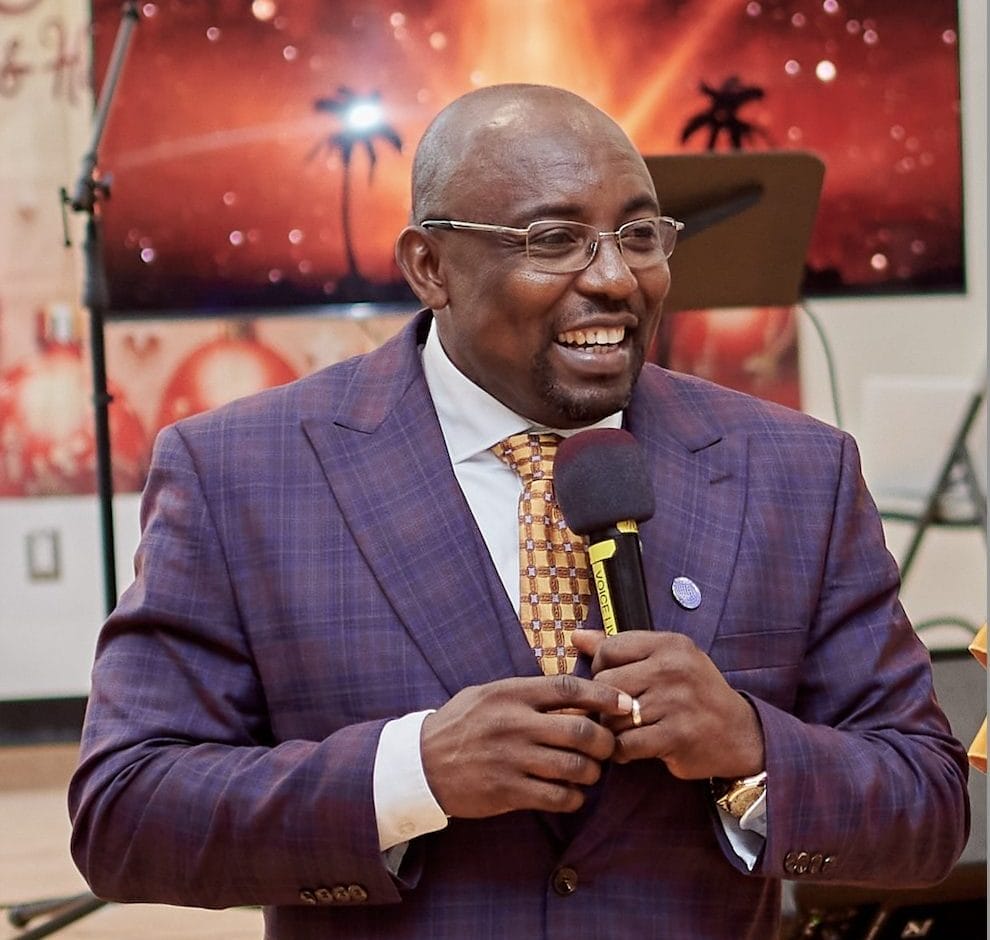
Godwin Ude is an author and business consultant with multifaceted experience as a wellness coach, clinical counsellor, and pharmacist. Based in Surrey, British Columbia, he leads the Kingdom Acts Foundation (KAF) as executive director, where he guides programs with a positive impact on marginalized communities and new immigrants. Responsible for everything from policy development to financial stewardship, Godwin Ude assists people with employment, housing readiness, attaining food security, and maintaining positivity and mental resilience. Mr. Ude also guides the Transformation Centre, which serves as a hub for psychotherapy and counseling activities, entrepreneurship, and Christian education and discipleship. He has taken on various projects in partnership with the Ministry of Agriculture, Agri Food Canada, United Way British Columbia, and the Foundation for Black Communities. Mr. Ude has also delivered research reports focused on Black Canadians to organizations such as the Canadian Women Foundation, the Vancouver Foundation, and the Ministry of Canadian Heritage. Godwin Ude’s advocacy on behalf of marginalized communities extends to the international stage. Presenting at the United Nations Permanent Forum in Geneva, he has spoken eloquently on the importance of policies that enhance well-being and enable integration within one’s adopted society.
What is your typical day, and how do you make it productive?
As a community development leader, researcher, and consultant, no two days are exactly alike — but purpose anchors them all.
I typically start the day early with a moment of quiet prayer, reflection, and scripture to align with my “why” before diving into the “what.” Mornings are often reserved for deep work: writing grant proposals, designing strategic frameworks, or reviewing impact reports for Kingdom Acts Foundation or one of my consulting clients through the consulting company.
Midday is when I engage in meetings with policy partners and nonprofit collaborators or coaching sessions with leaders navigating tough challenges. I also carve out time for podcast development, book writing, or preparing for speaking engagements focused on intercultural marriage, food justice, or systems change.
What makes my day productive is intentionality. Every task is filtered through purpose, not just productivity. I use a hybrid digital planner and thematic time blocking to align my focus with the week’s most mission-critical outcomes.
And always, no matter how packed the day, I end with gratitude. Even on the busiest days, I’m reminded that I’m walking in alignment with my calling.
How do you bring ideas to life?
I bring ideas to life by combining vision, validation, and velocity.
It starts with a burden or insight — whether it’s noticing a gap in housing access for marginalized families, the isolation among seniors, or the cultural silence around intercultural marriages. From there, I map the idea through prayer, research, and community dialogue. I ask: “Is this idea meeting a real need? Is it scalable? Is it sustainable?”
Then comes the framework. I translate the idea into a concrete proposal, project plan, or program/logic model through Theory of Change— complete with metrics, partnerships, and potential impact. My background in grant writing and systems design allows me to connect the dots between vision and execution.
I also believe deeply in collaboration. I involve diverse voices early — whether from the community, social purpose organizations, faith leaders, or subject-matter experts. When people see their fingerprints on an idea, it gains momentum and depth.
Finally, I launch with agility—piloting, listening, refining, and growing. I don’t wait for perfection; I move with purpose, knowing that clarity often comes in motion. This was how we conceived, created, and are now scaling one of the biggest food security programming programs in Surrey, BC, Canada.
What’s one trend that excites you?
One trend that deeply resonates with me is the rise of trust-based philanthropy. This approach shifts the traditional power dynamics in philanthropy, emphasizing mutual respect, transparency, and long-term commitment between funders and nonprofits. Instead of imposing rigid requirements, funders provide unrestricted, multiyear support, allowing organizations to allocate resources where they’re most needed and adapt to changing circumstances.
This trend aligns perfectly with my belief that sustainable impact arises when organizations are empowered to lead with autonomy and authenticity. By fostering genuine partnerships, we create an environment where innovation thrives and communities benefit from solutions tailored to their unique needs.
In my work with Kingdom Acts Foundation, I’ve witnessed firsthand the transformative power of trust-based relationships. When funders trust organizations to know their communities best, it leads to more effective programs and lasting change.
What is one habit that helps you be productive?
Strategic stillness!
Before diving into the busyness of leadership, deadlines, and deliverables, I carve out intentional moments of stillness each morning — usually through prayer, meditation, and goal-centering. It grounds me, clarifies priorities, and helps me discern what truly matters that day.
From there, I use thematic time blocking — grouping my days into focus areas like writing, strategy, meetings, or content development. This helps me stay sharp, avoid multitasking fatigue, and give each assignment the depth it deserves.
Also, I set impact goals over activity goals — instead of asking “What did I do today?” I ask “What did I move forward that matters?”
What advice would you give your younger self?
Trust the process — every delay is design. I would remind my younger self that the detours are not denials but divine redirections. The seasons of obscurity, the closed doors, the quiet work are all part of the foundation God is laying for something far greater than you can imagine.
I’d also say: don’t shrink to fit in. Stand tall in your uniqueness. Purpose won’t always make sense to others, but it will always find its voice in time.
Tell us something you believe almost nobody agrees with you on?
Charity is not always the answer — systems change is.
While many celebrate acts of charity (rightly so), we risk getting too comfortable with short-term relief. I often say, “If we keep feeding the hungry without asking why they’re hungry in the first place, we’re patching wounds without healing them.”
Most people are content with providing a meal, but I’m passionate about redesigning the table, the access, and the entire system that made the meal necessary. This stance is not popular because it demands more—policy advocacy, data, equity, accountability—but that’s where the real transformation lies.
What is the one thing you repeatedly do and recommend everyone else do?
Step back to see the system, not just the symptom.
Whether I’m writing or reviewing a grant, advising a nonprofit, writing a book, or counselling a couple, I always zoom out first. I ask: What’s really happening beneath the surface? What’s the structure causing this outcome?
Too often, we treat the pain without probing the pattern.
So, I recommend everyone take a moment to understand the bigger picture before reacting, responding, or rushing in. That’s how you move from band-aid solutions to breakthrough strategies.
When you feel overwhelmed or unfocused, what do you do?
I retreat into stillness — and return with strategy.
I pause everything. I close the tabs, silence the phone, step away from the noise, and create space to breathe, pray, and realign with purpose. I remind myself, busyness is not the same as impact.
Then, I do something surprisingly simple but powerful: I write down the top three things that actually matter today, not ten, just three. That clarity instantly restores my focus.
Overwhelm is usually a signal that I’m operating outside of alignment. Stillness helps me reset that alignment.
What is one strategy that has helped you grow your business or advance in your career?
Position purpose before pitching.
Before offering any service, proposal, or solution — I always lead with the “why.” Whether in consulting or in grant writing for Kingdom Acts Foundation, I don’t just present what I do — I communicate why it matters.
This strategy has helped me:
• Win trust with funders and partners.
• Build long-term relationships instead of one-off engagements.
• Attract clients and collaborators aligned with deeper mission impact.
By positioning purpose first, people don’t just see a service — they see a story they want to be part of.
What is one failure in your career, how did you overcome it, and what lessons did you take away from it?
Early in my career, I launched a community initiative without securing deep community buy-in or stakeholder alignment. On paper, the idea was strong — well-written, data-informed, and fully funded. But within months, it lost momentum and ultimately collapsed.
Why? Because I built for the community before building with the community.
That experience was humbling and transformational. I learned that even the best strategies fail without shared ownership. I shifted from top-down project design to co-creation, inviting community voices from the start.
Since then, every successful initiative I’ve led begins with deep listening, collaborative design, and cultural relevance.
The lesson? If you want lasting impact, don’t rush to lead. Start by listening.
What is one business idea you’re willing to give away to our readers?
Launch a Purpose-Driven Grant Writing Academy for BIPOC-Led Nonprofits.
There’s a growing wave of grassroots organizations doing powerful work — but lacking the skills to access sustainable funding. Most can’t afford full-time consultants. Many feel intimidated by traditional funding systems.
Create a hybrid learning platform (online + live coaching) focused on:
• Writing values-aligned grant proposals.
• Navigating racial equity in philanthropy.
• Building funder relationships with confidence.
• Telling impact stories with authenticity.
• Leveraging community data for policy advocacy.
It’s not just a business — it’s a bridge. And the need is massive.
If someone builds this with integrity and scalability, they’ll create revenue and ripple effects across underserved communities.
What is one piece of software that helps you be productive? How do you use it?
I use Notion as my purpose hub — it’s where vision meets structure. Here’s how I use it:
• Grant Tracker Dashboard: Tracks deadlines, funder criteria, submission stages, and reporting timelines for multiple projects.
• Research Repository: Houses articles, stats, policy documents, and case studies I reference for proposals and publications.
• Content Planning Board: Maps out podcast episodes, book chapters, social media content, and public speaking themes.
• Daily Priority Journal: I list my top three outcomes, reflections, and alignment checks — every morning.
What I love most is how Notion allows me to connect all the moving parts of my mission — faith, advocacy, consulting, and writing — in one clean, customizable space.
Do you have a favorite book or podcast you’ve gotten a ton of value from and why?
Favourite Book: Start With Why by Simon Sinek
This book shaped the way I lead, build, and communicate. It reinforced my conviction that clarity of purpose precedes clarity of action. Whether I’m writing a grant, advising a nonprofit, or mentoring leaders, I always begin with “why?” — because that’s where vision takes root and alignment becomes possible.
Favourite Podcast: The Craig Groeschel Leadership Podcast
It offers a rare blend of faith, strategy, and systems thinking. His practical frameworks on vision, values, and organizational growth have deeply influenced how I structure Kingdom Acts Foundation.
Both resources remind me that leadership isn’t just about what we do — it’s about why and how we show up.
What’s a movie or series you recently enjoyed and why?
The Boy Who Harnessed the Wind (Netflix).
This film moved me deeply — not just as a storyteller, but as a systems thinker and community builder. It’s based on the true story of William Kamkwamba, a young boy in Malawi who builds a windmill to save his village from famine.
What I loved most is how the movie captures the intersection of purpose, persistence, and innovation. It’s a powerful reminder that sustainable change doesn’t always come from outside aid — sometimes, it comes from within the very community that’s been overlooked.
It’s the kind of story that mirrors what I advocate for: empowering people to become agents of change in their own environments.
Key learnings
- Sustainable impact in the nonprofit sector requires a shift from short-term charity to long-term systems change, policy reform, and structural equity.
- Leading with purpose — rather than simply pitching services — builds trust, deepens engagement, and attracts mission-aligned partnerships.
- True transformation happens when community voices are involved in co-creating solutions, not just receiving them.
- Productivity is rooted in intentionality and clarity — focusing on high-impact outcomes rather than unchecked activity.
- Tools like Notion and strategic stillness practices are essential for managing multifaceted leadership, advocacy, and creative work.