
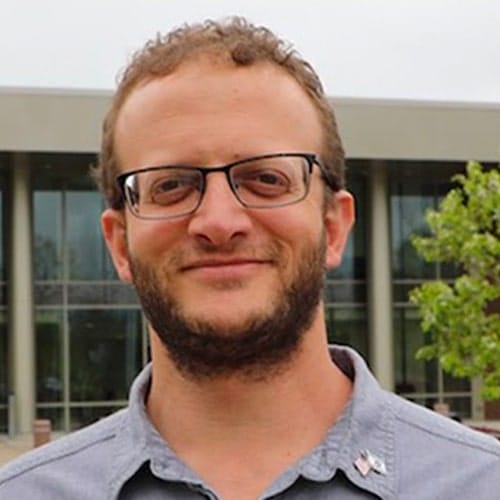
Gon Erez is a multifaceted professional based in Cleveland, Ohio, with a rich background in psychology, economics, and nonprofit management. Originally from Israel, where he served as a Human-Rights Officer in the IDF Spokesperson’s Unit, Gon relocated to the United States at the age of 30. He holds a Bachelor’s degree from Ben-Gurion University of the Negev and a Master’s degree in Nonprofit Management from Gratz College. Gon is currently pursuing an MSW at Eastern University.
With a career that includes significant roles such as Program Director at the Youngstown JCC and Chief Program Officer at the JCC of Greater Buffalo, Gon has a proven track record of leadership in community-centric roles. Presently, he works as a freelance business consultant, leveraging his extensive experience to guide organizations towards strategic success.
In his personal time, Gon enjoys outdoor activities like snowboarding, hiking, and sailing, as well as playing pickleball. His life reflects a commitment to personal growth, community service, and family, embodying the values he promotes professionally.
What is your typical day, and how do you make it productive?
My days are quite varied due to my freelance consulting work, but I always start with a morning routine that includes some form of exercise. This physical activity helps clear my mind. I schedule my most demanding tasks for the morning when I’m most alert. Throughout the day, I use the Pomodoro technique, dedicating specific blocks of time to tasks with short breaks in between. This keeps my day structured and productive.
How do you bring ideas to life?
I like to start with a lot of brainstorming and then narrow down the ideas based on feasibility and impact. Collaborating with others, especially those from different backgrounds, often brings a fresh perspective and refines the process. I use visual tools like mind maps to organize thoughts and approaches, which helps in translating abstract ideas into actionable plans.
What’s one trend that excites you?
The rise of remote work technology excites me. It not only allows for a flexible work environment but also supports a balance between personal life and work, which is essential for mental health and productivity.
What is one habit that helps you be productive?
Keeping a strict to-do list and prioritizing tasks rigorously helps me stay productive. I also make sure to review and adjust my plans at the end of each day to prepare for the next, ensuring that I’m always focused on what’s most important.
What advice would you give your younger self?
I would tell my younger self to worry less about the path that others think you should follow and more about what feels right for you. Trust your instincts and follow your passions; the rest will fall into place.
Tell us something you believe almost nobody agrees with you on?
I believe that non-profit organizations should operate more like businesses in many respects, particularly when it comes to efficiency and innovation. Many people in the non-profit sector resist this view, favoring traditional methods of operation.
What is the one thing you repeatedly do and recommend everyone else do?
Regular self-reflection is crucial. I spend time each week reflecting on what I’ve accomplished, what didn’t go well, and what I can improve. This practice helps me grow personally and professionally.
When you feel overwhelmed or unfocused, what do you do?
I go for a hike or spend some time on the water. Being in nature, away from all distractions, helps me clear my mind and regain focus.
What is one strategy that has helped you grow your business or advance in your career?
Networking has been instrumental. Building a broad and diverse network has opened doors to opportunities I would never have found otherwise. It’s not just about collecting contacts but about fostering meaningful relationships.
What is one failure in your career, how did you overcome it, and what lessons did you take away from it?
One significant failure was underestimating the cultural differences in business practices between Israel and the U.S., which initially led to some professional missteps. I overcame this by actively seeking mentors and taking courses in U.S. business communication and ethics. The key lesson was the importance of cultural competence in global business.
What is one business idea you’re willing to give away to our readers?
A platform that connects retired professionals with non-profits for pro bono consulting. This would help non-profits gain valuable expertise while providing retirees with a meaningful way to use their skills in retirement.
What is one piece of software that helps you be productive? How do you use it?
Trello has been a game-changer for organizing my projects and tasks. It’s visual, intuitive, and perfect for managing both individual tasks and larger projects with multiple team members.
Do you have a favorite book or podcast you’ve gotten a ton of value from and why?
“Sapiens” by Yuval Noah Harari. It provided profound insights into human history and behaviors, which is incredibly useful in both psychology and business.
What’s a movie or series you recently enjoyed and why?
I recently watched “The Queen’s Gambit” on Netflix. I enjoyed how it portrayed the complexity of mastering a skill and the personal growth of the protagonist through her challenges and triumphs.
Key learnings
- Seek Mentorship
- Develop New Relationships
- Collaboration