
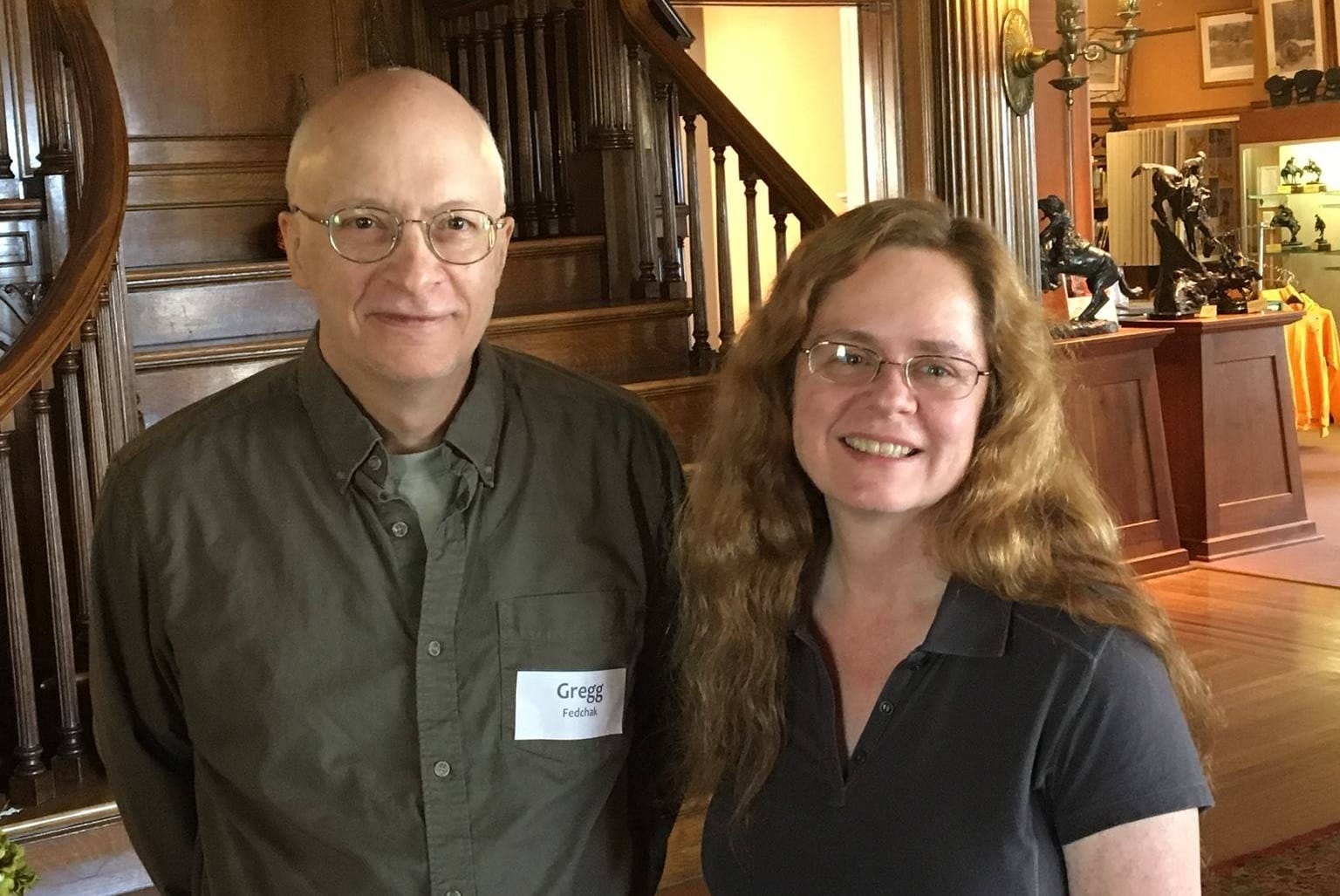
Residents of Boonville, New York, Greg and Elaine Fedchak enjoy sheep farming and gardening, especially growing African violets. Outside of their hobbies, Gred and Elaine Fedchak have careers in media and business, respectively, dating back to the late 1970s.
The couple worked with the National Security Agency (NSA) in the late 1970s (Elaine) and the early 1980s (Greg). Mrs. Fedchak served as a cryptanalyst for the NSA beginning in 1979. Then, she became a programmer/analyst for IIT Research in 1983. At the same time, Mr. Fedchak began working as a linguist in 1983 for the NSA. Then, he began to write professionally in 1984.
By 1993, Mrs. Fedchak was working for Rome-based Exelis as an analyst while Mr. Fedchak developed a thriving writing career. He has written for the Miland Review, Buffalo Spree, Beloit Fiction Journal, and American Way, the American Airlines publications. He has also authored five books, including Bad Apple Jack, The Magical Fruit, The Monk’s Love Potion, The Broccoli Eaters, and Love Among the Tomatoes.
What is your typical day, and how do you make it productive?
I work from home and drink a lot of coffee. Seriously, lots of sleep combined with lots of coffee power us.
How do you bring ideas to life?
By writing and painting. The ideas flow the way jazz improvisations do if you can manage to keep the critical forebrain out of the way–at least while doing free-wheeling thinking.
What’s one trend that excites you?
Minimalism. Minimal things. Blank canvases, empty spaces, white pages, bare walls need filling. Minimal spaces require creation.
What is one habit that helps you be productive?
Drinking caffeine. But only if you get enough sleep. Otherwise, all caffeine does is cause unproductive jitteriness.
What advice would you give your younger self?
Read even more. Both fiction and nonfiction. Not the internet. Stuff on real pages.
Tell us something you believe almost nobody agrees with you on?
That introversion is power. Extroverts waste their lives on small talk and politics.
What is the one thing you repeatedly do and recommend everyone else do?
Read. That can’t be stressed enough.
When you feel overwhelmed or unfocused, what do you do?
Sleep, nap. Sleeping is the flip side of coffee, and dreaming is a part of the creative process. A lot of people seem cowed by or afraid of their dreams. They shouldn’t be.
What is one strategy that has helped you grow your business or advance in your career?
Not worrying about success. It comes naturally. If it takes too much work and striving, chances are it’s just business or work and no fun.
What is one failure in your career, how did you overcome it, and what lessons did you take away from it?
We lost our perfectionism by losing our perfectionism. Perfection does not exist. The cleanest car has paint swirls if you look closely enough.
What is one piece of software that helps you be productive? How do you use it?
Any word processing software, used daily. Maybe video game software, which can oddly re-charge the batteries for the next day’s creative blast.
Do you have a favorite book or podcast you’ve gotten a ton of value from and why?
Don DeLillo’s novel White Noise, because it’s a hilarious book about postmodern life. DeLillo is a keen social critic.
What’s a movie or series you recently enjoyed and why?
The various Twin Peaks mutations. Because, like DeLillo’s White Noise, they’re more real than we’d like to believe. Seinfeld is good because it’s askew to norms. Kolchak: The Night Stalker, the original 1970’s series starring Darren McGavin, and the father of the more recent The X-Files, normalizes the abnormal the same way as Seinfeld or David Lynch does. Coming at things from a weird angle always seems to spur creativity.
Key learnings
- Steadiness pays off.
- Cross-country running is the best blueprint for life. Take the long path through the woods and across the fields.
- The slow reading of books is more valuable than the fast consumption of mere information on the internet.