
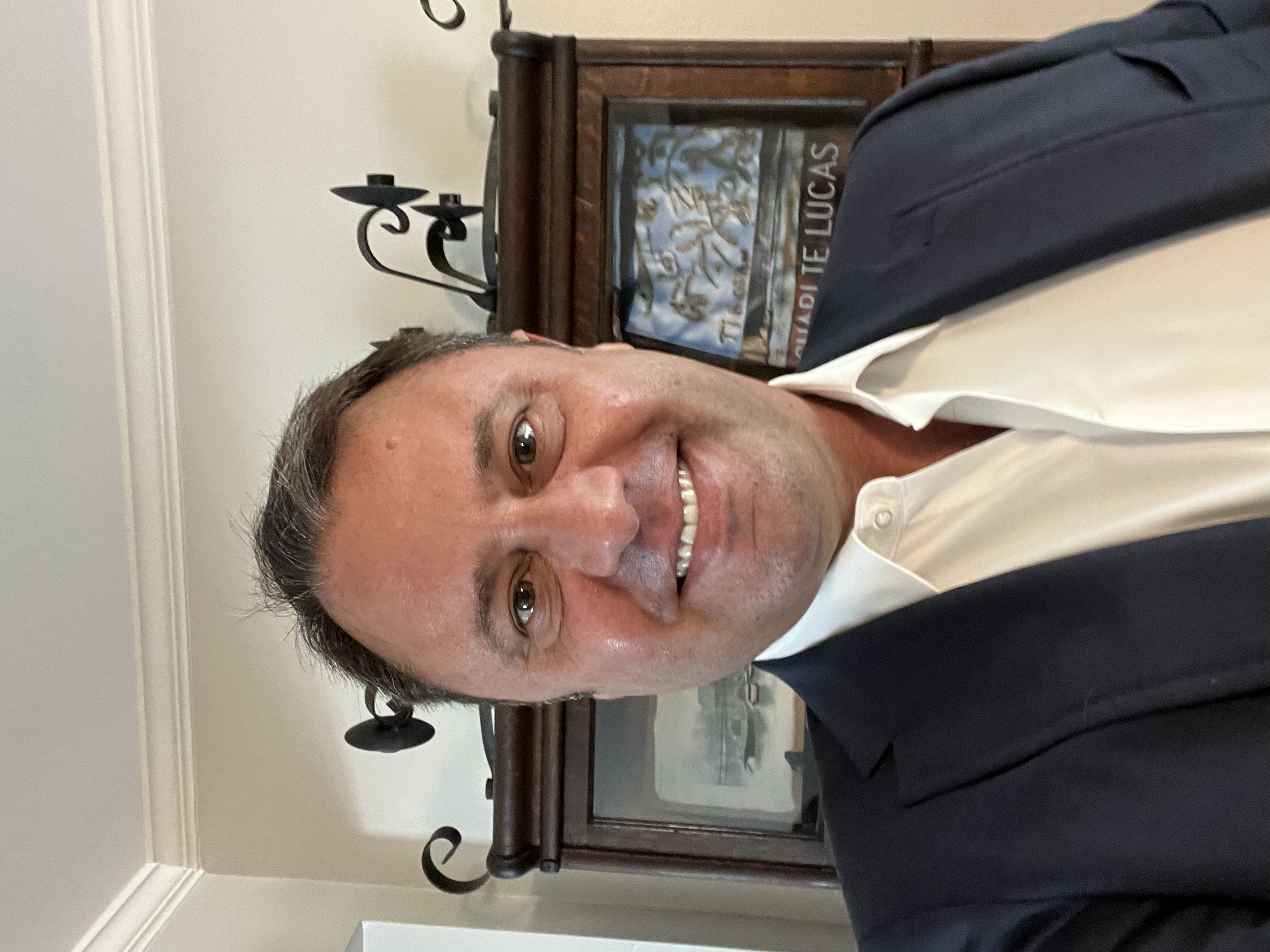
Since 2008, Harry Gamble has been a member and special project collaborator with the Baldwin County chapter of Alabama Real Estate Investors (AREI). He joined AREI the same year he took on the position of managing member at Newins Properties, LLC, a real estate investment firm in Birmingham, AL. During his time with Newins Properties his responsibilities have ranged from the provision of private money loans to all aspects of residential property sales, acquisitions, rentals, and remodeling projects. Harry Gamble has also managed commercial properties and long-term property investments during his time with the Birmingham, AL, real estate investment firm.
Between 1999 and 2001 Mr. Gamble served Peoples Bank and Trust Company in Helena, AL, (a suburb of Birmingham) as branch manager, loan officer, and assistant vice president. This role involved complete oversight of all branch operations, including staff hiring and supervision.
Harry Gamble studied at the South Alabama Banking School in Mobile and Tuscaloosa’s University of Alabama School of Law. He conducted his undergraduate studies at Tulane University in New Orleans, receiving his bachelor of arts in economics in 1991.
What is your typical day, and how do you make it productive?
I typically wake up early and play the New York Times Wordle of the day while drinking coffee, and sometimes other daily NYT games. Then I get some exercise, usually either riding my ebike on trails at the nearby state park, playing pickleball, or going to the gym. Getting some exercise early in the day helps me to stay focused and reduces any stress that may come my way for the remainder of the day. After exercising and taking a shower, I take care of my work tasks in accordance with the priorities I have set for what needs to be done, leaving some time for unexpected tasks that may arise. Finally, I often wind down by listening to music, writing songs, playing music, or resuming games from the morning.
How do you bring ideas to life?
I envision the completed idea and outline the steps needed to reach that goal. In real estate investing and development, I may see the potential of a dilapidated property and sketch out what it could look like with improvements, along with a list of what needs to be done to make the property shine and be appealing to buyers. In songwriting, ideas often come from simple things such as a phrase I may have heard someone say, and I expand on the idea by creating mental visuals of the story I am telling and putting words to paper in a structure that fits the song. Since ideas may come at any time, I tend to put them in my phone when I think of a potentially good idea because it is usually with me. Then I break down the plan into manageable steps to be executed, adjusting them as needed along the way,
What’s one trend that excites you?
The rise of AI is both thrilling and unnerving to me. It’s exciting to see how it’s transforming productivity, medical and scientific research, and the personalization of everyday tools. I love that AI can help with things I’m not naturally skilled at like generating decorating ideas for a room or troubleshooting a broken appliance. What I find more unsettling is its growing role in creative fields, but even there, I see positive potential when it’s used to inspire or enhance—rather than replace—human creativity.
What is one habit that helps you be productive?
Prioritizing. Not everything on my to-do list carries the same weight, so I make a point each day to identify a few tasks that will make the biggest difference. I try to focus first on what moves things forward rather than simply what keeps me busy.
Prioritizing helps me to avoid becoming overwhelmed or scattered. It gives structure to my day and ensures that my energy goes toward the most meaningful work. I’ve also found that when I’m clear on my priorities, I can say “no” more easily to distractions or less important tasks, which creates more space for creativity and quality work.
What advice would you give your younger self?
Follow your heart. For a long time, I thought that success meant doing what seemed most practical or what others expected, but I’ve learned that the most meaningful progress comes from trusting your instincts. I feel like my heart often knows the direction that’s right for me long before my mind can justify it.
This, of course, does not mean ignoring logic. It means listening to that inner pull that tells you when something feels alive, inspiring, or true. It’s about having the courage to pursue what excites you, even when the path isn’t clear or others might not understand it.
Tell us something you believe that almost nobody agrees with you on.
Most people need more stillness. Today, we have an overwhelming amount of information, so a lack of knowledge isn’t usually an issue. Rather it’s a lack of space to process what we already know. Stillness creates that space, whether it be through getting away from your phone and reflecting quietly at home, or my favorite: being immersed in nature. I believe that when we pause, we kind of start to hear our own thoughts, and any answers we may have been looking for often naturally come to the surface. I believe that we think more clearly when we are less rushed.
What is the one thing you repeatedly do and recommend everyone else do?
Exercise. The benefits of exercise are well documented and far reaching, from short term benefits like more energy and better sleep to long-term benefits like living longer and a better quality of life. And for me, exercise also helps to give me clarity. Mountain biking gives me a mix of adventure and focus. It’s something that completely clears my mind. When I’m on the trails, I’m not thinking about deadlines or distractions. I’m thinking about the nature around me, the terrain in front of me, and trying to not fly over the handlebars. It sharpens my concentration and gives me a sense of freedom, along with all of the tremendous benefits of moving your body.
When you feel overwhelmed or unfocused, what do you do?
I usually make a point to pause, and there is a stretch or yoga pose I do that makes me feel a little better. But the main thing I do when I feel overwhelmed is to write out my thoughts. This is often in the form of a to-do list that includes which tasks should have priority, and it could also be journaling. I find that when I get a lot of my thoughts on paper (or on my phone), it gives them some freedom to leave my mind.
What is one strategy that has helped you grow your business or advance in your career?
Envisioning success. When you picture yourself succeeding, your brain starts wiring itself for that outcome. Visualization is known to activate the same neural pathways you use when physically performing a task, which strengthens focus, confidence, and readiness. When you can see where you want to go, you naturally start making choices that align with that image. You prepare better, stay more motivated, and recognize opportunities that move you forward. Envisioning success turns vague goals into something vivid and specific, which gives you direction and purpose. Athletes, musicians, and entrepreneurs all use visualization to train their minds to expect success rather than doubt it. The clearer you can picture the result, the more your brain believes it’s possible. That belief changes how you act, and your actions eventually shape the outcome.
What is one failure in your career, how did you overcome it, and what lessons did you take away from it?
I believe that failure is part of success. It is an opportunity to begin again in a smarter way. One example of this was early on in my real estate career, when I purchased a lot located where I knew a road was going to be built. That would make the property a corner lot and therefore much more valuable. And as it turned out, the property did become a corner lot, and I did realize a nice gain on the sale of the property, but it only came after spending years solving the many legal and practical issues that arose when developing and marketing the property. So it can be viewed as a failure because the costs in terms of time and effort outweighed the gains. But overcoming this failure was helped by realizing how much I learned from the experience, which I was able to apply to later ventures. And the lesson learned was that you can’t be too thorough in the due diligence process of purchasing real estate.
What is one business idea you’re willing to give away to our readers?
While making a documentary isn’t always a profitable business idea, I believe it can be if analyzed and done based on successful business models. And it can be very rewarding from a creative standpoint. My idea is to make a documentary involving the Black Belt states of Alabama, Mississippi, and Georgia. Much of the Black Belt remains underrepresented in mainstream media. Many of its people, towns, and artists have stories that rarely get shared beyond local circles. I believe that a documentary that highlights these communities—their challenges, creativity, humor, and humanity—would feel fresh and authentic. It could give national audiences a deeper understanding of Southern identity beyond stereotypes. I believe audiences would tune in to see what is essentially a lesser developed country, right here in the U.S.
What is one piece of software that helps you be productive? How do you use it?
The generative AI apps such as ChatGPT, Gemini, and Copilot. I use them for things like solving everyday problems. For example, if the light in my den is too bright, I might ask ChatGPT what my options are for softer light, then follow up with where to find and how to install a dimmer switch. Or I can upload a picture of a room and get design ideas and a mock-up of what the room could look like. In the context of real estate investing, I may use the apps for things like helping to create a business plan for a small subdivision and creating a sample plat map of the subdivision. And if I’m being extra thorough, I can search for solutions with all three apps on the same issue and pick and choose what is most helpful.
What is the best $100 you recently spent? What and why?
The best $100 I recently spent was the nightly rate for a boutique hotel in the Casco Viejo area of Panama City, Panama. It had two large bedrooms with adjoining luxury bathrooms for each room, a kitchen, bar area, huge den area, two balconies overlooking the bustling streets of the neighborhood, and wonderful staff and service. A hotel that would be outrageously expensive in many other countries.
Do you have a favorite book or podcast you’ve gotten a ton of value from and why?
The book Man’s Search for Meaning by Viktor Frankl. Frankl was imprisoned in several Nazi concentration camps, including Auschwitz, and his parents, brother, and pregnant wife were all killed in the camps. The book tells both his personal story of survival and his psychological insights, including how people can find meaning even amid the most unbearable suffering. His story helped me stay positive and optimistic when the going got tough.
What’s a movie or series you recently enjoyed and why?
Rewatching No Country For Old Men. I love most of the Coen Brothers’ films, but especially this one. It is both tense and eerily calm. There’s almost no music, which makes the silence itself unsettling. Every moment feels loaded with moral weight and tension. I love the casting and the actors’ performances, and the blend of Western, crime, and philosophical drama. And the chilling character played by Javier Bardem is impossible to forget.
Key learnings
- Envisioning success can help you to achieve your goals.
- Generative AI apps can help to boost your productivity.
- Stay optimistic despite tough circumstances.