
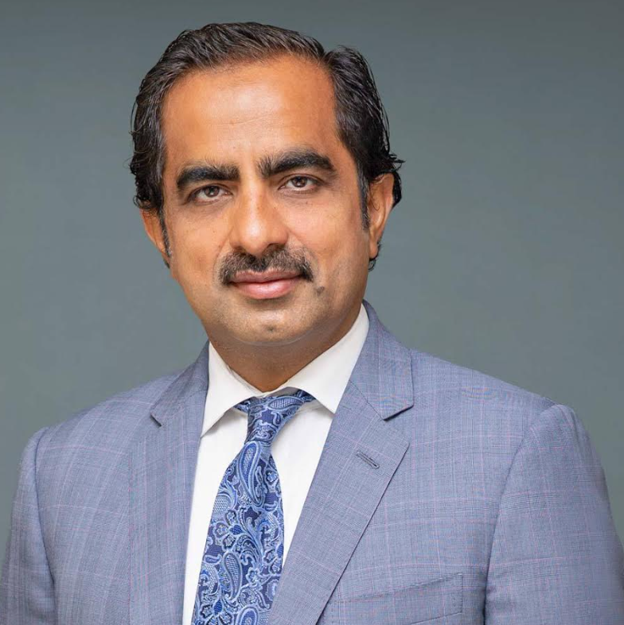
Dr. Ijaz Ahmad, MD, FACC, is a non-invasive nuclear cardiologist, healthcare entrepreneur, and philanthropist who has spent his career closing the gap between illness and access. As Founder and Medical Director of Park Slope Cardiac & Diagnostic Center in Brooklyn, New York, Ijaz Ahmad has expanded his practice from Park Slope into underserved communities such as Brownsville and Flatbush, pairing preventive cardiology with mentorship and civic leadership.
Born in Gujranwala, Pakistan, Dr. Ahmad witnessed the toll heart disease took on communities without access to cardiac care, an experience that set the direction of his life. He earned his medical degree from Allama Iqbal Medical College before moving to the United States, completed his residency at Interfaith Medical Center, and finished a cardiology fellowship at NewYork-Presbyterian Brooklyn Methodist Hospital. He is a Fellow of the American College of Cardiology.
Dr. Ahmad maintains hospital affiliations with NYU Langone Health and NewYork-Presbyterian Brooklyn Methodist Hospital and continues to build his healthcare network, recently acquiring an additional medical practice and real estate in Brooklyn. He is also exploring an affordable-housing initiative across his Brooklyn properties.
His civic work is extensive. Governor Kathy Hochul appointed him as an advisory member of the New York State Justice Center, a role that reflects his standing as a civic leader in New York. His philanthropic reach extends to Gujranwala, where he is developing a 350-bed hospital with plans for a future medical school, intended to bring lasting care and education to the region that first inspired his career.
Colleagues describe Dr. Ahmad as a disciplined, compassionate “doer.” His guiding philosophy, drawn from advice he holds himself to, is to treat every patient like family. His personal motto, “Service Before Self,” shapes both his medical practice and his philanthropy.
Fluent in English, Urdu, and Punjabi, Dr. Ahmad is an avid tennis player and music lover, drawing inspiration from vocalist Mohammed Rafi. He is an active real estate investor and stays engaged with medical literature and current events. His mission remains constant: advance healthcare, empower communities, and build institutions that outlast him.
What is your typical day, and how do you make it productive?
My days usually start early and are very structured. I divide my time among patient care, managing and expanding my medical practices, real estate and healthcare projects, mentoring young physicians, community work, and family. I also make time for exercise, especially tennis, because physical activity gives me energy and helps me think clearly.
I stay productive by being organized, making decisions quickly, and acting on things rather than allowing them to sit on a list. I believe execution is often more important than having the perfect plan.
How do you bring ideas to life?
I act on ideas quickly. When I believe an idea can solve a real problem, I identify the people and resources needed, create a practical plan, and start moving.
I don’t wait until every detail is perfect. I would rather begin, learn from what happens, make adjustments, and keep moving forward. Many good ideas fail because people spend too much time discussing them and not enough time executing them.
What’s one trend that excites you?
Artificial intelligence in healthcare excites me tremendously. I believe the combination of AI, advanced cardiac imaging, precision medicine, and preventive care will allow us to identify disease much earlier and personalize treatment in ways that were previously impossible.
The greatest opportunity may be using these technologies not only in major academic centers but also to bring high-quality healthcare to underserved communities.
What is one habit that helps you be productive?
Acting immediately on important tasks. If something can be decided or delegated now, I try not to leave it for tomorrow.
I also exercise regularly. Tennis and fitness give me physical energy, mental clarity, and time away from work to think about problems differently.
What advice would you give your younger self?
Think bigger, earlier.
When you’re young, you often underestimate what can be accomplished over 10, 20, or 30 years. Work hard, surround yourself with good people, don’t be afraid of calculated risks, and start building toward your larger vision as early as possible.
Tell us something you believe almost nobody agrees with you on?
Giving away more can actually make you stronger, not weaker.
People naturally think that accumulating more creates security and happiness. I have found that giving your time, knowledge, opportunities, and resources to people who genuinely need them can create a different kind of wealth—purpose, relationships, peace, and meaning.
What is the one thing you repeatedly do and recommend everyone else do?
Invest in people.
Whether it is a patient, employee, medical student, young physician, or someone in the community, helping another person develop creates a multiplying effect. I mentor many young physicians every year, and watching them progress into residency, fellowship, and successful careers is extremely rewarding.
When you feel overwhelmed or unfocused, what do you do?
I step away temporarily and reset. Prayer and reflection help me put things back into perspective, and playing tennis is one of the best ways for me to clear my mind.
Afterward, I identify the few things that actually matter and focus on those rather than trying to solve everything simultaneously.
What is one strategy that has helped you grow your business or advance in your career?
Go where the need is greatest.
A major part of my healthcare growth has come from establishing and expanding medical practices in underserved communities. Instead of looking only at where a business might be easiest to build, I look for communities where patients have significant unmet healthcare needs.
When you solve a genuine problem and consistently provide good service, growth tends to follow. That philosophy has allowed us to expand while remaining aligned with our mission.
What is one failure in your career, how did you overcome it, and what lessons did you take away from it?
One lesson I learned was that expanding too quickly without having the right people and systems in place can create unnecessary problems. An entrepreneur can have the vision and energy to start many things, but eventually the organization becomes too large for one person to manage every detail.
I learned to build stronger teams, delegate responsibility, create accountability, and develop systems that do not depend entirely on me. Sustainable growth requires infrastructure, not just ambition
What is one business idea you’re willing to give away to our readers?
Create neighborhood preventive-health centers that combine primary care, cardiovascular risk assessment, advanced diagnostics, nutrition, exercise, and technology in one coordinated system.
Healthcare spends enormous resources treating advanced disease. There is a tremendous opportunity—both socially and economically—in identifying hypertension, diabetes, cardiovascular disease, obesity, and other chronic conditions years before they produce major complications.
What is one piece of software that helps you be productive? How do you use it?
Artificial intelligence tools have become extremely useful to me. I use AI to organize information, analyze ideas, improve communication, research topics, structure projects, and accelerate decision-making.
The value is not in replacing human judgment. It is in reducing the amount of time spent moving from information to understanding and from an idea to execution.
What is the best $100 you recently spent? What and why?/
Probably something related to tennis or fitness.
For me, spending money on something that encourages physical activity is an investment rather than an expense. Exercise improves my health, energy, concentration, and mood, and tennis also gives me an opportunity to disconnect from work for a while.
Do you have a favorite book or podcast you’ve gotten a ton of value from and why?
I don’t depend on one book or podcast. I prefer learning continuously from multiple sources—medical literature, The New York Times, podcasts, conversations with successful people, and increasingly AI-assisted research.
I believe exposing yourself to different perspectives is important. Some of my best ideas have come from connecting concepts from completely different fields
What’s a movie or series you recently enjoyed and why?
I tend to spend more of my free time playing tennis, listening to music, traveling, and being with family than watching television. When I do watch something, I enjoy stories about resilience, leadership, human potential, and people overcoming difficult circumstances.
Key learnings
- Execution turns vision into results. Moving quickly, learning from experience, and refining along the way can be more effective than waiting for perfect conditions.
- Business growth can align with social impact. Building healthcare services where unmet needs are greatest can create both sustainable enterprises and healthier communities.
- Investing in people creates a multiplying effect. Mentorship, opportunity, and knowledge can continue producing value long after the original investment.
- Prevention represents one of healthcare’s greatest opportunities. Earlier detection, AI, advanced diagnostics, and coordinated care can shift medicine from reacting to disease toward preventing its consequences.
- Generosity can be a source of strength. Giving time, knowledge, opportunity, and resources can create purpose and impact that financial success alone cannot provide.