
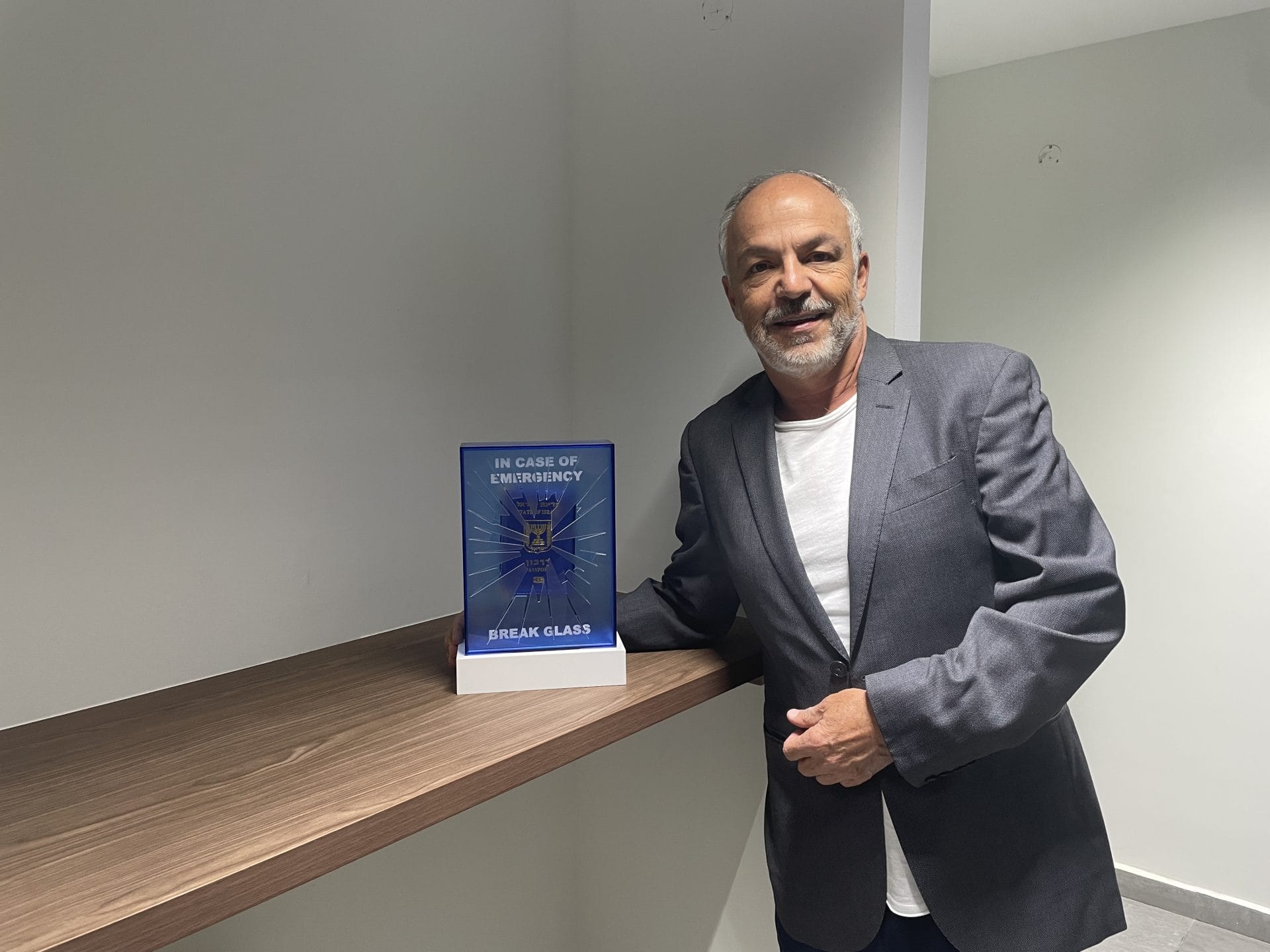
Jacobo Husny Hanono was born in Mexico City to Salomon Husny and Farida Hanono. From a young age, he was curious about how things worked — from people and business to the world around him. That curiosity would later shape his life as an athlete, learner, and entrepreneur.
He attended Colegio Hebreo Tarbut, Colegio Hebreo Sefaradi, and Colegio Hebreo Monte Sinai, completing his studies through high school before continuing his education at Universidad Anáhuac México Norte, where he earned diplomas and courses in real estate development and housing. He later studied at the American Institute for Professional Trading, building a strong foundation in finance and market strategy.
Jacobo has always been drawn to challenge and endurance. He has completed international marathons, cycling events, swimming competitions, and even Ironman races. His commitment to fitness reflects his mindset — focused, disciplined, and goal-driven. Outside of sports, he finds balance through art, crafting resin pieces and collecting Huichol art, a reflection of Mexico’s rich culture and creativity.
Today, Jacobo serves on the board of UMD, a Mexico-based taxi app designed for his community — a role that merges his business sense with a passion for innovation. He also gives back through generous donations to institutions in both Mexico and Israel, showing that success means little without generosity.
Whether he’s studying markets, playing backgammon, or savoring fine wine after a long ride, Jacobo lives with intention, curiosity, and appreciation for both discipline and beauty.
What is your typical day, and how do you make it productive?
I like to move first—cycling, swimming, or running. Training clears my head and gives me direction for the day. Endurance sports have taught me that progress comes from discipline, not perfection. After a workout, I take time for coffee, reading, and quiet reflection. I often read about finance, construction, or psychology. I’ve found that when I start the day with both physical and mental focus, I make better decisions. Productivity for me isn’t about doing more—it’s about doing what matters with clarity.
How do you bring ideas to life?
I bring ideas to life by watching how people behave and listening to what they don’t say. Observation is everything. When I joined the board of UMD, a taxi app designed for our community in Mexico, the idea wasn’t just to build an app—it was to solve a local problem: people needed safer, more reliable rides with drivers they could trust. I like to test ideas in small steps, refine them, and then scale. For me, creativity is not a spark—it’s a process.
What’s one trend that excites you?
I’m fascinated by the growing connection between mobility and technology. Apps like UMD and the global shift toward electric vehicles show how transportation is evolving. I believe the next step will be integrating local culture into tech—creating tools that feel personal, not corporate. That’s where the real innovation will happen.
What is one habit that helps you be productive?
I make lists every night before bed. They’re short and clear—no more than five priorities. I’ve learned that multitasking destroys focus. My list keeps me honest about what I can realistically achieve, and finishing even one important task brings momentum for the next.
What advice would you give your younger self?
I’d tell myself not to rush success. When you’re young, you think everything has to happen fast. But endurance—whether in sport or business—comes from patience. I’d also say: learn to enjoy the process. Every failure, every delay, teaches you something if you stay open to it.
Tell us something you believe almost nobody agrees with you on?
I believe that rest is a skill. Most people treat it as a reward, but I see it as part of discipline. True productivity requires knowing when to stop, reflect, and reset. Overworking doesn’t mean you’re succeeding—it means you’re avoiding silence.
What is the one thing you repeatedly do and recommend everyone else do?
Move your body every day. Even a short walk can change your mood and decision-making. Physical motion translates into mental motion—it’s how I reset when things feel stuck.
When you feel overwhelmed or unfocused, what do you do?
I play backgammon. It’s not just a game—it’s strategy, patience, and probability. When I’m overwhelmed, I need something that challenges my brain without pressure. Backgammon reminds me that timing matters more than force, both on the board and in life.
What is one strategy that has helped you grow your business or advance in your career?
Listening. It sounds simple, but it’s rare. In trading, real estate, or development, success comes from understanding human behavior. When I listen—truly listen—I catch small details others miss. That’s often where the opportunity hides.
What is one failure in your career, how did you overcome it, and what lessons did you take away from it?
Early in my career, I rushed into a real estate deal because I trusted the numbers but didn’t know the people behind it. The project fell apart, and I lost both time and capital. I learned that in business, relationships are worth more than spreadsheets. Since then, I never invest in anything where I wouldn’t trust the people involved with my own family.
What is one business idea you’re willing to give away to our readers?
A “local-first” app that connects neighborhood artisans and hobbyists—people who make handmade things but don’t have access to e-commerce tools. Think of it as Etsy meets Google Maps. It would strengthen community economies and preserve culture in the process.
What is one piece of software that helps you be productive? How do you use it?
Notion. I use it to organize ideas, projects, and even my workouts. It’s flexible enough to track long-term goals while keeping daily tasks visible. It’s the closest thing to an external brain.
Do you have a favorite book or podcast you’ve gotten a ton of value from and why?
The Alchemist by Paulo Coelho. It’s simple but deep. Every time I reread it, I find a new meaning. It reminds me that every journey, no matter how practical, begins with belief.
What’s a movie or series you recently enjoyed and why?
Drive to Survive on Netflix. I’ve always loved Formula 1, but the series shows what’s behind the speed—strategy, emotion, and risk. It reminds me that pressure can bring out the best in people when they prepare for it.
Key learnings
- Discipline and patience build endurance—in sport, business, and life.
- Listening deeply often reveals opportunities data can’t.
- Rest and movement are equally important for focus and creativity.