
Jeff Fager spent 37 years at CBS News, including fourteen years as Executive Producer of 60 Minutes and a term as Chairman of CBS News from 2011 to 2015. He was part of a generation of producers who cared deeply about the values and traditions of the CBS News organization.
A graduate of Colgate University and a native of Wellesley, Massachusetts, Fager began at CBS as a producer, learning the craft alongside correspondents and colleagues who set the standard for reporting at the network. He worked across the news division on coverage of major events around the world, and produced multiple interviews with world leaders and American presidents as well as significant world events such as the attacks on September 11 and the American wars of the 21st century. He was the executive producer of CBS Evening News with Dan Rather in the mid-nineties, and he was in charge of the launch 60 Minutes II in 1999. Later, he returned to lead the original broadcast, 60 Minutes, following its founder, Don Hewitt.
During his 14 years in charge, 60 Minutes earned many of the industry’s top honors and continued to reach one of the largest and most loyal audiences in television news history. Fager often credited the people around him for that success, and he worked to give producers the room and the resources to chase original stories. He believed the job was less a career than a calling, and that the standard a newsroom holds itself to is the thing worth protecting above all else.
Since retiring, Fager has turned to documentary film, producing the Hulu series Algiers America, directed by his son Jackson. He serves as Chairman of the Board at Oligo Nation, a brain cancer research organization, and continues to write and speak about journalism, media, and the stories that shaped his career.
What is your typical day, and how do you make it productive?
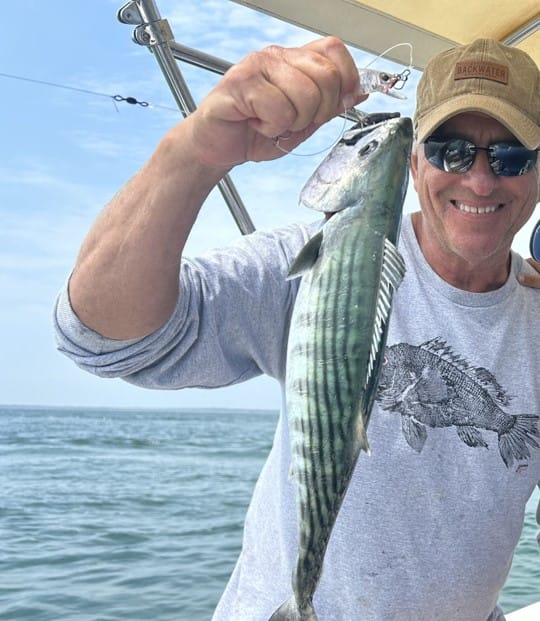
It depends on the time of year. Almost every day in the winter and spring months begins with a morning newspaper. I read the New York Times religiously and the Wall Street Journal occasionally. It may seem odd but, even though I am semi-retired, keeping up with the news has always been an important part of my job, and so it is something I consider productive. It is usually followed by some kind of workout. I have been a runner all of my life, though I am running less now and find sprinting on a machine just as useful. But the summer months are very different. My day will often begin at daybreak with a fishing expedition from our summer home on Martha’s Vineyard. It is important because in these months we live off the sea and bringing in a daily feast of seafood is critical to feeding everyone. I am never alone on these expeditions, and it is a very rewarding experience for me and those friends and family members who join me. There are few things in life as fulfilling as catching your dinner in the wild. It’s a rare and primal experience.
How do you bring ideas to life?
It has always been a huge part of my adult life to bring ideas to life by finding a good story and telling it to a television audience.
What’s one trend that excites you?
I am excited by artificial intelligence and, probably like everybody else, I am a bit afraid of it as well. But the potential is enormous, and the speed at which we are witnessing its development is extraordinary.
What is one habit that helps you be productive?
Watch everything as if you were sitting at home, as a viewer would. Write and rewrite. It is said that the most important thing about writing is rewriting. I have always believed in that. That habit of going back over the material instead of moving on too quickly is what separates good work from great work. I carried the same discipline into the documentary projects I work on now. Slow down, look again, and be honest about what you actually see rather than what you expected to see.
What advice would you give your younger self?
The best advice I would give a younger me is to be a bit more cautious about people I come upon. I’ve often been accused of looking for the good in people to a fault, and the truth I’ve learned over the years about the world we live in is that you will come upon people with bad or even dark intentions. It would have benefited a younger me to be more aware of that.
Tell us something you believe almost nobody agrees with you on?
The problem with television is that we treat the people who go on air as if they are somehow special humans. They are not. I used to say that at 60 Minutes we had about 75 reporters and 5 of them happen to be on the air. Television reporters are prone to turning into divas, and it is a very unhealthy place to be for themselves and everyone around them. Most TV executives treat them with kid gloves, and that doesn’t make for the best teamwork in a newsroom.
What is the one thing you repeatedly do and recommend everyone else do?
Be skeptical of almost everything. The people I admired most in this business questioned what they were told and assumed the easy answer was probably incomplete. That is not cynicism. You can want things to go well and still expect that they might not, and holding both at once is what keeps the work honest. The reporters and producers who got the big stories right were almost always the ones who refused to take the convenient version on faith. In journalism, you should never go out on a story with your mind made up about how it should be reported. Your understanding of a story will always be different when you are finished reporting it compared to how you started out. Most mistakes in journalism are made by reporters that make up their minds about a story and then set out to prove it. In doing so, they tend to leave out any mitigating circumstances because they don’t fit with their conclusions.
When you feel overwhelmed or unfocused, what do you do?
I go fishing. That is the honest answer. There is something about being out on the water that clears everything down to what actually matters. When I cannot get to the water, I go back to first principles and ask what the actual job is, what we are here to do, and the answer is almost always simpler than the chaos suggests. For us, it was always the same. Inform the public. Tell the truth. Get the story right. When you are unfocused, it is usually because you have lost sight of the one thing that matters.
What is one strategy that has helped you grow your business or advance in your career?
Protecting the standard. What made our broadcast valuable was that people trusted it, and that trust was built on never cutting corners, even when there was pressure to do so. You hear a lot about Fred Friendly as the person who shaped the CBS News organization with Ed Murrow, but I don’t think many people know how long their standards and values lasted at 60 Minutes, or why holding onto their ways for so long played such an important role in our success. There is good reason to be concerned that the line of succession has ended. We faced lawsuits, political pressure, and corporate nervousness over the years, and the times we held the line are the times I am proudest of. Your reputation is the entire business. Lose it, and you have nothing. Defend it and everything else follows.
What is one failure in your career, how did you overcome it, and what lessons did you take away from it?
I once wrote an angry text and got fired over it. I would relive that day if I could, and do it differently. The broader lesson goes beyond one message sent in a bad moment. Not every story we put on the air held up the way we hoped, and there were times over the years when we got things wrong. The way through it was always the same. You own the mistake, you correct the record, and you do not let it make you timid. Credibility does not come from never failing. It comes from how you handle yourself when you do.
What is one business idea you’re willing to give away to our readers?
There is a real opportunity for a service that trains people to interview well. Everyone now conducts interviews of some kind, for podcasts, for hiring, for their own content, and almost nobody is taught how to do it. The art of asking a good question, listening to the answer, and asking the right follow-up is rare and teachable. A program built around that single skill would have customers in every industry.
What is one piece of software that helps you be productive? How do you use it?
I cannot think of any piece of software I depend upon.
What is the best $100 you recently spent? What and why?/
A great meal with old friends. I have always believed that the table is where the real conversation happens, where you actually catch up on people’s lives and hear what they are thinking. One of my dearest friends in life, almost on his death bed, planned an entire gathering around exactly that, the food and the company, and it left everyone moved to the core. Money spent bringing people together around a table is never wasted.
Do you have a favorite book or podcast you’ve gotten a ton of value from and why?
My favorite book is also my favorite movie, and it is part of the next answer.
What’s a movie or series you recently enjoyed and why?
The book and movie called Hamnet is my favorite by far in recent years, and it is high on my all-time list. It is a sad story about the death of a child, and that is what you hear most about it, or that it was brilliantly acted and directed, which it was. But it is the story by Maggie O’Farrell that strikes me most. I’ve always been fascinated by Shakespeare, and the fact is that we know nothing about him or his life beyond his date of birth and death, the date of his marriage to Anne Hathaway, and the births and deaths of his children. The real success of Hamnet, the book and movie is painting what seems to be an accurate picture of Shakespeare’s life and times as no one has done before. I believe that he was born a genius writer and storyteller and that his natural talent flourished because of his training to become fluent in Latin as a boy, which every boy in Elizabeth I’s England was forced to do in grade school. And though historians have always wondered about his life in London, away from his Stratford family, this story about him makes the most sense to me – a brilliant man in grief over the death of his son, responsible for a company of actors, living like a monk in a small apartment churning out play after play that would be read and performed centuries later.
Key learnings
- Keeping up with the news daily and protecting time for deep, original storytelling remain central disciplines even in semi-retirement.
- The strength of a newsroom rests on rigorous standards and institutional trust, which erode the moment corners are cut under political, legal, or corporate pressure.
- Good journalism requires entering a story without a predetermined conclusion, since reporting that sets out to prove a fixed idea tends to ignore mitigating facts.
- Skepticism, rewriting, and reviewing one’s own work as an ordinary viewer would are habits that separate competent work from great work.
- Owning mistakes and correcting the record openly builds more lasting credibility than an unbroken record of success.