
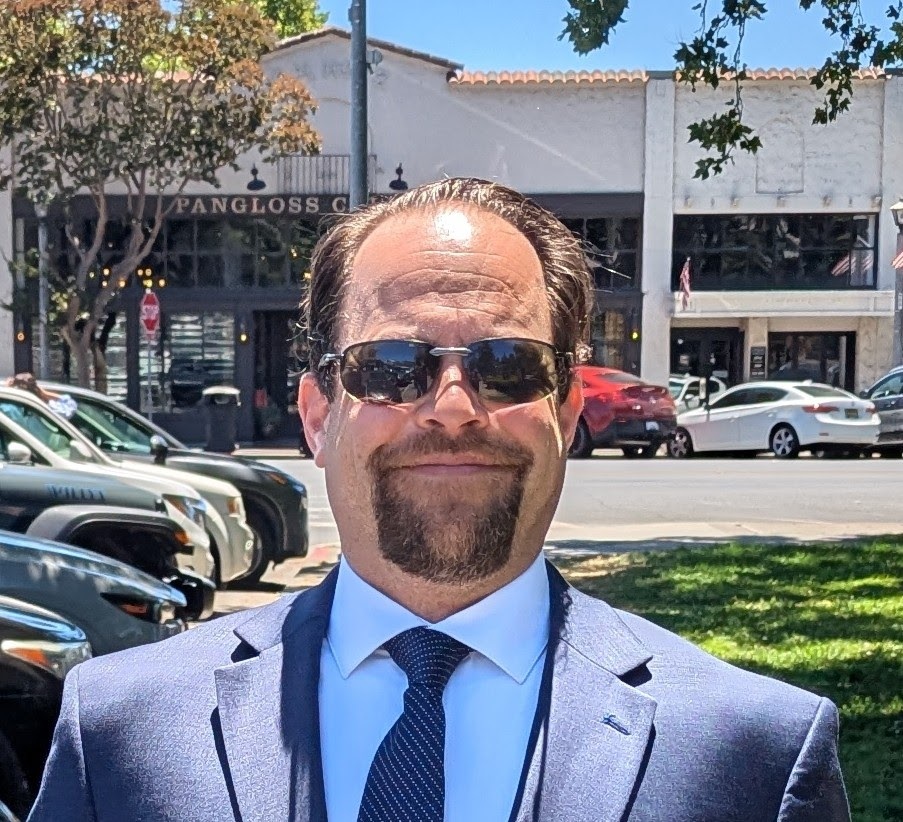
Jeremy Packman is a California-based school/district administrator with 25 years of experience in public education. His career began with a simple decision. After graduating from Towson University, he moved across the country to serve in AmeriCorps, tutoring students in literacy in San Rafael. That year shaped everything that followed.
He entered the classroom soon after. In East Oakland, he taught American and World History for eight years. It was there that he began to notice how much of education depends on systems, not just effort. When systems were unclear, even strong teachers struggled.
He moved into leadership roles with that idea in mind. He served as an Assistant Principal in Oakland and San Lorenzo, and later became a Principal in San Mateo. During COVID-19, he led a school through closure and reopening, learning quickly that structure and communication matter most when everything else is uncertain.
Today, his work focuses on improving student services and special education systems. He works with both schools and families to ensure that promised services are delivered and consistently monitored. He believes clarity reduces conflict and that most problems start with misunderstanding, not bad intent.
Outside of work, Jeremy plays guitar and sings Americana music. He spends time outdoors hiking and kayaking. His approach to both work and life stays consistent: steady, practical, and grounded in follow-through.
What is your typical day, and how do you make it productive?
Typical days do not often exist in the educational realm. My role now is to support principals with planning for the fall and ensuring that all compliance documents are in order.
To keep myself productive, I rely on structure and calendar organization. I track tasks, follow-ups, and deadlines. If I don’t externalize that, it becomes reactive instead of intentional.
How do you bring ideas to life?
I don’t treat ideas as ideas. I treat them as systems that either work or don’t.
If something isn’t working, I break it down, focusing on why it isn’t working. Is it unclear roles, minimal buy-in, inconsistent program fidelity, or lack of structured time? Then I work with leadership to build something simple around it. A checklist. A workflow. A clear ownership structure.
What’s one trend that excites you?
I’m interested in how systems can become more visible.
Right now, a lot of education work happens in silos. There’s limited transparency into whether services are actually being delivered as intended, and a clear lack of structured time to review and analyze data to understand what is working (or not) and why.
Tools that make systems more visible — not more complex — have real potential.
What is one habit that helps you be productive?
Closing loops.
If something starts, it gets documented and followed through. Meetings are summarized. Decisions are written down. Tasks are tracked with clear understanding of who is responsible for what.
Open loops create stress and confusion. Closed loops create stability.
What advice would you give your younger self?
Don’t confuse urgency with importance.
Earlier in my career, I reacted quickly. Now I pause more. I try to understand before acting.
Most problems benefit more from clarity and a structured approach than from speed.
Also, when seeking feedback on a new initiative, it is important to apply it, where possible, in future implementation. With that, it is equally important to communicate when aspects of feedback are not implemented and why. This communication makes stakeholders feel heard and leaves them with clear expectations.
Also, own your missteps and learn from them. Modeling a growth mindset is an essential practice.
Tell us something you believe almost nobody agrees with you on?
Most conflict is not about disagreement. It’s about the misalignment of understanding.
People think they are arguing about outcomes. In reality, they are interpreting the same information differently.
Once that becomes clear, the tone of the conversation changes.
What is the one thing you repeatedly do and recommend everyone else do?
Write things down and share them.
Clarity should not live in one person’s head. It should be visible and accessible.
That alone reduces significant friction.
When you feel overwhelmed or unfocused, what do you do?
I breathe. Mindfulness is a wonderful thing, but it’s hard to remember to practice when you are the one who is stressed out. So, I keep a sign above my desk that reminds me to just breathe!
Then, I identify what actually matters in the next few hours. Not the next week. Not everything at once.
Then, I play music! It is essential to balance your mind and body to refocus.
What is one strategy that has helped you grow your business or advance in your career?
Understanding constraints.
A lot of people focus on what should happen. I focus on what can happen within the system. My favorite question to ask administrators is why they approach an issue a certain way. Often, they respond with “that is the way it has always been”. This answer is a great starting point in conversations regarding growth mindset and systemic change.
That perspective builds credibility. People trust decisions that reflect reality, not just intention.
What is one failure in your career, how did you overcome it, and what lessons did you take away from it?
I once pushed too many new district initiatives too quickly, without process or feedback. Although I believed it was clearly the right move to shift the instructional focus, I needed to slow down the process.
The amount of pushback I received was significant, especially because I was a new administrator on a site full of veterans. I needed to spend a significant amount of time meeting with various teachers and grade levels/departments to “sell” the rationale for the shifts. In the end, I needed to refocus on only one new initiative and let the others slowly fall into place.
I learned that adoption matters more than correctness. If people don’t understand or buy in, the idea doesn’t hold.
What is one business idea you’re willing to give away to our readers?
A simple, transparent system that allows families and educators to see, in real time, whether services align with what’s documented.
Not complex. Not overloaded. Just clear.
There is a gap there.
What is one piece of software that helps you be productive? How do you use it?
Google Sheets.
I use it to track timelines, responsibilities, and follow-ups. It becomes a single source of truth.
The tool itself is simple. The value is in how consistently it’s used.
Do you have a favorite book or podcast you’ve gotten a ton of value from and why?
Great question. “Always Running” by Luis Rodriguez and “ Gang Leader for a Day” by Sudhir Venkatesh are two of my favorite books because they focus on learning through lived experiences, whether their own (Rodriguez) or through others (Venkadesh).
Podcasts that I listen to are mostly comedic, which helps me relax. “SmartLess” and Conan O’Brien Needs a Friend” are two of my favorites.
What’s a movie or series you recently enjoyed and why?
“The Bear” and “The Pitt” are two of my favorite television series because they relate to human emotions and to dealing with complex stress and issues that arise in life and work.
It shows how leadership, pressure, and community expectations intersect. It’s not about the surface story. It’s about how people respond under constraint.
Key learnings
- Clarity and documentation reduce friction more effectively than force or urgency.
- Systems fail when they remain abstract; execution requires visible structure and ownership.
- Most conflict is driven by misunderstanding rather than intent and can be reduced through alignment.
- Sustainable leadership depends on understanding constraints, not ignoring them.
- Small, consistent operational habits outperform large, inconsistent initiatives