
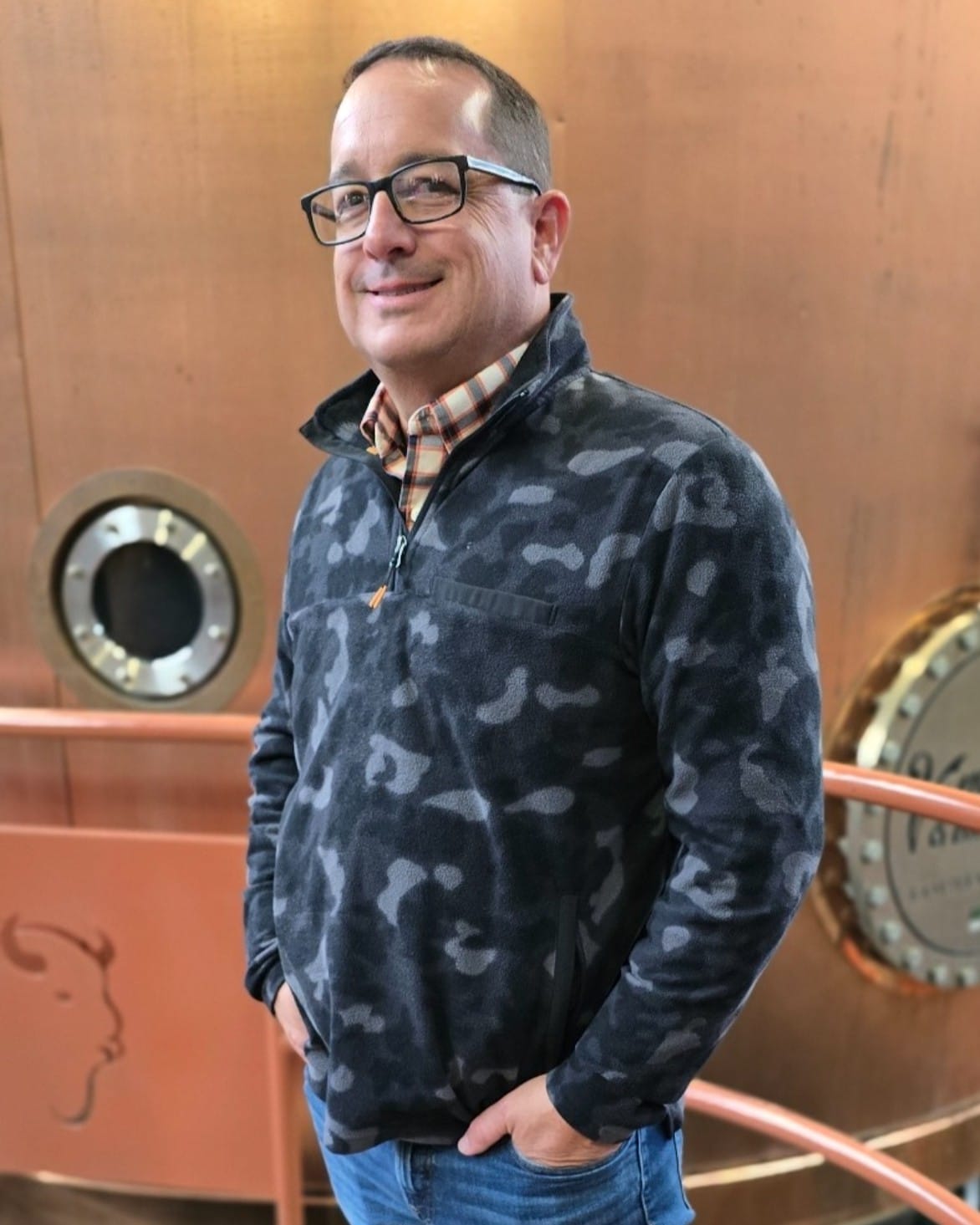
Joel Hackleman is a business leader and respected community figure in Madison County, Indiana. As the general manager of Keg N Bottle, Joel Hackleman has dedicated more than three decades to growing and strengthening one of the region’s most trusted family-owned beverage retailers. His leadership reflects a commitment to excellent customer service, community partnership, and strong business ethics.
Joel Hackleman began his career at Keg N Bottle in 1992 as a second-shift supervisor. Early on, he demonstrated a natural ability to lead teams, build relationships, and streamline operations. His dedication and strong work ethic led to progressive responsibilities, and by 1994, he was promoted to store manager. In that role, he oversaw daily store operations and ensured customers enjoyed exceptional service.
Under Mr. Hackleman’s leadership, Keg N Bottle has continued to grow. What began in 1968 as a small local shop has become a popular retail destination known for its wide selection of wines, spirits, and craft beers. His all-around product knowledge and passion for the industry enable him to help customers discover unique selections, from limited-edition bourbons to local craft brews.
What is your typical day, and how do you make it productive?
Each morning, I start my day with intention and structure. I begin with a quiet meditation session to clear my mind, set my focus, and ground myself before the day gets busy. After that, I head to the gym, where I challenge my body with a mix of strength and cardio training—this not only keeps me fit but also boosts my energy and mood. I wrap up my morning routine with a balanced breakfast that usually includes lean protein, whole grains, and fresh fruit, giving me the fuel I need to stay productive and focused throughout the day.
This routine helps me stay centered, healthy, and ready to take on new challenges, both personally and professionally.
How do you bring ideas to life?
I’m passionate about turning ideas into real-world results. I specialize in identifying opportunities by researching market trends, customer behavior, and emerging technologies, then translating those insights into practical strategies and solutions.
Collaboration is at the core of how I work. I regularly exchange ideas with colleagues across departments to refine concepts, stress-test assumptions, and uncover new angles. I also engage with industry leaders and experts to stay ahead of shifts in the market, validate direction, and ensure that what I build is not only innovative, but relevant and scalable.
By combining data-driven research with open, informed dialogue, I help move ideas from initial concept to actionable plans that create value for both the business and its customers.
What’s one trend that excites you?
I’m very excited about the growth of nonalcoholic, functional beverages, especially plant-based options like kava, lion’s mane, and other adaptogens and nootropics. Consumers are looking for social, “adult” drinks that fit a wellness-oriented, sometimes alcohol-free lifestyle.
Kava offers a relaxing, social effect without alcohol, and lion’s mane and other functional mushrooms tap into demand for focus, calm, and cognition. What excites me is that this trend combines mindful drinking, wellness, and flavor exploration, creating room for brands to innovate in product, occasion, and education.
I see it as an early-stage category with lots of white space: the brands that get the science, taste, and storytelling right can define how people “go for a drink” in a completely new way, and I’d love to contribute to that.
What is one habit that helps you be productive?
I stay productive by planning each day in advance and reviewing my progress the night before. This routine helps me stay focused, organized, and intentional with my time. I also prioritize my well-being: getting a full night’s sleep and starting each morning with a balanced breakfast. Together, these habits give me the clarity and energy I need to consistently perform at my best.
What advice would you give your younger self?
If I could sit down with my younger self, the first thing I’d say is “stop taking everything so seriously.”
For years, I overthought almost every situation—conversations, decisions, relationships. I treated small moments like they were life-or-death choices. Looking back, most of the things I lost sleep over either worked themselves out or never really mattered in the long run. I’d tell my younger self to breathe, zoom out, and remember that not every moment needs to be analyzed and dissected.
I’d also remind myself that relationships are meant to be lived, not managed like complex problems. Not every text needs to be decoded, not every silence is a disaster, and not every disagreement is a sign that something is broken. I’d tell myself to show up honestly, communicate clearly, and then let go of the rest. The right people will stay when you stop trying so hard to control everything.
Most importantly, I’d encourage my younger self to get socially involved—even when it feels uncomfortable. Join the group. Go to the event. Say yes to the invite. Raise your hand. Being around people, learning to connect, to listen, and to share is where a lot of growth happens. Some of my most meaningful lessons and friendships came from those moments when I pushed past my own hesitation and showed up anyway.
If I had understood earlier that life is not a test I needed to pass, but a series of experiences to live, I would have spent far less time in my head and much more time fully present. That’s the advice I’d give my younger self—and the reminder I still give myself today.
Tell us something you believe that almost nobody agrees with you on.
I want to share one belief I hold that many people around me would probably disagree with and may even find a little strange. I know how it sounds at first, but I genuinely think that some of the arguments made by people in the flat Earth community are more reasonable than they’re usually given credit for.
To be clear, I’m not claiming to have all the answers about the shape of the Earth or to have personally disproven centuries of science. What I do believe, however, is that the flat Earth viewpoint raises important questions about how we accept information, who we trust as authorities, and how rarely most of us examine what we’ve been taught.
Most people, including me for much of my life, accept that the Earth is a globe because that’s what we’ve been told by teachers, textbooks, and scientists. We see pictures from space, we learn about gravity, and we’re shown models that make sense on the surface. But if you ask the average person to explain why they believe the Earth is round—without simply pointing to an authority—they often struggle. They usually repeat things they’ve heard but haven’t tested or deeply understood themselves.
What is the one thing you repeatedly do and recommend everyone else do?
I’m someone who finds clarity and creativity one step at a time—literally. Walking in nature has become my reset button: a way to quiet the noise, reconnect with the present moment, and remind myself of what actually matters. Whether it’s a quick trail loop or a long wander under the canopy of trees, I’ve learned that fresh air and movement can shift my entire perspective. These walks ground me, boost my mood, expand my thinking, and help me return to daily life more centered and inspired. For me, nature isn’t just a backdrop—it’s a partner in my wellbeing.
When you feel overwhelmed or unfocused, what do you do?
I’m someone who learned the hard way what it feels like to be constantly overwhelmed—pulled in a dozen directions, scattered, and unsure where to place my energy. Breathwork became the tool that helped me find my way back to clarity. Through simple, intentional breathing practices, I discovered how quickly the mind can settle, how the body can shift from stress to calm, and how focus naturally returns when the nervous system feels safe.
Today, I share breathwork because it has transformed the way I move through life. It helps me slow down when my thoughts race, ground myself when I’m overstimulated, and reconnect to what actually matters. Breathwork reminds me that calm isn’t something we chase—it’s something we can create, one breath at a time. My work is dedicated to helping others access that same sense of balance, presence, and inner steadiness.
What is one strategy that has helped you grow your business or advance in your career?
As an entrepreneur dedicated to building meaningful solutions and long-lasting client relationships, I’ve learned that success is rarely achieved alone. Throughout my journey, networking has been one of the most powerful catalysts in growing my business. By intentionally connecting with like-minded professionals, industry leaders, and potential collaborators, I’ve gained access to opportunities I wouldn’t have discovered on my own.
From my earliest days in business, attending local meetups, workshops, and online communities helped me refine my ideas, gain valuable feedback, and build a trusted support system. Over time, these relationships evolved into partnerships, referrals, and strategic insights that shaped the direction of my company. Many of the clients I work with today came from conversations that began with a simple introduction.
Networking has taught me the importance of showing up, being authentic, and giving value without expecting anything in return. It’s helped me expand my reach, strengthen my brand, and continue growing as both a leader and a business owner. Most importantly, it has reinforced my belief that every meaningful connection has the potential to spark growth—not just for my business, but for the entire community around it.
What is one failure in your career, how did you overcome it, and what lessons did you take away from it?
For a time, our company ventured into the world of online sales, convinced that expanding into e-commerce would unlock new growth. Instead, we discovered that the digital marketplace wasn’t aligned with our strengths or the way we serve customers best. After investing significant energy and resources, it became clear that selling online wasn’t working for us—and stepping away from it ultimately became one of the best decisions we’ve made.
What initially felt like a setback turned into a valuable lesson: success often comes from staying focused on what you do best and doubling down on what’s proven to work. Leaving the online business allowed us to refocus on our core expertise, strengthen the parts of the company that truly set us apart, and grow with more clarity and confidence than before.
What is one piece of software that helps you be productive? How do you use it?
At our business, we rely on Keystroke as our primary point of sale (POS) software. It plays a central role in our daily operations, helping us maintain accurate and up-to-date inventory levels, process credit card transactions securely, and keep our workflow running smoothly. Keystroke also supports our ordering process and allows us to track customer transactions with precision, giving us clear insight into purchasing history and customer needs. By using Keystroke, we’re able to operate more efficiently and maintain the high level of service our customers expect.
What is the best $100 you recently spent? What and why?
Recently, I discovered that the best $100 I’ve spent was on new cooling pillows. That small investment has made a big difference—better sleep means sharper focus, more energy, and improved performance in everything I do. I’m passionate about finding practical ways to optimize life and work, and this little upgrade is proof that even small changes can have a big impact.
Do you have a favorite book or podcast you’ve gotten a ton of value from and why?
I really appreciate how Joe Rogan brings a variety of perspectives to his podcast. One of the things that draws many listeners to him is his conversational style—he often gives guests a lot of space to express their ideas fully, which can lead to discussions that feel thorough and nuanced.
What’s a movie or series you recently enjoyed and why?
I’ve always been fascinated by the nuances of human behavior, and few shows capture this as brilliantly as Seinfeld. What drew me to the series was its ability to turn everyday trivialities into comedy gold, highlighting the quirks and contradictions of modern life. Each character offers a unique lens on human nature: Jerry, with his dry wit and observational humor, serves as the calm center amidst chaos; George’s neurotic tendencies and perpetual scheming reveal the insecurities we often hide; Elaine brings sharp intelligence and spirited independence to the mix; and Kramer, with his unpredictable antics, reminds us that spontaneity can upend the mundane in the most hilarious ways.
Through Seinfeld, I’ve come to appreciate how the smallest social interactions—waiting in line, awkward conversations, the minutiae of dating—can be both relatable and absurd. The show’s genius lies not only in its humor but in its timeless reflection of human eccentricities, which is why it continues to resonate years after its original airing.
Key learnings
- Get out into nature.
- Don’t overthink life.
- Be thankful.