
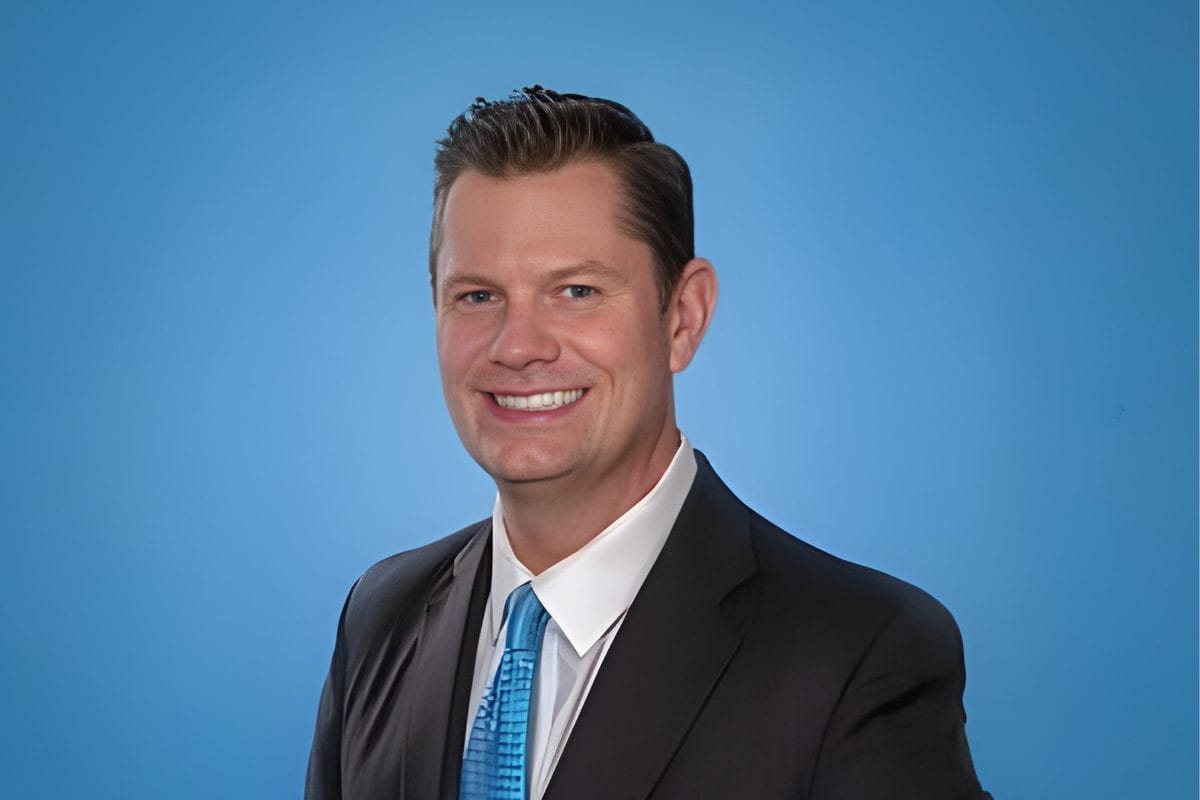
John Bryant is a distinguished forensic meteorologist with more than 30 years of professional experience in meteorology, including decades of work in atmospheric science and forensic weather analysis, reconstruction, and expert witness testimony. He holds the rare global distinction of triple certification by the American Meteorological Society (AMS), the National Weather Association (NWA), and the Environmental Protection Agency (EPA). He is recognized as one of the few meteorologists worldwide to hold all three certifications concurrently, a credential that underscores his expertise in forensic weather reconstruction and regulatory compliance.
Mr. Bryant provides authoritative expert testimony and forensic weather reconstruction in high-stakes litigation for both the defense and the plaintiff. He has created meteorological reports used to support legal arguments at deposition and trial, and he has served as a pivotal expert in wrongful death and personal injury cases on both sides, where his foundational meteorological analysis shaped legal strategies and case outcomes. His expert report in a two-million-dollar case involving extreme weather conditions resulted in a favorable settlement for the client.
He consults closely with legal teams to translate complex atmospheric data into clear, accessible narratives that help judges and juries understand how weather conditions affected specific facts in a case. His ability to communicate technical weather science in plain language is central to the value he brings to litigation support.
Mr. Bryant holds a B.S. in Geosciences with an emphasis in Meteorology and Atmospheric Science from Mississippi State University. He previously served as Chief Meteorologist at an ABC affiliate station in Memphis for over a decade, where he directed a professional meteorological team and worked with regional emergency management services during severe weather events, including hurricanes, tornadoes, and winter storms. He has also collaborated with a NOAA team to audit and refine AI-driven weather models, conducting rigorous assessments of predictive technologies for weather-sensitive sectors.
What is your typical day, and how do you make it productive?
I usually wake up around 7 a.m., grab my coffee, and catch up on the news with CNBC. From 8 a.m. to noon, I’m in my home office for my focused work: case analysis, radar interpretation, GIS mapping, weather data review, and writing complex report sections that require precision. I don’t allow meetings or emails during this block, and I focus on one case at a time. Dedicating 2-4 hour segments to a single matter helps me maintain my focus and accuracy.
Around midday, I take a short lunch, usually browsing casually to give my mind a break from forensic meteorology. From noon to 2 p.m., I shift to communications, attorney calls and consultations, case intake discussions, and email responses, which I typically aim to turn around within 24 hours. After lunch, I try to get outside, whether for a short walk or a half-hour gym session, just to move around and reset.
In the afternoon, I handle supporting work, such as depositions and trial preparation, research to stay current with methods and legal standards, file organization, and planning blog content. I document everything as I go, including data sources, analysis steps, and methodology decisions in real time rather than trying to reconstruct them later. Toward the end of the day, I wrap up, look ahead, or take time to learn something new. Some days I finish early; others, I work late. It really depends on the workflow.
How do you bring ideas to life?
I’m moving toward more personal storytelling in my work. Many of my blogs have been more technical and promotional, like “Where to find a slip and fall weather expert witness in Colorado.” I want search engines to find me, but I realized they haven’t been very personal.
Now I want to show my thought process while staying professional. Each case is unique, and I aim to explain what made it interesting. I want to share my initial thoughts on how I started thinking about my implementation plan and how to communicate it in a non-technical, personalized way without revealing confidential strategies.
Hence, I want to inform people and help them get to know me, but I’m also going to keep my specific methodology to myself. Part of that comes from learning something new every day and listening to others. It’s about translating my technical expertise into insights people can relate to.
What’s one trend that excites you?
Artificial intelligence fascinates me. We’ve never seen anything like this in human history.
Unlike the Industrial Revolution or the internet, AI is moving so quickly that even legislators struggle to keep up. I love exploring its capabilities, like finding different podcasts and playing around with them, testing applications, and of course, thinking about the ethical implications. I’ve also written and presented papers on AI ethics and hope to contribute meaningfully to that conversation
What is one habit that helps you be productive?
Having a clear plan and strong time management skills. I used to sit down and figure out what to do in the moment, but that approach is counterproductive. Outlining weekly or monthly priorities helps me stay on track. Obviously, plans change, and you have to be adaptable, but time management and planning are everything. I also make sure to balance work with health, family, and relationships, which keeps me energized and focused. Sometimes, I put on Mozart while working. It really helps me stay in the zone when working on complex tasks.
Tell us something you believe almost nobody agrees with you.
I believe that within 500 years, a couple of major events could dramatically change life on Earth. First, a meteorite could hit the planet, disrupting things as we know them today. Second, I think humans will face a serious challenge from machines. I’ve seen three cell phones, shown to me by my nephew, all running artificial intelligence and communicating with each other without any human input. The code is already there, and these systems are beginning to modify themselves. Companies like Anthropic are exploring autonomous AI interactions.
I think we’ll probably see the AI-versus-human scenario before a meteorite strikes. But who knows? It’s not trying to be pessimistic. It’s just something I believe, even though most people think I’m wrong. The future is unpredictable, and sometimes the most unusual ideas can turn out to be plausible.
What is the one thing you repeatedly do and recommend everyone else do?
I believe in karma, and I think everybody should strive to be humble and kind. Is it easy? Not always. But I have found that in most conflicts, responding with kindness diffuses tension and often leads to better outcomes. That doesn’t mean you should disrespect yourself. You always have to stand up for yourself, because if you don’t, who will?
For me, kindness also brings a deeper sense of contentment in life. Knowing you’ve done something good is its own reward. Be humble, polite, kind, and empathetic. That’s what I try to live by.
When you feel overwhelmed or unfocused, what do you do?
I rely on my faith because I can’t do it all alone. I have a sign by my computer that says, “This is God. Do you trust me?” When I first started this business, I leaned on that daily, and I still do. When I feel overwhelmed, I remind myself that I am not always in control. I lift my burdens to God, and that sense of faith takes over. It’s freeing. Sometimes, I simply can’t do it myself, and I have to let go. I’m not trying to impose my beliefs on anyone; I respect what others believe. This is just my way of finding clarity, focus, and peace during busy days or challenging moments.
What is one strategy that has helped you grow your business or advance in your career?
I would say strategic networking. Learning who to connect with and how to build meaningful relationships has been a process, and it continues to be. Networking and working smarter, not harder, has made me more successful. Of course, you still have to work hard. Nothing just falls into your lap, especially when you’re building a new business.
Even with all the academic knowledge in the world, if you can’t step outside your comfort zone and connect with people, it holds you back. I’m naturally introverted, so conferences can be intimidating. I used to worry about what others would think, but I’ve forced myself just to start conversations, strategically and intentionally. Most of the time, if people respond positively and relationships develop naturally, it’s still a challenge, but over time, that fear has lessened, and the payoff has been enormous.
What is one failure in your career, how did you overcome it, and what lessons did you take away from it?
One failure I experienced was early in my career when I realized I was not happy in a certain job. I had returned from a conference with fresh ideas and differentiation, and while corporate management encouraged them, local leadership resisted. My gut told me I was in the wrong place. Finished out my TV contract, but when an extension opportunity came up, I didn’t have another job lined up. Still, I decided not to take it. At the time, it felt like a failure because I had always believed in having a plan B, a plan C, even a plan D. I simply didn’t have one.
Looking back, though, that decision turned out to be a success. Stepping away from broadcast meteorology allowed me to pivot and start my own business. Had I not made that leap, I wouldn’t be where I am today. At the time, it felt like a failure, but in hindsight, it was the best thing that could have happened. It taught me to trust my instincts and embrace uncertainty. It’s often where the biggest opportunities lie.
What is one business idea you’re willing to give away to our readers?
Don’t be afraid to step outside the box. Don’t be afraid to be different and justifiably radical. You don’t have to follow everybody else’s playbook or the way things have always been done. Be a disruptor. Be creative, be innovative, try something new.
And don’t be afraid to fail. It happens to everyone, and it’s part of growth. You can even fail two or three times, be disappointed for a day or two, and still get back up and try again. I think that’s healthy. Embrace failure as a learning opportunity, then strap on your boots, step up, and move forward.
What is one piece of software that helps you be productive? How do you use it?
The tool that drives my work in meteorology is GR3 Analyst. It’s complex, but incredibly powerful for analyzing radar data at multiple atmospheric levels, which is essential for the cases I work on. I also rely on software from the National Center for Environmental Information, though some of these weather tools can be challenging to master.
Lately, I’ve also incorporated AI tools, but I use them carefully. I think critically first, develop my own ideas, and then ask AI for perspectives or refinements. I’m deliberate about not letting machines think for me, because relying too heavily on them can dull critical thinking over time.
Because some of the existing weather software is so intricate, I’m exploring developing my own software that I can use efficiently, with greater control and speed. It’s a project I’m actively pursuing to make my workflow smarter and more streamlined.
What is the best $100 you recently spent?
This is a personal one. I recently had someone come clean my house after I’d been out of town. They did an excellent job. They went above and beyond; they even folded up the paper towels as a hotel would. I was so impressed that I gave them an extra $100 because I felt their work truly deserved it. It wasn’t about business. I recognize their effort, and I felt great doing it. Honestly, that was the first thing that came to mind when you asked.
Do you have a favorite book or podcast from which you’ve received much value?
My favorite podcast is Your Everyday AI. I don’t know Jordan Wilson personally, but as a former journalist, I relate to how he communicates complex ideas clearly. He speaks to both technical developers and complete beginners, especially through his Start Here Now series, which helps newcomers find their footing in AI. I don’t listen to every episode daily, but I make it a point to catch up because each one is insightful and practical.
What’s a movie or series you recently enjoyed and why?
I love documentaries. The one I’m currently watching on Netflix is about artificial intelligence and the future. It covers how humans and dogs will be able to communicate in the future thanks to AI. I find it fascinating, even if I’m not sure I want my own Pomeranian analyzing me that way!
I also love documentaries about the Earth’s history and the evolution of life. This content stretches your perspective and curiosity. And on a lighter note, I enjoy Judge Judy. Watching her command the courtroom and get people to behave always makes me smile.
Key learnings:
- Critical thinking is your biggest asset. It’s the kind of ability that helps you even when you have your back against the wall.
- Reflecting on failures allows you to overcome them. Winners get back up no matter what.
- A good leader communicates clearly and understands how people are wired to bring out their best.
- Being kind doesn’t cost a single penny. When you strive to be humble and kind, you’re choosing empathy and compassion. Remember, the true measure of success depends on how many people truly believe in you.
- AI is revolutionizing our world. But the only way you’ll keep up is by learning something new every day. Your mind needs intellectual stimulation to stay sharp.