
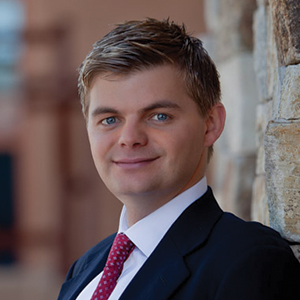
Joshua D. Mellberg didn’t wait for permission to start. As a college student at Western Michigan University, he built and sold custom dorm beds to make extra money. That early hustle taught him a lot — how to solve problems fast, how to serve customers well, and how to stay focused.
After graduating, he earned his Life and Health Insurance License and jumped into the financial world. In 2005, he founded J.D. Mellberg Financial from the ground up. He focused on helping people plan for retirement with smart, secure strategies. The firm grew quickly. Under Josh’s leadership, it landed on the Inc. 5000 list seven years in a row.
But growth wasn’t luck. Josh built systems. He used tools like EOS, set clear goals, and trained others to lead. He didn’t just grow a business — he created a model that others could follow.
In 2020, he sold a majority stake in J.D. Mellberg. Two years later, he launched Secure Investment Management (SIM), a modern advisory platform with a virtual-first approach. SIM quickly earned its own spot on the Inc. 5000, including a top-5 ranking in Arizona.
Josh still trains advisors, speaks on income planning, and appears in national media. He also makes time for his wife and son, traveling often and staying grounded.
He lives in Tucson, Arizona, and has been a member of YPO Scottsdale since 2014. From college dorms to coast-to-coast retirement planning, Josh Mellberg proves what’s possible with vision, structure, and the right people around you.
What is your typical day, and how do you make it productive?
My day starts early — usually before 6 a.m. I get up, stretch, and review the goals I set the night before. I keep my morning routine short and structured. I check my calendar, look at key metrics for the business, and write down my “rocks” for the day. I follow an EOS-style system, so I divide tasks into boulders (major projects), rocks (important short-term goals), and pebbles (minor tasks). That framework helps me focus. I try not to let email or Slack dictate my priorities.
Most of my productive hours happen before noon. I protect that time for strategic work — planning, decision-making, or coaching a team member. In the afternoons, I leave room for meetings, calls, or recording content. Evenings are for family. We’ll cook, go for a walk, or plan our next trip. I try to unplug fully by 8 p.m.
How do you bring ideas to life?
I test them. That’s the short answer. I don’t just run with an idea based on instinct. I prototype it. Whether it’s a new advisor onboarding flow or a client education tool, I start small and build in feedback loops. For example, when we first shifted to virtual retirement planning during the pandemic, we created a draft process, walked through it internally, then roleplayed it with three clients. Only after we validated that it worked did we roll it out company-wide.
What’s one trend that excites you?
Automation that still feels human. I love seeing CRMs, onboarding flows, and training systems that save time and improve the client experience. At SIM, we’ve been building advisor-facing tools that walk through retirement strategies in real time, with visuals that update as inputs change. It reduces confusion and empowers better conversations.
What is one habit that helps you be productive?
I always plan tomorrow before I finish today. I write down three priorities on a note card and keep it on my desk. It sounds simple, but it eliminates a lot of decision fatigue in the morning.
What advice would you give your younger self?
Start using systems sooner. I used to think I could outwork any problem, but that only gets you so far. The real unlock is when you build something that works whether you’re in the room or not.
Tell us something you believe almost nobody agrees with you on?
I think public speaking is easier than most one-on-one conversations. People expect polished language on a stage, but real impact comes from honest, unscripted dialogue. That’s where you actually learn something about your client, your team, or yourself.
What is the one thing you repeatedly do and recommend everyone else do?
Block time to think. I put it on my calendar like any other meeting. If I don’t have space to zoom out, I default to reaction mode.
When you feel overwhelmed or unfocused, what do you do?
I go for a walk — no phone, no earbuds. Just movement and space. That usually resets my thinking. If I’m stuck on something big, I’ll also whiteboard it out or call one of my coaches. I keep a few trusted advisors close who aren’t afraid to challenge my assumptions.
What is one strategy that has helped you grow your business or advance in your career?
Hire slower, but build training faster. At J.D. Mellberg, we created our own advisor training system because the market didn’t offer what we needed. That gave us a huge advantage. People could plug into the system and succeed without needing to figure everything out from scratch.
What is one failure in your career, how did you overcome it, and what lessons did you take away from it?
In the early days, I focused too much on marketing and not enough on capacity. We generated more leads than we could handle and ended up disappointing clients. I had to pause growth to rebuild our scheduling system and hire. It taught me that scaling without structure is a trap.
What is one business idea you’re willing to give away to our readers?
A subscription-based financial education platform for families. Most retirement content is built for individuals, but planning affects spouses, adult children, and even grandkids. Create simple, 10-minute videos with visuals that families can watch together. Add worksheets. Charge monthly. That’s a space with huge need and low clutter.
What is one piece of software that helps you be productive? How do you use it?
Monday.com. We use it to track strategic projects across the firm. Every team has a board, and we tie them back to quarterly “rocks” so everyone can see how their work connects to the big picture.
Do you have a favorite book or podcast you’ve gotten a ton of value from and why?
Traction by Gino Wickman. That book gave me language and structure to run a business with intention. I’d recommend it to any founder or operator feeling stuck.
What’s a movie or series you recently enjoyed and why?
The Playlist on Netflix — it’s about the founding of Spotify. I liked how it showed different perspectives of the same startup story. Reminded me that success looks different depending on where you’re sitting.
Key learnings
- Systems make success sustainable. Planning beats effort when repeated at scale.
- Productive leaders make time to think — not just to act.
- The best tools aren’t flashy; they help people do great work consistently.
- Failure often stems from overgrowth without infrastructure. Fixing the system fixes the problem.
- Teaching others is a growth strategy — not just for them, but for you.