
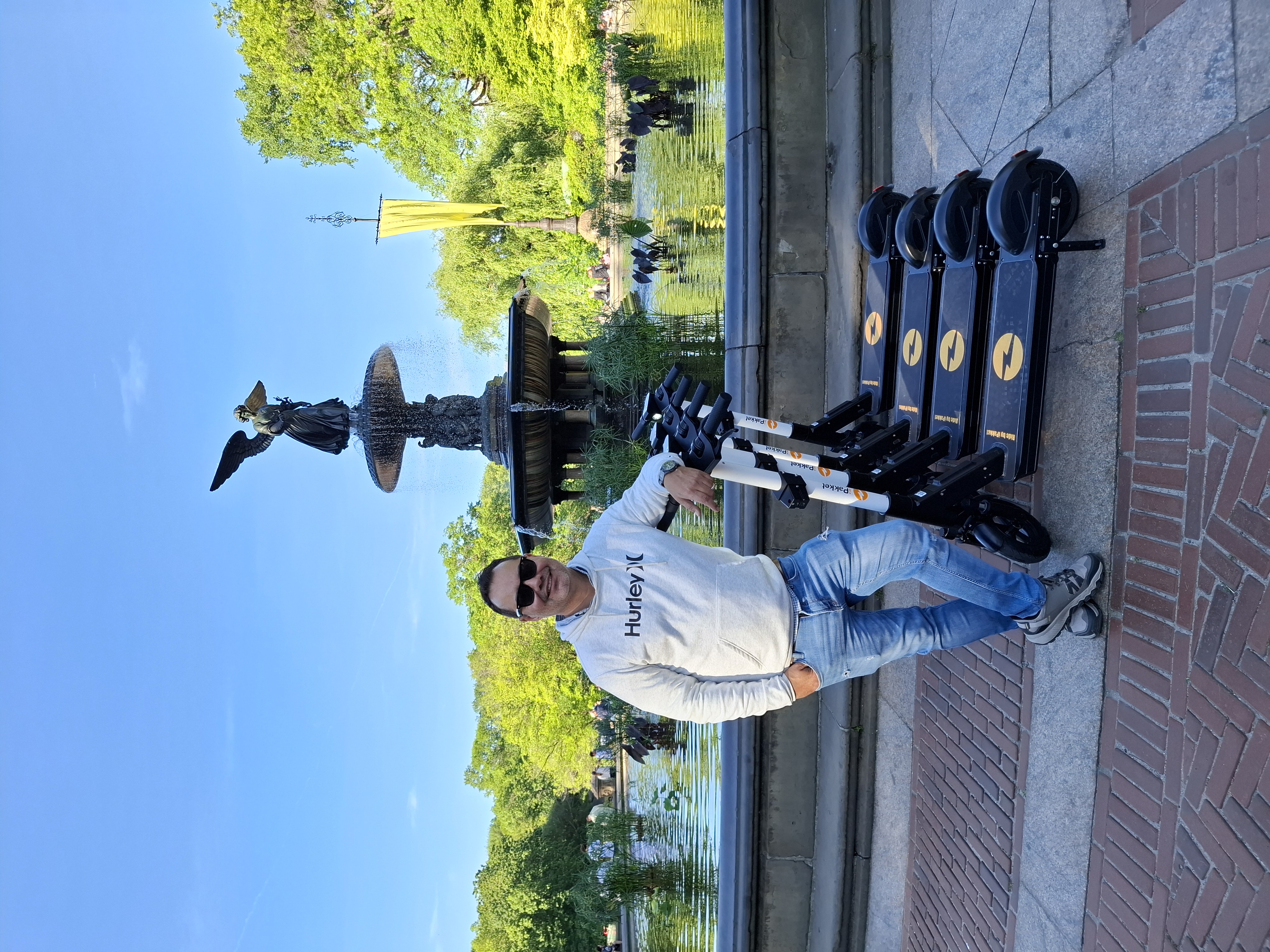
Juan Sebastian Palomo Murga is an entrepreneur who has spent more than 25 years building companies across infrastructure, logistics, mobility, and financial technology. His career began in 1999 in large-scale construction and infrastructure projects, where he learned the value of discipline, execution, and long-term thinking. Those early experiences shaped the way he approaches business today.
As Founder and CEO of Arqcons Group, he led complex engineering and infrastructure projects that demanded precision and accountability. Over time, he expanded into logistics and technology, launching iPakket and later Ride by iPakket, a micromobility platform focused on organized urban transportation systems and infrastructure-first deployment.
Rather than chasing trends, Juan Sebastian has focused on solving practical problems. His companies are built around structure, operational clarity, and systems that can scale responsibly. More recently, through Fink Financial Corporation, he has expanded into financial technology, focusing on transparency and accessibility.
Outside of business, he is a long-time supporter of Amnesty International and initiatives that help improve access to clean energy in underserved regions of Central America. He prefers low-profile philanthropy and believes consistency matters more than visibility.
Away from work, Juan Sebastian enjoys NASCAR, tennis, and spending time with family. Across industries and decades, one principle has remained constant in his life: ideas only matter when they are put into action.
What is your typical day, and how do you make it productive?
My day usually starts early. I wake up around 5:30 a.m. and avoid looking at messages for the first hour. I use that time to think clearly before the day’s noise starts. I review operational reports, mobility usage data, and logistics updates before meetings begin.
Most of my day is structured around decision-making and problem-solving. I spend time with infrastructure teams, software teams, and city partnership discussions. Every part of the business connects to another system, so communication matters.
I make my day productive by keeping things simple. I do not overload my schedule with unnecessary meetings. If a meeting can be solved in 10 minutes, I do not turn it into an hour.
How do you bring ideas to life?
I test ideas against reality very quickly. I come from infrastructure, where mistakes are expensive. That mindset stayed with me.
At iPakket, we do not just ask if something sounds innovative. We ask if it can operate consistently in a city with regulations, traffic, weather, and public use.
Most ideas fail because they skip structure. I focus on systems first.
What’s one trend that excites you?
The integration of digital systems into physical infrastructure.
Cities are becoming smarter, but the real opportunity is coordination. Mobility, logistics, energy, and data will increasingly work together rather than operate separately.
I think organized micromobility networks will become a normal part of city planning over the next decade.
What is one habit that helps you be productive?
Writing things down by hand.
I still keep notebooks. It slows my thinking down in a good way. Some of my best operational decisions started as rough sketches during airport delays or late-night reviews.
What advice would you give your younger self?
Stop trying to move too fast.
Earlier in my career, I believed speed solved everything. Experience taught me that structure matters more than speed. Sustainable systems take patience.
Tell us something you believe almost nobody agrees with you on?
I think many companies expand too early.
There is pressure today to scale quickly and dominate markets. But uncontrolled growth damages operations. I would rather grow slower with strong infrastructure underneath.
What is the one thing you repeatedly do and recommend everyone else do?
Talk directly to the people closest to operations.
Executives sometimes become disconnected from reality because information gets filtered. I learn more from maintenance teams, drivers, and field operators than from presentations.
When you feel overwhelmed or unfocused, what do you do?
I disconnect from screens for a few hours.
I play tennis, walk without my phone, or spend time with family. Distance helps me solve problems faster than staring at them.
What is one strategy that has helped you grow your business or advance in your career?
Partnerships instead of confrontation.
In the mobility sector, many companies entered cities aggressively. We took the opposite approach. We worked with municipalities and universities rather than treating regulation as an obstacle.
That created trust and long-term stability.
What is one failure in your career, how did you overcome it, and what lessons did you take away from it?
Years ago, I underestimated how difficult operational integration could be after expanding into a new market. We grew faster than our internal systems could support.
We corrected it by slowing expansion, improving reporting systems, and standardizing procedures across teams.
The lesson was simple: growth without operational discipline creates instability.
What is one business idea you’re willing to give away to our readers?
Structured charging hubs for suburban micromobility near commuter rail stations.
Many transportation discussions focus on downtown cores. I think suburban mobility connections are still underserved.
What is one piece of software that helps you be productive? How do you use it?
Notion has been useful because it combines operational notes, planning, and collaboration in one place.
I use it to organize infrastructure rollout timelines, meeting summaries, and long-term planning documents.
Do you have a favorite book or podcast you’ve gotten a ton of value from and why?
I revisit The Prize by Daniel Yergin often. It explains how energy, infrastructure, and politics shape economies over time.
For podcasts, I enjoy Acquired because it focuses on how companies are actually built, including mistakes and operational decisions.
What’s a movie or series you recently enjoyed and why?
I recently watched BlackBerry. I liked it because it showed how innovation alone is not enough. Operational discipline and timing matter just as much as vision.
That is true in almost every industry.
Key learnings
- Structured growth creates more long-term stability than rapid expansion without operational discipline.
- Infrastructure and technology work best when they are designed together from the beginning.
- Strong partnerships with cities and institutions can create sustainable business advantages.
- Operational clarity often comes from listening directly to frontline teams and field operators.
- Sustainable systems are built through consistency, not hype.