
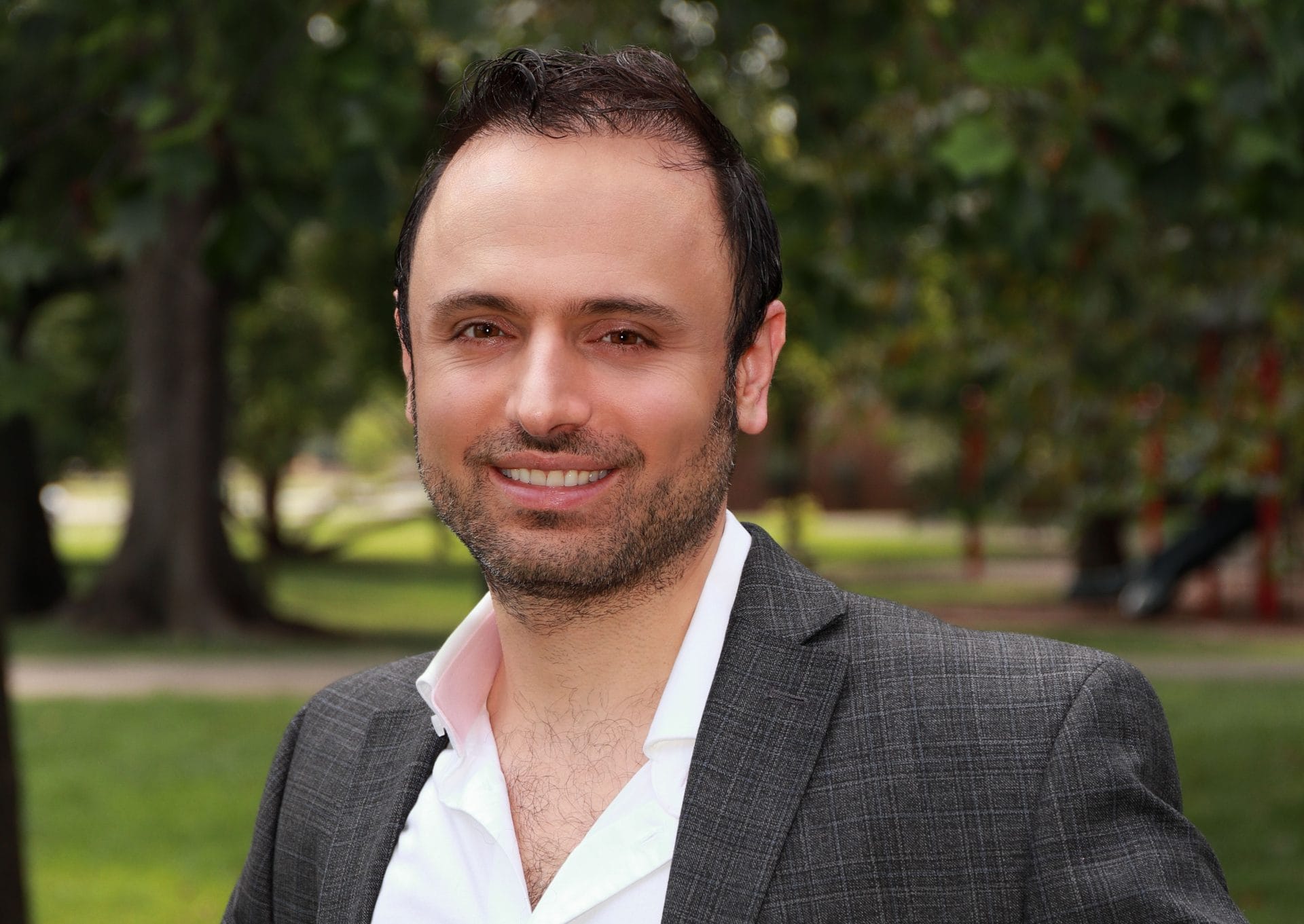
Karim Sarhane, MD, is a general surgeon who performs a variety of laparoscopic procedures at the Burjeel Royal Hospital in Al Ain, Abu Dhabi (UAE). He addresses complex cancer cases of the thyroid, breast and colon. He also performs complex hernia repairs requiring abdominal wall reconstruction. Dr. Karim Sarhane regularly treats patients who require neck lymph node dissection for head/neck cancers, those in need of oncoplastic and implant-based breast reconstruction, and those diagnosed with colorectal cancers. On another note, he has also extensive knowledge in soft tissue sarcoma and skin cancer surgery. Dr. Sarhane completed undergraduate studies in Biological Sciences and his Medical Doctorate at the American University of Beirut. He also holds a Master of Science in Molecular Genetics and Biochemistry. Additionally, he is a graduate of Johns Hopkins University’s Clinical Trials Program (Baltimore, Maryland), and performed advanced basic translational research at this same institution. Dr. Sarhane maintains a prominent presence in his field and serves as associate editor with Frontiers in Pediatrics. He has been a review editor with Frontiers in Surgery and has a professional interest in developments in nerve regeneration. A diplomate of the American Board of Surgery, Karim Sarhane, MD holds certification in robot-assisted procedures employing the da Vinci Xi system.
What is your typical day, and how do you make it productive?
My day starts early with surgical rounds, followed by operating sessions that often include complex oncologic or laparoscopic cases. Afternoons are reserved for clinic, academic meetings, or mentoring. I stay productive by planning each day meticulously and staying focused on high-impact activities—be they patient-centered or academic.
How do you bring ideas to life?
By testing them. I merge clinical observations with research hypotheses, then leverage multidisciplinary collaboration to validate those ideas through experimentation, trials, and publications. Many of my ideas have materialized into patents and high-impact papers because I believe in translational execution.
What’s one trend that excites you?
The integration of regenerative medicine and smart biomaterials into surgical care. It’s reshaping how we approach tissue reconstruction and bioengineering—areas I’ve explored extensively through both clinical practice and research.
What is one habit that helps you be productive?
Blocking time for deep work. Whether it’s writing a grant or planning a complex surgical case, uninterrupted focus for a set period delivers exponential results.
What advice would you give your younger self?
Trust your instincts, but don’t rush the journey. Excellence is built over years of precision, discipline, and resilience—not shortcuts. It will take time.
Tell us something you believe almost nobody agrees with you on?
That surgical excellence and academic innovation can coexist at the highest level—without compromise. Many believe one inevitably takes precedence, but my career is built on proving the contrary. You can have an academic surgical career that is both 100% clinical and 100% translational research.
What is the one thing you repeatedly do and recommend everyone else do?
Read scientific literature outside your field. It fosters cross-disciplinary thinking, which often leads to breakthroughs in clinical practice or research.
When you feel overwhelmed or unfocused, what do you do?
I revert to structure—writing down actionables, prioritizing the top three, and stepping outside for clarity. A brief reset can make the day productive again.
What is one strategy that has helped you grow your business or advance in your career?
Mentorship. Seeking out mentors early—and later becoming one—accelerated my growth exponentially. It shaped my leadership approach and expanded my network across continents.
What is one failure in your career, how did you overcome it, and what lessons did you take away from it?
Early in my academic path, a grant I poured months into was rejected. I learned to treat failure as data. That same idea, refined, later secured funding and resulted in a patented technology.
What is one business idea you’re willing to give away to our readers?
A digital registry and analytics platform for surgical outcomes in rare oncologic cases. Combining real-world data with AI can personalize treatment plans and improve long-term care.
What is one piece of software that helps you be productive? How do you use it?
Notion. I use it to organize research projects, surgical logs, clinical pearls, and even my editorial workflow. Its flexibility mirrors the hybrid nature of my career.
Do you have a favorite book or podcast you’ve gotten a ton of value from and why?
The Checklist Manifesto by Atul Gawande. It’s a masterclass in how structure and simplicity can dramatically improve outcomes in complex fields like surgery.
What’s a movie or series you recently enjoyed and why?
Lenox Hill—it’s a gripping portrayal of the balance between patient care, academic pressure, and personal sacrifice that resonates with every surgeon-scientist.
Key learnings
- Consistent structure and time-blocking optimize both surgical and academic productivity.
- Cross-disciplinary thinking fuels innovation in clinical care and research.
- Failure is a feedback mechanism, not a dead end.
- Mentorship—both giving and receiving—catalyzes career growth.
- Integrating AI and technology into surgical practice is not optional—it’s the future.