
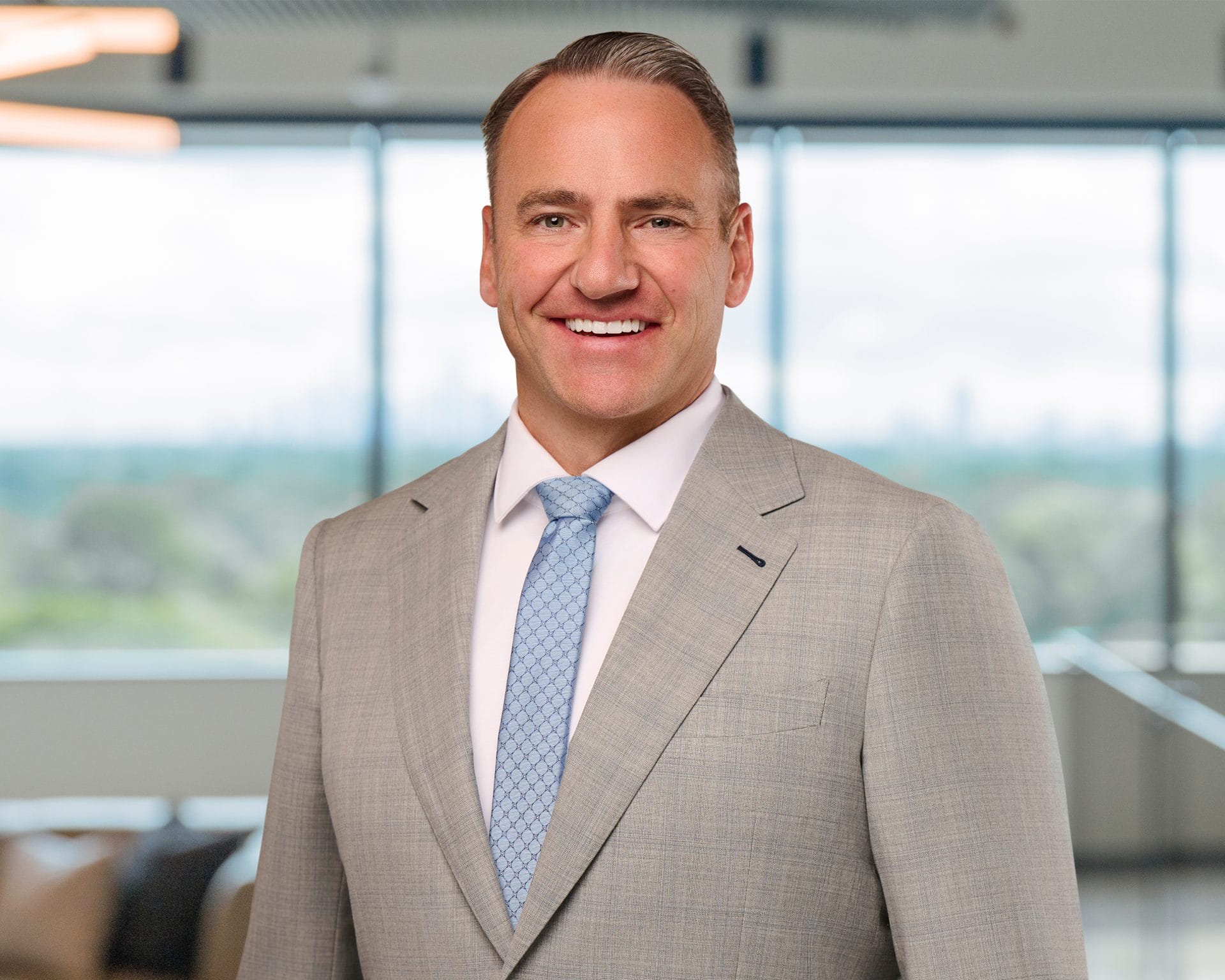
Karl Studer serves as President of Electric Power at Quanta Services, where he directly oversees all electrical operations across the United States, Canada, and Australia. His leadership has been instrumental in driving the strategic growth of Quanta’s electrical engineering and construction business.
Studer’s career path exemplifies dedication and expertise, beginning as a journeyman lineman and rising to executive leadership. He is a graduate of Northwest Lineman College in Meridian, Idaho, where his leadership qualities immediately earned him responsibilities over crew safety, job efficiency, and client satisfaction.
In 2007, Studer Co-Founded Probst Electric as Vice President, where he became instrumental in expanding the company’s services from basic commercial electrical work into high-voltage power transmission projects. Under his leadership, the company expanded rapidly across multiple western states, taking on large-scale transmission projects, including all types of grid projects building out energy infrastructure. He also co-founded Summit Line Construction, specializing in electrical infrastructure construction. Both companies were acquired by Quanta Services in 2013, marking Studer’s transition to corporate leadership.
Following the acquisition, Studer served as President and Chief Executive Officer of the Probst Group, overseeing thousands of field and line operators while implementing advanced safety measures to protect workers in challenging construction environments. In 2018, he was promoted to Regional Vice President of Quanta Services, managing operations and major projects across a large territory.
Since assuming his current role as President of Electric Power in 2022, Studer has been responsible for guiding Quanta’s electric power division through significant growth in grid modernization and renewable energy infrastructure projects. His unwavering focus on safety, innovation, and workforce development has helped maintain Quanta’s position as an industry leader.
Studer resides in his hometown of Rupert, Idaho, with his wife and five children. In his free time, he remains true to his roots as an active farmer and cattle rancher.
What is your typical day, and how do you make it productive?
My days are driven by what needs to be done rather than by routine. I don’t function well with rigid schedules. I prefer being out in the field, solving problems that my teams need help with. Whether it’s related to Quanta’s operations, personal business matters, or helping others, I start each week, month, or morning by identifying what truly needs attention. Distractions come from every direction, but when I know something is genuinely important, I give it my full focus and see it through to completion. I believe in being all in or not at all. There’s no value in half-hearted effort.
How do you bring ideas to life?
Ideas are constantly flowing. My mind runs through endless possibilities of what could be done or created. Some ideas are worth keeping as just that: ideas. But the ones with real potential for creating or building something meaningful deserve deeper thought. I work through them carefully, testing whether they’re worth the investment of time and resources. When an idea proves it can generate value or revenue, it moves up the priority list. From there, I focus on learning what’s needed, assembling the right team, and driving that idea forward into reality.
What’s one trend that excites you?
What excites me most is the growing appreciation for simple, down-to-earth living: a return to country life, old-fashioned family values, western heritage, and farm living. I’ve been fortunate to experience this lifestyle firsthand, and as I work with more people from large cities and urban areas, I see how much they’re missing. It’s a gift to live this way, and I plan to keep embracing those simple values that ground everything else I do.
What is one habit that helps you be productive?
Staying healthy and fit is essential to my productivity. Pushing myself through endurance races helps me strengthen my mind as much as my body. Life is full of hard challenges. You’ll never avoid them completely, so why not make yourself strong enough to handle whatever comes your way?
What advice would you give your younger self?
Be patient. There’s no need to rush into something until the timing is right. Your gut will tell you when it’s time to move. Don’t go until that feeling aligns. And never forget that everyone around you has played a role in making you who you are. Stay thankful for that.
Tell us something you believe almost nobody agrees with you on?
My unwillingness to slow down isn’t always well received. I can’t accept wasting even a single minute or day when there’s an opportunity worth pursuing. Sitting still doesn’t come naturally to me, and it probably never will. That relentless drive isn’t for everyone, but it’s fundamental to how I operate.
What is the one thing you repeatedly do and recommend everyone else do?
Never use the word ‘I.’ Always say ‘we.’ Everything worth achieving is done together, never alone. My greatest successes have come from helping teams succeed, and in return, they’ve elevated me. It’s a principle I live by and one I’d encourage everyone to adopt.
When you feel overwhelmed or unfocused, what do you do?
I very rarely feel overwhelmed. I honestly can’t recall a specific time when I’ve experienced that sensation. Staying calm and not letting emotions cloud my judgment keeps everything manageable. When I do lose focus, I find something productive to occupy my time. If that unfocused feeling persists, I step back entirely and give myself permission to mentally disengage until clarity returns.
What is one strategy that has helped you grow your business or advance in your career?
I examine strategies from every angle: beginning to end and end to beginning. What roadblocks will we encounter, and can we solve them? How much time will it take? What will it cost? What challenges will the team face? There are countless strategies and ideas circulating at any given time, but the key question is: which ones justify the full investment of time and effort? Answering that question honestly separates worthwhile pursuits from distractions.
What is one failure in your career, how did you overcome it, and what lessons did you take away from it?
My failures have come when I’ve approached something halfheartedly. Partial commitment creates instant failure. The lesson is simple: be fully engaged in what you’re doing, and you’ll rarely fail. Success requires complete dedication.
What is one business idea you’re willing to give away to our readers?
Build a business around work that requires hands-on effort, something people genuinely need and can’t easily do themselves. If you solve real problems through hard work and skilled labor, you’ll build something sustainable. That foundation has never failed, and it won’t in the future.
What is one piece of software that helps you be productive? How do you use it?
My Outlook calendar is indispensable. It’s how I maximize my time and ensure my family gets the attention they deserve alongside my professional commitments. The principle is straightforward: either you control your schedule, or your schedule controls you. I prefer being in control.
What is the best $100 you recently spent? What and why?
I was waiting in line at a grocery store, doing the shopping for my wife, which I’m not particularly fond of, but I love her. I noticed a young woman with her children. She was carefully counting money, clearly trying to figure out what she could afford to buy. Watching her worry about not having enough struck me. I walked up, paid for her groceries, and handed her a $100 bill. I have no idea how she used that money, but I can tell you with certainty: that was the best $100 I’ve ever spent.
Do you have a favorite book or podcast you’ve gotten a ton of value from and why?
I’ll be honest. I’ve probably read fewer than two books in my entire life. My mind doesn’t hold focus well enough for traditional reading. However, I do listen to audiobooks, especially during long runs. One that has resonated deeply with me is Simon Sinek’s ‘Start With Why.’ The book explores how understanding the psychology of human motivation makes leaders more effective, which I believe is essential when leading teams.
What’s a movie or series you recently enjoyed and why?
I’m drawn to shows with dry comedy: ‘The Office,’ ‘Brooklyn Nine-Nine,’ ‘Parks and Recreation.’ There’s something grounding about watching the simple, everyday moments those shows capture. We often get caught up chasing what we think are life’s big attractions, but these sitcoms remind me that real satisfaction often comes from appreciating the simple things.