
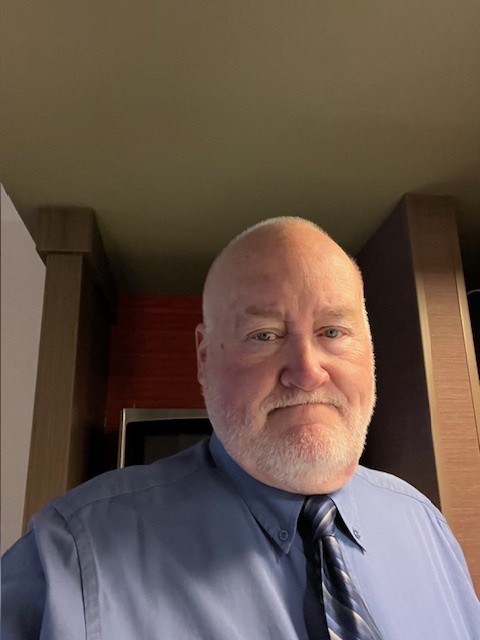
Based in Bluffton, South Carolina, Kevin Biebel served as the executive director of the Saratoga Automobile Museum in Saratoga Springs, New York, between 2015 and 2016, followed by eight years as the elected chairman of the board, until his retirement in 2023. Kevin Biebel achieved many milestones at the museum, including turning the insolvent organization around and achieving profitability, and launching initiatives such as the Distracted Driving Program and Rebuild A Racer. The former provided driving safety education to over 25,000 high school students, while the latter offered hands-on STEM opportunities.
Before joining the Saratoga Automobile Museum, Kevin Biebel spent 15 years as the leader of J. Frederick Construction, Inc., a Milford, Connecticut-based construction company he established as a family business in 1993. His responsibilities included the design and management of projects ranging from theme park displays to flood control systems. He worked with several well-known brands as the leader of J. Frederick Construction, including Six Flags and Hasbro.
Kevin Biebel began his career as the founder and owner of Lordship Antique Auto Parts, Inc. He has restored automobiles his entire life, completing his first Model A Ford at age 13. Beyond his business interests, he is a member of community organizations, including the Lions Club and Lordship Community Church.
What is your typical day, and how do you make it productive?
I jump into my mind to complete what I didn’t finish the day before. After six decades of building businesses—from restoring my first Model A Ford at age 11 to leading a museum turnaround in my 70s—, I’ve learned that productivity isn’t about elaborate systems. It’s about maintaining momentum. Whatever was left undone yesterday becomes the first priority today. The discipline of completing what you start, rather than constantly chasing new beginnings, is what separates builders from dreamers.
How do you bring ideas to life?
My thoughts go on paper first, including drawings. This habit formed early—when you’re 13 years old completing your first automotive restoration, you learn quickly that an idea you can’t sketch is an idea you can’t build. That principle carried through decades of increasingly complex work: the rare 1939 W154 Grand Prix Mercedes I restored for Pebble Beach, the theatrical sets I built for STOMP! and the Hello Dolly! revival with Carol Channing, the architectural metalwork my companies produced for Yankee Stadium and JetBlue’s Terminal 5 at JFK. Every project, regardless of scale, began the same way—pencil on paper, working out the concept before touching any tools or software.
What’s one trend that excites you?
Coming up with new business ventures and bringing them to life. At 15, I started a manufacturing business reproducing Model A Ford mirrors, which led to founding Lordship Antique Auto Parts in 1970. In the decades since, I’ve built companies in automotive restoration, construction, architectural metals, and museum management. Each venture taught me something that informed the next. The ability to recognize patterns across industries—to see how lessons from restoring vintage Mercedes apply to building flood control systems for the MTA—, that’s the skill I find most valuable. The specific industry matters less than the problem-solving.
What is one habit that helps you be productive?
Keeping notes and sketching ideas on paper. I use 3-D AutoCAD for complex architectural projects, but the discipline of hand-sketching first keeps my thinking grounded in what’s actually buildable. When I was developing emergency fire department subway access ladders—work that eventually earned a patent—the breakthrough came from sketching iterations, not from software. There’s something about the physical act of drawing that engages a different part of the brain than typing or clicking. The hand knows things the computer doesn’t.
What advice would you give your younger self?
Listen to advice from professional consultants. This is wisdom I earned the hard way. When you’re building something—a company, a career, a reputation—the instinct is to trust your own judgment above all else. That instinct serves you well in many contexts. But there are domains where expertise matters more than instinct and recognizing those domains is a skill in itself. Accountants, attorneys, industry specialists—these professionals exist because their knowledge is genuinely difficult to acquire on your own. The cost of ignoring their counsel inevitably exceeds the cost of the counsel itself.
Tell us something you believe that almost nobody agrees with you on.
I believe in following needs that pop up and finding innovative designs to meet them. More controversially, I believe anyone can become wealthy if they work hard enough. That’s become an unfashionable position, but my experience bears it out. I started with nothing but mechanical aptitude and a willingness to work—a teenager making car mirrors in Connecticut. That foundation supported a career that encompassed Pebble Beach concours events, Broadway theatrical productions, major architectural projects across New York City, and museum leadership. The opportunities exist for those willing to recognize them and persist through the inevitable setbacks.
What is the one thing you repeatedly do and recommend everyone else do?
Never give up. The simplicity of this advice belies its difficulty in practice. I’ve navigated business failures, industry transformations, and personal challenges that would have justified walking away many times over. The companies that succeeded—Lordship Antique Auto Parts, J. Frederick Construction, Art Metal Industry—all required years of persistence before they achieved meaningful traction. When I took over the Saratoga Automobile Museum, it was insolvent. Eight years later, it held half a million dollars in reserves and had educated 25,000 high school students through our Distracted Driving Program. That transformation wasn’t the result of brilliance. It was the result of showing up every day and refusing to accept failure as final.
When you feel overwhelmed or unfocused, what do you do?
I take a walk, clear my head, and start again. Physical movement breaks the mental loop that keeps you cycling through the same unproductive thoughts. Some of my best solutions have come not in meetings or at a desk, but on a walk when I wasn’t consciously trying to solve anything. The mind continues working on problems even when you’re not aware of it. Walking creates the space for those unconscious processes to surface.
What is one strategy that has helped you grow your business or advance in your career?
Surround myself with creative people and build a reputation. At J. Frederick Construction, we grew from a family startup to 125 employees over 20 years. Our client roster eventually included the Port Authority of New York and New Jersey, the MTA, the Mayor’s Office of New York City, Hasbro, Hershey, M&M’s/Mars, Six Flags, and Time Warner Center. That growth didn’t come from marketing campaigns or aggressive sales tactics. It came from consistently delivering quality work and treating every project as an audition for the next one. In construction and fabrication, your reputation precedes you into every room. We became the approved vendor for multiple city agencies, not because we submitted the lowest bids but because we had demonstrated, project after project, that we could be trusted to deliver.
What is one failure in your career, how did you overcome it, and what lessons did you take away from it?
My failure was not listening to the right accountant’s advice. The specifics matter less than the lesson: I hired a better accountant, and more importantly, I learned to actually heed professional counsel rather than treating it as background noise to my own instincts. This connects to the advice I’d give my younger self. Entrepreneurs tend toward self-reliance—it’s often what makes them entrepreneurs in the first place. But self-reliance can curdle into stubbornness, and stubbornness in the face of expert advice is just another form of ignorance. The professionals who advise you have seen patterns across hundreds of situations. Your situation may feel unique, but it rarely is.
What is one piece of software that helps you be productive? How do you use it?
3-D AutoCAD has been essential for the complex architectural metalwork and construction projects that defined much of my career. When you’re designing flood control panels for the MTA, emergency subway access systems, or custom architectural installations, the ability to visualize in three dimensions before fabrication prevents costly errors and enables client communication that two-dimensional drawings can’t achieve. But I maintain the discipline of hand-sketching first. Software excels at precision and presentation; paper excels at initial thinking and rapid iteration. The two complement rather than replace each other.
What is the best $100 you recently spent? What and why?
Purchasing additional industry publications. This has been a consistent investment throughout my career, from the antique automobile trade publications of the 1970s to current construction and design journals. Staying informed about developments in your field—new techniques, regulatory changes, market shifts, who’s doing innovative work—provides compounding returns that are difficult to quantify but obvious over time. The person who knows what’s happening across their industry makes better decisions than the person operating with outdated mental models. A hundred dollars in reading material has informed decisions worth hundreds of thousands.
Do you have a favorite book or podcast you’ve gotten a ton of value from and why?
A series of notes from a colleague’s life diary, published by his wife after his death. It’s not a famous book—you won’t find it on bestseller lists or in business school syllabi. But there’s something uniquely valuable about reading someone’s unfiltered reflections on their life and work, thoughts they never intended for public consumption. The honesty that emerges when someone isn’t writing for an audience teaches lessons that polished memoirs and carefully constructed business books cannot. You see the doubts, the mistakes, the reasoning behind decisions that looked obvious in hindsight but weren’t obvious at the time.
What’s a movie or series you recently enjoyed and why?
Landman captures something authentic about building a business in a demanding industry. The series portrays the reality of deals that collapse, relationships that matter more than contracts, and the daily grind of making something work against constant resistance. Anyone who’s spent decades in construction, manufacturing, or any industry where you’re building physical things in the real world will recognize the dynamics it depicts. It’s not glamorous, and the show doesn’t pretend it is. That honesty is what makes it resonate.
Key learnings
- Your reputation is the true equity in any service business—every project either builds or erodes it, and there are no neutral outcomes.
- Professional advisors have seen patterns across hundreds of situations that your instincts alone cannot perceive; the cost of ignoring their expertise consistently exceeds the cost of the expertise.
- Ideas that cannot be sketched on paper usually cannot be built in reality; maintain the discipline of hand-drawing before opening software.
- Hire creative people and create the conditions for them to do their best work; your job is to enable, not to control.
- Persistence through setbacks is not merely a virtue but a prerequisite—the businesses that succeed are led by people who refused to accept failure as final.