
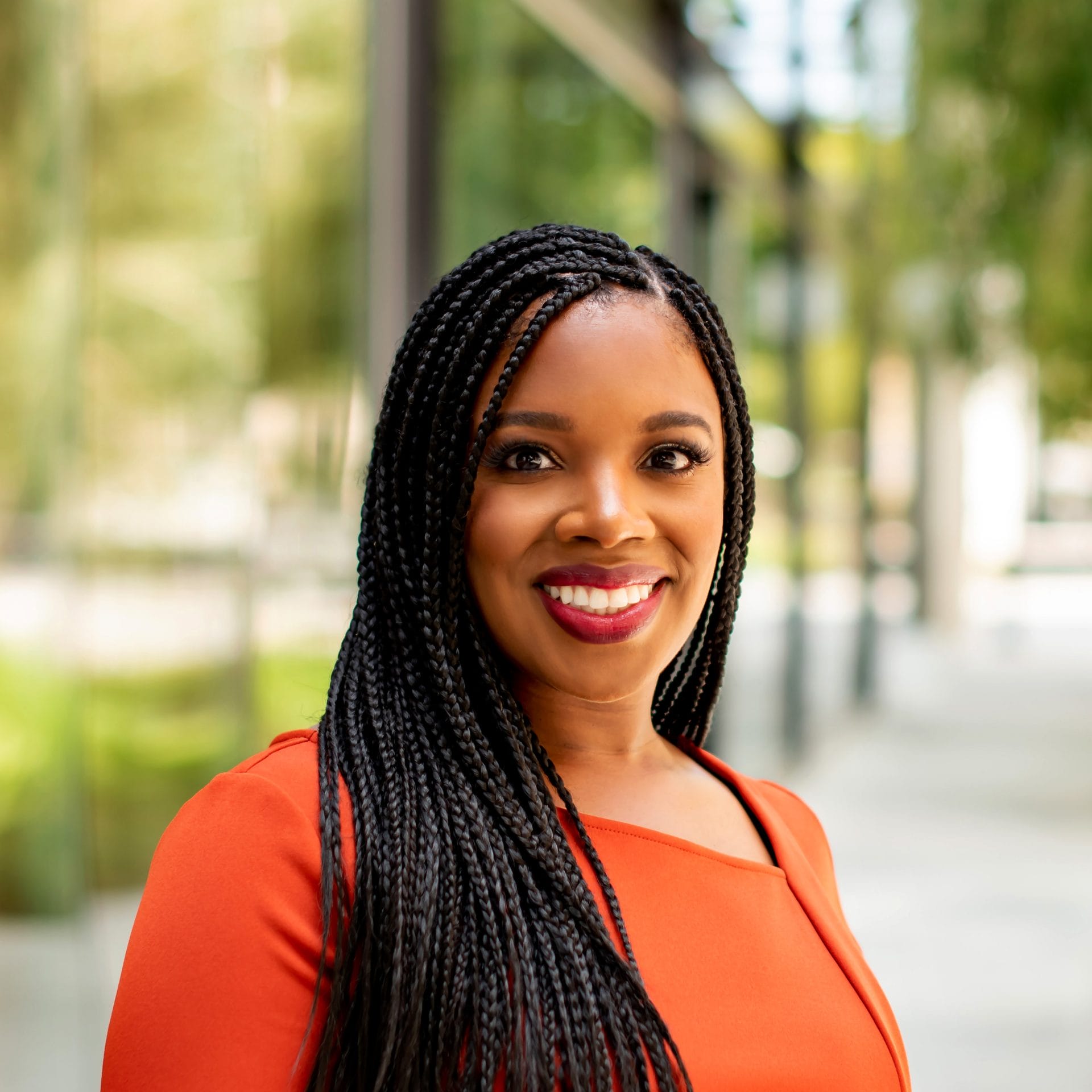
Dr. Lakeya Cherry is an executive coach, facilitator, and trusted advisor dedicated to cultivating courageous, authentic, and high-impact leaders. She is the CEO and Founder of Lakeya Cherry LLC, the Founder of Changemakers of Color, and a Partner at Evolution. An ICF Certified Coach, she supports individuals, teams, and organizations across sectors in aligning leadership with purpose, equity, and well-being.
Her clients have included The Gates Foundation, Snap, Cisco, Takeda Pharmaceuticals, Seattle Children’s Hospital, Glassdoor, and the NFL Players Association’s The Trust. Known for her deep listening, strategic thinking, and grounded presence, she helps leaders build psychologically safe, inclusive, and high-performing cultures.
As the founder of Changemakers of Color, Dr. Cherry created a community and leadership initiative to elevate and empower leaders of color navigating complexity and driving meaningful change.
Previously, she served as CEO of The Network for Social Work Management, leading its global expansion and launching programs that strengthened diverse leadership pipelines.
Dr. Cherry holds a Doctorate in Social Work from the University of Southern California (Order of Arête recipient), a Master’s in Social Work from Columbia University, and a Bachelor’s in Psychology and Legal Studies from UC Santa Cruz. She is a Certified Dare to Lead™ Facilitator, StartingBloc Fellow, Rmrkblty #IAmRemarkable Facilitator, and trained in Enneagram, EQi 2.0/EQ 360, team coaching, psychological safety, and DEI.
She also serves as a Commissioner on the San Diego Commission on the Status of Women and believes that when leaders lead from within—with clarity, vulnerability, and intention—they create space for everyone around them to thrive.
What is your typical day, and how do you make it productive?
No two days look the same, which is part of what keeps my work fulfilling. My mornings typically start with a Pilates class before diving into my work for the day. Each day is a blend between coaching sessions and facilitation. I also put blocks on my calendar to have time to eat lunch, prep between sessions, handle admin tasks, reflect, and connect with those in my network. I’ve learned that productivity isn’t about doing more; it’s about doing what matters most.
How do you bring ideas to life?
I pay close attention and listen attentively to people, trends, and what’s unsaid. I start with curiosity, test ideas in conversation, and then pilot in small ways before scaling. Whether it’s a new leadership program or a framework, I create with practicality in mind, often thinking about the audience, their environment, and how to be inclusive to various personalities and learning types, while ensuring that everyone benefits to some degree. I also believe in co-creation, i.e., collaborating with those impacted because I can’t assume I know what’s best for an audience as I have different lived experiences.
What’s one trend that excites you?
I’m genuinely excited about the thoughtful integration of AI into leadership and coaching. When used intentionally, AI can take care of repetitive, behind-the-scenes tasks, which frees up more time and energy to focus on what matters most: being fully present with my clients and supporting their individual, team, and organizational growth.
I don’t believe AI can replace the relational, emotional, and psychological depth at the core of coaching, but it can support it.
What is one habit that helps you be productive?
I check in with myself throughout the day. If my energy is low or I’m feeling distracted, I know it will ultimately affect the quality of my work. So I listen to my body and give it what it needs, which sometimes means taking a midday nap (one of the gifts of working for myself). On other days, I pause and ask, “Is this the best use of my time and energy?” If the answer is no, I give myself permission to adjust. These habits help ensure I show up with the clarity, presence, and energy required for the work before me.
What advice would you give your younger self?
Your worth is inherent. You don’t have to prove it by overworking. Your value isn’t tied to your productivity or how others perceive you. Success isn’t about being constantly busy or checking every box; it’s about alignment, fulfillment, and showing up as your whole self. I’d tell her to define success on her terms, not by external expectations or accolades. I’d remind her that she’ll be happier and more impactful when she’s rested, grounded, and leading from a place of wholeness.
Tell us something you believe almost nobody agrees with you.
Rest is a leadership strategy. In a world that glorifies hustle and ties worth to output, I know from experience that slowing down leads to better decisions, deeper relationships, and more sustainable impact. To lead well, you have to be well, starting with rest.
What is the one thing you repeatedly do and recommend everyone else do?
Schedule space on your calendar to relax. You can use this time to think, reflect, listen to music, or simply breathe before tackling any meetings and deliverables.
When you feel overwhelmed or unfocused, what do you do?
I step away, take a walk, take a nap, or call a trusted friend. When I feel overwhelmed or unfocused, it indicates that I need a break to breathe and reset.
What is one strategy that has helped you grow your business or advance in your career?
I invest in relationships. Whether it’s clients, collaborators, or mentors, I try my best to nurture my relationships organically and while being my authentic self. Most of my business growth and career advancement have come through my network.
What is one failure in your career, how did you overcome it, and what lessons did you take away from it?
One of the most defining early failures in my career was going to law school because everyone else thought it would be a great idea. I didn’t pause long enough to ask myself whether I truly wanted that path or if I just loved how people responded when I said I was going. I got caught up in being seen a certain way, e.g., successful and powerful, without really checking in with what I wanted.
That experience taught me a hard but necessary truth: I can’t build a life based on other people’s opinions. I had to learn to trust myself, even if it meant changing direction. That clarity led me to apply to graduate school in a different field and ultimately shift careers entirely. It was the beginning of my honoring alignment over approval, a practice I continue to return to.
What is one business idea you’re willing to give away to our readers?
Find your business besties. Leadership can be lonely, but it doesn’t have to be. Surround yourself with people who get it, those who challenge you, support you, and expand your vision. The right relationships can be game changers.
What is one piece of software that helps you be productive? How do you use it?
Calendly. I resisted it for years, but once I embraced it, it helped me protect my time, eliminate back-and-forth scheduling, and focus on what matters.
What is the best $100 you recently spent?
A deep tissue massage. As someone who used to glorify workaholism, I now prioritize rest and recovery. Investing in my well-being is non-negotiable.
Do you have a favorite book or podcast from which you’ve received much value?
I’m a fan of The Dare to Lead Podcast by Brené Brown. It’s an incredible resource for leaders navigating vulnerability, courage, and authentic leadership.
What’s a movie or series you recently enjoyed and why?
Running Point is a powerful reminder of what it means to lead under pressure while staying true to who you are. I appreciated how it highlighted the complexities women face in leadership, especially in high-stakes, male-dominated environments, and the strength it takes to challenge the status quo with grace and grit.
Key learnings:
- Rest is a strategy, not a luxury. Sustainable success requires balance, and overworking is not a measure of worth.
- Relationships drive impact. Investing in authentic connections is essential for leadership, career growth, and business success.
- Creating space for reflection fuels productivity. White space in your calendar leads to better decision-making and innovation.
- Leadership is an inside-out process. Self-awareness and alignment are crucial before stepping into new opportunities.
- The future of leadership is human-centered. Psychological safety, emotional intelligence, and well-being are no longer optional; they are business imperatives.