
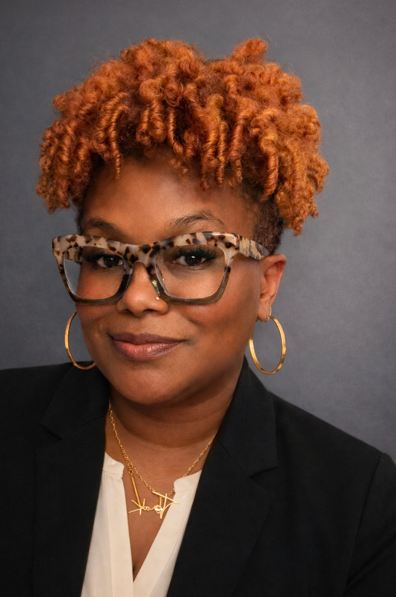
LaTosha Kerley has built her career around understanding how workplaces really function. As an HR executive, she is known for her steady leadership, clear thinking, and ability to connect policy with real people.
Her professional journey began early. At fourteen, Kerley took her first job. The role introduced her to workplace dynamics and the importance of professionalism. She learned quickly that every environment has different personalities, expectations, and challenges. Those early lessons helped shape her calm and observant leadership style.
Over time, Kerley gravitated toward human resources. She saw HR as the place where business operations and human behavior meet. It allowed her to focus on communication, structure, and the systems that help organizations run smoothly.
“HR isn’t just policy,” she often says. “It’s understanding how systems affect people.”
Kerley later earned a master’s degree in Human Resource Management from Strayer University. The program gave her a deeper framework for what she had already been learning through experience. It strengthened her understanding of workplace policy, leadership strategy, and organizational structure.
Today, Kerley focuses on helping organizations create clear systems and stronger communication. She believes consistency, fairness, and listening are the foundations of effective leadership.
Her approach is thoughtful and steady. She values credibility over visibility and long-term thinking over quick wins.
For Kerley, leadership is not about attention. It is about doing the work well and building systems that help people succeed.
What is your typical day, and how do you make it productive?
My day usually starts quietly. I like to review emails and notes before jumping into meetings. HR work is often about solving people and process issues, so I try to begin the day with a clear mind.
Most of my time is spent listening. That might mean talking with leadership, reviewing policies, or helping teams work through challenges. I keep a running list of observations. Sometimes the smallest patterns reveal the biggest operational gaps.
Productivity for me is not about speed. It’s about clarity.
How do you bring ideas to life?
I observe first. I watch how systems actually work in practice. If something feels inefficient, I try to trace where the process breaks down.
Then I simplify the idea. Good solutions are usually not complicated. They just need to be structured clearly and communicated well.
What’s one trend that excites you?
I’m interested in the shift toward more transparent workplace communication. Employees want clarity about expectations, policies, and decisions. Organizations that embrace that transparency tend to operate more smoothly.
What is one habit that helps you be productive?
Writing things down. I keep notes on everything. Conversations, patterns, small observations. Over time those notes help me connect dots that might otherwise be missed.
What advice would you give your younger self?
Slow down and observe more. Early in my career I thought progress meant moving fast. Now I know that thoughtful decisions are usually the better ones.
Tell us something you believe almost nobody agrees with you on?
I think many workplace problems are actually simple to solve. People assume issues are complex when they are often just communication gaps.
What is the one thing you repeatedly do and recommend everyone else do?
Ask questions. Not aggressively, but thoughtfully. Good questions reveal how systems actually work.
When you feel overwhelmed or unfocused, what do you do?
I step away for a short reset. Sometimes I cook or bake. Baking especially helps because it requires precision and patience. It brings my focus back.
What is one strategy that has helped you grow your business or advance in your career?
Observation. I watch how people move through processes. Where they pause. Where they struggle. Those moments show where systems need improvement.
What is one failure in your career, how did you overcome it, and what lessons did you take away from it?
Early in my career I pushed for a policy change too quickly. I focused on the logic of the idea but underestimated how important communication and timing were.
The lesson was simple. Even good ideas need the right rollout.
What is one business idea you’re willing to give away to our readers?
A simple workplace audit service that focuses only on communication flow. Not compliance. Just understanding how information moves through an organization. Many companies underestimate how valuable that insight would be.
What is one piece of software that helps you be productive? How do you use it?
Microsoft OneNote. I use it to track ideas, meeting notes, and observations. It keeps everything organized in one place.
Do you have a favorite book or podcast you’ve gotten a ton of value from and why?
Mel Robbins’ Let Them Theory made an impression on me. It’s a reminder that you don’t have to control every outcome. Sometimes leadership means allowing people the space to grow.
What’s a movie or series you recently enjoyed and why?
I still enjoy Marvel films. They’re creative and imaginative, but they also tell stories about teamwork and responsibility.
Key learnings
- Strong workplace systems are built through observation and clear communication.
- Many organizational challenges stem from simple process gaps rather than complex problems.
- Consistency and credibility are often more valuable than visibility in leadership.
- Asking thoughtful questions can reveal how workplace systems actually function.
- Creating space for people to grow can be more effective than trying to control every outcome.