
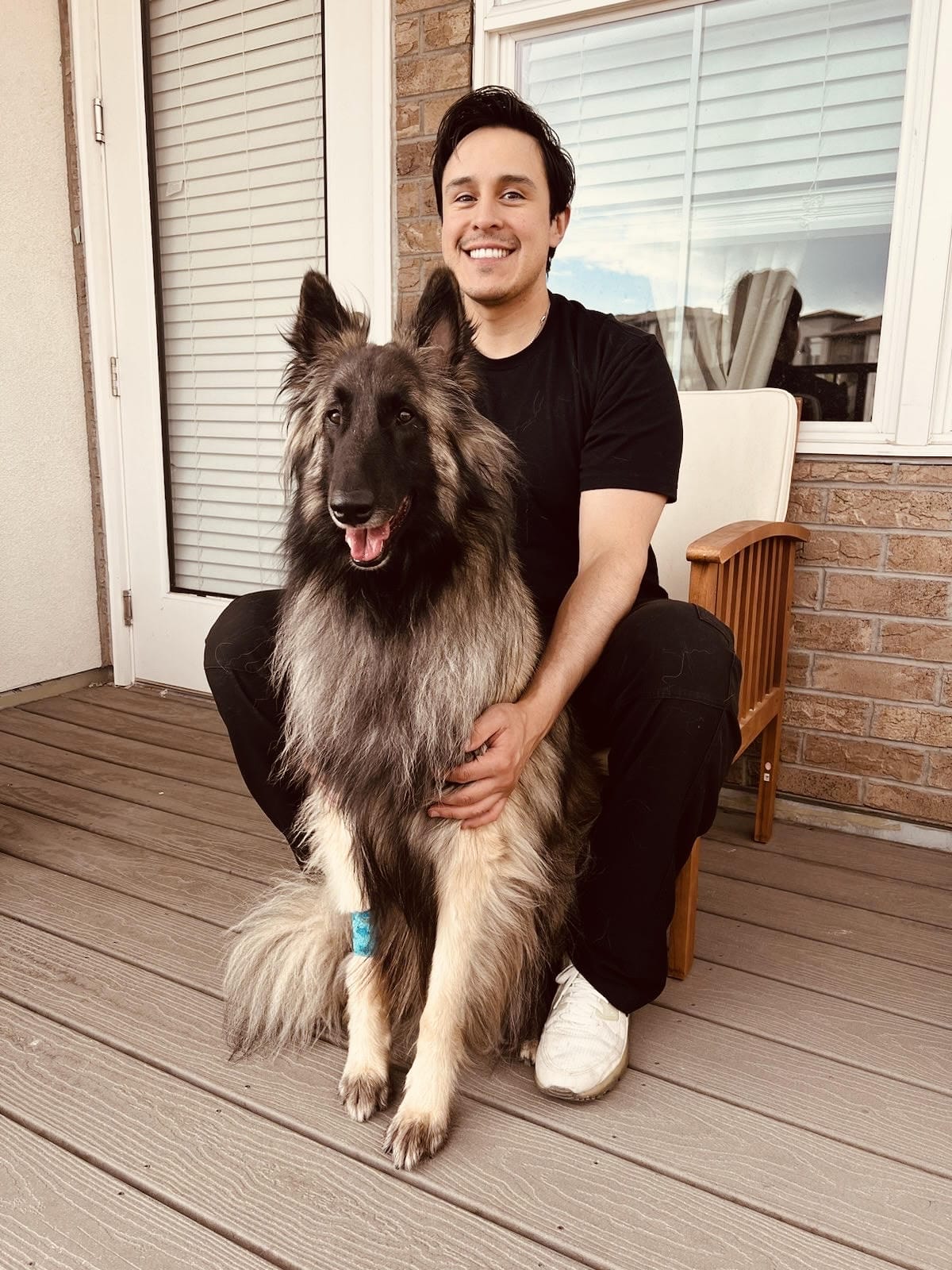
Lee Tafoya is a multifaceted healthcare professional with a track record of excellence across nursing, clinical research, and business development. Holding degrees in both Nursing and Philosophy/Psychology, Lee combines analytical thinking with empathetic leadership to bridge the gap between patient care and healthcare innovation.
In his current role as a Business Development Executive at a prominent diagnostic laboratory, Lee drives strategic growth through relationship-building, service optimization, and targeted marketing. His ability to uncover root causes and translate insights into actionable strategies has made him a key player in expanding client portfolios and enhancing patient outcomes.
Earlier in his career, Lee made significant contributions to the fields of immunology and hematology as a Research RN, particularly in the execution of stem cell apheresis protocols with Dendreon. His leadership as Clinical Director and Assistant Director of Nursing in home health settings showcases his skill in elevating organizational performance, achieving regulatory compliance, and scaling operations in competitive markets.
Lee’s career is defined by curiosity, adaptability, and a deep-rooted commitment to doing what’s right, for patients, partners, and communities. His philosophy is simple yet powerful: ethical practices are good for people and business.
He has extended his impact globally through medical relief efforts, working with underserved populations and refugees. Whether in the boardroom or on the frontlines, Lee brings compassion, focus, and a global perspective to every endeavor.
Outside of work, he enjoys playing guitar, hiking, and training dogs, and he never turns down a good philosophical debate.
What is your typical day, and how do you make it productive?
As a Business Development Executive for a laboratory, my days are structured around client acquisition, logistics improvement, and service recovery. I work with private practices, nursing homes, and healthcare networks. Productivity comes from staying strategic. I research local market needs, identify areas where our services create value, and build partnerships grounded in trust. Every interaction is approached with integrity, and I regularly reassess my time allocation to ensure I’m focused on high-impact tasks. I also try to stay ahead of problems by using root cause analysis, not just treating surface-level symptoms.
How do you bring ideas to life?
I think divergently and avoid getting boxed into conventional pathways. Most people follow a linear progression, which is sometimes helpful, but true innovation often requires looking at problems from entirely different angles. I question assumptions, research cross-disciplinary approaches, and bounce ideas off people outside my field. Sometimes, the best solutions come from outside the expected playbook. I’ve learned to trust the creative process, even when it feels uncertain. I test, refine, and implement, and I never let perfectionism stall momentum. Movement is key. So is listening to feedback from a wide variety of stakeholders.
What’s one trend that excites you?
I’m excited about advances in biologics and immunomodulation, particularly in treatments for rare diseases. My background in nursing and clinical trials, especially in immunology and hematology, makes me appreciate the impact these therapies can have. The science is evolving rapidly, and we’re seeing precision treatments where there were previously only generalized options. This isn’t just about medicine; it’s about offering hope where there wasn’t any. It’s fascinating to witness the intersection of innovation, human need, and patient-centered care. I follow these trends closely because they’re shaping the future of healthcare.
What is one habit that helps you be productive?
Constant learning is a foundational habit for me. I’ve transitioned across roles, clinical research, nursing leadership, and now business development, and in each, I’ve had to pick up new tools and frameworks. I read broadly, take notes, and actively look for ways to apply what I learn, even if it’s outside my professional wheelhouse. Whether I’m brushing up on emerging clinical trends or learning about market dynamics, I keep a “working journal” to process information and refine ideas. Growth requires humility, so I stay open to new knowledge and perspectives, even if they challenge my comfort zone.
What advice would you give your younger self?
Be decisive and stop dwelling on setbacks. Reflection has its place, but too much introspection can become paralyzing. I would tell my younger self that failure isn’t just inevitable. It’s essential. Don’t wait for the perfect moment or foolproof plan; act, learn, adjust. Also, simplify your life. Not everything deserves your time or emotional energy. Stay focused on what matters and build routines that support your larger goals. And lastly, don’t underestimate how much consistency, not intensity, creates long-term impact. It’s the small, repeated actions that define who you become.
Tell us something you believe that almost nobody agrees with you on?
I believe the current obsession with cost-cutting and risk aversion is doing more harm than good, especially in healthcare. While efficiency matters, an overemphasis on reducing expenses often erodes quality, innovation, and staff morale. Not every risk is bad, and not every cost-saving measure is wise. We’ve created systems where people are afraid to experiment or advocate for patient-centered initiatives because they might slightly dent a budget. I think long-term value and integrity should guide decisions, not just quarterly metrics. It’s a view that tends to clash with conventional operational thinking.
What is the one thing you repeatedly do and recommend everyone else do?
Challenge yourself and embrace failure. I’ve learned far more from setbacks than I ever have from success. Whether it’s trying something outside your comfort zone or taking on a role you’re not 100% ready for, those moments of discomfort are where real growth happens. Failing gracefully teaches humility, sharpens your skills, and gives you the resilience to keep improving. I seek out projects that stretch me, and I encourage others to stop chasing perfection. Instead, aim for progress and treat every mistake as feedback.
When you feel overwhelmed or unfocused, what do you do?
I break things down into smaller, measurable steps. When the big picture feels too chaotic, I zoom in on one immediate task and execute that first. I also reevaluate how I’m allocating my time: what’s urgent, what’s important, and what can be delegated. Often, the feeling of being overwhelmed comes from trying to tackle everything at once. Creating quick wins builds momentum. I also remind myself that not everything requires my control. When possible, I let go of the need for perfection and just focus on progress.
What is one strategy that has helped you grow your business or advance in your career?
Being adaptable and actively managing my mindset toward adversity has helped me immensely. I’ve moved between clinical care, leadership, and now business development. Each shift required a new toolkit and mindset. What helped was viewing every challenge as a learning opportunity and not being afraid to blend disciplines. For example, I’ll borrow logistics principles from supply chain management to solve problems in a clinical lab setting. Adaptability isn’t just useful. It’s necessary. If you’re rigid in today’s healthcare landscape, you risk becoming irrelevant. Embracing change has been key to my growth.
What is one failure in your career, how did you overcome it, and what lessons did you take away from it?
Early in my career, I lost a significant research contract because I let daily operational pressures distract me from follow-through. It wasn’t due to incompetence but a lack of structure. That experience forced me to rethink how I manage time and priorities. I adopted systems like daily planning, digital reminders, and accountability tracking. Most importantly, I learned that even good intentions aren’t enough if your execution falters. Now, I approach each opportunity with disciplined organization and clarity. Failure taught me that excellence isn’t just about effort. It’s about consistency.
What is one business idea you’re willing to give away to our readers?
There’s a massive need for innovation in mental healthcare. Current models are often outdated and siloed, relying too heavily on pharmacology alone. I believe in a multi-modal, multidisciplinary approach that integrates therapy, nutrition, lifestyle coaching, and community care. Think of a platform that blends telehealth, peer support, and wellness practices to offer holistic mental health solutions. It’s not about replacing traditional psychiatry. It’s about enhancing it with a more human-centered model. With rising mental health needs, this kind of integrated approach is more relevant than ever.
What is one piece of software that helps you be productive? How do you use it?
I use OneNote as a central hub for my work. It functions as my digital journal, planning tool, and idea repository. I organize notes by topic, client meetings, service strategies, research ideas, and it helps me maintain continuity across projects. Because it’s cloud-based, I can access it on any device, whether I’m at my desk or in the field. I also use it to reflect on failures, track follow-ups, and document insights that might otherwise slip through the cracks. It’s become essential for staying organized and focused.
Do you have a favorite book or podcast you’ve gotten a ton of value from and why?
My favorite podcast is Philosophize This! by Stephen West. It brings philosophical ideas down to earth without watering them down. Having studied Philosophy in undergrad, I appreciate how it helps me think critically and evaluate problems with nuance. As for books, The Hero with a Thousand Faces by Joseph Campbell stands out. It’s deeply symbolic and speaks to life’s challenges through the lens of mythology. Every time I revisit it, I find new meaning relevant to whatever I’m facing at that point in life.
What’s a movie or series you recently enjoyed and why?
My fiancée and I recently watched Demon Slayer, and I was surprised by how much I connected with the protagonist, Tanjiro. Despite his struggles and constant adversity, he never compromises his values or compassion. That’s something I admire and aspire to emulate in my own life. It’s a reminder that kindness and strength aren’t mutually exclusive. The storytelling, visuals, and emotional arcs are compelling, but it’s Tanjiro’s unwavering spirit that left the biggest impression on me.
Key learnings
- Embrace failure, it’s your best teacher.
- Divergent thinking often leads to the most creative solutions.
- Success requires both adaptability and structure.
- Holistic care, whether for patients or teams, leads to better outcomes.
- Integrity and consistency always compound over time.