
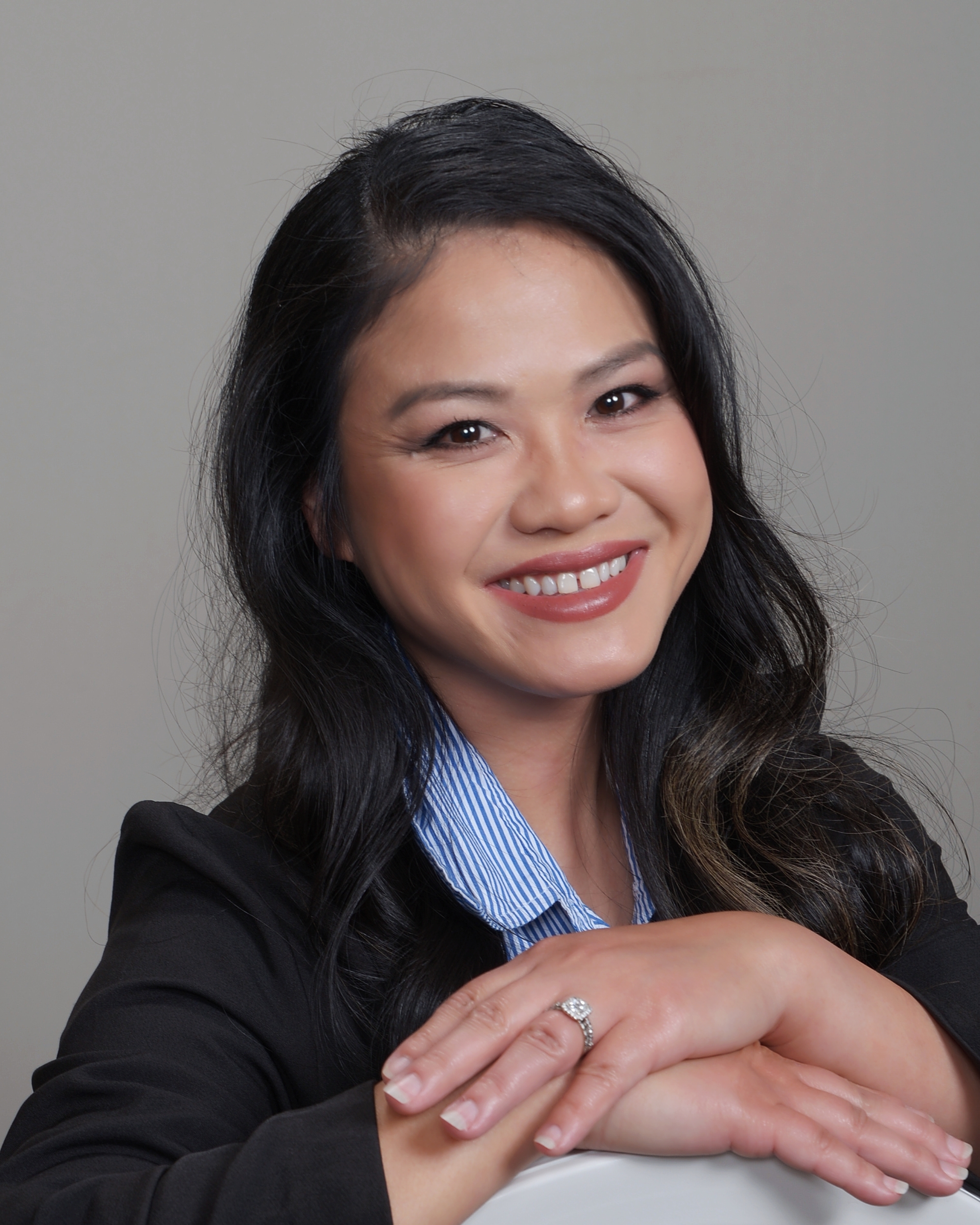
Linda Ellard grew up in Michigan, where she played just about every sport there was to play: cheerleading, wrestling, softball, volleyball, cross country. That range shows up later in her career, too. She started nursing in Tulsa in 2009 and spent her early years working as a burn nurse, a job that pulled her toward wound care and, eventually, toward the question of what actually causes a wound to turn into something worse. By 2017, she had become an advanced practice registered nurse.
Her first APRN role was as a hospitalist, a job that put her in contact with specialists across nearly every discipline and forced her to hold a wide base of medical knowledge at once. That broad foundation turned out to be useful. Since 2019, she has practiced as an infectious disease APRN, working alongside five different infectious disease attending physicians, each with a different way of reasoning through a case. In that same stretch, she has also worked in chronic pain management and addiction treatment, and from 2024 to 2026 she has added wound care back into her practice, closing a loop that started in the burn unit years earlier.
She studied at Wayne State University and a community college in Michigan before finishing her BSN and MSN at OU Tulsa, making dean’s honor roll for most of her time in school. In 2019 she began a DNP at the University of Alabama Huntsville, which she has paused with about a year and a half left to finish. Outside of work, she fishes, goes to the gym, and credits her family, especially her husband, with keeping her grounded through all of it.
What is your typical day, and how do you make it productive?
My days move between specialties, which keeps me sharp but also means I have to be organized about it. Mornings are usually rounds or patient visits tied to infectious disease, then I shift into pain management or addiction treatment appointments in the afternoon. I keep a running list the night before so I’m not reconstructing my day from memory at 6 a.m. The productivity comes from not trying to multitask across specialties at the same time. One patient type at a time, one chart at a time.
How do you bring ideas to life?
I write them down first, then break them into steps I can actually act on that week. If it’s a clinical idea, like a different way to coordinate between a pain management patient and their infectious disease needs, I’ll run it by one of the attendings I work with before I build it into a plan. Five different attendings means five different ways of thinking through a problem, and I use that.
What’s one trend that excites you?
I like seeing patients take more ownership of their own recovery, tracking their own symptoms, their own labs, asking sharper questions at appointments. It changes the conversation from me explaining everything to us working through it together.
What is one habit that helps you be productive?
Setting realistic goals and working through them one at a time instead of all at once. I used to try to tackle everything in a week. Now I pick what actually matters and let the rest wait its turn.
What advice would you give your younger self?
Stop rushing the parts of your training that feel slow. The years I spent in the burn unit felt like a detour at the time. They ended up being the reason I understood infection the way I do now.
Tell us something you believe almost nobody agrees with you on?
I think burn nursing should be a required rotation for anyone going into infectious disease. You see what infection actually does to tissue in real time, not just on a lab report, and it changes how you treat every wound after that.
What is the one thing you repeatedly do and recommend everyone else do?
Get outside and move. Fishing does for my head what a gym session does for my body. I recommend people find whatever version of that works for them and protect the time for it.
When you feel overwhelmed or unfocused, what do you do?
I step away, usually outside, and let my husband talk me through it if it’s a bigger issue. Most of the time I just need an hour of quiet before I can look at the problem clearly again.
What is one strategy that has helped you grow your business or advance in your career?
Working under multiple attending physicians instead of just one. Each of the five infectious disease attendings I’ve worked with approaches a case differently, some lean heavier on imaging, some on history, some on gut instinct built over decades. Seeing those differences side by side taught me faster than any single mentor could have.
What is one failure in your career, how did you overcome it, and what lessons did you take away from it?
Early on, I asked a nurse on call to phone me back with lab results and the callback never came. The patient ended up in surgery the next day. I overcame it by changing how I handle waiting periods entirely. Now I consult other specialists while labs are pending instead of sitting on my hands. I never delay care waiting for one piece of information again.
What is one business idea you’re willing to give away to our readers?
A simple scheduling tool that lets patients seeing multiple specialists, infectious disease, pain management, wound care, see one combined calendar instead of juggling three separate portals. Coordination between specialties is where a lot of care falls through the cracks.
What is one piece of software that helps you be productive? How do you use it?
I use a notes app to keep a running list of patient follow-ups that don’t fit neatly into the EHR, things like a phone call I’m waiting on or a question I want to bring to another provider. It’s low-tech but it keeps small things from slipping through.
Do you have a favorite book or podcast you’ve gotten a ton of value from and why?
I lean toward nonfiction that deals with how people make decisions under pressure. It’s useful outside of clinical work, and reading has always been a way for me to slow my brain down after a long shift.
What’s a movie or series you recently enjoyed and why?
I enjoyed a medical drama recently, mostly because it got some of the small details right that most shows skip over. It’s rare to watch one and not immediately start picking apart the clinical accuracy, so when one holds up, I notice.
Key learnings
- Broad early experience, including work outside one’s eventual specialty, can build clinical judgment that specialization alone does not.
- Exposure to multiple mentors or supervisors with different approaches accelerates skill development faster than a single mentorship track.
- Treating delays in information, such as pending lab results, as a cue to consult other specialists rather than wait can prevent care gaps.
- Physical hobbies and time away from clinical settings support clearer decision-making under pressure.
Coordination gaps between specialties remain a practical problem that simple tools, not just new programs, could help solve.