
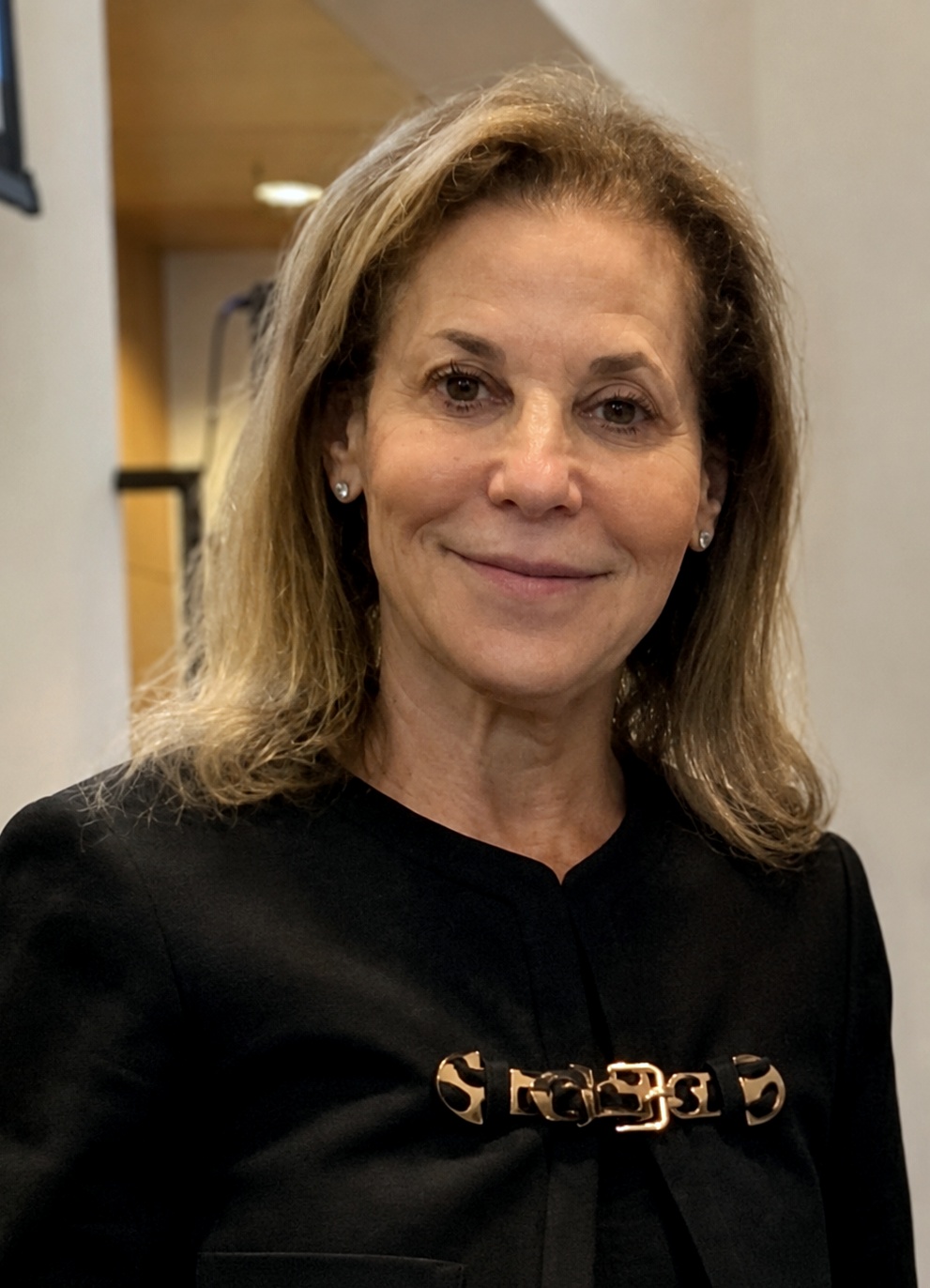
Lisa Jonas spent eight years as an Assistant United States Attorney for the Southern District of New York (SDNY). Her time as an SDNY lawyer included serving as a member of the team that prosecuted a public corruption and racketeering case, United States v. Mason Tenders. She received the U.S. Department of Justice Director’s Award for Superior Performance. Following her time as an Assistant U.S. Attorney, Lisa Jonas moved into a career as a senior compliance and governance executive, supporting senior executives, regulators, and governing bodies at major global financial institutions.
Throughout her private-sector career, Ms. Jonas has gained extensive experience advising on financial crime, cross-border regulatory risk, and related issues. While serving as Executive Director, Head of Americas Anti-Bribery and Corruption and Head of Americas Government Relations Compliance at UBS, she helped senior business leaders navigate anti-bribery, corruption, and a range of related political activities matters across multiple business divisions in the Americas. She also represented UBS at the Europol Financial Institutions Innovation Lab on Human Trafficking. She has addressed trafficking and related crimes in her philanthropic work with groups such as Rights4Girls, the New York State Anti-Trafficking Coalition, and Sanctuary for Families.
Ms. Jonas previously served in governance and compliance leadership roles at Goldman Sachs and Deutsche Bank. In addition to a degree in law, Ms. Jonas also holds a bachelor’s degree in psychology from the University of Colorado, in addition to advanced professional studies at the Association of Certified Anti-Money Laundering Specialists. She is in the midst of completing the Wharton School’s AI for Business program.
What is your typical day, and how do you make it productive?
I tend to be most productive when I give my day some structure, but leave room for the unexpected. I start by identifying the two or three things that genuinely need my attention rather than allowing email and other people’s priorities to dictate the day. I’ve spent much of my career in environments where something urgent can suddenly change the agenda, so I’ve learned to distinguish between what is truly important and what is simply demanding attention.
I also make time to move: a walk, a workout, whatever fits. Exercise clears my head and often helps me solve problems that seemed much more complicated when I was sitting at a desk. And I make time to read. Staying curious—about business, technology, world events, books, or something completely outside my professional life—is part of being productive for me.
How do you bring ideas to life?
I usually begin by asking what problem I am actually trying to solve. In law, public service and financial services, I’ve seen very sophisticated solutions developed for problems that were never clearly defined in the first place.
Once I understand the problem, I talk to the people who experience it from different perspectives. Then I try to turn the idea into something concrete enough to test. I’m a great believer in iteration. An idea rarely emerges fully formed. You make it better by exposing it to smart people, challenging your own assumptions, and being willing to change direction when the facts tell you to.
What’s one trend that excites you?
The thoughtful use of artificial intelligence to improve human decision-making. I’m particularly interested in what AI can do in risk management and compliance—not to replace human judgment, but to make that judgment better informed.
Financial institutions possess enormous amounts of information, but historically much of it has existed in disconnected systems. AI creates the possibility of identifying patterns across that information much earlier and turning risk assessment from a largely retrospective exercise into something increasingly dynamic and predictive. The challenge, and what makes the subject especially interesting to me, is building the governance around AI so that innovation and accountability develop together.
What is one habit that helps you be productive?
Writing things down. When I have a complicated problem, I find that the act of writing forces me to clarify what I actually think. Something that seems impossibly complicated in my head often becomes manageable once I reduce it to its essential components on paper.
I also keep a running list of what needs to be accomplished and continually reprioritize it. I like the satisfaction of crossing things off, but the real value is that it prevents the urgent from automatically crowding out the important.
What advice would you give your younger self?
Trust your instincts sooner, and don’t confuse someone else’s certainty with wisdom. Some of the most consequential decisions in my career involved situations in which there wasn’t an obvious answer. Over time, I learned that judgment is partly the accumulation of experience, but it is also the willingness to listen to the voice telling you that something doesn’t quite make sense.
I would also tell my younger self that careers do not have to follow a straight line. Some of the most interesting opportunities in my life came from leaving an established path and entering a world I knew very little about. Reinvention can be uncomfortable, but it can also be enormously rewarding.
Tell us something you believe almost nobody agrees with you on?
More information does not necessarily lead to better decisions. We have become extraordinarily good at producing data, presentations, dashboards, and metrics, but sometimes all of that information obscures rather than illuminates the question that actually needs to be answered.
I would rather have five meaningful pieces of information and someone with excellent judgment than 100 metrics and no one willing to make a decision. Technology can make us smarter, but it cannot relieve us of the responsibility to think.
What is the one thing you repeatedly do and recommend everyone else do?
Read outside your own field. Some of the most useful ideas I have encountered professionally did not come from compliance manuals or legal opinions. They came from history, psychology, technology, literature, and conversations with people whose lives were completely different from mine.
Reading broadly makes you more curious, and curiosity makes you better at asking questions. In my experience, the person who asks the right question often contributes more than the person who believes they already know the answer.
When you feel overwhelmed or unfocused, what do you do?
I move. I go for a walk, work out, hike when I can, or simply get away from screens. Physical movement quiets my mind and gives me enough distance from a problem to see it differently.
Then I come back and break whatever is overwhelming me into smaller pieces: What actually has to happen today? What can wait? What am I worrying about that I cannot control? Usually, the problem becomes much less intimidating once I separate those things.
What is one strategy that has helped you grow your business or advance in your career?
Being willing to become a beginner again. My career has crossed very different worlds—law, public service, human rights, and global financial institutions. Each transition required me to walk into rooms where other people knew things I didn’t know yet.
Instead of pretending otherwise, I asked questions and learned from people at every level of an organization. That willingness to learn has allowed me to move into new areas and eventually contribute something different: the ability to connect legal analysis, regulatory expectations, business realities, and human behavior. Intellectual curiosity has probably advanced my career more than any deliberate career strategy.
What is one failure in your career, how did you overcome it, and what lessons did you take away from it?
One lesson I learned relatively late is that doing excellent work is not always enough. Earlier in my career, I believed that if you worked hard, exercised good judgment, and produced strong results, the work would largely speak for itself. Organizations are more complicated than that.
I learned the importance of communicating what you are trying to accomplish, building relationships before you need them, understanding the perspectives of the people affected by your decisions, and making sure that good ideas have advocates. I don’t think of that as office politics. I think of it as part of leadership. An idea that never gains support cannot create change, regardless of how good it is.
What is one business idea you’re willing to give away to our readers?
I would build a technology platform that gives senior executives a real-time view of an organization’s ethical and financial-crime risk—not simply a dashboard showing historical compliance statistics.
It would integrate information that often sits in separate systems: transactions, investigations, employee concerns, third-party relationships, regulatory developments, geographic exposure, and other indicators. AI could identify emerging patterns and anomalies, while experienced professionals would provide the judgment and context. The objective would be to identify where risk may be developing before it becomes an investigation, enforcement action, or front-page story. Many companies possess the necessary information already. What they lack is a meaningful way to connect it.
What is one piece of software that helps you be productive? How do you use it?
My calendar. I use it as more than a scheduling tool—it’s how I protect time for what actually matters rather than letting the day get taken over by whatever is loudest. If something important isn’t on my calendar, in my experience it tends to get crowded out.
What matters most is treating calendar time as a commitment rather than a suggestion. I block time before a big meeting or decision rather than assuming I’ll find it in the moment, and I try to protect a small amount of unstructured time every day, because some of my best thinking happens when nothing is scheduled at all.
What is the best $100 you recently spent? What and why?
A stack of books. I still love physical books, and buying them is one expenditure I almost never regret—even when my ambition to read them exceeds the available hours in a day.
A book can entertain you, teach you something completely unexpected, or alter the way you think about a subject you believed that you understood. That is an extraordinary return on a relatively small investment.
Do you have a favorite book or podcast you’ve gotten a ton of value from and why?
I have never been very good at naming a single favorite book because different books matter at different moments in your life. What I value most is fiction that allows me to inhabit a consciousness very different from my own.
I also read widely outside of fiction—history, biography and current affairs. The common thread is curiosity. Some of my favorite books include Jhumpa Lahiri’s Interpreter of Maladies, and Theodore White’s In Search of History. I’m drawn to books that transport me to another world or make me reconsider something I thought I understood rather than simply confirming what I already believe.
On podcasts, I’m drawn to serious narrative journalism—1619, Tortoise Investigates’ We Call Her Emma, and Serial Productions’ The Retrievals have all stayed with me long after I finished listening. And for something completely different, I’m a regular listener of Popcast and The Athletic.
What’s a movie or series you recently enjoyed and why?
I tend to love intelligent thrillers and mysteries—stories that require you to pay attention and gradually reveal that what you thought was happening isn’t quite what is happening. What keeps me interested is usually less the crime itself than the psychology: why people make the choices they make, what they conceal, and how seemingly small decisions can have enormous consequences.
I recently enjoyed Furious, the Hulu thriller with Emmy Rossum—and I still come back to The Godfather, which holds up every time.
I also enjoy British crime series like Slow Horses because they often trust the audience and allow characters to be complicated rather than dividing everyone neatly into heroes and villains.
Key learnings
- Curiosity is a professional advantage. Reading broadly, asking questions, and remaining willing to learn can be as important to a career as subject-matter expertise.
- Technology is most powerful when it improves rather than replaces human judgment. AI has enormous potential to transform risk management, provided that innovation is accompanied by thoughtful governance.
- Good judgment requires distinguishing meaningful information from noise. More data does not automatically produce better decisions.
- Reinvention can strengthen a career. Moving between disciplines can create a perspective that would be difficult to develop by following a single professional path.
- Ideas require both substance and support. Creating change means understanding the problem, listening to different perspectives. and building the relationships necessary to turn an idea into action.