
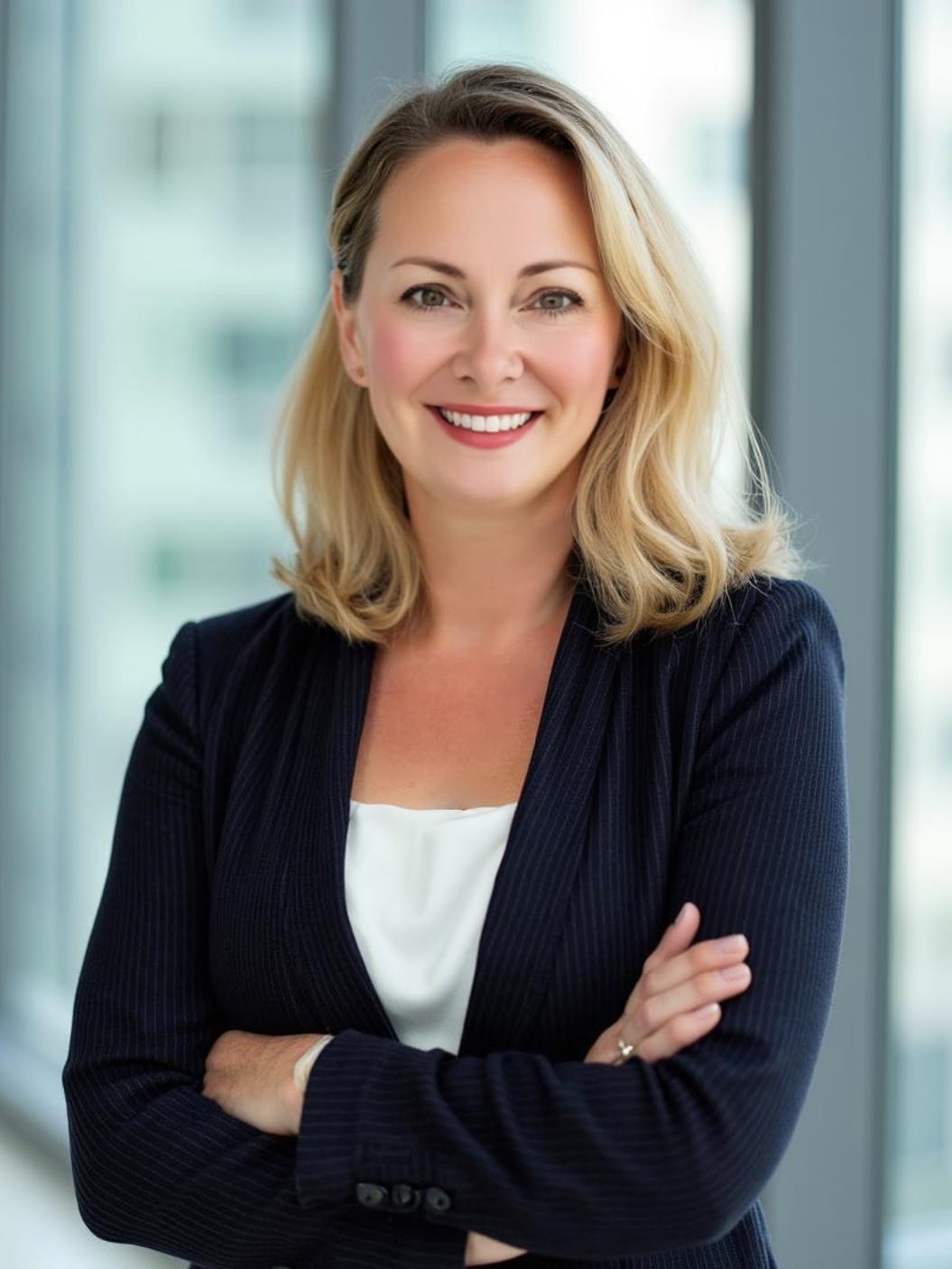
Currently based in Laguna Beach, California, Liza Loidolt began her career in the pharmaceutical industry as a life sciences consultant at Celerant Capital in Boston, Massachusetts. This was followed by more than 3 years as the chief of staff to the chief medical officer at Cedars-Sinai in Los Angeles. Liza Loidolt joined Novartis as a manager of global technical operations in 2012, a position that involved oversight of the company’s strategic business transformation and portfolio optimization programs. She held several leadership positions with Novartis, including chief of staff to the US vice president and US ophthalmology brand lead.
After spending more than 2 years with Amgen as the US brand director for BLINCYTO, Ms. Loidolt joined Kite Pharma as the head of cell therapy business in the United Kingdom and Ireland. She played a key role in achieving and maintaining a 92 percent market share. She remained with Kite Pharma through 2024, spending time in leadership roles such as head of the multiple myeloma brand in the US and head of US marketing.
Ms. Loidolt studied foreign service at Georgetown University, graduating with a master of arts. She also holds a master of business administration from the Columbia Business School.
What is your typical day, and how do you make it productive?
My mornings are my strategic engine. I carve out 90 minutes for deep work before the meetings begin. After that, it’s high-velocity decision-making—connecting dots across medical, commercial, and market access to keep momentum on launches and brand performance. Every hour has intent. I don’t do meetings without a purpose.
How do you bring ideas to life?
Ideas get traction when they’re cross-functionally owned. I pressure test early with medical, regulatory, access, and sales. Once we align, I move fast to prototype, refine, and scale. Execution starts when the idea is no longer mine—it’s ours.
What’s one trend that excites you?
Subcutaneous delivery in cell therapy. It’s more than a formulation shift—it’s a strategic unlock for access, operational efficiency, and patient experience. It will reshape how we think about CGT commercialization.
What is one habit that helps you be productive?
Timeboxing. I don’t just manage time—I architect it. Focus isn’t about willpower; it’s about design.
What advice would you give your younger self?
Say yes before you’re ready. Growth rarely comes from certainty—it comes from momentum.
Tell us something you believe almost nobody agrees with you on?
Biotech shouldn’t mimic Silicon Valley. Scientific complexity demands nuance, not speed for speed’s sake. Our patients deserve precision, not hype.
What is the one thing you repeatedly do and recommend everyone else do?
Walk the floor. Sit with the field team. Join a call with patient access. Real leadership doesn’t happen in slide decks—it happens when you see the friction (and success) firsthand.
When you feel overwhelmed or unfocused, what do you do?
Step outside. Take a walk. Nature recalibrates my brain faster than any inbox zero.
What is one strategy that has helped you grow your business or advance in your career?
Saying yes to the international GM role. Building a team from scratch, owning a $250 million P&L, and launching in a new regulatory environment sharpened every leadership muscle I have.
What is one failure in your career, how did you overcome it, and what lessons did you take away from it?
I once led a brand refresh that looked great on paper—but landed flat because I underestimated internal buy-in. Lesson learned: strategy without alignment is just noise.
What is one business idea you’re willing to give away to our readers?
A global mentorship exchange for biotech leaders—pairing talent across borders, functions, and growth stages. We don’t need more leadership theory; we need more shared wisdom.
What is one piece of software that helps you be productive? How do you use it?
ChatGPT. It’s like having a strategic thought partner on demand. I use it to pressure test messaging before a launch, distill scientific content for field teams, or reframe complex strategy decks into clear, compelling narratives. When time is tight—and it always is—ChatGPT helps me move faster without sacrificing clarity or quality.
Do you have a favorite book or podcast you’ve gotten a ton of value from and why?
The First 90 Days — it’s the playbook I revisit every time I step into a new leadership role.
Akimbo: A Podcast from Seth Godin — sharp, clear, and always one step ahead.
What’s a movie or series you recently enjoyed and why?
The Diplomat. Sharp writing, geopolitical tension, and executive decisions made under pressure. It mirrors the stakes we manage in global biotech—without the luxury of fiction.
Key learnings
- Great biotech leadership is built at the intersection of science, strategy, and storytelling.
- Launches succeed when commercial, medical, and access move as one unit—not in sequence.
- SubQ delivery in cell therapy could redefine scalability and access in the next five years.
- The best growth opportunities lie outside your comfort zone—often in a new country or function.
- Culture isn’t built in all-hands meetings; it’s built in how leaders show up when no one’s watching.