
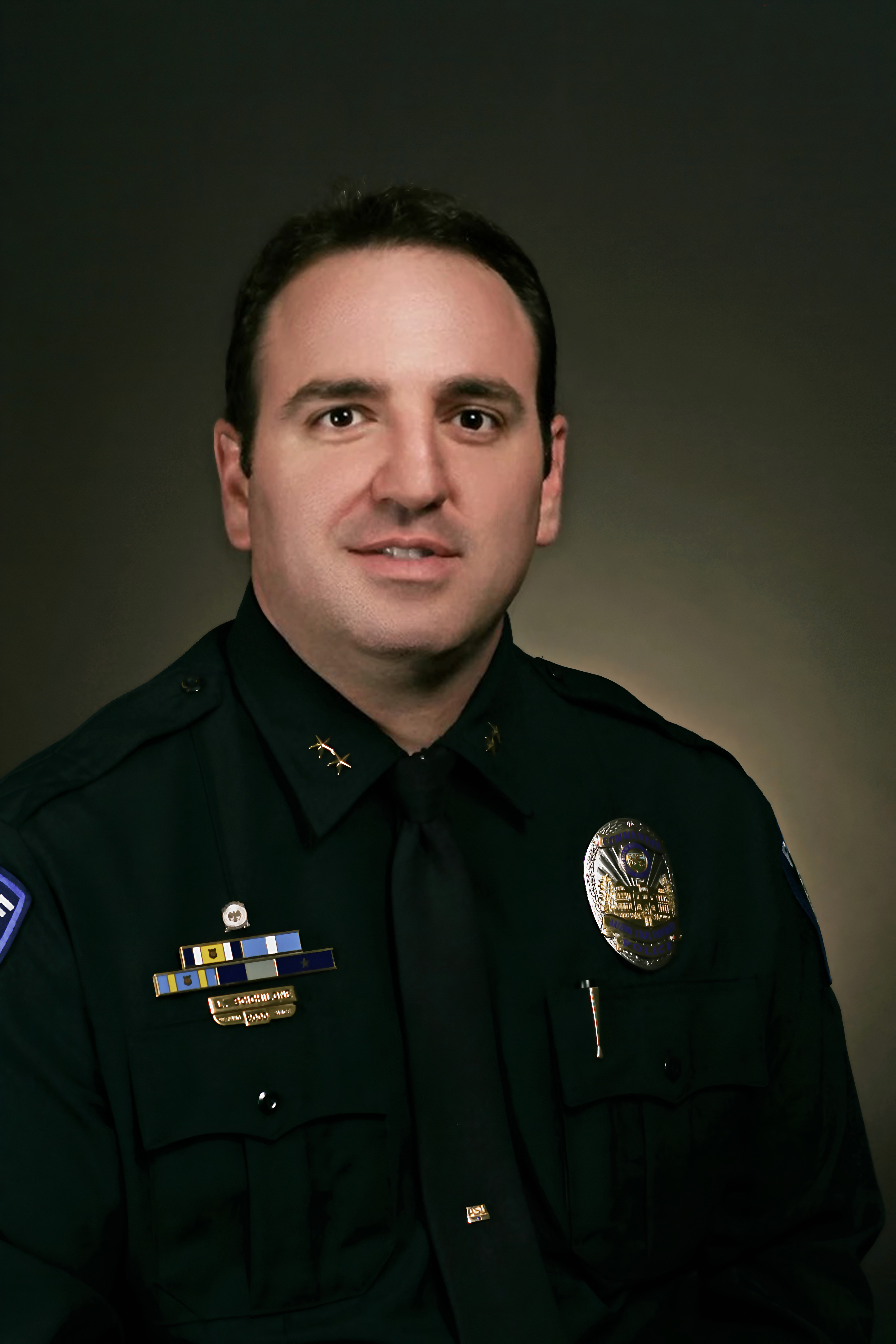
Louis Scichilone is a career law enforcement leader whose journey reflects more than two decades of leadership, innovation, and honorable service to the citizens of Arizona. Having served as a Commander and Chief of Police, Mr. Scichilone is known for his data-driven, community-oriented policing emphasis. He excels at creating safe, inclusive, and supportive environments that serve the diverse needs of his communities. Through transparency and collaboration and by focusing on current industry standards, legal best practices, and agency accreditation, Mr. Scichilone acts as a change agent who has successfully fostered strong cultures of service within his organizations.
Mr. Scichilone began his journey in public service as an active duty member of the United States Army, serving as a Cavalry Scout and Operations & Logistics Specialist. He earned a Bachelor of Science degree in Justice Studies with a minor in Computer Science from Arizona State University and is currently working towards his Master’s degree in Organizational Management at Northern Arizona University.
After graduating from the Arizona Law Enforcement Academy Mr. Scichilone began his role as a sworn Police Officer, assigned to Patrol Operations with the ASU Police Department. Over his more than two-decade career, Mr. Scichilone has advanced steadily, having held the positions of Corporal, Detective, Sergeant, Interim Commander, Commander, and Chief of Police. He has served in both the Patrol and Support Services Divisions.
His achievements and recognition extend beyond patrol, having been honored as Supervisor of the Year, and being notably recognized in multiple quarters for his leadership excellence. He has been recognized for his active contributions to community efforts such as the ASU Police Holiday Toy & Food Drive, the United Way campaigns, and the W. Steven Martin Toy Drive. Additionally, his engagement further extended beyond patrol by serving as Chair of the Public Safety Advisory Council and as an active member of the Student Assistance Coordination Committee.
Mr. Scichilone’s career is marked by a steadfast commitment to public safety, technological modernization, community engagement, and leadership development. From his foundational service as a United States Army soldier, through a distinguished and innovative tenure at ASU Police, to his role as Chief of Police, his journey is a testament to dedication, adaptability, and strategic vision in law enforcement.
What is your typical day, and how do you make it productive?
My typical day starts with setting my priorities and reviewing what needs the most attention, which helps me stay focused and organized. I ensure I take a moment to complete low-impact stretching and breathing exercises, which helps bring a state of mental and physical balance. I’ve found that a little inner focus helps keep me centered. I usually begin by tackling the most important or time-sensitive tasks first, so I can give them my best energy and attention. Throughout the day, I make it a point to stay flexible, since unexpected challenges can come up, and I want to be ready to adjust without losing productivity. I build in time to check in with my team or colleagues, making sure communication stays clear and everyone is aligned to their goals. What keeps me productive is balancing focus with adaptability and staying on track with planned priorities, while also being able to handle new issues effectively.
How do you bring ideas to life?
I bring ideas to life by starting with a clear vision and then breaking that vision down into practical, achievable steps. I make sure I gather input from others, since collaboration often strengthens an idea and helps anticipate challenges early. Once there’s a solid plan, I focus on execution, setting measurable goals, assigning responsibilities, and monitoring progress along the way. I also believe in staying adaptable, because even the best ideas may need to evolve as they move forward. Being able to pivot and move forward is crucial when trying to realize your visions or goals. By combining clear planning, teamwork, and flexibility, I’m able to take concepts from discussion to successful implementation.
What’s one trend that excites you?
One trend that excites me is in the field of law enforcement, and it’s the advancement of technology that improves transparency, safety, and community trust. These advancements include body-worn cameras, less-lethal use of force options, drones, and data-driven policing tools. These innovations not only enhance officer accountability but also provide valuable insights that help the law enforcement community deploy resources more effectively and help them to make more informed decisions. I see these tools as opportunities to strengthen relationships with the community, increase safety for both officers and the public, and ultimately build greater trust through openness and fairness.
What is one habit that helps you be productive?
One habit that helps me be productive is starting each day by setting clear priorities. I identify the top tasks that need my focus and tackle the most important or time-sensitive ones first. This keeps me organized and ensures I’m always working on what truly moves things forward, rather than getting caught up in distractions. Staying disciplined about this habit helps me maintain momentum throughout the day and end with a sense of accomplishment.
What advice would you give your younger self?
If I could give my younger self advice, I would say: be patient and focus on the long game. Success doesn’t happen overnight, and challenges are often opportunities in disguise. I’d also remind myself to listen more than I speak, because you can learn a great deal from the experiences of others. I’d encourage myself to embrace balance: work hard, but also take care of your health, family, and relationships, because those are what truly sustain you over the course of a career and a lifetime, particularly when working in a high-stress field like law enforcement.
Tell us something you believe that almost nobody agrees with you on.
Something I believe that many are incapable of understanding is that challenges and setbacks are just as valuable as successes. Many people see obstacles as purely negative, but I view them as being some of the best learning opportunities. I believe that success, sometimes, only comes after a series of failures; because failures force you to adapt, improve, and think in new ways. When viewed appropriately, failures shape stronger leaders than success alone. While not everyone shares that perspective in the moment, I’ve seen time and again how setbacks lay the foundation for long-term growth and success.
What is the one thing you repeatedly do and recommend everyone else do?
One thing I repeatedly do and recommend everyone else do is take time each day to reflect and be thankful. Whether it’s at the start or end of the day, I review what’s going well, what could be improved, and what I learned. That habit keeps me grounded, helps me stay accountable, and ensures I’m always moving forward with purpose. Reflection doesn’t take much time, but it has a powerful impact on personal growth, decision-making, and long-term success.
When you feel overwhelmed or unfocused, what do you do?
When I feel overwhelmed or unfocused, I take a step back, take a deep breath, center myself mentally, and then move forward with prioritizing. I ask myself, “What is most important right now?” I then break down larger or complicated situations or tasks into smaller, more manageable steps. Sometimes that means pausing briefly to reset, whether through a quick walk, a few minutes of deep breathing, or simply clearing my workspace so I can return with a clear head. I’ve found that staying calm, focusing on one thing at a time, and resetting when needed allows me to regain momentum and move forward productively.
What is one strategy that has helped you grow your business or advance in your career?
One strategy that has helped me advance in my career is focusing on building strong relationships based on trust and communication. No matter the role or situation, success often depends on how well one can collaborate, listen, and bring people together toward a common goal. By investing in relationships, whether with colleagues, community members, or leadership, I’ve been able to create partnerships that open doors, solve problems more effectively, and build credibility that lasts. That foundation of trust has been key to both my professional growth and my ability to help others succeed.
What is one failure in your career, how did you overcome it, and what lessons did you take away from it?
One failure in my career was early on when I took on too much by myself instead of asking for help or delegating. I thought handling everything on my own was a sign of strength and would show initiative, but instead, it led to unnecessary stress and missed opportunities for collaboration. I overcame that by learning to lean on my team, communicating openly, and trusting others with responsibility. Delegation, when used correctly, is a key leadership trait. The experience taught me that strong leadership isn’t about doing everything yourself, it’s about empowering others, building trust, and creating an environment where everyone has an opportunity to contribute to success.
What is one business idea you’re willing to give away to our readers?
One business idea I’m willing to share is the creation of a highly talented team of leaders who are available to be commissioned to go to any business or organization and create an internal, structured mentorship program specifically designed to the unique environment of that business or organization. By pairing experienced team members with newer staff, you create a system where knowledge, skills, and culture are transferred intentionally. It not only accelerates professional growth for newcomers but also strengthens leadership skills in mentors, improves team cohesion, and drives long-term organizational success. This approach is scalable and has a powerful impact on both individual and organizational performance.
What is one piece of software that helps you be productive? How do you use it?
One piece of software that helps me be productive is Microsoft Outlook. I use it to organize emails, meetings, appointments, tasks, track projects, and to stay aligned with my team. For example, it helps me to track both large projects and smaller tasks, to assign deadlines, and to monitor progress. It also allows for easy collaboration and communication by sharing calendar information, so everyone knows their responsibilities and deadlines and nothing falls through the cracks. Using this tool consistently helps me stay focused, manage priorities efficiently, and ensure accountability.
What is the best $100 you recently spent? What and why?
The best $100 I recently spent was on a brief, online introspective self-assessment and personal development exercise that focused on leadership and effective communication. The assessment helped pinpoint strengths and weaknesses, as well as provided suggestions for improvement. It provided practical tools I could immediately apply in my work, improved how I interacted with my team, and helped me approach challenges more strategically. The investment was small compared to the long-term benefits of stronger leadership skills, better decision-making, and the ability to foster a more collaborative and productive environment through self-awareness.
Do you have a favorite book or podcast you’ve gotten a ton of value from and why?
One book that has had a significant impact on me is the leadership book “Start with Why” by Simon Sinek. This book enlightened me with its concepts on leading with purpose, cause, and belief. It helped me understand the “how” (my methods) and the “what” (my products or services) as it relates to leadership. The book discusses how to inspire and build trust because people connect with your fundamental values, not just you as a person. This information helped me reinforce the importance of building trust, prioritizing the well-being of my team, and leading by example. The lessons from this book helped me foster stronger teams, improve communication, and create an environment where people feel supported and motivated to do their best work.
What’s a movie or series you recently enjoyed and why?
“The Old Man,” starring Jeff Bridges and John Lithgow, is an incredible series because it combines suspenseful storytelling with deeply developed characters and moral complexity. The plot keeps viewers on the edge of their seats, while exploring themes like loyalty, deception, secrecy, resilience, national security, and the consequences of past actions. The performances are compelling, the pacing is engaging, and the writing balances action with emotional depth. What really sets it apart is how it makes the audience care about the characters’ journeys while delivering unpredictable twists, making it both entertaining and thought-provoking.
Key learnings
- Great leadership is about empowering and supporting others, not just directing them—the most effective leaders focus on helping their team succeed.
- Clear, transparent communication fosters understanding, alignment, and engagement within teams and with the community.
- Mistakes and setbacks are opportunities for growth—resilient leaders embrace challenges as lessons, not failures.
- Encouraging diverse perspectives and teamwork often produces better results than working in isolation.
- Having a clear vision provides direction for decision-making, motivates others, and keeps teams aligned toward common goals.