
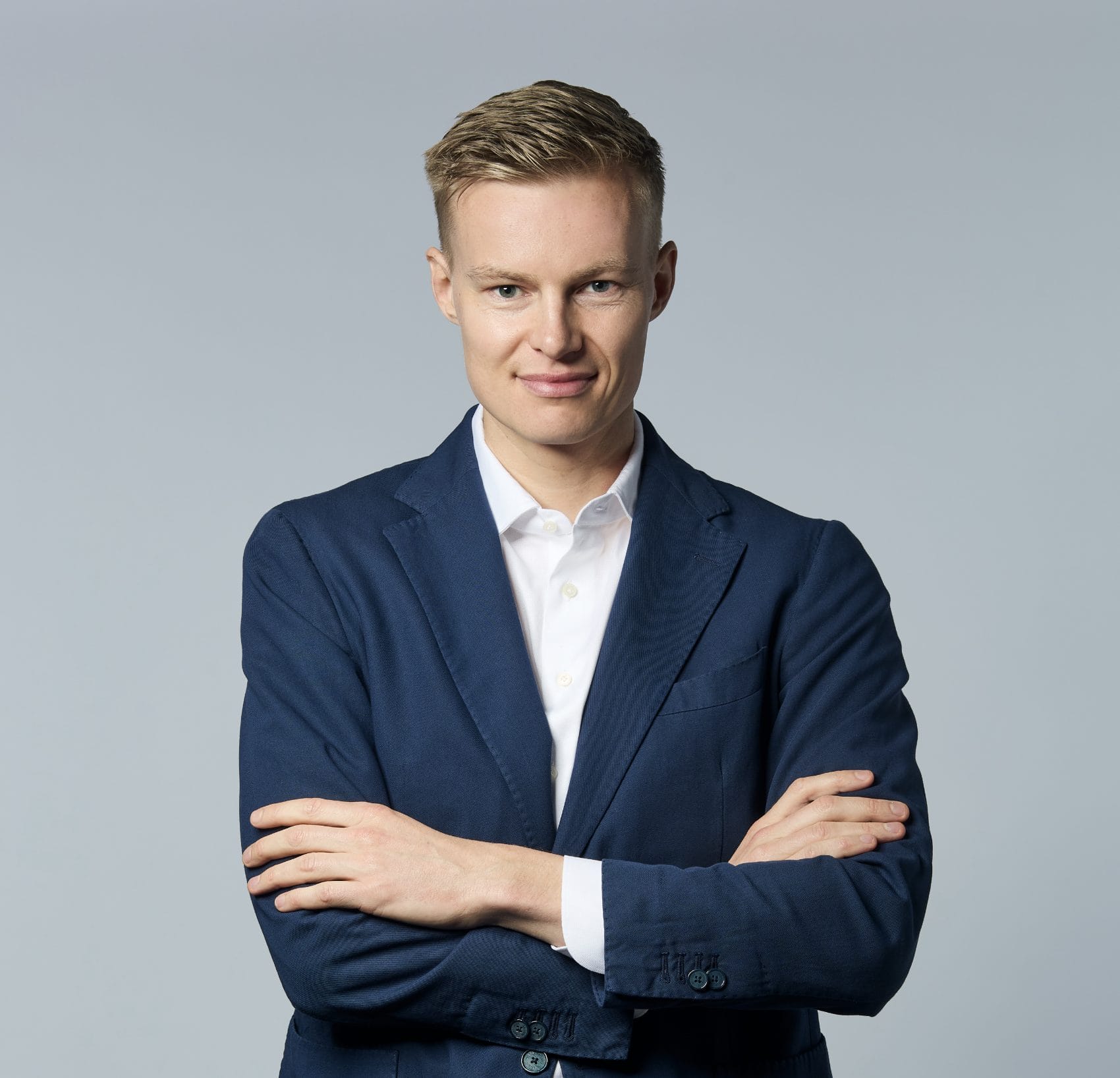
Marco Nobel is the founder of Fuse, a flex-living operator working to solve Europe’s housing crisis for young people. Fuse takes undervalued, overlooked real estate and repositions it into premium student housing people are proud to call home. Since last year three cities are live today, Riga, Budapest and Vienna, with Prague, Krakow and Warsaw opening this year.
The idea grew out of his first company. At twenty, on a semester abroad in Asia, Marco started what would become the largest social platform for students studying abroad, reaching more than 150 cities and over a million students a year before he exited in 2025, work that earned him a spot on the Forbes 30 Under 30 list.
That business taught him how community forms when people land somewhere new. Fuse adds the piece he kept finding missing: the place they actually live. Today he pairs that community DNA with an AI-driven operating layer, running much of the business with a quiet team of agents that lets a small team do the work of a far larger one.
Alongside his companies, he produces and performs on some of the world’s biggest stages, including Tomorrowland, Ultra and EDC as an artist.
What is your typical day, and how do you make it productive?
My mornings are for focus. That’s when I do my hardest thinking, in one big block, with nothing else pulling at me. The afternoon shifts to people: check-ins with the teams at both my companies, Fuse on the real estate side and Socials on the platform side. Somewhere in there I try to squeeze in a game of tennis or a gym session to clear my head. The late part of the day goes one of two ways, either another focus block if I’ve got the energy, or I switch off and go for a walk or out to dinner with my girlfriend. Sharp in the morning, with my teams in the afternoon, actually present in the evening. That balance is the whole thing for me.
How do you bring ideas to life?
I experiment. When something feels promising, I take it to the smartest people I know, friends and people in my network who actually work in that space, and I get honest feedback. Then I iterate. But the part most people skip is the simplest one: just try it. Build the thing, let it break, and make it better from there. An idea sitting in your head is worth nothing. A rough version that’s been out in the world for a week teaches you everything.
What’s one trend that excites you?
Real estate is turning into an operating game. For a long time it was about location and buying smart, get the right asset cheap in the right place and you win. That’s changing. The real value now is in how you actually operate the building, the experience you wrap around it, the systems behind it. The same four walls can be worth completely different things depending on who’s running them. That shift is what Fuse is built on, and it’s only getting started.
What is one habit that helps you be productive?
Long, protected focus blocks. When I give one topic a big uninterrupted stretch, I make real kilometers on it, far more than I would picking at it between ten other things. The other side of that is meetings. I’m with Elon Musk here: most meetings quietly kill productivity, so I cut them hard. If a meeting is genuinely needed, it happens. If it’s not, it doesn’t go in the calendar.
What advice would you give your younger self?
Think in longer chapters. When I was younger I was impatient, I wanted everything to happen at once. Looking back, the best things came from committing to a direction for years, not months. I plan my life in rough five-year chapters now, and that long view takes the panic out of the short term. I’d tell my younger self to relax into that a lot sooner.
Tell us something you believe almost nobody agrees with you.
That you shouldn’t let yourself be defined by one thing. Everyone tells founders to pick one lane and go all in on a single identity. I think that’s a trap. I want to be excellent as an entrepreneur and as an artist, I’m planning to do a PhD later in life, and right now I’m deliberately building companies in different industries. People treat range like a distraction. To me it’s the point.
What is the one thing you repeatedly do and recommend everyone else do?
Build a small system instead of doing the task twice. The second time I catch myself doing something by hand, I hand it off to a tool or a script. Do it once properly, then never again. It compounds harder than almost anything else.
When you feel overwhelmed or unfocused, what do you do?
I go and move my body. A long run or a gym session, with a podcast on that has nothing to do with whatever I’m working on. There’s one with three geography students who go country by country through the whole world and talk through each one’s history, I love it (they’re nearly through every country now, so I’ll need a new one soon). By the time I’m back at my desk, the thing that felt overwhelming is usually just smaller.
What is one strategy that has helped you grow your business or advance in your career?
Diving straight into the deep end, and being opportunistic about it. With my first company I packed up and moved from Amsterdam to Hong Kong to build it on the ground. With Fuse, I saw the opening in Central and Eastern Europe, booked a flight to Riga, hired my first team member there and spent days on the ground getting it going. I didn’t wait for the plan to be perfect. When I see the opportunity, I get on the plane and make it real. That instinct has moved me forward more than any strategy on paper.
What is one failure in your career, how did you overcome it, and what lessons did you take away from it?
Early on, I didn’t hire enough high-quality, senior talent. My first company was bootstrapped, so I kept the team very lean and outsourced a lot. It worked, it only accelerated when later I brought in the more senior and experienced people. I took that lesson straight into my second company and hired for real experience from the start, especially in areas where I wasn’t the expert. The fix was simple once I admitted it: stop protecting the budget and start buying the experience you’re missing.
What is one business idea you’re willing to give away to our readers?
Build for AI agents as the customer, not humans. The whole internet is designed for people, the websites, the services, the sign-up flows, all optimized for a human looking at a screen. But more and more, the thing actually using those services is an agent acting on someone’s behalf. There’s a real business in building a platform or service designed from the ground up with agents as the user. Someone is going to own that, and it’s wide open right now.
What is one piece of software that helps you be productive? How do you use it?
Wispr Flow. I never learned to type with ten fingers, I’m slow at it and I never took a typing course, so I just talk and it turns my voice into text. I’m literally using it to answer these questions right now. Not having to type anymore has genuinely changed how much I get through in a day.
What is the best $100 you recently spent?
Food in Italy. I just spent a month there with my girlfriend, and the meals were unforgettable. The purest, simplest ingredients, incredible wine, nothing overcomplicated. A great meal in a place like that, with someone you love, is about the best hundred dollars I can think of.
Do you have a favorite book or podcast from which you’ve received much value?
On podcasts, My First Million is the one I’d point to. It’s two guys talking, genuinely excited, about business ideas and what’s happening in startups, and that energy is contagious. I come away from almost every episode with something I want to try. On books, I like anything with a real story to it, and the one that stuck with me most is Richard Branson’s autobiography. He’s a big example for me: adventurous, restless, building across completely different industries and refusing to be boxed into one. That’s the kind of life I’m building toward.
What’s a movie or series you recently enjoyed and why?
I’m working my way through The Crown at the moment. I’ve got a weakness for that era and the classiness of the British, the restraint, the sense of occasion. It’s a nice contrast to the pace of everything else in my life.
Key learnings:
- Take care of your health. Sleep especially. Nothing else works without it.
- Don’t wait. The moment rarely feels ready. Get on the plane and figure it out when you land.
- Work with the best and brightest, always, whether it’s a co-founder or your next hire.
- Don’t let one thing define you. Build across what you love and let the range be your edge.