
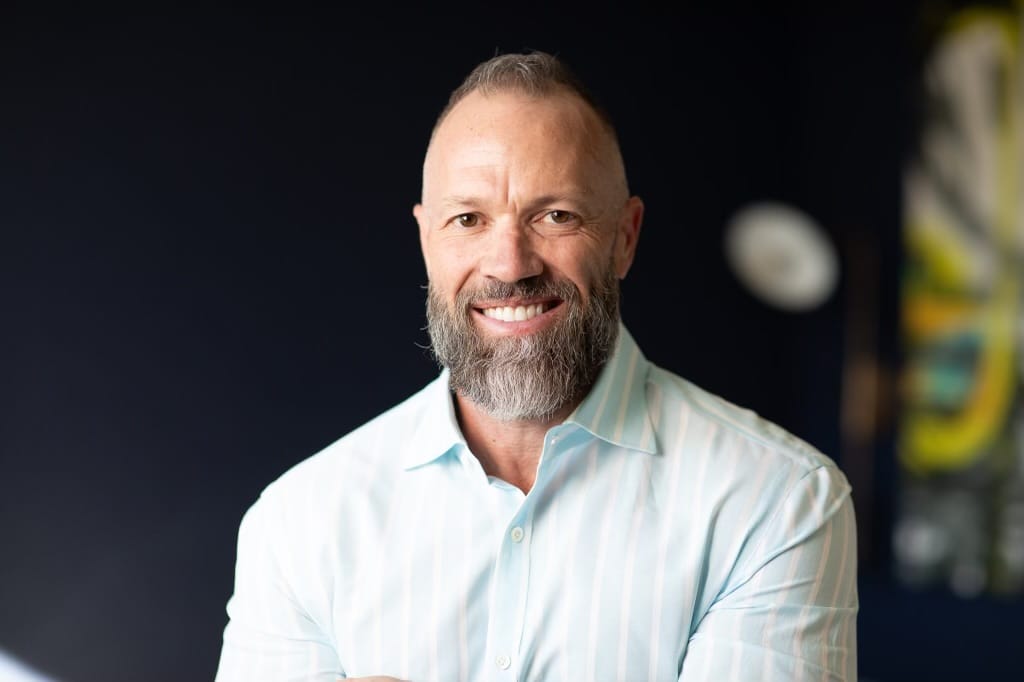
Max Hansen has over 2 decades of experience in recruiting, and is the CEO and Co-Founder of Y Scouts, a firm that helps purpose-driven companies find extraordinary leaders. He specializes in purpose-driven executive recruiting, ensuring your company connects with leaders who are not only highly qualified but also deeply committed to your mission, vision, and values.
What is your typical day, and how do you make it productive?
Every day starts with grounding—mentally, physically, and emotionally. I’m usually up before the sun, getting a workout in, spending time with my family, and making space to clear my head. Health and wellness are a huge part of my life—not just because they help me lead better, but because they’re core to how I stay connected to my purpose.
As for work? No day looks the same, but they all start with one guiding question: What can I do today to help our team connect more people to work that matters? That mission is at the heart of everything.
I spend a lot of time in high-leverage conversations—whether that’s meeting with a client who needs their next game-changing COO, strategizing with our team on how to use ScoutPath to reduce hiring friction, or mentoring a leader through the hard stuff. I’m most productive when I’m doing work that aligns with our purpose and empowering others to do the same.
I protect my time like crazy. I know where I’m irreplaceable—and I’ve learned to let go of the rest. That means building and trusting a team of A-players, having a clear vision and success outcomes, and using tools like our Role Visioning process and the Y Scouts Leadership Model to stay aligned and make decisions faster and better.
At the end of the day, I don’t measure productivity by how many tasks I checked off—I measure it by how many people I helped move closer to their purpose, and how well I stayed aligned with mine.
How do you bring ideas to life?
I bring ideas to life by testing them in the real world—fast. I’ve never been one to over-theorize. If I’ve got an idea that I believe in, I’ll throw it into the mix, see what resonates, and adjust in real time. That’s how Y Scouts was built—on a gut feeling that there had to be a better way to hire leaders.
Most ideas start as conversations. I listen closely—to our clients, to candidates, to our team—and when I hear a pattern or a pain point, that’s usually the spark. From there, we define what success would look like if we solved it. Then we reverse-engineer the process to make it happen. ScoutPath, our AI hiring platform, is a perfect example. It was born from hundreds of searches where I realized we needed a way to define
success before we ever looked at a resume. Now it’s helping companies hire faster and better, with less guesswork and more alignment.
Great ideas don’t survive in a vacuum. They need friction, feedback, and iteration. That’s how I operate—test, listen, tweak, scale.
What’s one trend that excites you?
I’m incredibly excited about the shift from resume-based hiring to success-based hiring, especially as AI accelerates that transformation.
For years, companies have relied on resumes, which are essentially marketing documents written by the candidate. They don’t tell you who someone really is or what they’re capable of. What excites me is the move toward defining what success actually looks like in a role, before a search even begins. That’s where our Role Visioning and ScoutPath platform come in.
When you can align on success outcomes first—across multiple stakeholders—and then use AI to score candidates based on purpose, performance, and leadership DNA… you’re no longer guessing. You’re hiring with intention.
That shift—away from surface-level credentials and toward values-aligned, data-backed hiring—isn’t just more effective. It’s the future. And we’re not just watching it happen… we’re building the tools that are making it possible.
What is one habit that helps you be productive?
Hands down—prioritizing my health and wellness.
Before I lead anyone else, I’ve got to lead myself. I start almost every morning with movement—whether it’s strength training, a run, or even just getting outside for a walk. It clears my head, resets my energy, and sharpens my focus. That one habit sets the tone for the entire day.
It’s not just about physical fitness—it’s about showing up with the stamina, clarity, and emotional resilience it takes to lead a business, serve our clients, and be fully present with my family. I’ve found that when I’m neglecting my health, everything else suffers. But when I put it first, I show up better everywhere else.
It’s not optional. It’s foundational.
What advice would you give your younger self?
Slow down—clarity is more valuable than speed.
In my early years, I thought the faster I moved, the more successful I’d be. And sure, hustle has its place. But I’ve learned that moving fast in the wrong direction is just expensive. Whether it’s hiring, strategy, or personal growth, taking the time to ask the right questions and align with purpose always leads to better outcomes.
I’d also tell my younger self: Don’t underestimate how much who you surround yourself with matters. The right people change everything—team, mentors, clients, even friends. Hire slow. Partner slower. And when you find people who align with your values and challenge you to be better, hold onto them.
And finally? Trust your gut. It’s wiser than you think.
Tell us something you believe almost nobody agrees with you.
I believe you should never start a search with a job description.
That probably flies in the face of what 99% of the world believes about hiring. But after two decades in executive search, and after building and selling multiple companies myself, I’ve learned that job descriptions are one of the biggest culprits behind bad hires.
A job description is usually just a recycled list of responsibilities and qualifications that has little to do with what success in the role actually looks like. It’s backward. It puts the focus on what someone has done in the past, not what you need them to achieve in your future. That’s why we created our Role Visioning and Success Outcome Design process—to flip that script.
Instead of asking “What does this person need to have on their resume?” we ask, “What does success look like 12 to 18 months from now if we get this hire right?” We align multiple stakeholders around that vision and reverse-engineer the role from those outcomes. That’s what allows us to match leaders to companies not just by skills, but by purpose, performance, and potential.
So yeah, throw out the job description. Start with purpose. It’s not conventional, but it’s how you build teams that actually move the needle.
What is the one thing you repeatedly do and recommend everyone else do?
I consistently carve out time to get crystal clear on what success looks like—before making any big decision, hire, or move.
It’s something we teach our clients to do with every executive search: before you start scanning resumes or writing job descriptions, define what success actually means for that role, in your business, at this stage of growth. We’ve built an entire platform—ScoutPath—around helping people do that. But it’s not just for hiring. I apply it everywhere.
Whether I’m launching a new product, mentoring a team member, or setting a quarterly goal, I ask: “What does a win look like 12–18 months from now? And what are the outcomes that would prove we got there?”
It sounds simple, but most people skip this. They chase activity instead of alignment. Clarity creates momentum. It filters out distractions. It helps your team move faster, with confidence and purpose. So if there’s one practice I swear by—and recommend to every leader—it’s defining success before doing anything else.
When you feel overwhelmed or unfocused, what do you do?
I move my body and simplify my mind.
First thing I do is get out of my head—literally. I’ll go for a workout, take a walk, get outside. Physical movement is the fastest way for me to reset. It shifts my energy, clears the mental fog, and helps me reconnect with what actually matters. I’ve found over the years that if I neglect my health, everything else suffers—my clarity, my leadership, my creativity.
The second thing I do is zoom out. I’ll ask myself: What’s the one thing I can do today that moves the needle? When you’re in a funk, it’s usually because you’re buried in the weeds or trying to do everything at once. I go back to purpose. Back to priorities. And then I take one focused, intentional action.
I’ve learned that it’s not about doing more—it’s about doing the right thing, from the right state of mind. And for me, that starts with getting grounded in my body and re-centered on the “why.”
What is one strategy that has helped you grow your business or advance in your career?
Listening. And I don’t mean nodding politely while waiting for my turn to talk—I mean actually listening.
Early in my career, I thought the key to leadership was having the answers. Turns out, it’s asking better questions and shutting up long enough to hear what people are really saying. (Harder than it sounds, especially when you’ve had too much coffee.)
Whether I’m with a client, a candidate, or someone on our team, I try to go beneath the surface—past the rehearsed answers and into what’s really driving the challenge or opportunity. That’s where the good stuff is. That’s where trust is built. And that’s where great decisions get made.
It’s also the foundation of everything we do at Y Scouts. You can’t hire exceptional leaders with surface-level conversations. You have to listen for alignment—in purpose, values, and potential. And that only happens when you slow down enough to actually hear people.
So yeah, the strategy? Shut up, lean in, and listen like your growth depends on it.
Because it does.
What is one failure in your career, how did you overcome it, and what lessons did you take away from it?
Oh, I’ve been wrong plenty of times. But one that sticks out? Early in my entrepreneurial journey, I hired someone purely based on their resume. Ivy League degree, impressive job titles, glowing references—the whole polished LinkedIn package. I thought, “This is it. Total game-changer.” Spoiler alert: it was not.
Within 60 days, I realized I hadn’t hired a leader—I’d hired a professional interviewee. They said all the right things, but none of it translated into impact. There was a complete mismatch in values, energy, and leadership style. And that was my fault. I skipped the deeper discovery and bought into the hype.
It cost us time, money, and momentum. But it also lit a fire. That experience is part of what led to the creation of Y Scouts. I became obsessed with figuring out how to see past the mask—how to uncover who someone really is and whether they’re aligned with a company’s purpose, culture, and mission.
Now, we don’t just scan resumes—we define success, get multiple stakeholders aligned, and use tools like Role Visioning and ScoutPath to get it right from the start. That failure turned into one of the most powerful lessons of my career: shiny credentials are great, but they don’t lead people. Character does.
Also—pro tip—never hire someone just because they’re great at talking about themselves. Unless, of course, you’re looking for a podcast host.
What is one business idea you’re willing to give away to our readers?
Here’s one I’ve been waiting for someone to build—so if it’s you, I’ll cheer you on (and maybe invest):
Build a “Success Outcome Marketplace” for key executive roles.
Imagine a platform where companies anonymously post the actual outcomes they’re hiring for—not job descriptions, not titles, not laundry lists of qualifications, but real success metrics. Think:
• “Reduce customer churn by 30% in 12 months”
• “Expand into two new international markets”
• “Rebuild a leadership team and improve org health scores by 20%”
Then candidates (especially senior leaders) can match themselves not to the role, but to the results. Bonus: candidates can post their own “Outcome Profiles”—essentially saying, “Here’s what I’m great at. Plug me into a business that needs it.”
Why? Because the resume is dead. And honestly, so is the job posting.
The future of hiring is outcome-driven, aligned on purpose, and built on mutual clarity. If someone builds that marketplace—built on trust, anonymity, and value alignment—they’d be solving one of the biggest gaps in leadership hiring today.
And if you’re reading this thinking, “Wait… isn’t that kind of what ScoutPath is becoming?” Yeah. Kinda. But there’s plenty of room to run with it.
What is one piece of software that helps you be productive? How do you use it?
Right now? ScoutPath.
I know—shameless plug—but hear me out. We built ScoutPath because I was tired of losing time and clarity in the hiring process. The software lets us define success outcomes for a role before we ever look at a resume. It aligns multiple stakeholders, surfaces what actually matters, and gives us a foundation to make smart, fast, and purpose-aligned hiring decisions.
It basically takes everything we used to do in hours of calls, meetings, and spreadsheets—and automates it in a clean, guided experience. Which means I get back more of my time to focus on where I’m irreplaceable: leading our team, serving clients, and growing the business.
Outside of that? Zoom transcripts integrated with AI tools like ChatGPT have been a game-changer. It’s like having an extra brain that never forgets a detail—and never zones out during a long meeting.
What is the best $100 you recently spent?
A pair of running shoes.
Nothing fancy, no carbon plates or futuristic foam—just solid gear that gets me moving. I’ve learned over the years that my best ideas, clearest decisions, and biggest breakthroughs don’t happen behind a desk.
They happen when I’m in motion—running, walking, sweating out the stress and reconnecting with my priorities.
That $100 didn’t just buy me shoes—it bought me clarity, creativity, and sanity. Which, when you’re leading a fast-moving team and building a product to change how leaders are hired, is a pretty great ROI.
Plus, no subscription required.
Do you have a favorite book or podcast from which you’ve received much value?
Absolutely. One book that’s had a lasting impact on me is “Everybody Matters” by Bob Chapman. It’s the story of how he built a wildly successful business by treating every team member like someone’s precious family member. Sounds simple. It’s not. But it deeply shaped how I think about leadership—not as a power play, but as a responsibility to help people thrive.
It also confirmed something I already believed: when you lead with purpose and values, the results follow. And if they don’t? You’re probably chasing the wrong results.
As for podcasts, I host one—Built on Purpose, where I get to talk to leaders who’ve chosen meaning over mediocrity. Selfishly, I get a front-row seat to the mindset shifts, habits, and bold decisions behind the scenes of some of the most purpose-driven people on the planet. It’s basically my continuing education.
So yeah—books that challenge your beliefs, and conversations that expand your perspective. That combo has never steered me wrong.
What’s a movie or series you recently enjoyed and why?
The Bear on Hulu. Hands down one of the best things I’ve seen in a while.
On the surface, it’s about a chef trying to turn around a chaotic restaurant—but underneath, it’s really about leadership, culture, trauma, and what it takes to hold a vision when everything around you is on fire.
Which… I think every founder can relate to at some point.
It’s raw, messy, intense, and weirdly inspiring. The characters are flawed but committed. The stakes feel real. And watching someone try to transform a team while holding onto their standards (and sanity) hit a little too close to home… in the best way.
Plus, the soundtrack’s great and the kitchen scenes are basically startup life with knives.
Key learnings:
Here are a few takeaways that capture the heart of what I shared in this interview:
- I’ve learned that hiring should always start by defining what success actually looks like in the role. Job descriptions don’t cut it. If you want a leader who truly moves the needle, you need to align on outcomes, not just responsibilities.
- The best leaders aren’t always the flashiest on paper. I’ve made mistakes trusting resumes over character, and that’s part of what inspired the entire Y Scouts approach to hiring.
- I built ScoutPath to solve the exact problems I kept running into—lack of clarity, misalignment, wasted time. It helps companies define success and hire faster, with more purpose and less friction.
- One of the most important things I do to stay grounded is prioritize my health. Movement clears my mind. Clarity comes when I slow down, simplify, and reconnect with what really matters.
- And finally, deep listening changes everything. Whether it’s in a client conversation, a team meeting, or an interview, I’ve found the biggest breakthroughs come from asking better questions… and actually shutting up long enough to hear the answer.