
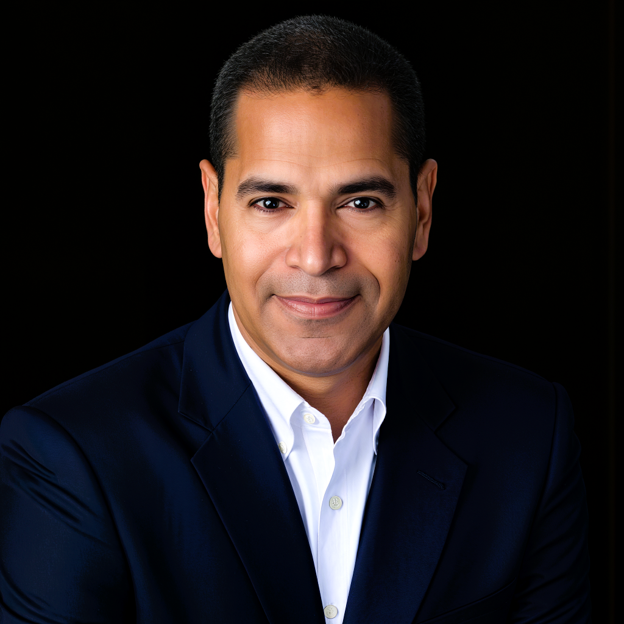
Dr. Max Lataillade, DO, MPH, is a physician-scientist, infectious disease specialist, pharmaceutical executive, and entrepreneur whose career spans more than three decades at the intersection of medicine, biotechnology, and global public health.
His professional journey has been shaped by a longstanding commitment to one of the world’s most persistent public health challenges: the HIV epidemic. From early work in clinical laboratory science and HIV and tuberculosis research in Haiti to leading global pharmaceutical research and development programs, Dr. Lataillade has helped advance innovative approaches to HIV prevention and treatment while working to bridge the gap between scientific discovery and meaningful patient impact.
Today, Dr. Lataillade serves as Head of HIV Drug Development at the Gates Foundation, where he leads global strategies to accelerate the development of innovative medicines for HIV prevention and treatment, with particular emphasis on long-acting antiretroviral therapies and their potential to improve outcomes in countries with high HIV burdens.
Previously, he held senior research and development leadership positions at Bristol Myers Squibb and ViiV Healthcare, where he oversaw complex global drug development portfolios and contributed to the advancement of multiple HIV and hepatitis C therapies. His work included leading the development program for fostemsavir (Rukobia), the first HIV-1 attachment inhibitor, and advancing innovative long-acting HIV treatment strategies, including longer-acting formulations of Cabenuva and pipeline assets.
In 2023, Dr. Lataillade received the American Chemical Society’s Heroes of Chemistry Award for his contributions to the development of fostemsavir. His scientific career includes more than 45 publications, contributions to pharmaceutical patents, and extensive experience in clinical development, regulatory strategy, and pharmaceutical innovation.
Building on this experience, Dr. Lataillade founded Health and Pharma Solutions LLC, a biotechnology and pharmaceutical consulting firm providing executive-level strategic leadership, clinical development expertise, regulatory guidance, and business development solutions. The company helps biotechnology organizations prioritize development opportunities, navigate scientific and regulatory complexity, and translate promising discoveries into sustainable therapeutic and commercial value.
What is your typical day, and how do you make it productive?
My typical day is a combination of science, strategy, people, and problem-solving. And occasionally, trying to figure out how the day became so short!
Throughout my career, whether leading global pharmaceutical development programs, working in global health, or building my own business, I’ve learned that productivity is less about how much you accomplish and more about whether you’re accomplishing the right things.
I generally approach each day by identifying the two or three priorities that will make the greatest difference. In drug development, decisions can have consequences that extend years into the future, so it’s important to balance immediate operational demands with long-term strategic thinking.
I also make time to engage with people. Some of the most valuable insights I’ve gained have come from conversations with scientists, clinicians, business leaders, patient and community advocates, and colleagues who approach problems differently.
Finally, I try to preserve time for reflection and exercise. I particularly enjoy walking with my wife and my dog. It’s an opportunity to unwind, reconnect, and talk about our day, although, if you asked her, she might say I’m the one who needs to do a little more of the talking! Those walks are among my favorite moments of the day.
In leadership, constant activity can easily be mistaken for progress.
I’ve discovered that a productive day isn’t necessarily one in which every item on your calendar is completed. It’s one in which you’ve moved something important forward, helped someone succeed, or made a decision that creates lasting value.
How do you bring ideas to life?
I follow a fairly disciplined process that begins with three essential elements: sight, strategy, and structure.
First comes sight. You must clearly understand what you’re trying to accomplish, why it matters, and what success should look like. Without that clarity, even talented teams can spend enormous energy moving in different directions.
Next comes strategy. Once the destination is clear, you need to determine how to get there. Strategy requires making choices, allocating resources, understanding risks, and sometimes saying no to opportunities that are attractive but distracting.
Finally comes structure. This is where many promising ideas struggle. A compelling vision and brilliant strategy mean very little without the right people, processes, accountability, and execution capabilities.
But there’s something equally important that governs all three: self-awareness. A leader must understand their own strengths and limitations, recognize when they need different perspectives, and remain willing to challenge their assumptions.
I’ve applied this thinking throughout my career in pharmaceutical research and development, and it continues to guide my entrepreneurial approach at Health and Pharma Solutions LLC.
I believe ideas become successful when vision meets disciplined execution.
Otherwise, even the most brilliant idea can remain a very impressive PowerPoint presentation. And believe me, I’ve seen a few of those!
What’s one trend that excites you?
Two closely related trends excite me enormously: the convergence of artificial intelligence and biotechnology, and the rapidly emerging science of longevity.
We’re entering an extraordinary period in medicine, where advances in computational science, molecular biology, and data analytics are changing how we discover medicines, identify patients who may benefit from them, and design clinical development programs.
But perhaps one of the most fascinating developments is what we’re witnessing with GLP-1 receptor agonists and related metabolic therapies.
Initially developed for diabetes, these medicines are fundamentally changing how we approach obesity and metabolic health. We’re seeing remarkable advances in weight management, glycemic control, and cardiovascular risk reduction, with important implications for preventing or reducing complications associated with obesity, including type 2 diabetes and heart disease.
What makes this particularly exciting is that we’re beginning to appreciate how interconnected these conditions really are. Obesity, diabetes, cardiovascular disease, chronic inflammation, and metabolic dysfunction are not isolated problems. They are closely related drivers of morbidity, premature mortality, and reduced quality of life.
The possibility of intervening earlier and more effectively in these pathways could transform not only how we treat disease, but how we think about healthy aging.
And I believe we’ve only seen the tip of the iceberg.
The field of longevity is moving beyond simply asking how long people can live toward a much more meaningful question: How can we help people remain healthier, more functional, and independent for more of their lives?
As a physician and drug developer, I find that prospect incredibly compelling. The evidence already demonstrates important clinical benefits, while the broader potential to influence biological aging and long-term healthspan remains an exciting area for future research.
Combine these advances with AI-driven drug discovery, precision medicine, and a deeper understanding of aging biology, and I believe we’re looking at some of the most important opportunities in healthcare over the coming decades.
Of course, scientific innovation alone is not enough. We must also think about affordability, access, and the sustainability of healthcare systems.
Ultimately, the future of medicine may be defined not simply by our ability to help people live longer, but by our ability to help them live better for longer.
Adding years to life is important. Adding life to those years is the real prize.
What is one habit that helps you be productive?
I make a deliberate effort to challenge my own assumptions.
In science, we’re trained to develop hypotheses, examine evidence, and change our conclusions when the data demand it. I’ve found that the same discipline is incredibly valuable in business and leadership.
Before making an important decision, I try to ask myself a few questions: What am I assuming? What evidence supports that assumption? What might I be overlooking? And who might see this differently?
This habit has helped me navigate complex drug development decisions, organizational challenges, and strategic investments.
I also believe strongly in surrounding yourself with people who are willing to disagree with you.
One of the dangers of senior leadership is that people sometimes become reluctant to challenge your ideas. That’s precisely when you need constructive disagreement the most.
If everyone in the room agrees with me immediately, I occasionally wonder whether I’ve asked the wrong question, or whether everyone just wants the meeting to end.
Either way, it’s worth investigating.
What advice would you give your younger self?
I would tell my younger self to be ambitious, but not impatient. And perhaps most importantly, stop worrying so much. Things have a remarkable way of working themselves out.
Early in my career, I was fascinated by science and medicine and eager to make meaningful contributions. Like many young professionals, I sometimes thought success meant progressing quickly, accumulating expertise, and achieving the next milestone.
Over time, I learned that professional growth is not simply about moving upward. It’s about expanding your perspective, developing judgment, and understanding people.
My journey took me from clinical laboratory science and public health research in Haiti to medical training and infectious disease research at Yale, pharmaceutical development, and eventually global health leadership and entrepreneurship.
Each chapter taught me something that the previous one couldn’t.
I would also tell my younger self not to be afraid of failure. Some of the most important lessons in my career came from ideas that didn’t work, decisions I had to reconsider, and moments when I discovered that my original assumptions were wrong.
Failure is uncomfortable, particularly when you’ve invested your energy, intellect, and reputation in an idea. But failure is also an extraordinary teacher, provided you have the humility to listen.
I would remind myself that not every setback is a catastrophe, not every disappointment is permanent, and not every opportunity lost is the end of the road.
Relationships matter enormously, too. Your scientific expertise may earn you a seat at the table, but your character, humility, and ability to work with others determine the impact you can have.
Finally, don’t be afraid to take an unconventional path. Some of life’s most rewarding opportunities emerge when you step beyond what is familiar.
And one last piece of advice to my younger self: Relax a little. Work hard, prepare well, take some chances, and trust yourself.
You’ll make mistakes. You’ll recover. You’ll learn. And more often than you think, things will be just fine.
Tell us something you believe almost nobody agrees with you on?
I believe that developing a breakthrough medicine is sometimes easier than ensuring it reaches the people who need it most.
That may sound surprising coming from someone who has spent much of his career developing innovative therapies.
Drug development is extraordinarily difficult. It requires scientific creativity, enormous investment, persistence, and the ability to navigate uncertainty over many years.
I’ve had the privilege of contributing to medicines that have changed the treatment landscape for people living with HIV. Those achievements represent tremendous scientific and organizational efforts.
But scientific success and public health success are not necessarily the same thing.
A medicine can receive regulatory approval, generate substantial commercial value, and represent a remarkable scientific achievement, yet still fall short of its potential if patients cannot access it.
I also believe we create an unnecessary divide between commercial success and social impact.
A sustainable pharmaceutical business can generate tremendous public health value, just as thoughtfully designed access strategies can support long-term commercial sustainability.
The challenge is aligning the incentives, strategies, and partnerships that make both possible.
Profit and purpose are not natural enemies. Poorly designed incentives are.
Ultimately, innovation should be judged not only by what we discover, but by the difference it makes in people’s lives.
What is the one thing you repeatedly do and recommend everyone else do?
Ask better questions, and listen carefully to the answers. Not simply to respond, but to understand. Listen with intent.
Throughout my career, I’ve found that the quality of a decision often depends on the quality of the questions being asked.
In pharmaceutical research and development, it’s easy to become captivated by a promising scientific result. But good leadership requires stepping back and asking whether we’re addressing the right problem, whether the evidence supports our assumptions, and what risks we may be overlooking.
I also recommend asking questions that go beyond the immediate technical challenge.
Who will ultimately benefit from this decision? What are the long-term implications? Are we creating a sustainable solution? Have we heard from people who see the problem differently?
Some of the most important insights I’ve gained have come from colleagues who challenged my thinking.
Leadership isn’t about proving you’re the smartest person in the room.
It’s about creating an environment where the collective intelligence of the room produces better outcomes.
And if you consistently find yourself being the smartest person in every meeting, you may need to reconsider your meeting invitations.
When you feel overwhelmed or unfocused, what do you do?
I try to separate the noise from the actual problem.
One of the realities of leadership is that everything can begin to feel urgent. There are decisions to make, people who need guidance, unexpected challenges, and competing priorities.
When that happens, my instinct is to step back and regain perspective.
I ask myself what truly matters, what requires my direct involvement, and what can be delegated or postponed.
I also remind myself that being overwhelmed doesn’t necessarily mean there is too much work. Sometimes it means there isn’t enough clarity about what deserves attention.
Over the years, I’ve learned that self-awareness is essential in these moments. You have to recognize when your own thinking is becoming less effective and have the discipline to reset.
Sometimes that means stepping away from the computer, taking a walk, or simply having a conversation with someone whose judgment I trust.
I’ve also learned that not every problem needs an immediate solution.
Some problems improve dramatically when you give yourself enough time to understand them.
Others, unfortunately, are still waiting when you return. But at least you’re better prepared to deal with them.
What is one strategy that has helped you grow your business or advance in your career?
One strategy that has consistently served me well is combining scientific ambition with disciplined strategic execution.
In pharmaceutical development, you can have exceptional science and still fail if you don’t have a clear development strategy, the right organizational capabilities, and the courage to make difficult decisions.
During my leadership roles at Bristol Myers Squibb and ViiV Healthcare, I worked with outstanding teams to advance innovative HIV and hepatitis C therapies through complex development and regulatory pathways.
At ViiV, I led global research and development activities across multiple HIV programs, especially innovative long-acting therapies. I also led the development program for fostemsavir, the first HIV-1 attachment inhibitor, which was approved as Rukobia.
That work was recognized with the American Chemical Society’s Heroes of Chemistry Award in 2023.
Another important experience involved challenging traditional development approaches. By integrating clinical pharmacology, formulation science, regulatory strategy, and operational execution, our teams implemented strategies that accelerated development timelines by approximately three years and generated substantial cost efficiencies.
Those experiences reinforced a lesson I carry into entrepreneurship: successful innovation requires more than a compelling scientific idea. It requires strategic clarity, financial discipline, effective teams, and relentless attention to execution.
That’s also the philosophy behind Health and Pharma Solutions LLC.
We aim to help biotechnology companies navigate complex development decisions, strengthen their strategies, and translate scientific potential into meaningful therapeutic and commercial value.
Ultimately, the best strategy is not necessarily the most sophisticated one. It’s the one that can be executed successfully and delivers the intended result.
What is one failure in your career, how did you overcome it, and what lessons did you take away from it?
One of the most valuable lessons I’ve learned is that being scientifically correct about a concept doesn’t necessarily mean your first approach to implementing it will succeed.
A good example comes from my time at Bristol Myers Squibb, when I was involved in exploring whether HIV could be effectively treated with a simplified two-drug regimen rather than the traditional three-drug approach.
The scientific rationale was compelling. If two antiretroviral medicines with complementary mechanisms of action could achieve durable viral suppression, we might be able to simplify treatment and potentially reduce the burden associated with lifelong therapy. We investigated this concept in the SPARTAN study, using atazanavir and raltegravir.
Unfortunately, the regimen did not deliver the results we had hoped for. The emergence of resistance, particularly to raltegravir, demonstrated important limitations in that specific combination.
I was disappointed. More importantly, the experience influenced my thinking about two-drug regimens for some time. I became less convinced that the broader approach could succeed.
But as the science evolved, so did my perspective.
I eventually recognized that the failure of one combination did not invalidate the underlying concept. The critical question was whether the regimen included a sufficiently potent anchor drug with a high genetic barrier to resistance, capable of supporting and protecting the companion agent.
That distinction was fundamental.
It took me years to fully appreciate it, and it required something that isn’t always easy for scientists or leaders: the courage to acknowledge that my earlier interpretation had been too restrictive.
The lesson was not simply about HIV drug development. It was about intellectual humility and self-awareness.
Sometimes an idea fails because the concept is wrong. Other times, it fails because the execution, the components, or the conditions aren’t right.
The responsibility of a scientist, and a leader, is to understand the difference.
I also learned that a brilliant strategy without organizational alignment can become nothing more than an expensive intellectual exercise. But even with alignment, science has the final vote, and we must have the humility to listen when the data challenge our convictions.
Today, I try to approach setbacks with a different mindset. Rather than asking only why something failed, I ask what the failure is teaching us and whether there’s a better way forward.
Failure should change your understanding, not extinguish your curiosity.
And sometimes the greatest progress begins with three very difficult words: “I was wrong.”
What is one business idea you’re willing to give away to our readers?
Here’s a business idea I’m happy to give away: build a company that helps biotechnology organizations make better decisions about what not to develop.
One of the recurring challenges I see in smaller biotechnology companies is that they sometimes become so enthusiastic about their lead asset that they begin to see it as the solution to almost every therapeutic problem.
I occasionally joke that some companies treat their lead molecule, or sometimes their only molecule, like holy water. Just sprinkle it on a disease and hope for a miracle!
Of course, scientific optimism is essential. But optimism without discipline can become extraordinarily expensive.
A promising molecule may have potential applications across multiple diseases, but that doesn’t mean a company should pursue all of them simultaneously.
For emerging biotechnology companies, capital, time, talent, and organizational attention are finite resources. Trying to develop too many indications at once can dilute those resources and jeopardize the programs with the greatest likelihood of success.
I believe one of the most valuable capabilities in biotechnology leadership is knowing where to plant your flag.
That means identifying the indication with the strongest combination of biological rationale, probability of technical and regulatory success, what we call PTRS, clinical differentiation, unmet medical need, and commercial opportunity.
Once you’ve identified that opportunity, concentrate your resources, establish proof of concept, and build from a position of strength.
This is an important part of the philosophy behind Health and Pharma Solutions LLC. We help biotechnology organizations think critically about portfolio prioritization, development strategy, capital efficiency, and the choices required to maximize the value of their science.
I’m particularly interested in the future of oncology, neuroscience, including Alzheimer’s disease, inflammation, and longevity. As populations age and our understanding of disease biology advances, these areas present enormous scientific and commercial opportunities.
But even in the most exciting therapeutic fields, the fundamental principle remains the same: focus matters.
I also see a broader entrepreneurial opportunity in helping companies close what I call the last-mile innovation gap, the distance between developing a promising therapy and creating a practical, sustainable pathway for that therapy to reach patients.
A successful biotechnology company needs more than a good molecule. It needs the right indication, a credible development strategy, sufficient capital, the right partnerships, and disciplined execution.
In biotechnology, knowing what not to pursue can be just as valuable as knowing what to pursue.
Sometimes the best strategy for a company with ten exciting opportunities is to have the courage to pursue one exceptionally well.
What is one piece of software that helps you be productive? How do you use it?
Artificial intelligence tools, particularly ChatGPT and Claude, have become increasingly useful to me as instruments for organizing ideas, exploring alternative perspectives, and challenging my own thinking.
I see their greatest value not in replacing human judgment, but in augmenting it.
Whether I’m exploring a business concept, structuring a written argument, or considering different approaches to a complex problem, AI can help accelerate the early stages of analysis and creativity.
However, my scientific background also makes me cautious about accepting outputs without critical evaluation.
In healthcare and pharmaceutical development, accuracy, evidence, confidentiality, and ethical responsibility are essential. AI-generated information must be appropriately validated, and sensitive information must be handled within approved safeguards.
I think of AI as a capable intellectual sparring partner.
It can help you explore possibilities, sharpen your arguments, and identify weaknesses in your reasoning.
But ultimately, you still need to bring your own expertise, judgment, and accountability to the conversation.
AI may help you think faster. It shouldn’t give you permission to think less.
What is the best $100 you recently spent? What and why?
Without question, some of the best money I spend is taking my children out individually for a meal.
I have a teenage daughter and college-age sons, and I try to make time, ideally every quarter, to spend one-on-one time with each of them.
There’s no particular agenda. No formal fatherly lecture, no checklist of questions, and certainly no PowerPoint presentation!
We just sit down, enjoy a meal, shoot the breeze, and talk about whatever comes to mind.
Sometimes we discuss school, friends, their interests, or what they’re thinking about for the future. Soccer is a big one with my daughter, and it’s something we both enjoy. Other times, we talk about absolutely nothing important, and those conversations can be just as valuable.
What I enjoy most is discovering how much they’re growing and changing. You begin to see their personalities, their independence, their sense of humor, and their perspectives on life evolving right before your eyes.
As parents, we’re often so busy guiding our children that we sometimes forget to simply enjoy getting to know the people they’re becoming.
Throughout my career, I’ve been involved in decisions concerning substantial research and development investments. Those experiences teach you a great deal about financial discipline and evaluating returns.
But some investments cannot be measured in dollars.
A hundred dollars spent on a meal with one of my children, sharing laughter and an uninterrupted conversation, delivers a return that no financial model could ever adequately capture.
And unlike some pharmaceutical development programs, the results are usually available the same evening!
For me, that’s money exceptionally well spent.
Do you have a favorite book or podcast you’ve gotten a ton of value from and why?
One book that captures a philosophy I find particularly meaningful is Man’s Search for Meaning by Viktor Frankl.
What I appreciate about the book is its exploration of purpose, resilience, and the human capacity to find meaning even under extraordinarily difficult circumstances.
In professional life, success is often measured through titles, financial performance, recognition, or organizational achievements.
Those things can be important, but they don’t necessarily define a meaningful life.
Throughout my career in medicine, pharmaceutical innovation, and global health, I’ve become increasingly convinced that purpose is one of the most powerful drivers of sustained achievement.
I’ve also learned that our failures and setbacks can be among our greatest teachers. They challenge our assumptions, test our resilience, and sometimes force us to reconsider beliefs we once held with great confidence.
What matters is not simply whether we encounter failure, but whether we have the humility to learn from it and the determination to continue moving forward.
It’s also one reason I’ve begun writing a book on leadership, reflecting on lessons learned from scientific innovation, organizational challenges, professional successes, failures, and the people I’ve had the privilege of working with.
Leadership, in my view, isn’t simply about achieving results. It’s about understanding why those results matter and what kind of impact we leave behind.
A meaningful career is not just about what you accomplish. It’s also about who you become along the way.
What’s a movie or series you recently enjoyed and why?
One film whose message I particularly appreciate is The Pursuit of Happyness.
Beyond its emotional story, I find its exploration of perseverance, dignity, responsibility, and personal sacrifice especially compelling.
We often celebrate success once the outcome is visible. What we don’t always see are the difficult decisions, uncertainty, disappointments, and persistence that precede it.
Throughout my career, I’ve learned that meaningful achievements rarely follow a perfectly predictable path.
Scientific development is filled with uncertainty and failure. Business leadership requires difficult choices. And personal growth often involves moments when the next step isn’t entirely clear.
What matters is maintaining a sense of purpose, learning from setbacks, and continuing to move forward.
I also appreciate stories that remind us that success has a human dimension.
Professional accomplishments are important, but relationships, family, and personal integrity ultimately give those accomplishments meaning.
And occasionally, it’s refreshing to watch a movie where the main character’s biggest challenge cannot be solved by another executive committee meeting.
Key learnings
- Successful leadership begins with clarity and disciplined execution. Sight, strategy, and structure help transform ambitious ideas into achievable outcomes, while self-awareness keeps leaders open to learning and adaptation.
- Failure can become a powerful source of innovation. A failed scientific approach does not necessarily invalidate the underlying concept. The ability to reconsider assumptions and change direction is an essential leadership strength.
- In biotechnology, focus creates value. Companies improve their chances of success by prioritizing indications with strong scientific rationale, technical and regulatory feasibility, and commercial potential rather than spreading resources across too many opportunities.
- The future of healthcare is increasingly about healthspan, not just lifespan. Advances in metabolic therapies, artificial intelligence, precision medicine, and longevity research may help people live healthier lives for longer.
- Meaningful success extends beyond professional accomplishments. Purpose, relationships, resilience, and time invested in family are essential dimensions of a fulfilling life and lasting leadership.