
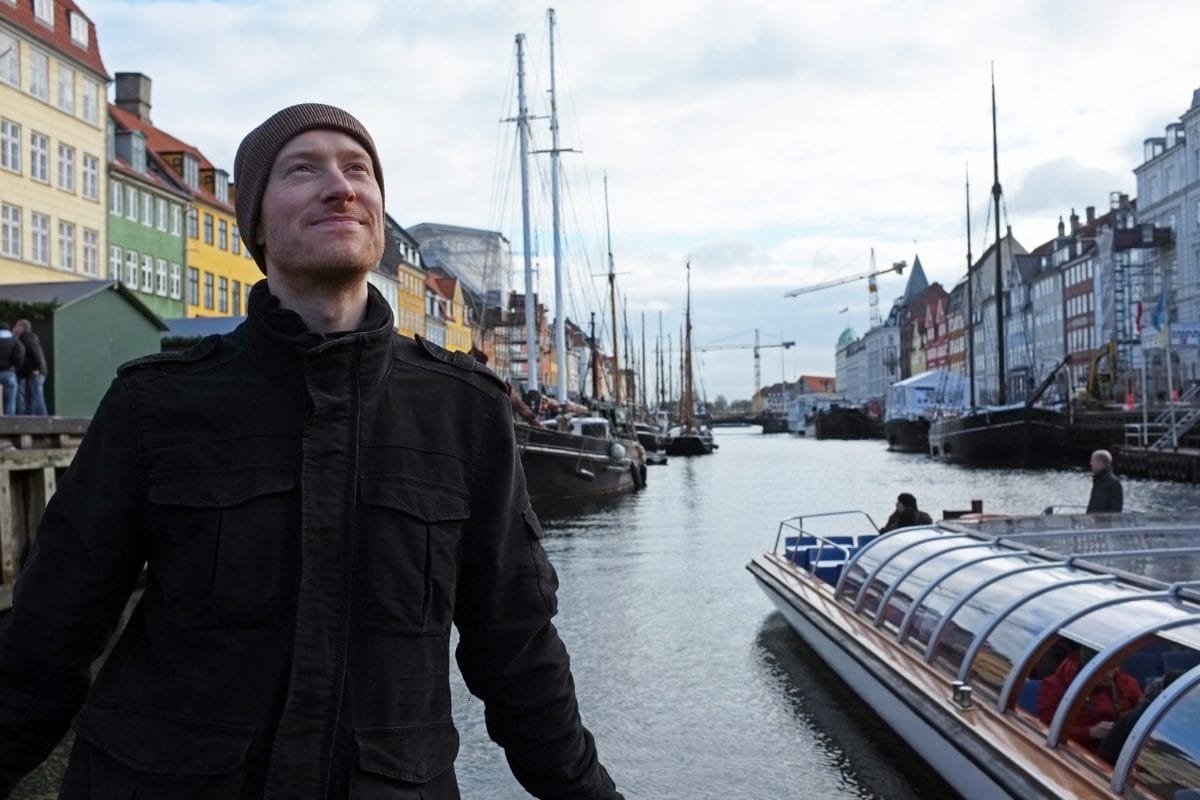
Michael Olsen is the co-founder, CEO, and CTO of Mailbird, one of the world’s leading email management apps. A serial entrepreneur based in Denmark, he launched Mailbird in 2012 and turned it into a million-dollar business with minimal outside funding.
At heart, Michael is a software engineer who champions the KISS (Keep It Simple, Stupid) principle, both in design and in business. He used this very principle to build Mailbird, an email client that allows users to manage all their inboxes from a single platform.
Under Michael’s leadership, Mailbird has evolved into a powerhouse of productivity. Beyond email management, it now integrates with social media and task management apps, helping people save time and stay organized. Initially exclusive to Windows, Mailbird has recently launched on Mac. To date, the app has been downloaded more than four million times.
A self-proclaimed perfectionist, Michael Olsen is on a mission to combat inbox anxiety, simplify digital communication, and make managing email not just easier—but enjoyable.
What is your typical day, and how do you make it productive?
Exercising early in my day is what keeps me productive. I either exercise at home or in the gym every morning, shortly after breakfast. That’s my routine.
Then I’m ready for work. That great energy a workout gives me can keep me going for hours. Another “secret” I have is 100% cocoa chocolate – it’s like coffee, but better.
Blocking notifications for set periods of time also helps if I’m working on a project that requires deep work and concentration.
I have dinner pretty early, and then I get back to work for a while. Mailbird is fully remote, and our team is spread across four continents. Sometimes I’ll have calls with our team in Bali, other days I catch up with my colleagues in Canada or The Dominican Republic.
This is what my days look like six days a week. On Saturdays I take some time off and go play badminton. Or I’ll get together with my friends during the week and play soccer.
I’m both the CEO and CTO at Mailbird, so my work is demanding. But I somehow manage to stay on top of things using this routine.
How do you bring ideas to life?
I’m a perfectionist, so whenever I get an idea, I tend to do a lot of research to understand all the little details and potential scenarios.
For simple ideas I can implement myself, I like to do a quick test before investing a lot of time and energy into them. But if it’s a more complex idea, I’ll research and find the proper solutions before delegating any tasks to the team.
What’s one trend that excites you?
Artificial intelligence excites many people in tech, myself included. AI has already started to change society at large – and it’s just the beginning.
The tricky part is that everyone talks about it and tries to implement it in their products, but so often, it provides little to no benefits to the user because things haven’t been thought out properly.
As a software engineer, I always keep my end user in mind. The juice has to be worth the squeeze, and the feature or update you’re working on has to solve a real pain point and result in a clear benefit. That’s how I approach every project. AI can do a lot, but many times, the way it’s implemented only scratches the surface of the problem it’s trying to solve.
In my industry, I really look forward to seeing how we can further embed AI into email. The goal is to make it an easier communication channel that boosts our productivity instead of hindering it.
What is one habit that helps you be productive?
It’s a combo of making sure I exercise and that I keep distractions at bay when I focus on deep work. I love staying active and I’ve been playing badminton for 20 years now. Soccer and fitness at the gym are also a part of my routine. No matter how busy my schedule, I still make time to work out – mainly because I enjoy the energy it gives me.
But even when you have the energy to do good work, if you’re constantly distracted, your productivity goes down. So I turn off almost all notifications during work hours.
Of course, I use Mailbird, so I manage all my inboxes and other apps there. It saves time and leaves me the mental space to deal with what matters most at work.
What advice would you give your younger self?
I’d say, listen to your instincts and don’t allow yourself to get into a situation you’re not content with. Being at peace and content with the things you do day by day is tremendously important to your well-being.
Define early on what makes you content and establish some ground rules around that concept. Then follow your own rules and be consistent.
Tell us something you believe almost nobody agrees with you.
“AI in email is currently useless”.
I strongly believe so because 95% of regular email users won’t need the features AI is currently helping developers build in email technology.
Companies often integrate AI for the wrong reasons – to please the media or their investors.
But don’t get me wrong: there’s a way to make AI very useful for people, but it requires a depth of thought and implementation that very few actors are actually able to provide.
Email is communication, and communication is a human attribute.
You don’t want AI to reply to your emails. You don’t want AI to make you a superhuman. AI should be a behind-the-scenes technology that helps you to make the most of your humanity.
What is the one thing you repeatedly do and recommend everyone else do?
Eat healthy and exercise. I have a healthy diet as I believe what we eat can influence not just our longevity but how we feel every day.
I eat almost no sugar. Lots of veggies and a good amount of olive oil. My diet is very similar to the Mediterranean diet.
Working out is also a big part of my routine. I love the way I feel after a great workout and a healthy meal.
When you feel overwhelmed or unfocused, what do you do?
Hitting the gym helps a lot – almost always. If that doesn’t work, I shift my routine. Instead of going to the gym, I play soccer or do volunteer work. The most recent place I volunteered at was the Copenhagen International Documentary Film Festival. A small change in my day-to-day life can give me some perspective and help me get back to work refreshed.
What is one strategy that has helped you grow your business or advance in your career?
Leaning into what makes me unique. For instance, I’m very detail-oriented and love to work on a project until I consider it complete or as close as possible to perfect. Trying to achieve perfection can be painful, of course. You’re rarely satisfied with the result of your work and always think you could have done better.
But it’s a trait that’s helped me, too – both as a software engineer and a business owner. It’s allowed me to build a better product than the ones available when Mailbird launched. By spending more time on every detail, we were able to offer people a better user experience. Those people then told other people about it and we were able to gain more customers through word-of-mouth. The media also noticed it and reported on it in their reviews.
So I’ve come to accept this trait and try to see its positive effects as well. To this day, I focus on quality over quantity and want to make sure what we put out for our customers is consistent, useful, and a pleasure to use.
What is one failure in your career, how did you overcome it, and what lessons did you take away from it?
In 2016, we incorporated Mailbird in the US to be closer to potential investors. We believed at the time that being a US-based company with an office in California would allow us to raise money more easily.
We had a few discussions, but never closed any funding and ended up growing the company organically. It was definitely slower, but we worked hard to come up with creative ways to compete with the big guys that were raising dozens of millions of dollars.
It helped us, among other things, to get really good at acquiring a lot of organic traffic. We built the biggest email client website in the world. There are companies in our space worth billions that barely have 25% of the qualified traffic Mailbird gets.
The lesson is that, if you really want something, you have to do whatever it takes to make it happen. In our case, we wanted to raise VC funds in the US. But we weren’t really a part of the local ecosystem, so our initial plan didn’t pan out. But when we set our minds to grow Mailbird organically, we put all of our efforts into that and made it happen.
What is one business idea you’re willing to give away to our readers?
A really good accounting SaaS. Accountants are very expensive, especially in the US, and don’t always integrate tools very well. Now, payment services (like Ramp) and accounting tools (like Quickbooks) can work well together, but the accounting part of the process is still a bit old-school.
From a software developer and a tech CEO perspective, I believe we can go a lot further and reduce costs significantly. I know such a service exists in some countries, but somehow I haven’t yet come across a very good solution for US-based companies.
What is one piece of software that helps you be productive? How do you use it?
Aside from Mailbird, which helps me stay on top of my emails and countless other app notifications, I enjoy using Notion for note keeping.
Also, one tool that keeps us productive as a team is ClickUp. In a full remote company, with 30 people in 15 countries and six different time zones, it’s critical to have the execution under control. ClickUp and its capacity to automate allows us to make sure we keep pushing forward at the right pace.
What is the best $100 you recently spent?
It was a bit more than $100, but I’d say my Whoop. It tracks my health metrics and sleep. Because I’m into health and longevity, I feel like it’s a great device to measure how I’m doing and see where I can improve.
Do you have a favorite book or podcast from which you’ve received much value?
I don’t regularly listen to podcasts, but I recently listened to one called “Saas Talk” where I learned about “the rule of 40,” which is a financial indicator of success for SaaS businesses. It helps you gauge the health and efficiency of your SaaS company by combining different metrics.
The rule states that your business revenue growth and profit margin should be at least 40%.
Realizing that we’ll reach – and potentially exceed – the 40% benchmark in 2025 was a satisfying moment. It gave us a sense of accomplishment on the long and rocky road of entrepreneurship.
What’s a movie or series you recently enjoyed and why?
I really liked The Beanie Bubble. It’s the story of the meteoric rise in popularity of Beanie Babies. The obsession was real, the company growth was explosive, and the personality of the characters is captivating. It has all the ingredients of a great story.
Key learnings:
- To feel good and be productive, exercise every day. It will make your life better, and your business too.
- Define what makes you content and establish some ground rules to help you accomplish that. Then follow your own rules and be consistent.
- Leaning into what makes you unique can be an effective business strategy. Sometimes, that trait can be a perceived flaw, but it can end up helping your company stand out.