
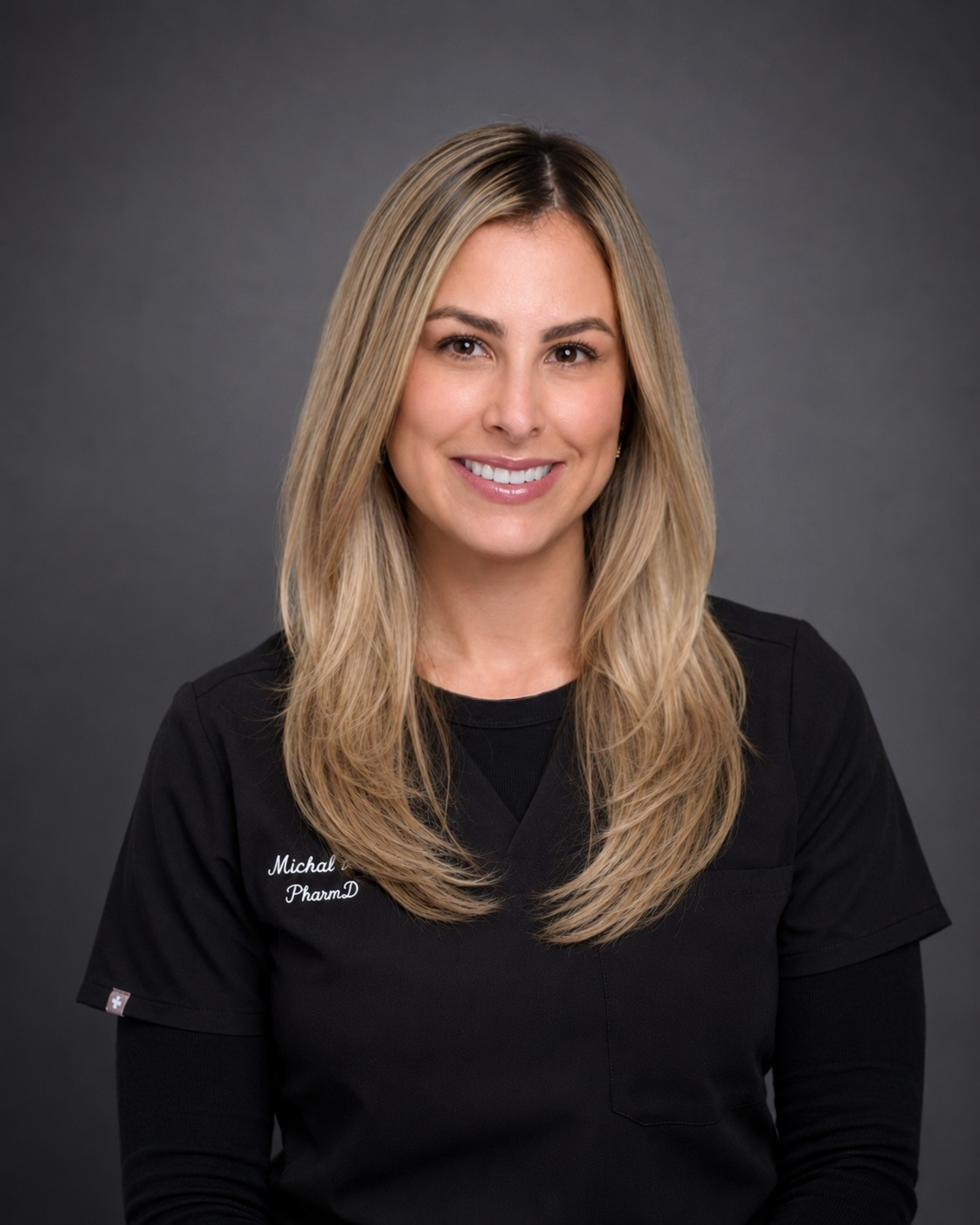
Michal Voldiner, PharmD, is the founder and CEO of Ultimate Care Rx, a long-term care pharmacy based in Burbank, California, serving skilled nursing, assisted living, board and care, and residential care communities across Los Angeles County.
Voldiner earned her Doctor of Pharmacy from Long Island University and built her career in a corner of medicine most people never see: long-term care, where residents are often the most medically complex and their medication regimens the most layered. The field has long belonged to a handful of large organizations. She founded Ultimate Care RX in 2022 to build a more modern and responsive alternative — one that pairs clinical rigor with well-designed operations, round-the-clock pharmacist access, and technology that earns its place.
Her commitment to the work is personal. After watching medication-related problems affect a loved one in a nursing community, she came to believe that every resident deserves the care you would want for your own family. She mentors pharmacy students and emerging pharmacists. Outside of work, she is a wife and mother of three.
What is your typical day, and how do you make it productive?
I’m up before the kids, usually by 5:30, because that’s the only quiet hour I get. I use it to look at what actually needs my brain that day versus what can wait. Mornings are chaos: breakfast, lunches, drop-off. Then I’m at the communities we serve or on calls until pickup, then it’s dinner and bedtime, then an hour at night to close the loop on anything urgent. The trick is knowing which hour of the day is for deep work and protecting it like it’s a meeting with the CEO, because it is.
How do you bring ideas to life?
I test them on the smallest possible scale first (one community, one shift, one conversation) before I build a whole process around them. Long-term care doesn’t forgive big swings that miss; a medication error or a missed delivery has real consequences. So I pilot quietly, get feedback from the nurses actually using it, and only then does it become “how we do things.”
What’s one trend that excites you?
The push toward pharmacists being genuinely embedded in care teams instead of just a dispensing function down the hall. When a community can call and get a real pharmacist at 2 a.m. instead of voicemail, medication management stops being reactive. That shift toward pharmacy as a partner is the direction the whole industry needs to keep moving.
What is one habit that helps you be productive?
I write down the three things that actually matter before I open my email. If I open email first, my whole day gets run by other people’s priorities instead of mine.
What advice would you give your younger self?
Ask for help sooner. I spent years thinking I had to prove I could do it all myself, the business and the household, before I was allowed to delegate. You’re allowed to build support systems from day one.
Tell us something you believe almost nobody agrees with you on?
That being reachable and being genuinely useful are two different things, and a lot of businesses confuse the two. In long-term care, round-the-clock coverage is the baseline, and it should be. The part nobody talks about is whether the person who picks up at 2 a.m. has the resident’s full medication history in front of them. I’d rather a community reach a pharmacist who calls back in ten focused minutes with a real answer than one who answers on the first ring without one. Availability without clinical judgment behind it is just noise.
What is the one thing you repeatedly do and recommend everyone else do?
Follow up with a real phone call, not just an email. In an industry built on relationships with nurses, administrators, and families, a two-minute call does more than a perfectly worded message ever will.
When you feel overwhelmed or unfocused, what do you do?
I go back to the one community, one resident, one problem in front of me. Zooming out when I’m overwhelmed makes it worse. Zooming in gives me something solvable.
What is one strategy that has helped you grow your business or advance in your career?
Leading with the thing communities actually worry about at night, what happens when something goes wrong after hours, instead of leading with price or service lists. Once administrators trust that there’s a real person answering when it matters, the rest of the relationship builds itself.
What is one failure in your career, how did you overcome it, and what lessons did you take away from it?
Early on I wanted to say yes to every community that called, because turning down work felt like losing it. What I learned is that growth you can’t fully staff for is really just a promise you’re going to have trouble keeping. So we set a hard limit on how quickly we take on new communities, and we hold to it even when it costs us in the short term. The lesson: a “no” now protects every “yes” you’ve already earned.
What is one business idea you’re willing to give away to our readers?
A simple after-hours triage line specifically for assisted living staff. Not medical emergencies, just “is this medication issue urgent or can it wait until morning.” Most of these calls just need someone knowledgeable to confirm it can wait until morning or flag that it needs the care team now, and almost nobody is building specifically for that gap.
What is one piece of software that helps you be productive? How do you use it?
A shared calendar and task system that both my team and I actually check. The tool matters less than the discipline of putting everything in one place. For me, the moment something lives in my head instead of the system, it gets dropped.
What is the best $100 you recently spent? What and why?
Meal prep delivery for one week. It gave back hours I would’ve spent cooking and let me actually sit with my kids at dinner instead of standing at the stove.
Do you have a favorite book or podcast you’ve gotten a ton of value from and why?
I keep coming back to books on operations and systems thinking, because running a pharmacy that serves vulnerable people has zero room for “we’ll figure it out as we go.” Anything that teaches me to build repeatable, dependable processes pays off immediately.
What’s a movie or series you recently enjoyed and why?
Honestly, whatever’s calm enough not to wake anyone if I fall asleep halfway through. That’s the real criterion some weeks. But when I get a real night, I like shows that are slower and character-driven, because my days are so fast-paced that I crave the opposite at night.
Key learnings
- Protecting one hour of genuine deep work each day matters more than building a perfect schedule around it. The discipline lies in defending that hour once it has been chosen.
- Testing a new idea at the smallest possible scale, a single site or a single shift, before building process around it limits the cost of being wrong. In industries where an error carries real consequences for the people being served, that restraint is worth the slower pace.
- In relationship-driven industries, a short phone call accomplishes more than a carefully worded email. Written follow-up is efficient; spoken follow-up is what builds trust with nurses, administrators, and families.