
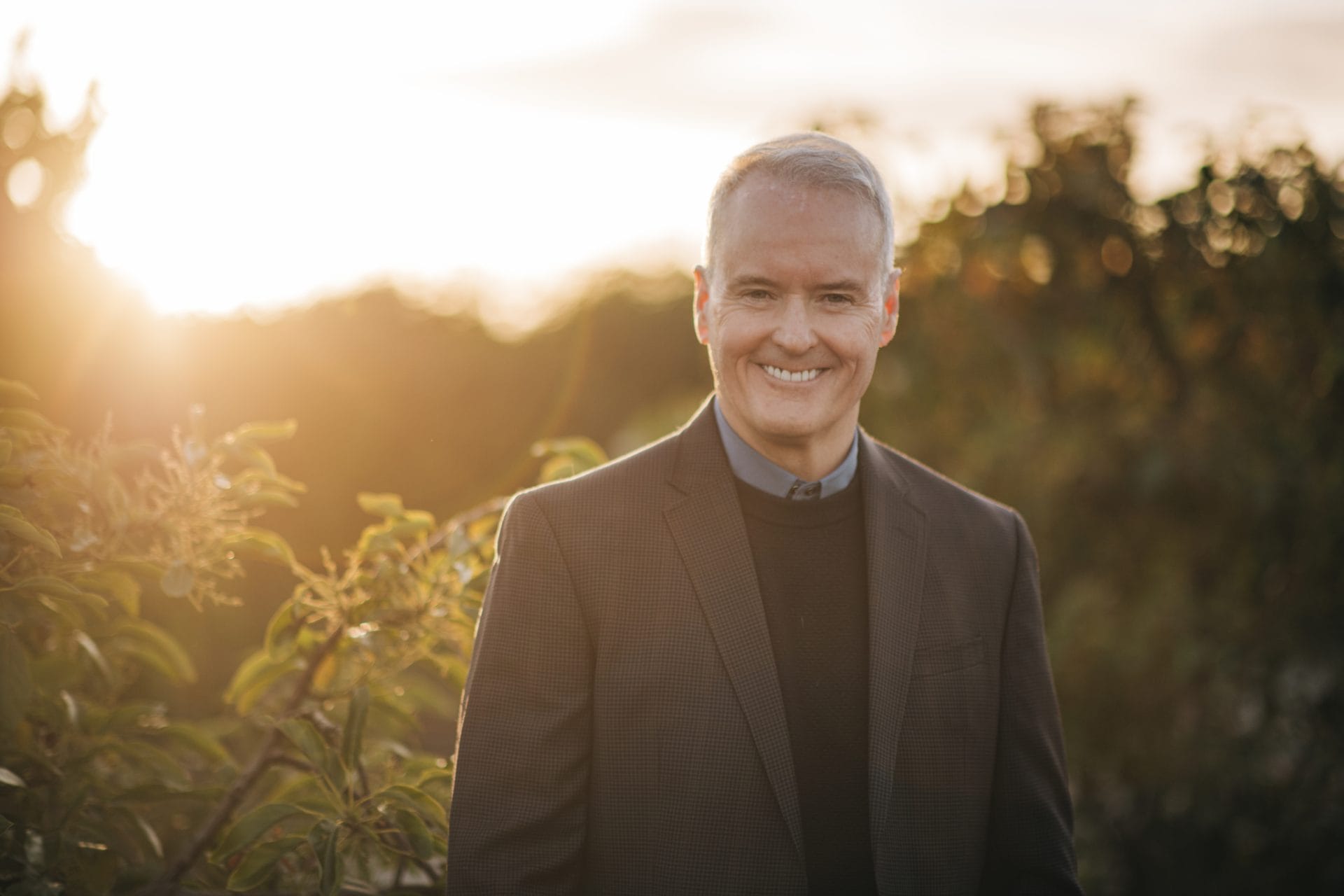
Mike has spent the last three years leading and developing the CoolPath team and rangeland ecological restoration project. In partnership with Agromin, the largest producer of compost in California, the project is based on large-scale compost application along with other regenerative practices, financed by verified, high-integrity nature-based carbon credits. He and his partners have helped guide the pioneering project to submission for initial registration as “Under Validation” with VERRA, one of the world’s leading voluntary carbon registries. Mr. Powers is passionate about fulfilling the mission of CoolPath to achieve ecological restoration while reducing greenhouse gas emissions through a sustainable business model and strong partnerships.
Prior to his work with CoolPath, Mr. Powers served as County Executive Officer for 11 years, capping off a 30-year career of service with the County of Ventura. He managed a budget of $2.5 billion, and nearly 10,000 employees in 25 departments at over 500 locations. He provided oversight and support for all major county functions including budget, finance, legislation, human resources, labor relations, economic development and information technology. During his tenure, he helped increase the County’s long term bond ratings to AAA with both Standard & Poor’s and Moody’s, the highest level possible.
Mr. Powers’ leadership focused on providing measurable quality public service in the areas of public safety, health, environmental and social services. He further oversaw the planning, waste management, and agriculture departments and lead the development of the Sustainability Office.
His role entailed large scale project management including supporting the development of the County’s first Climate Action Plan, first Economic Vitality Plan, as well as numerous large sustainability projects. Additional complex projects included the finance and construction of a new hospital and establishment of an over $400 million health plan and Electronic Health Record. Due to these and other investments, the County was twice recognized as the top Digital County in the nation. During his tenure, he helped guide and support the County through several crises including the impacts of large fires, a mass shooting and the pandemic.
Prior to his role as CEO, Mr. Powers served as the Director of the Health Care Agency, an $800 million department with over 3,000 employees. He managed multiple health departments, including two hospitals, and over 80 community-based health centers and supported the development of a countywide trauma system and the regions only pediatric cancer program.
Mr. Powers worked as a lawyer in private practice for three years before joining the County Counsel’s Office where he practiced another five years. His focus areas included business litigation, environmental and employment law. He received a BA in Business/Economics from UCLA and a law degree from Loyola Law School.
What is your typical day, and how do you make it productive?
After reading the news, local and national, I prepare a priority To Do list. I try to step back and make sure I’m looking down the road at the next few months in order to keep projects moving forward. While I complete a few of the more straightforward tasks, I also carve out time for the larger, strategic goals which allows me to focus, uninterrupted to prepare analysis and reports, especially those that are complex and require continuity and integrating multiple project aspects. I include categories to make sure I’m hitting all of the different areas such as, for my projects, registration tasks, implementation, business development, talent acquisition and marketing. At the same time, I look for recent industry articles that provide insight into future growth potential and target areas. As president of a local community service group, I include any upcoming activities on my task list. I also coach high school sports with my sons, so I set time aside for that as well. I try to get some time for a workout also, maybe an hour or so, per day. This not only fosters long term health but also clears my head and helps me think through different issues. Finally, I make sure to connect with my wife Erin and my sons Charlie and Zack, to see how they are all doing. I also try to check in with my friends. Not that I always succeed, but I truly believe every day is a gift, so while I’m forward thinking in work and community service, I try as best I can to enjoy and appreciate every day and the special people I am fortunate to have in my life.
How do you bring ideas to life?
First, I read and study innovative ideas in our industries. I have always loved to learn new things. I am also fascinated by leadership in all its forms and the importance of creating a culture that fosters and inspires innovation and growth whether in business, sports, arts or politics. I have always been fascinated by the creative struggle and how successful people overcame hardships to achieve their goals. We so often focus on the ultimate outcome rather than the blood, sweat and tears it took to get there. Embracing the concept of getting comfortable being uncomfortable. Which also means you need to accept the risk of failure. If you’re not failing at efforts sometimes, you’re probably not pushing yourself or your business team enough. When I find interesting articles or studies, I share them my team and add them to our weekly meeting to ensure we make time to discuss them. Even if I don’t agree with an idea, I sometimes propose it just to provoke discussion and new perspectives. Or I suggest new ideas. Then, we as a group, take a positive view that this could work. If we think it could work, then we attack it to identify any weakness or fatal flaws. We believe this helps decision making in that, if it doesn’t work, we saved time and money. If it did hold up to the scrutiny, the idea will be the stronger for it. We will likely find ways to enhance it as well.
What’s one trend that excites you?
The growing acceptance that nature-based approaches to addressing climate change are real and impactful. Usually if something sounds too good to be true it is. In this case, however, our company, CoolPath’s, approach to utilizing compost to improve soil health, grasses and reverse climate change in a scientifically verifiable way, works and is real. We see the market demand growing for high-integrity nature-based carbon credits that companies purchase to fund critical carbon storage projects in order to meet their sustainability goals.
What is one habit that helps you be productive?
I think a willingness to tackle the most difficult problems head on. If there’s an issue that’s nagging me and I believe could truly impact the overall success of a project, I try to dive right in to deal with it. It’s only going to get worse if we wait and I’m only going to stress over it more. It relaxes me to just get in and deal with it, whatever the end results. It’s better to get there sooner.
What advice would you give your younger self?
Trusted relationships are everything in business and in life. Trust your instincts. Learn another language early.
Tell us something you believe almost nobody agrees with you.
My belief that too many people say “it’s not personal, it’s just business” when they are just trying to rationalize treating their business partners and/or employees in an unfair manner. I genuinely believe all business is personal and, therefore, you should treat your partners and employees in an equitable and respectful manner even if it many have some negative business impacts. While it is the right thing to do intrinsically, it also has the benefit of being good business. Building relationships based on trust and friendship has served me well in terms of seizing business opportunities.
What is the one thing you repeatedly do and recommend everyone else do?
Step back daily and reassess your goals. What’s important to you in life and business and how are my actions today going to further those goals. I must do that because I can also be a bit of a “grinder.” Meaning I’ll just keep working hard on multiple projects and focus on those all day. I need to pause and reflect on the bigger, more macro picture and long-term future
When you feel overwhelmed or unfocused, what do you do?
I write a list of the items that are causing me to feel anxious or unfocused and then I set about to tackle those issues. I have to say, I’m fortunate that, through my education, training, up brining and work experience, I rarely feel overwhelmed. I have learned to be able to handle and manage multiple complex, difficult problems at the same time. I also find it helpful to go for a workout, usually a run. This clears my head and, often, my brain just naturally starts to problem solve.
What is one strategy that has helped you grow your business or advance in your career?
Over my 35-year career in business, law, and health and government administration, waste management and sustainability, I have had the privilege of working in some meaningful though complex industry sectors. Especially in complex areas where I lack experience, I truly study the area and meet with multiple subject matter experts to try to get up to speed and, ultimately, to develop a working knowledge of the area. It’s important to embrace the humility of saying, “I don’t understand this area. Please help me learn it.” Shed the fallacy of the omniscient leader. No one knows everything. Your understanding will grow faster, you will be more relatable to your team and the experts that you sought out will, rightly, feel respected and valued. All of which helps engender a positive work culture. I express this feeling as trying to “get my arms around it.” Not so I can be an expert so much as that I can make good business decisions that support the operations in that area and so I can provide meaningful advice to my partners and decision makers. I test myself on this by trying to explain the area to lay people who know nothing about the area. If my audience doesn’t understand after my explanation, I go back to the drawing board to learn more, simplify my presentation or fill in gaps to help make it more understandable. I also try to use metaphors to help people have a gut level understanding and to remember it. Example: carbon sink. Turning waster into an asset. A full circular economy. To explain the business side of supporting a public, safety net health system “no money, no mission.” Finally, it is important to me to give credit to people who come up with good ideas. Often in business brainstorming situations, one person has a great idea, and another person agrees and adopts it. As a matter of fairness, it is important to attribute that good idea to the originator. This makes them feel valued and avoids needless resentment. While the adopter may think it lowers their perceived value, I believe their humility shows strength. When they could have taken credit for something and they didn’t. This promotes an open culture in which people are eager to share good ideas knowing they will be valued and recognized.
What is one failure in your career, how did you overcome it, and what lessons did you take away from it?
I was relatively new to a leadership role and made a change in a critical leadership role which I shouldn’t have. I was rushed and I relied too much on the perspective of one person rather than seeking the view of others and taking time to mull it over. This is what I usually try to do, and it just reinforced why I should. In response, I admitted the error publicly and apologized to the individual. He appreciated it and we have had a very positive relationship ever since. I also didn’t fully grasp the negative, ripple effect it had on many departments. Once I did, I set about to meet with the leaders of these departments. They were all honest and, frankly, vulnerable in describing their reactions and fears. They really thought the worst, like maybe they were next. I thought, my goodness, I would never do that. Then I realized, much of this stemmed from the fact they didn’t really know me yet. So I used this as an opportunity to accelerate the building of my relationships with them. This really ended up being a silver lining. Through their openness and these meetings, I was able to develop trusted relationships with the leadership team much more quickly.
What is one business idea you’re willing to give away to our readers?
Though it is a bit self-serving, the voluntary carbon market is growing and maturing. Increased verification standards have addressed previous greenwashing concerns and increased demand and pricing for high-integrity credits. Markets are also favoring projects which not only store carbon permanently, but which also provide additional cored benefits such as improved soil health, biodiversity and water capture and storage. The need for nature-based carbon credits to address GHG emissions was already significant, but it is only growing with the increased energy demand generated by AI as well compliance markets such as California’s Cap and Invest Program, which recently expanded the volume of voluntary credits approved in the program.
What is one piece of software that helps you be productive? How do you use it?
Digital Soil Mapping and remote sensing is revolutionizing the verification of soil-based carbon storage. It is dramatically reducing the cost, and accelerating the pace, accuracy and efficiency, of measuring carbon in the soil necessary to issue nature-based carbon credits on the voluntary market.
What is the best $100 you recently spent?
Matchapp – tells us whether our sons are likely to get in certain competitive tennis tournaments and helps improve our planning. Dermatologist recommended sunscreen. This is especially important as I just had a cancerous segment removed. Finally, I purchased a special hat for a friend, Tia Eva, with a personalized message on it. Eva has been like a loving Aunt to our boys. She’s so generous and thoughtful with them and us and yet expects nothing. Felt really good to let her know through this simple gesture how important she is to us. (Lesson: I could easily not have done this due to my busy schedule, but I kept thinking about it. Trust your instincts!)
Do you have a favorite book or podcast from which you’ve received much value?
Good to Great by James Collins. Two reasons: the focus on assembling the right team first, then developing your strategic and implementation plans. The plans will be better formed and informed with multiple perspectives plus the team will have more buy-in since they helped create it. People don’t like to be told what to do. It’s amazing how people flourish when you show them trust and respect for their ideas. I also appreciate how the author describes the difference between a level four and a level five leader, the highest level. A four does a great job of leading the company, but when they leave or retire, the company’s performance declines. A level five leader wants to make sure the company not only thrives after they leave but performs better. They accomplish this by building a team and surrounding themselves with people who are smarter and more talented than them. While some leaders are fearful or threatened by adding such talented people, a secure, level five leader, embraces the value they bring, and most importantly, the long-term impact of building such a strong team. Ideally, once they leave or retire, it will be a seamless transition, and the company will keep thriving without them.
Related to this notion of building a strong team with a focus, not on the leader, but on the organization, the book “Team of Rivals,” by Doris Kearns Goodwin about President Lincoln. Lincoln set aside petty personal squabbles to assemble the most talented team possible. Senator Seaward is a perfect example. The senator was the shoe-in candidate for President, when Lincoln stunned all and won the nomination. Rather than treating him as a vanquished opponent, Lincoln recognized the Senator’s talents and asked him to be his Secretary of State – a key and trusted position in his cabinet. He did was best for the country, despite some potential, personal risk. And it spoke well of the Senator, who could have been wounded and bitter. Instead, he accepted the offer, did a great job for his country and became one of President Lincoln’s biggest supporters.
It’s also an example of sometimes we are, through work or other circumstances, pitted against one another without really knowing each other. It’s important to step back and try to empathize with the other person and get to know them. Try to find that common ground and, maybe even a positive relationship or friendship. I have had that happen to me in the last few years. A previous bitter rival due to our circumstances, we didn’t really know each other. However, due to sharing common friends, we have gotten to know each other and become good friends. I truly respect and appreciate this person.
What’s a movie or series you recently enjoyed and why?
“The Pitt”: I am always fascinated by team chemistry. This show highlights a group of very different people with a diversity of backgrounds and levels of training and expertise coming together and being united by the common purpose and focus of saving critically ill and injured patients. Their focus and collaboration during these intense, life-or-death moments, is truly inspiring. Whatever differences or ego issues they may have, they are all set aside when the patient is wheeled in on a gurney. Such a clarifying and galvanizing environment.
I often think of dealing with daily work and life challenges in the same way. That is, you need to triage each issue. How serious is it, how time sensitive, what resources are needed? Time and life are precious, so you need to use them thoughtfully. And answer this critical question: is this the best, most meaningful way of prioritizing tasks and investing my time and energy?
Key learnings:
1. Trust your instincts: while this seems obvious, my faith in this principal has only grown with time. Some may see it as just taking the easy, even lazy, approach of just following your gut or to ease your anxiety. I believe our instincts are incredibly sophisticated and powerful – akin to a supercharged AI program. If you think about it, our instincts are comprised of all our education, training, upbringing, managing and overcoming challenges at work, in life, in sports, all of your lessons from failures as well as reminders of what works. And best yet, like the best AI programs, your instincts continue to improve daily. If you trusted your instincts and it didn’t work out, you will now modify your instincts to know better for next time. I like this too because, unlike say athletic ability which diminishes over time, our instincts only grow stronger as we age and add to our bucket of skills, training and life experiences.
2. Creating a safe, positive, accountable and reinforcing culture is one of the most important roles as a leader. If you want to foster quality and innovation, you need to create an environment in which people are comfortable talking about problems that need to be fixed. Where it is safe to demonstrate accountability by admitting and owning a mistake and addressing it going forward. To truly encourage innovation, you must acknowledge this means trying ideas that fail and taking risk. And it’s not enough just to say these nice words. To ensure your team believes you, you need to demonstrate it with your actions, repeatedly. To ensure it is a safe culture, free of discrimination or harassment of any type, you must ensure there are strong, open, safe avenues for your team to report such problems and, when they do, the matters are dealt with swiftly. Creating such a culture also builds momentum in terms of hiring talented people. The most talented have many choices. They will seek out such a positive culture and, once they’ve found it, they will encourage other talented people to join them.
3. Continue to search for common ground. This idea is important in business and life. Especially with so much division of late, it is ever more important. This is also important in a business and really in any negotiation. It is critical to try to understand what the other side wants and why. Even if it doesn’t make sense to you, it is important to them and that’s what matters. You don’t “win” a negotiation. You create partnerships and trusted relationships. One example of an unlikely approach to finding common ground is when I worked for a local government with a public hospital and clinic system. I had board members with diametrically opposite views of the system. One member wondered why we had it at all and worried about its finances, while the other believed it served as a critical safety net for the community. However, we were able to help them see some common ground though for different reasons. The one board member supported it because if the essential care it provided to those in the community. The other ended up supporting it because if it provided preventive, outpatient care, which reduced the overall cost of care and strengthened the financial footing of the system. Different reasons, same result.
4. Build a talented, trusted and diverse team. I was literally on a pivotal call today with a potential long-term partner for my business and my three partners. One of my partners asked the other team why they were so interested in forming a long-term partnership with us? They first provided many meaningful market reasons. Then one of them said the following: “Based on our experience working with you, we know you are trustworthy, sharp and reliable. No doubt it in our business, there are going to be challenges that arise regularly. But if you have the right people on your team, you can overcome anything.” Since we feel the same about them, we believe this is going to be a strong and stable long-term partnership.
Core to any successful venture is starting with the right team. Of course, technical skills are important. But just as important is finding people who are open, honest and trustworthy. They are willing to tell you the hard truths you need to know when others might be reluctant to. They should have a strong personality but also work collaboratively on a team. And this is especially important for my next point which is that you include team members with diverse backgrounds and perspectives. No one person has all the right information and or is fully aware of the variety of viewpoints in your market. Having these diverse backgrounds will ultimately lead to spirited discussions and debate which is what you want. You need people who are comfortable and respectful in participating in those debates. I always believed that if everyone is agreeing with the plan right away, there is a problem. It is basically just preaching to the choir. It is imperative that you seek and receive contrary opinions.
This point leads to another thought, which is, if you have developed a plan or project, now you should attack it with a fatal flow analysis. This will inevitably make your plan stronger and insulate it from foreseeable challenges or problems. When I used to practice law, I would notice that often the judge at a hearing would pose rigorous, critical questions to one side. Some would say, “oh he’s going to rule against them.” But, no, typically what I found is that the judge planned to rule for the side they were questioning, they just wanted to make sure they were right and there weren’t going to be blindsided with problems with the ruling.
5. If someone is important to you, it is never too late to them know, in business and life. This is a practice I continue to work on but always feel better when I follow it. See the example above of my effort to have a custom tennis hat made for a friend who is so supportive of our boys and so generous with them. I could have let it go, but I kept thinking I wanted to do it. When I gave it to her, it meant so much to her. It was really a small gift, but she understood it was a symbol of how important she is to our family.
The same is true of personal and business relationships. I have always believed all business is personal and that those who say, “oh it’s not personal, it’s just business,” are really just using it as an excuse to rationalize doing something they know they shouldn’t have. While I believe this for its intrinsic, and not transactional, value, it does end up being good business as well. This is playing out right now, with a long term personal and business friend with whom I am partnering to build and expand an exciting new business. It’s amazing what you can accomplish with just a few phone calls when you have built relationships based on trust. It’s also a much better way to live.