
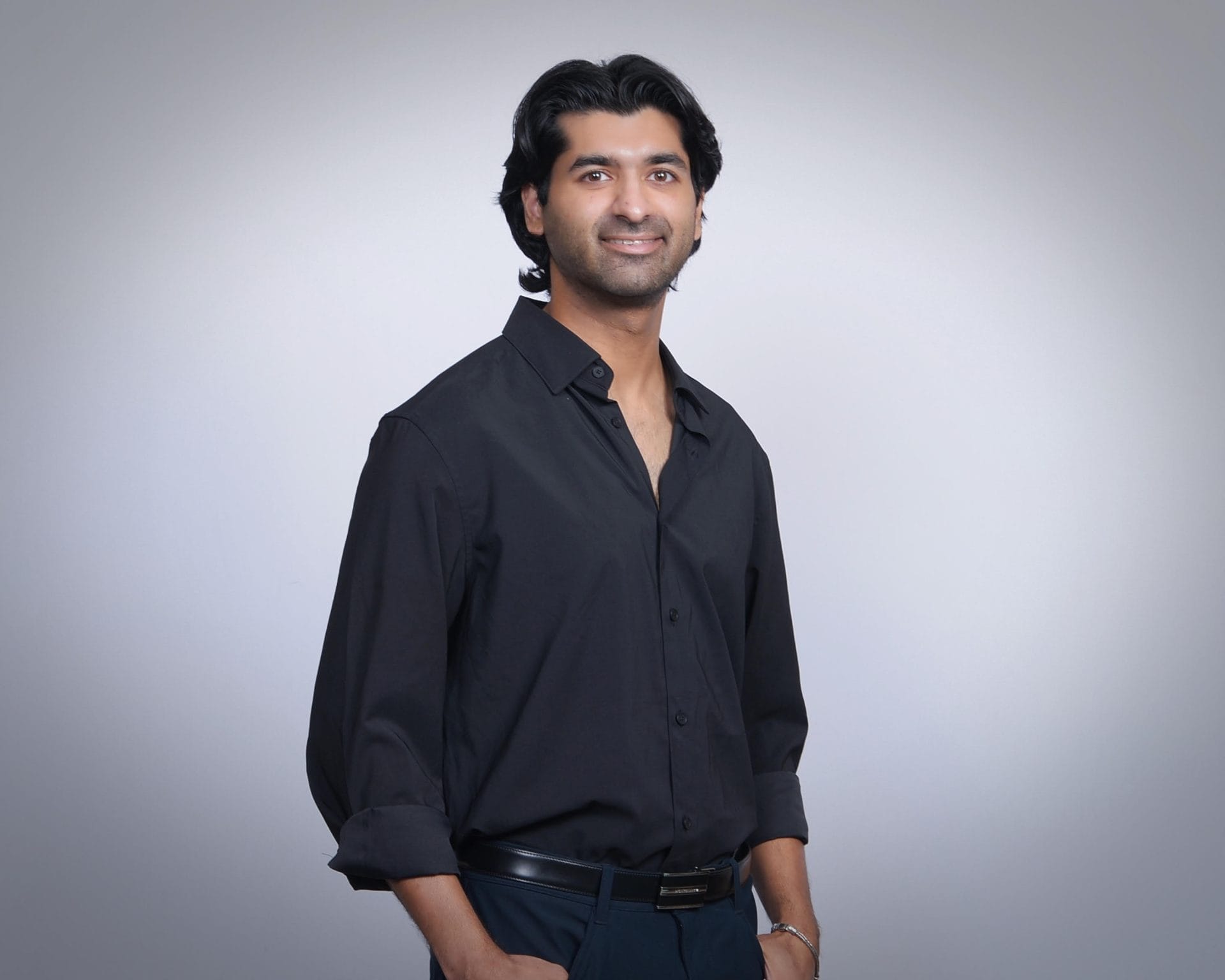
Neel Somani is an emerging leader in the world of crypto and blockchain development. He is the founder of Eclipse, a pioneering Layer 2 blockchain platform that raised $65 million in funding, turning a bold idea into a cutting-edge reality. Before venturing into Web3, Neel was a quantitative researcher at Citadel, where he focused on commodities markets. This experience in finance laid the foundation for his transition into the blockchain space, where he aims to reshape the future of decentralized technology.
Neel holds a triple major from UC Berkeley in Computer Science, Mathematics, and Business Administration. His academic research explored areas such as differential privacy and next-generation machine learning systems, positioning him at the intersection of technology and innovation.
Beyond his entrepreneurial endeavors, Neel is a passionate mentor and advocate for education. He has actively supported students at Berkeley and other institutions, fostering growth across multiple disciplines. Whether advising early-stage crypto startups, building decentralized platforms, or creating scholarship opportunities, Neel’s work is driven by a commitment to community-building and advancing innovation.
What is your typical day, and how do you make it productive?
Since I left my job, my typical day has limited structure except that I always gym or go boxing at 2pm. I’ve been working with a trainer in the Equinox E-Club for the last 6+ months and I lost 30+ lb.
I often have 1-2 essays or side projects that I am working on. These take up all my free time. When family or friends visit, I make it a point to prioritize them.
How do you bring ideas to life?
It depends on the kind of idea. Some ideas are not even necessarily commercial, but instead they’re just thought experiments that I naturally structure my thinking around and flesh out. In some cases, solutions come first, but you run the risk of thinking too
much about a solution-in-search-of-a-problem. In many cases, there is a problem space that has obvious issues, but it’s not immediately clear what causes those issues to exist, so I have a few hypotheses and I flesh out my understanding of the space to support or disqualify those hypotheses.
What’s one trend that excites you?
The most interesting trend by far is of course AI and the potential for achieving AGI in the near future. The implications are difficult to properly reason through.
I am also interested in the initiatives that will now be possible under the new Trump administration. Government reform and privatizing previously public sector functions are both rare opportunities that we are lucky to take part in.
What is one habit that helps you be productive?
I maintain a meticulous calendar. Everything, from brushing my teeth to what time I sleep, is recorded in the calendar. This also makes it easier to do my taxes in some cases, when I am trying to recollect exactly how many days I was in each location.
What advice would you give your younger self?
I would have encouraged my college self to take more probability and statistics classes. I was lucky to have held jobs where I could learn math on-the-job, but I had far more time when I was a student.
Tell us something you believe that almost nobody agrees with you on?
Science does not generally progress via people following the scientific method. The most interesting hypotheses – Newton with gravity, Thomas Edison with electricity, even the recent
advent of mRNA vaccines – did not strictly follow the scientific method and were sometimes rejected by the scientific enterprise altogether. At the same time, these novel hypothesis (which ought to be generated outside the scientific method) should still be formally tested for confirmation. The scientific enterprise as it exists today has produced thousands and thousands of papers that fail to reproduce.
What is the one thing you repeatedly do and recommend everyone else do?
I track my sleep religiously via an Oura ring. This is one of the most useful pieces of health data in my opinion. It is the #1 determinant of how I feel in a day.
When you feel overwhelmed or unfocused, what do you do?
I don’t remember the last time I felt overwhelmed. If I’m unfocused, I take that as a sign that the work I’m doing is not sufficient important or interesting, so I would either delegate it or not do that work at all.
What is one strategy that has helped you grow your business or advance in your career?
High-level strategic decisions, especially as a startup, are not a group exercise. They are best reasoned through in isolation. This is because the consequences of bold strategic moves often result in re-structuring, layoffs, or actions that have implications on the work that people do day-to-day, which people naturally push back on. After you make these decisions on your own, you should align with leadership, and finally you should get the team on board. The democratic process will lead to hivemind, middle-of the-road decisions which are not bold enough for a startup to succeed.
What is one failure in your career, how did you overcome it, and what lessons did you take away from it?
When I first started my project on the Terra blockchain, I picked the chain for its rapid growth. What I didn’t account for is the risk that the blockchain goes to $0. If a founder is going to build a project like that, they shouldn’t hedge against Terra imploding, so I did that part right, but my point is that whenever you build an idea, you want to make as few “bets” as possible. For example, that project might have worked if Terra didn’t de peg. Whether that’s a reasonable bet is up for debate. But on top of Terra working, the project itself also needed to succeed. And for projects building on my infrastructure to raise capital, they needed Terra, my project, and the project building on my infrastructure to succeed. So I use that kind of reasoning when I think about what investments are reasonable, or what projects I want to pursue building myself.
What is one business idea you’re willing to give away to our readers?
This isn’t necessarily a business idea, but in the same way that Open AI started as a non-profit doing AI research and eventually found commercial viability, I wonder if that same strategy could be applied to an unusual field in the humanities: history, anthropology, etc. So you’d take the top 5 professors or thinkers in that field, pay them $1M per year, and just see what comes out of it. You might end up with foundationally new contributions in propaganda creation, political science, wherever else the applications are.
What is one piece of software that helps you be productive? How do you use it?
Aside from my calendar (mentioned above), I set alarms 1 minute before I need to hop on a call. This allows me to do my focused work without constantly checking the time.
What’s a movie or series you recently enjoyed and why?
Three Body Problem was interesting on Netflix, but after reading the Wikipedia summary of the remaining books, I see it spirals out-of-control and loses practicality.
Key learnings
- Neel Somani maintains a flexible but structured daily routine, with a focus on fitness (gym/boxing) and side projects, while prioritizing family and friends when they visit.
- Ideas are approached as thought experiments, with a focus on understanding problem spaces and testing hypotheses rather than jumping directly to solutions.
- Strategic decisions, especially in startups, are made independently to avoid groupthink, and minimizing risks by reducing dependencies is key to success.