
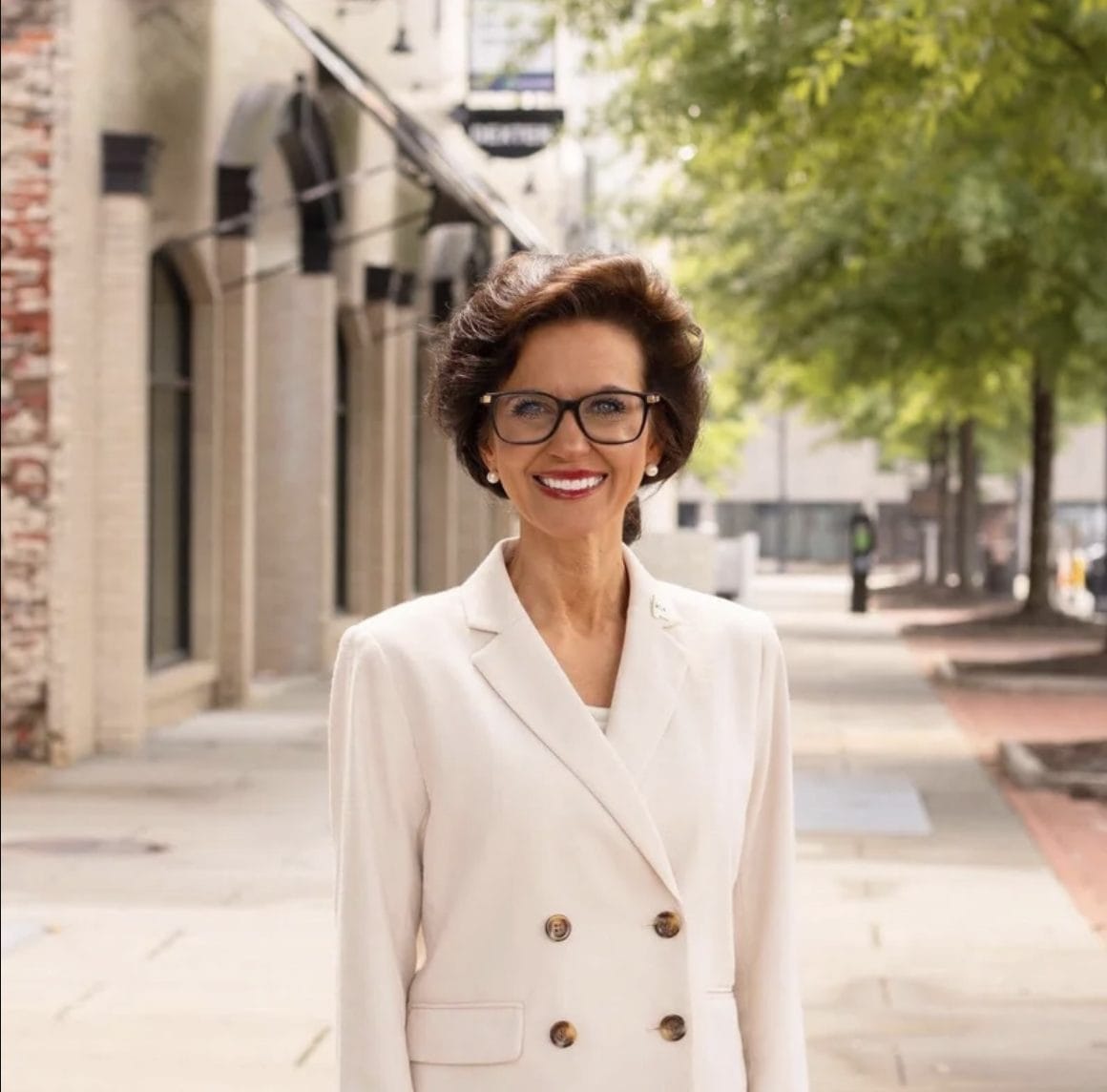
Dr. Nicole Wadsworth grew up with a deep love for Alabama—its land, its history, and its people. From an early age, she believed in working hard and giving back. That belief shaped her life.
Nicole earned four degrees, including an MBA, an MS, and a PhD, along with two certifications focused on economic development, contracts, and planning. In 2017, she became part of the first group in Alabama to earn the EDAA Leadership Certificate.
She began visiting cities and towns across the state to listen and learn. Over the years, Nicole visited all 67 counties—more than 25 times each. She asked local business owners what they needed, toured potential locations, and walked through empty buildings imagining what could be rebuilt.
Her career took off as a site selector and economic development consultant, helping cities attract new businesses and retain the ones they had. Nicole worked with clients to create jobs, restore historic buildings, and improve infrastructure—turning small ideas into lasting change.
Beyond her professional work, Nicole serves on boards and committees, donates to food banks, and supports causes that strengthen Alabama’s communities. She is active in groups focused on industry, workforce development, healthcare, and economic policy.
Through every role, she stays true to her values: faith, family, and service. Dr. Wadsworth often works alongside her husband, State Representative Tim Wadsworth, and their children, who join in on projects and volunteer efforts.
Nicole’s story is about building more than buildings. It’s about believing in people—and giving them the tools to grow.
What is your typical day, and how do you make it productive?
No day is the same, and I like it that way. I usually start early—before the sun comes up—so I can read news briefs, economic development reports, or community updates without distraction. My day may include site selection meetings, calls with business leaders, or traveling to urban and rural communities to meet with local officials or business owners.
I stay productive by being organized but flexible. Some of the most meaningful conversations happen unplanned—on a porch, in a town hall, or during a walk-through of a vacant building. Preparation helps, but being present matters more.
How do you bring ideas to life?
I listen first. Every good idea I’ve pursued started with a conversation—usually with someone in the community. Then I combine what I heard with data, resources, and the right people.
For example, the I Shop Local campaign came from small businesses telling me they were struggling. Community volunteers partnered with the SBA to promote their towns’ own entrepreneurs. When you give people a voice and connect them to solutions, ideas come to life.
What’s one trend that excites you?
The return of manufacturing and industrial development to Alabama. I’ve walked through empty factories that once powered entire communities. Now, with shifts in supply chain thinking, those places are getting a second look. Economic development is about restoring pride and opportunity to overlooked areas.
What is one habit that helps you be productive?
I prioritize based on impact. Every morning, I list what will make the biggest difference that day—whether it’s securing grant paperwork, following up on infrastructure bids, or returning a call from a mayor. I also set aside time to think quietly—during early walks or long drives. That space helps me plan ahead.
What advice would you give your younger self?
Don’t let opposition discourage you. Early in my career, people tried to block my efforts—not because the ideas were bad, but because they disrupted the status quo. I’d tell my younger self: stay rooted in data and stay visible. If the idea is sound, the results will come.
Tell us something you believe almost nobody agrees with you on?
I believe some of the best economic insights come from non-experts. I’ve learned as much from farmers, barbers, and retired teachers as I have from consultants. Everyone’s input matters—economic development is about making life better for people, and they deserve a seat at the table.
What is the one thing you repeatedly do and recommend everyone else do?
Visit places in person. It’s easy to make assumptions from behind a desk. But driving through a town, walking the business district, and eating at a local diner gives you real understanding. I’ve visited every Alabama county more than 25 times—those visits ground everything I do.
When you feel overwhelmed or unfocused, what do you do?
I step away from the screen. I might go for a walk, listen to music, or read something unrelated to work—usually history or memoirs. I also talk to my husband, Tim. As a state representative, he understands the pressure. We ground each other.
What is one strategy that has helped you grow your business or advance in your career?
Consistency. I show up, follow through, and focus on long-term results. That builds trust. In this field, people want to work with someone who is steady and dependable. That kind of reputation opens doors you can’t plan for.
What is one failure in your career, how did you overcome it, and what lessons did you take away from it?
Early in my career, I got bogged down in emails and daily tasks, and I burned out. I learned to block out time for focused work. Now I manage my time more intentionally, and that has improved both my performance and my well-being.
What is one business idea you’re willing to give away to our readers?
Create a digital “Main Street” hub for rural towns—a platform for local businesses to promote themselves, post job openings, and list community needs. Many great small businesses lack a digital presence. That’s a solvable problem.
What is one piece of software that helps you be productive? How do you use it?
ArcGIS. I use it to analyze geographic data when reviewing development sites. It shows patterns in land use, zoning, and infrastructure proximity—essential information for smart decision-making.
Do you have a favorite book or podcast you’ve gotten a ton of value from and why?
Strong Towns—both the book and its articles. It challenges conventional development models and promotes financially resilient towns. The insights are practical and rooted in lived experience.
What’s a movie or series you recently enjoyed and why?
Turn: Washington’s Spies. It covers lesser-known parts of the American Revolution. I appreciate its focus on overlooked people and decisions—reminding me that history is shaped by everyday choices.
Key learnings
- Trust is earned through consistency, visibility, and community-first action.
- Non-traditional voices often bring the most valuable economic insights.
- In-person connection is essential to understanding regional needs and potential.
- Top-down planning failures inspired a lifelong commitment to grassroots collaboration.
- Digital visibility is a major opportunity still lacking in many rural communities.