
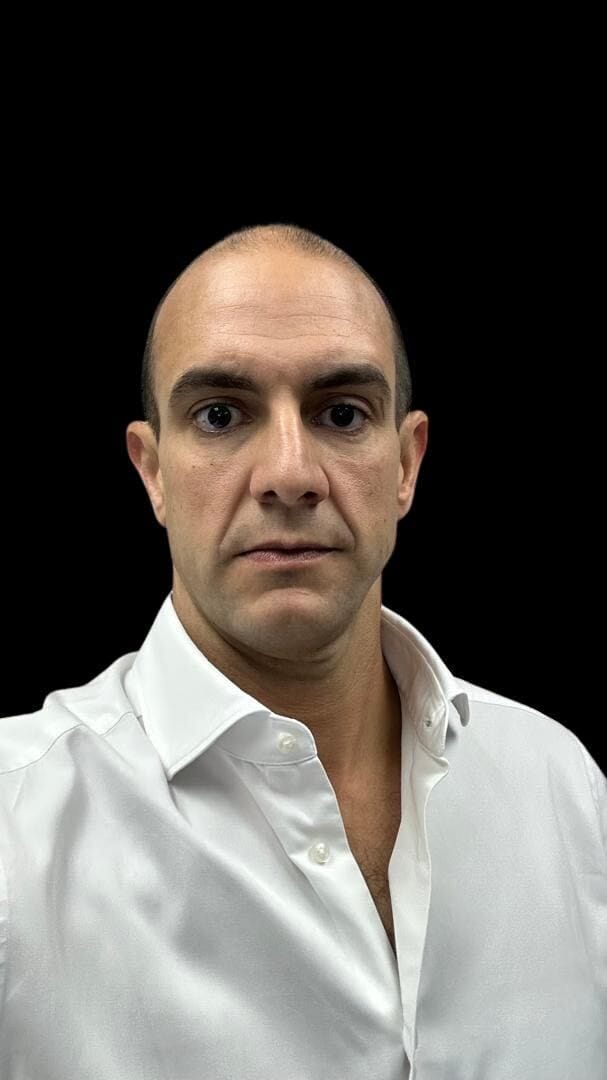
Pablo Eduardo Carrillo Fernandez is the Chief Executive Officer of one of Venezuela’s leading livestock breeding operations, Centro Genetico Toromacho. He is responsible for all operations and strategic decisions at the company. Since joining the business in 2010, Pablo Eduardo Carrillo Fernandez has spearheaded the adoption of modern technology and breeding practices, resulting in Centro Genetico Toromacho becoming one of the region’s most efficient and environmentally conscious breeding operations.
In addition to his leadership responsibilities with Centro Genetico Toromaco, Mr. Fernandez is the CEO of ONCA Equipment, LLC, a Miami-based corporation that excels in the agricultural and mining equipment trading markets. In 2021, he expanded the company’s operations by entering the Latin American commodity trading markets, with an emphasis on soybean oil and several grain products. His penchant for business innovation and growth has helped ONCA Equipment enjoy healthy profit margins for more than a decade, even during times of market volatility.
Pablo Eduardo Carrillo Fernandez has established relationships with several industry organizations. He is the former president of ASOSENEPOL Venezuela, the nation’s national association for advancing and promoting Senepol cattle in the livestock industry.
What is your typical day, and how do you make it productive?
No day looks the same. One day I’m inspecting breeding operations at our farm in Venezuela, and the next I’m reviewing commodity shipments or negotiating a logistics contract from our Miami office. I keep productivity anchored in three things: early starts, clarity of purpose, and ruthless prioritization. Mornings are for deep work and strategy, afternoons for calls and action, and evenings for reflection and learning. I also make time every day to walk through the fields—it grounds me.
How do you bring ideas to life?
I like to say ideas are like cattle: unless you feed them, guide them, and occasionally challenge them, they go nowhere. I test ideas quickly, even with rough edges, and let real-world feedback shape them. Whether it’s adopting a new breeding technique or launching a new trading product, we use pilot projects, monitor results closely, and pivot fast when needed.
What’s one trend that excites you?
The fusion of agriculture and AI. We’re seeing real-time animal health monitoring, predictive logistics, even blockchain in traceability. For a traditional industry like livestock, this is transformative. It’s the moment to blend centuries of knowledge with cutting-edge tech—and I want to be at the frontier.
What is one habit that helps you be productive?
Daily review. Every evening I look at what was accomplished, what stalled, and what needs to happen tomorrow. It’s a deceptively simple habit that compounds into clarity and momentum.
What advice would you give your younger self?
Don’t confuse movement with progress. Some of the biggest breakthroughs come when you pause, listen, and reflect. Also: learn accounting earlier.
Tell us something you believe almost nobody agrees with you on?
That constraints are more valuable than freedom when building a business. Boundaries force creativity. Limits breed resourcefulness. I’ve seen too many startups burn cash and vision because they had too much, too soon.
What is the one thing you repeatedly do and recommend everyone else do?
Have breakfast with people who challenge you. I make it a point to regularly sit down with someone who thinks differently than I do. It resets my assumptions and often sparks new ideas.
When you feel overwhelmed or unfocused, what do you do?
I get my boots dirty. Literally. I step away from the desk and into the physical operations—whether it’s walking the fields, checking machinery, or riding along a transport route. Action in the real world restores focus.
What is one strategy that has helped you grow your business or advance in your career?
Vertical integration. At ONCA, we didn’t just trade—we handled logistics, introduced financing options, and supported installation. The more pain points you solve for your client, the more indispensable you become. That mindset helped us grow in both revenue and resilience.
What is one failure in your career, how did you overcome it, and what lessons did you take away from it?
Early on, we overinvested in a line of equipment that never gained traction. We ignored local realities and bet too heavily on global trends. The lesson: never assume markets are interchangeable. We rebounded by doubling down on local insight, and I’ve since built every expansion plan on the ground-up, not top-down.
What is one business idea you’re willing to give away to our readers?
A “passport” for sustainable meat. A blockchain-based certification that traces cattle from farm to fork with emissions and welfare metrics. Consumers want it. Farmers need better margins. Someone should build it.
What is one piece of software that helps you be productive? How do you use it?
Notion. It’s my digital brain. I use it to track everything—from supply chain workflows to breeding experiment notes to daily reflections. It’s where structure meets flexibility.
Do you have a favorite book or podcast you’ve gotten a ton of value from and why?
Book: The Hard Thing About Hard Things by Ben Horowitz. It doesn’t romanticize entrepreneurship. It’s real, raw, and reminds me that leadership means making tough calls when no one’s watching.
What’s a movie or series you recently enjoyed and why?
The English on Prime. Stunning cinematography, but more than that, it’s a meditation on legacy, violence, and the weight of building something in a brutal landscape—something every entrepreneur can relate to.
Key learnings
- Ground-level involvement in operations can restore clarity and drive in leadership.
- Testing ideas quickly and embracing constraints can accelerate innovation.
- Vertical integration creates resilience and deepens client loyalty.
- Reflecting daily enhances focus and decision-making.
- Investing in local insight is key when expanding into new markets.