
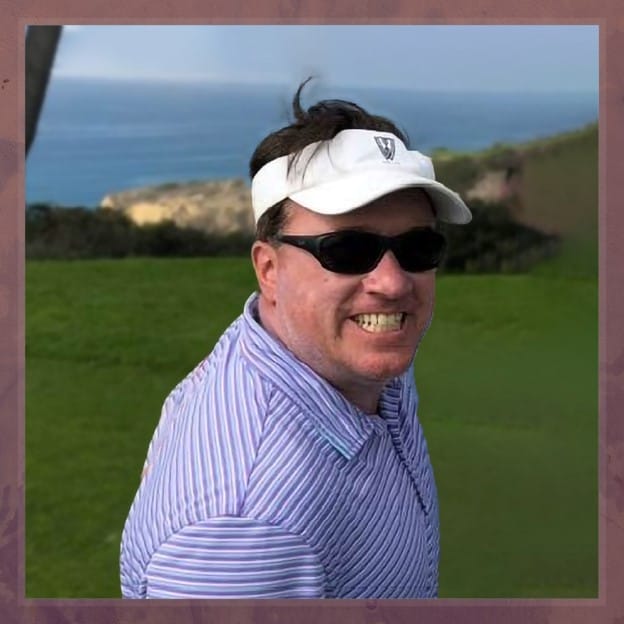
Paul M. Wilson has spent more than a quarter-century turning ambitious digital companies into category leaders, and today he sits at the helm of NetReputation, the highest-rated online reputation management firm in the United States. As Chief Executive Officer, he sets the strategy for an agency that protects, repairs, and elevates the digital footprints of public companies, founders, executives, and high-profile individuals navigating the realities of a search-defined world.
Before joining NetReputation in early 2026, Wilson had built a reputation as one of the most consistent revenue architects in digital marketing. As Chief Revenue Officer at iProspect, he helped grow the firm from a single Boston office of 40 people to more than 700 employees across 40 global markets: a tenfold revenue expansion that culminated in the Aegis Media (now Dentsu) acquisition. He repeated the pattern at RKG (The Rimm-Kaufman Group), where he scaled revenue from $5 million to $30 million in under three years and was part of the executive team that sold the company to Merkle. Ad Age named RKG the fastest-growing search agency in the country two years running.
Wilson later founded Massive Growth Partners, a Wellesley-based advisory firm that helped companies secure private equity funding. Outside the office, Wilson co-chairs the City of Champions golf tournament, an annual event that has raised more than $900,000 for the Prostate Cancer Foundation, with proceeds benefiting the Dana-Farber Cancer Institute and Mass General Brigham. He lives in Wellesley, Massachusetts.
What is your typical day, and how do you make it productive?
Up by 6:00, the first hour is mine before the inbox takes over. The day splits into three buckets: clients, team, and growth. Client calls are where the truth lives. Midday belongs to my leadership team. Afternoons go to planning and long-game work that doesn’t scream for attention but pays the biggest dividends. The rule I live by: never let tomorrow’s most important task get lost in today’s noise.
How do you bring ideas to life?
I’ve always believed great ideas are only worth it if you execute upon them and have a plan. Execution is everything. When I have one that I think is worth pursuing, I pressure-test it. I write it down in plain language, run it past people whose judgment I trust, usually folks who will tell me I’m wrong before they tell me I’m right, and then I commit to a small first step within seven days. Ideas die in the gap between conception and motion. The faster you create traction, the harder it becomes to walk away. After that, it’s just a matter of putting the right people around the work and refusing to lose interest before the results show up.
What’s one trend that excites you?
The convergence of artificial intelligence and online reputation management. We’ve spent twenty years teaching companies how to optimize for search engines. Now we’re entering an era where the answer your prospect, your investor, or your next employee gets about you may not come from page one of Google, but from an AI summary that reads everything ever written about you in a heartbeat. That changes the game entirely. The brands and individuals who understand this shift and shape the narrative around AI will own the next decade, while those who ignore it will be defined by it.
What is one habit that helps you be productive?
I write down the three things that have to happen tomorrow before I go to bed tonight. Three, not ten. Not a dashboard with twenty-seven priorities. Three things that, if I get them done, will move the business forward. It sounds embarrassingly simple, but it’s the single most powerful productivity lever I’ve ever used. It forces me to choose. And choosing, really choosing, is what most leaders avoid.
What advice would you give your younger self?
Slow down on the deals and focus on the relationships. When I was building agencies in my thirties, I treated every quarter like a war and every transaction like a victory. The truth is, the people who showed up for me twenty years later weren’t the ones I closed the biggest deals with; they were the ones I treated well when there was nothing in it for me. Reputation, in the long run, is just the compounding interest of how you’ve made other people feel.
Tell us something you believe almost nobody agrees with you on?
That reputation is a P&L line item, not a marketing expense. Most CEOs treat their digital reputation as a soft cost, something the communications team handles when there’s a fire. I think that’s a backward way of looking at it. Your reputation directly influences pricing power, deal velocity, hiring outcomes, and acquisitions. I’ve watched executives lose eight-figure deals because of a single article on the first page of Google. If you priced your reputation like a balance-sheet asset, you’d protect it like one.
What is the one thing you repeatedly do and recommend everyone else do?
Make the unprompted call. Every Friday, I pick up the phone and call two or three people I haven’t spoken to in a while: a current or former client, a colleague I’ve lost touch with, a vendor who came through when it counted. No agenda, just a call. Over the course of a year, that’s roughly 150 conversations that would never have happened otherwise. I cannot tell you how many opportunities, partnerships, and friendships have come back through that door. It’s the highest-ROI activity I do, and almost nobody does it.
When you feel overwhelmed or unfocused, what do you do?
I take my dog Ranger for a walk. It really clears my head.
What is one strategy that has helped you grow your business or advance in your career?
At iProspect and at RKG, the moments we accelerated were always traceable back to the same thing: getting the right people in the right seats and keeping the wrong ones out.
Talent is a multiplier, but the wrong talent is a divisor. I have walked away from candidates who looked perfect on paper because something in the conversation told me they would not be a good fit for the team. I have also moved on from people who were producing in the short term but corroding the culture. Both decisions felt expensive in the moment, but they paid off over the long term.
What is one failure in your career, how did you overcome it, and what lessons did you take away from it?
Focusing short-term on the next deal versus looking long-term. In my forties, I started focusing more on relationships for longer-term engagements and realized that you can create lifelong clients who will follow you throughout your career.
What is one business idea you’re willing to give away to our readers?
A dedicated platform to monitor and manage the digital footprint of Fortune 500 C-suite executives, tracking narrative exposure across search, AI, news, and social in real time, flagging risk early, and driving a content strategy that shapes how they appear where it matters most. The market need is real, the enterprise appetite is there, and nothing at this level of quality exists yet.
What is one piece of software that helps you be productive? How do you use it?
Claude. I use it for research, competitive analysis, and thinking through problems I want a second perspective on. I don’t use it for anything client-facing or relational. Emails, outreach, thank-you notes, those remain my own words because the relationship is the point, and people can tell the difference. But as a thinking partner for quickly synthesizing information or stress-testing an argument, it has become a regular part of my workflow.
What is the best $100 you recently spent? What and why?/
Tipping my Caddie for golf. He did a great job and will use the money to pay for his graduate school. A win-win for both of us!
Do you have a favorite book or podcast you’ve gotten a ton of value from and why?
“Die with Zero” is about focusing on experiences rather than things when creating your own happiness.
What’s a movie or series you recently enjoyed and why?
Friends and Neighbors. Jon Hamm is incredible. What a crazy story!
Key learnings
- Reputation is not a marketing expense; it is a balance-sheet asset that directly influences pricing power, deal velocity, hiring outcomes, and acquisition multiples. Treat it accordingly.
- Ideas die in the gap between conception and motion. The discipline of taking a small first step within seven days is what separates leaders who build things from leaders who only talk about building them.
- The unprompted call: a few phone calls a week to people you owe nothing to is one of the highest-ROI activities a leader can build into a calendar. Compounding goodwill is real.
- Protecting culture, even when short-term metrics tempt you to compromise, is a strategy that pays off over decades, not quarters.
- The convergence of AI and online reputation management is the most consequential shift in digital strategy of the next decade. The brands influencing the narrative that AI analyzes today will dominate tomorrow.