
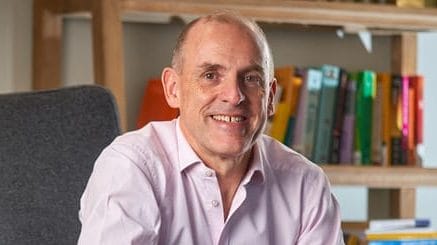
Paul Pester has dedicated around 25 years to building and leading some of the most disruptive and well-established consumer financial services businesses in the United Kingdom, Australia, and on the international stage.
As a former adviser to the UK Chancellor of the Exchequer and HM Treasury on competition issues in banking, Paul is a passionate advocate for consumers’ interests. He focuses on leveraging technology and innovation to improve competition and consumer outcomes in the financial services sector.
Paul holds the position of Chair at Tandem Bank, a fast-growing UK digital challenger bank. He also serves as a non-executive Director at the National Bank of Bahrain, representing Mumtalakat, the Bahrain Sovereign Wealth Fund. Additionally, he is the Founder and Chair of Loop, a digital money sharing app popular among Millennial and Gen Z users.
Throughout his executive career, Paul was the first Group Chief Executive Officer at Virgin Money, where he established the company as one of the UK’s first digital consumer financial services businesses and launched operations in Australia and South Africa. He also held the position of Managing Director of Consumer Banking & Payments at Lloyds Banking Group, the largest retail bank in the UK, and served as Managing Director of Santander UK.
In his role as Group CEO, Paul led the creation of TSB Banking Group, launching the business in 2013, steering its £1.4bn IPO on the London Stock Exchange in 2014, and overseeing its subsequent acquisition by Sabadell, a Spanish banking group. Under Paul’s guidance, TSB grew to serve over 6 million UK consumers with a balance sheet exceeding £30bn. The bank was included in the 2018 “Superbrands” list and was recognised as one of the Sunday Times Top 5 “Best Big Companies to Work For” in the UK.
Paul has held several non-executive Board positions, including roles at VISA International, VISA Europe, MicroFocus International (a UK-listed software company), and Oplo (a specialist lender). He has also chaired Fairer Finance’s Consumer Advisory Board.
Paul earned a degree in physics from the University of Manchester and a doctorate in theoretical physics from the University of Oxford. He began his career in management consulting, primarily at McKinsey & Company. A lifelong competitive swimmer, Paul continues to enjoy masters swimming and being a member of the Team GB triathlon squad.
What is your typical day, and how do you make it productive?
I believe that physical activity and training can go a long way in helping people be productive personally and professionally. For me, this means getting up early around 4:30am and training with the local swim team. When that’s finished, typically by 7:00am, I head over to the office for whichever organisation I am working with or consulting for. Even on days where I have no scheduled meetings, I try to make time to meet with people at an office space to remain productive when it comes to networking. Since I get up quite early, I also turn in for the evening earlier than others might, which limits my availability for going out but keeps me on track for personal wellness.
How do you bring ideas to life?
I find drawing and creating physical images with pencil and graph paper helps me visualise ideas and determine the best way to make something work. Because of this, I almost always have a pencil in my hand when I’m brainstorming, never ink pen since I like to ideate and change things as concepts progress. Using visualization absolutely helps me better explain my ideas to colleagues and clients. This probably goes all the way back to my roots as a trained academic physicist where I was often writing out sequences and drawing plans.
What’s one trend that excites you?
I believe that opening up data in banking and finance is going to transform how people engage with their money. In the UK and across Europe, the idea of open banking or open finance is gaining popularity. Uniquely, it requires financial institutions to provide all of the data they collect on a particular customer to that customer if the consumer decides to move to a different platform for their banking transactions. This has the potential to give power to banking customers to better understand their transaction trends while their new financial institution can leverage the data to better serve their needs. I am excited by how likely it is that open finance is going to change how individuals work with their banks.
What is one habit that helps you be productive?
I’m constantly looking for ways to improve processes and products through the act of questioning. I am always trying to feed my intellectual curiosity by asking questions, which probably also comes from my training as a physicist where we are always asking why or how things operate the way that they do. I uncover new ideas by continuing to ask questions like how something works, how it could be innovated, or how it could be done differently.
What advice would you give your younger self?
I would encourage my younger self to remain optimistic even in the most challenging times. It can be hard to see the light at the end of the tunnel, but by remaining true to myself, maintaining my curiosity, and doing the best I can with my mistakes, there’s a strong chance that everything will work out alright in the end even if things take a different than expected course.
Tell us something you believe almost nobody agrees with you on?
Continuing with a theme of optimism, I know a lot of leaders are pessimistic when it comes to the outlook on the future with regard for everything from technological advances to financial trends and geopolitical crises. But I believe firmly that the future is incredibly bright and well worth investing in. The next dynamic person to transform humanity in the lines of Newton, Einstein, or even Gandhi may have already been born and be about to help us advance to new heights.
What is the one thing you repeatedly do and recommend everyone else do?
Business leaders can learn a lot by exploring how they could re-invent their own business models. As the experts in their field and organisational structure, they can adopt a constructive destruction business model that proactively looks for pitfalls and then staves off potential disaster. For example, I encourage business executives to constantly attack their own business model looking for ways to undermine existing products and services or new avenues that could get to market quicker than what’s currently available with their firm. This can help future proof a company from changes in market trends and help drive innovation forward while also hedging against competitive threats.
When you feel overwhelmed or unfocused, what do you do?
Physical activity has always been a go-to solution for me when dealing with stress or negative emotions. I go out for a run, grab my bike, or head to the pool for a swim. I find it especially helpful to get out in nature. Prioritising mental wellness is an important component of effective leadership, but in our burnout culture of today, many leaders simply accept the tough times and sacrifice their own wellbeing. I think that while this may get you through the short term, it is not a sustainable long-term strategy for dealing with overwhelm.
What is one strategy that has helped you grow your business or advance in your career?
One area often overlooked in the finance industry is the power of influencer marketing and input. Finding ways to connect with social media channels that can effectively communicate your brand ideals or offerings to the masses can be a great way to reach an exponentially larger audience. To do this, understanding specific customer segments and how they engage with brands today is essential. By integrating traditional marketing with more innovative tactics, we’ve realised quite a bit of success.
What is one failure in your career, how did you overcome it, and what lessons did you take away from it?
Early on during my time with Virgin Money, we decided to establish an early version of a price comparison website. We were somewhat ahead of our time, and as a result, customers simply didn’t understand what we had on offer. We eventually made the decision to close out that business, and six months later the market for comparison platforms exploded. I learned from that experience that it can be beneficial to hold your nerve and have belief in an idea while giving it adequate time for consumer behavior and expectations to evolve.
What is one business idea you’re willing to give away to our readers?
There is enormous opportunity right now for generative AI and open banking to build a personal bank manager for consumers. This AI manager would be able to understand how each individual customer engages with their finances and would take a proactive role in helping manage their financial life. This would take today’s more boring budgeting tools and supercharge them by engaging with individuals on a personal level. With the availability of the data collected by banks today, I really believe this idea could become a reality.
What is one piece of software that helps you be productive? How do you use it?
I have always found the SaaS structure and sharing capabilities of Google Workspace with its document creation and search capabilities to be extremely useful. In addition to the productivity these tools bring to our teams, I have always been a fan on Google’s ability to help fuel intellectual curiosity by integrating resources for search and creation.
Do you have a favorite book or podcast you’ve gotten a ton of value from and why?
I always recommend the book Please Understand Me, which is about understanding your own psychological makeup to help you better comprehend how and why you view the world the way you do. I think this is really important for everyone but especially for business leaders who are constantly engaging with people from all walks of life. Understanding where these people, and where you, are coming from can create better connections and be more productive. I first read this book over 30 years ago, and it continues to head up my list of recommendations.
What’s a movie or series you recently enjoyed and why?
I really enjoyed watching For All Mankind on Apple TV. The series is an alternative history telling of the space race where the USSR gets to the moon first. The show details the consequences of this which, in short, is a continued space race with colonization of the moon and trips to Mars. I loved the science in it and think it’s really good fun.
Key learnings
- Open banking and generative AI stand to provide ample opportunity for the financial industry to innovate offerings to individual customers.
- Influencers and other non-traditional marketing tactics can open new doors for financial institutions looking to capture the attention of a specific target market.
- C-Suite leaders can benefit from remaining optimistic about business potential while also working hard to identify weaknesses in their business to fend off competition and future proof their offerings.
- Prioritizing wellness can help leaders stave off the impacts of overwhelm or overwork.