
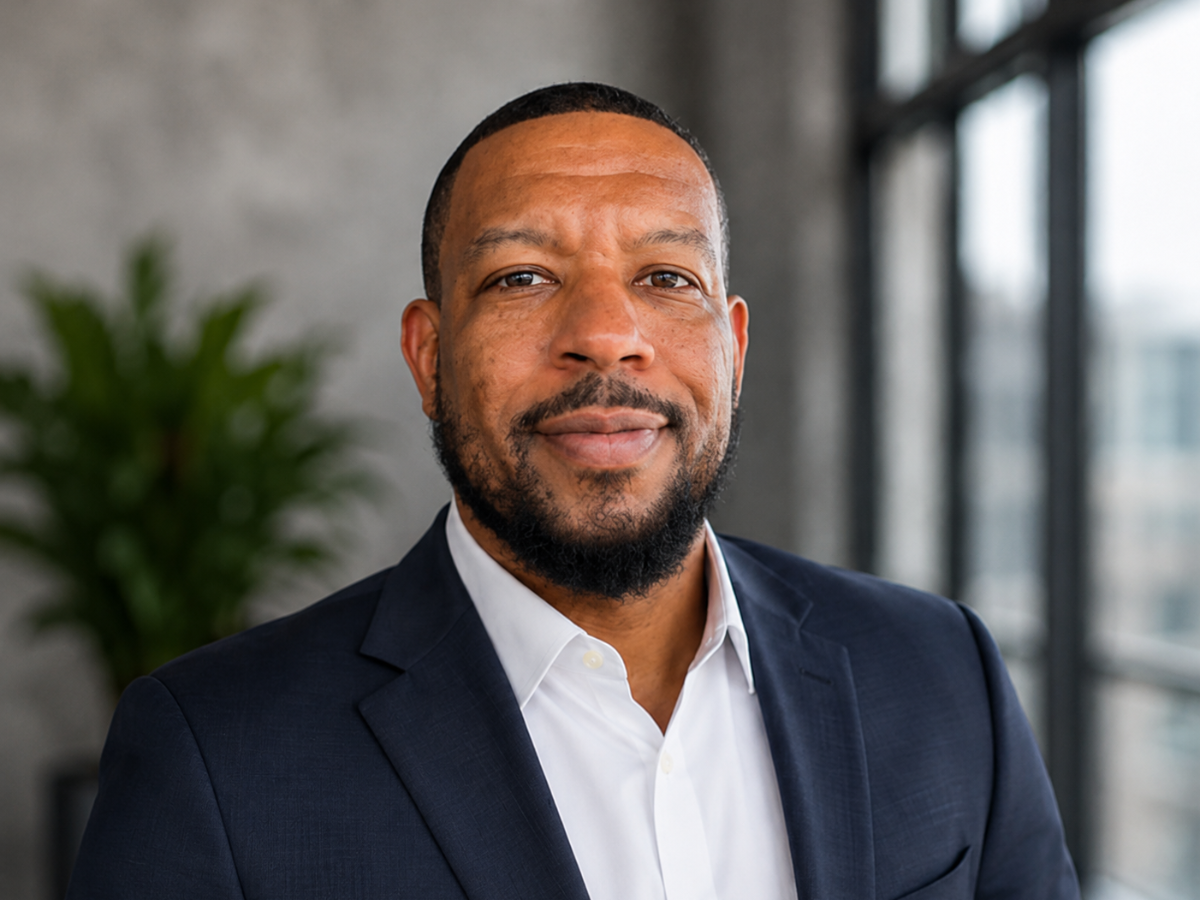
Pedro Morales-Llanos has built a career around helping organizations lead through change and solve complex problems. Born in Puerto Rico, he grew up in a military family that lived in Germany, Italy, and other parts of Europe before settling in Columbia, South Carolina. Experiencing different cultures from an early age taught him the value of adaptability, curiosity, and seeing challenges from multiple perspectives.
After graduating from Richland Northeast High School, Pedro earned his bachelor’s degree from the University of South Carolina. He later completed both an MBA and a master’s degree in Health Services Management from Webster University. Those experiences provided the foundation for a career focused on leadership, organizational development, and strategic planning.
Pedro spent more than two decades serving in leadership and program management roles within the federal government. He worked at the National Institutes of Health before joining the U.S. Department of Justice, where he led enterprise programs and supported large-scale operational initiatives. Throughout his career, he has focused on helping organizations improve business processes, embrace technology, and manage change in practical ways.
Today, Pedro is the founder and principal consultant of Strategic Rise Advisory Group. He partners with organizations that want to strengthen leadership, improve operations, and prepare for the future. Outside of work, he enjoys Brazilian Jiu-Jitsu, CrossFit, traveling, reading about history and culture, discovering local coffee shops, and volunteering with organizations including Harvest Hope Food Bank and Big Brothers Big Sisters.
What is your typical day, and how do you make it productive?
I like to start my day before the inbox starts filling up. I spend the first part of the morning reviewing priorities, reading industry news, and thinking through the most important challenges I need to solve. I try to avoid jumping from one meeting to the next without leaving time to think. Throughout the day, I also make a point of talking with people because some of the best ideas come from conversations rather than sitting alone at a desk.
How do you bring ideas to life?
I start by listening. Every organization has its own culture, strengths, and challenges, so I spend time asking questions before recommending solutions. Once I understand the problem, I break the idea into smaller, achievable steps that people can actually implement. Big changes happen when people see steady progress.
What’s one trend that excites you?
I’m excited by the way organizations are using data analytics to make better decisions. We have more information available than ever before, but the real value comes from turning that information into practical action instead of simply collecting more reports.
What is one habit that helps you be productive?
I make time every week to reflect on what’s working and what isn’t. It’s easy to stay busy, but being busy isn’t the same as making progress. I’ll review projects, think about conversations I’ve had, and ask myself whether I’m solving the right problem or simply reacting to what’s in front of me. That habit has helped me make better decisions throughout my career, both in government and in consulting.
What advice would you give your younger self?
I’d tell my younger self to stop worrying about having the perfect plan. Growing up in a military family taught me that change is inevitable, but I didn’t fully appreciate how many opportunities come from embracing uncertainty. Some of the most rewarding experiences in my career happened because I accepted challenges before I felt completely ready. I would have trusted the process sooner.
Tell us something you believe almost nobody agrees with you on?
I think many organizations spend too much time searching for the next big innovation when they would benefit more from improving the systems they already have. Sometimes the biggest breakthroughs come from doing the fundamentals exceptionally well.
What is the one thing you repeatedly do and recommend everyone else do?
Talk to people outside your field. Some of the best ideas I’ve applied in leadership came from conversations about history, sports, culture, or technology rather than management books. Different perspectives healthily challenge your assumptions.
When you feel overwhelmed or unfocused, what do you do?
I step away from my desk and move. Whether it’s CrossFit, Brazilian Jiu-Jitsu, or simply grabbing a coffee and taking a walk, changing my environment helps me reset. I almost always come back with a clearer perspective.
What is one strategy that has helped you grow your business or advance in your career?
I’ve learned that trust comes before strategy. Throughout my career, I’ve worked with people from different backgrounds, disciplines, and organizations. The projects that were most successful weren’t necessarily the ones with the most sophisticated plans. They were the ones where people felt heard and understood. Taking the time to listen, ask thoughtful questions, and build relationships has consistently produced better results than trying to prove I had all the answers.
What is one failure in your career, how did you overcome it, and what lessons did you take away from it?
One mistake I made was assuming that if a solution was well researched, people would naturally support it. I eventually realized that successful change depends just as much on communication as it does on planning. People need to understand the purpose behind a decision and feel like they’re part of the process. That experience changed the way I lead projects today. I spend more time building alignment, listening to concerns, and creating shared ownership before moving forward.
What is one business idea you’re willing to give away to our readers?
I’d love to see more experienced professionals donate a few hours each month to help nonprofits improve their operations. Many organizations have incredible missions but limited access to strategic planning or process improvement. A little guidance could make a lasting difference.
What is one piece of software that helps you be productive? How do you use it?
Microsoft OneNote is one of the tools I rely on most. I keep meeting notes, project ideas, research, and action items in one place so I can quickly find information without wasting time searching through emails or notebooks.
Do you have a favorite book or podcast you’ve gotten a ton of value from and why?
I enjoy podcasts that explore leadership, history, and public service because they expose me to different ways of thinking. I also find myself returning to leadership books over the years because each time I read them, I take away something different based on where I am in my career.
What’s a movie or series you recently enjoyed and why?
I recently enjoyed Andor. Beyond being a well-written science fiction series, I appreciated the way it explored leadership, responsibility, and the difficult decisions people make while working toward a larger purpose.
Key learnings
- Strong leadership begins with listening before offering solutions.
- Continuous learning and curiosity help leaders adapt to change and make better decisions.
- Building trust is often more important than having the perfect strategy.
- Sustainable change happens through consistent progress rather than dramatic transformation.
- Looking beyond your own industry can lead to fresh ideas and better problem-solving.