
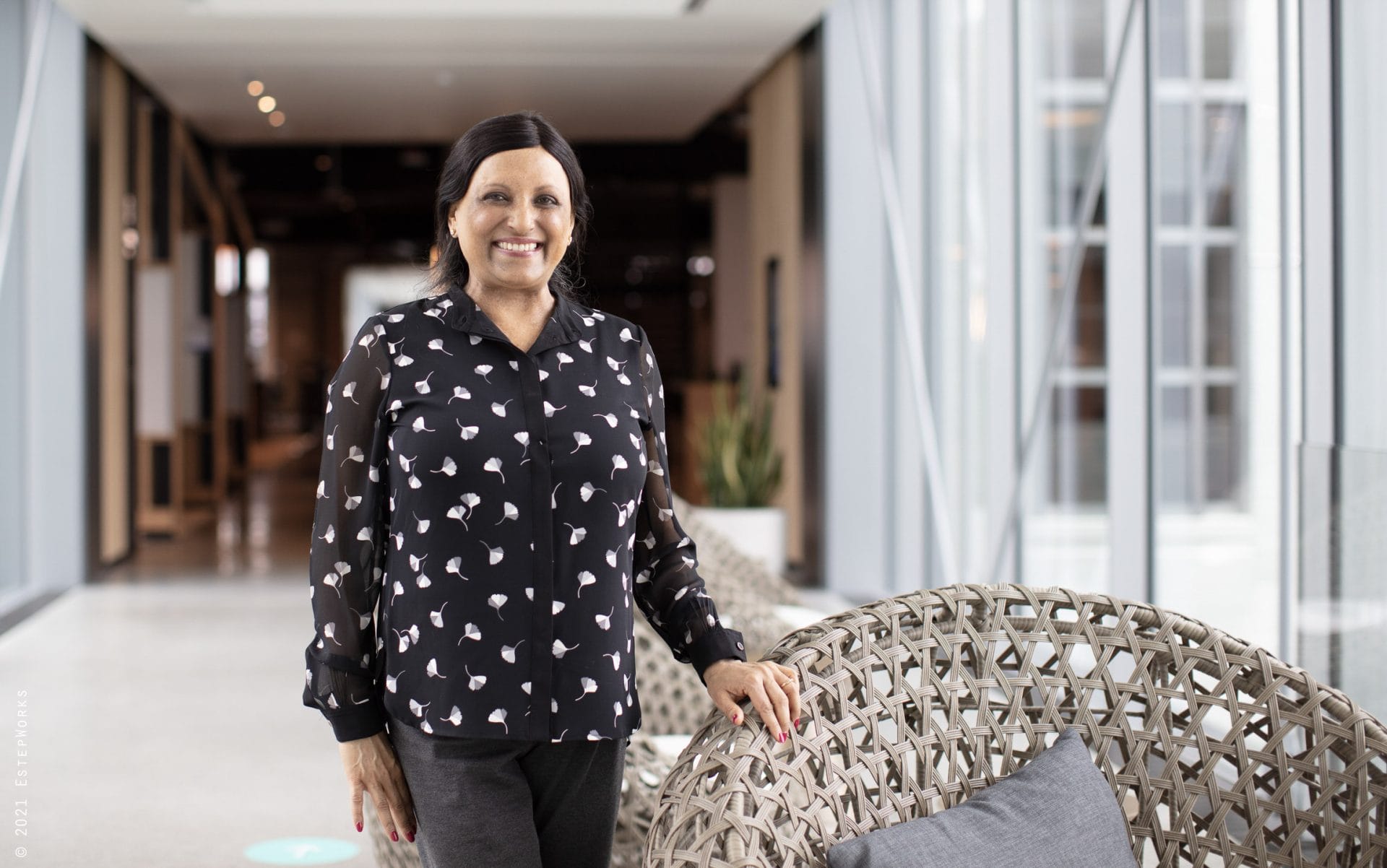
Rathi Murthy is the Chief Technology Officer (CTO) of Varo Bank, where she leads the development of cutting-edge technology that powers a new era of digital banking focused on financial inclusion, real-time personalization, and user empowerment. With more than 25 years of experience at the forefront of technology and innovation, Rathi has a proven track record of building scalable platforms, transforming legacy systems, and leading diverse global teams through complex digital shifts.
Prior to joining Varo, Murthy served as CTO and President of Expedia Group. There, she was responsible for unifying the travel giant’s consumer and partner technology platforms, accelerating the adoption of AI, and enabling a more personalized and efficient experience for millions of travelers worldwide. Her leadership was pivotal in modernizing Expedia’s infrastructure and positioning the company as a tech-forward travel platform.
Earlier in her career, Rathi held senior leadership roles at Verizon Media, where she was CTO as well as at American Express, and Gap Inc. Across these roles, she has consistently led enterprise-wide transformations and driven business growth by aligning engineering innovation with customer needs.
At Varo, Rathi is focused on using technology to make banking smarter, faster, and more accessible—particularly for underserved communities. As the first nationally chartered consumer fintech bank in the U.S., Varo offers her a unique opportunity to help reshape the future of financial services from the ground up.
Murthy is also a vocal advocate for women in STEM, ethical AI development, and inclusive leadership. Rathi frequently speaks on topics such as platform architecture, digital acceleration, and leading with empathy in the age of AI.
Rathi’s leadership philosophy centers on clarity of vision, transparency of execution, and building cultures where innovation thrives through collaboration. She is also an active board member, investor, and Art of Living teacher.
What is your typical day, and how do you make it productive?
I start early, grounding myself with a quick mindfulness check-in before diving into the day. I prioritize tasks using a “three big rocks” approach—what must move forward today—and I try to protect time for deep work amidst the meetings. Much of my day is spent with teams: aligning product and engineering roadmaps, removing blockers, and ensuring execution stays tightly coupled with vision.
How do you bring ideas to life?
Ideas start in conversation—with customers, partners, and cross-functional teams. I believe in fast prototyping: we test, iterate, and co-build with feedback loops at every level. Ideas come to life not in isolation, but through empowered teams working with clarity and shared purpose.
What’s one trend that excites you?
The democratization of AI. We’re finally seeing machine learning capabilities move beyond the hands of data scientists into the toolkit of everyday developers and business owners. That shift will accelerate creativity and problem-solving across industries.
What is one habit that helps you be productive?
Daily exercise and self-care. I carve out at least 45 minutes each day for movement—whether it’s strength training, a walk, or yoga. It clears my mind, boosts energy, and sets the tone for the rest of the day. Treating your body well directly translates into mental clarity and resilience.
What advice would you give your younger self?
Speak up earlier. Your voice, perspective, and experience are valid—even when you’re the youngest or the only woman in the room. Confidence isn’t something you wait to earn; it’s something you choose to project and grow into.
Tell us something you believe almost nobody agrees with you on?
Don’t let perfect be the enemy of the good. I strongly believe in getting something into the hands of customers quickly—even if it’s not fully polished—so we can gather real feedback and iterate. In large organizations, this can be controversial. Many hesitate to take what I call a “conscious risk” by releasing a feature to a limited segment or pilot group.
But in my experience, the faster you learn, the faster you improve. Waiting six months to get something 100% right often means you’ve missed the moment—or built the wrong thing altogether. Speed, with intention, is a powerful innovation tool.
What is the one thing you repeatedly do and recommend everyone else do?
Daily meditation. At least 20 minutes a day to “clear my cache.” It helps me process the noise, ground myself, and make more intentional decisions. Especially in a high-velocity environment, stillness becomes a superpower.
When you feel overwhelmed or unfocused, what do you do?
I step back. Even five minutes of stillness—closing the laptop, walking outside, or jotting notes in a journal—helps me reset and prioritize. It’s usually not about doing more, but doing the right thing next.
What is one strategy that has helped you grow your business or advance in your career?
Focus on doing excellent work—and communicating it clearly—rather than worrying about optics or politics. Early in my career, I saw how integrity and consistent results built long-term trust, even in complex organizations. When you lead with value and clarity, recognition tends to follow.
What is one failure in your career, how did you overcome it, and what lessons did you take away from it?
Most of the roles I’ve taken on have been transformational—turning around teams or divisions that need a reset. In one such role, I had just joined a company in the financial services space. Employee morale was low, and satisfaction scores were at rock bottom. The team had been through a lot of change and disruption in the prior year and was understandably wary.
Just two weeks in, we had a major code release scheduled—done at 2 a.m. to minimize customer impact. But this one went wrong. Really wrong. The release failed, and no one knew how to roll it back. For over 46 hours, the systems were down. Customers couldn’t transact on their cards. The situation was critical—the CEO even flew in to be on the ground with me.
At that moment, I thought: this could cost me my job. But instead of pointing fingers or launching a post-mortem witch hunt, I made a different choice. I stayed up with my team. I supported them. I encouraged creative thinking and calm under pressure. And after nearly two days, we found a fix—and it worked.
Yes, it was a huge failure. But something remarkable came out of it. The way we handled that crisis dramatically improved team morale. Trust in leadership soared. And from that point on, we saw a significant shift in innovation and productivity across the board.
What I learned is this: failure doesn’t define you—how you show up during failure does. Holding your integrity, staying with your people, and helping them do their best work under pressure can turn even the worst moments into inflection points for culture and trust.
What is one business idea you’re willing to give away to our readers?
A curated project marketplace for mid-career professionals—especially those in roles vulnerable to AI disruption—that offers real-world, part-time assignments designed to upskill and future-proof their careers. Think of it as a platform where companies post meaningful, skills-based projects and professionals can build a portfolio, not just a resume. It’s a win-win for the talent gap and for inclusive career mobility.
What is one piece of software that helps you be productive? How do you use it?
I love Miro! I’m a big fan of mind mapping—whether it’s brainstorming ideas, outlining plans, or mapping out strategy—and Miro makes that process intuitive and collaborative.
It’s simple to use and incredibly effective for quickly sharing ideas and iterating with my team. Especially in today’s hybrid work environment, Miro has become my go-to substitute for a physical whiteboard. It brings visual thinking into the digital space, and that’s been a game-changer for how we align and move fast together.
Do you have a favorite book or podcast you’ve gotten a ton of value from and why?
The Hard Thing About Hard Things by Ben Horowitz. It’s unvarnished and real, which resonates deeply with anyone who’s had to lead through change. And the podcast a16z consistently brings fresh insights on where tech is headed next.
What’s a movie or series you recently enjoyed and why?
The Queen’s Gambit. It’s a reminder that brilliance can come from unexpected places—and that focus, mentorship, and resilience can change the trajectory of a life. It also subtly challenges gender stereotypes, which I appreciate.
Key learnings
- Self-care and mental clarity drive leadership: Daily practices like exercise and meditation are central to sustained productivity and clarity of decision-making.
- Innovation favors speed and empowerment: Embracing fast iteration and cross-functional collaboration leads to better results than chasing perfection.
- Doing excellent work is the best form of visibility: Career growth follows naturally when you focus on delivering value and communicating clearly, rather than managing perceptions.
- Empathy is key to change leadership: Understanding culture and context before driving transformation can make or break a leadership transition.
- There’s a growing need for AI-resilient career paths: Platforms that upskill professionals through project-based work can help close the opportunity gap in the age of automation.