
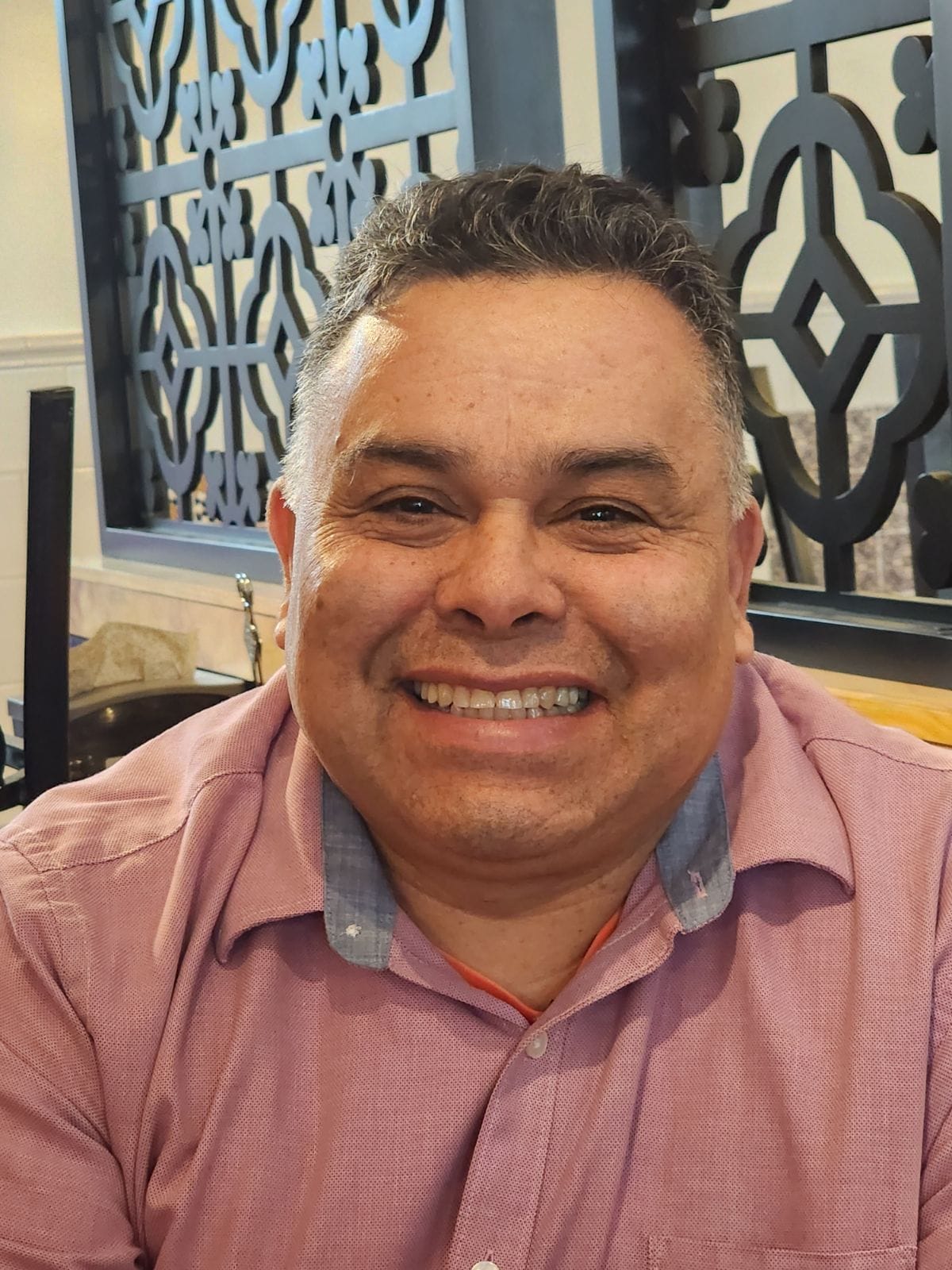
Raul Luis is the owner and operator of Birrieria Chalio’s, an authentic Birria restaurant. His family founded one of the first Birrierias in the United States, now with locations in California and Texas. Raul is a family fan passionate about educating the public about the culture and traditional significance Birria brings. Raul is part of the Goldman Sachs 10,000 small businesses in Long Beach, CA, which supports the growth and job creation of small businesses.
What is your typical day, and how do you make it productive?
Restaurant ownership comes with plenty of work and no set work schedule. It’s hands on deck at all times. I get to the restaurant at 9 am daily, check inventory, look over the food cooking process for the day, create a prep schedule, and walk around to ensure all equipment is working properly, including food temps and dishwashing. For the restaurant to be successful, you have to regularly be on the lookout for any possible problems that may arise from mechanical or operational setbacks, including but not limited to employees calling off work.
How do you bring ideas to life?
Ideas come from going out to eat at different restaurants all over the country, traveling from coast to coast and some areas of Mexico, and food shows across the country to get new ideas. When I create a dish or a drink, we usually experiment with the staff. They become the Guinea pigs we feed our employees and ask them for feedback.,we then give out free samples to our guests to gauge interest and make them aware of new offerings. The testing process then gets serious because creating a few servings is very different from creating large batches, which requires us to increase or decrease ingredients because the taste profile changes each time the batch size changes.
Through the years, I have learned that there is only one constant, and that is change. You must keep on reinventing yourself to become relevant, and change is where the magic happens. Never be complacent. I was once told by a professor at USC’s entrepreneurial school that there are three certainties in life: Death, Taxes, and Restaurant closures. To avoid restaurant closures, you constantly have to change.
What’s one trend that excites you?
The trend that excites me is the Birria Movement, Birria is causing a culinary revolution across the nation more specifically QuesaBirria tacos (beef). Attention is being placed on the Mexican cuisine. Many restaurants are placing their version of this dish on their menus. This created much-deserved attention and allowed this dish to cross over to the main street. This is a great opportunity to educate all ethnic groups about the origins of this dish and introduce them to the traditional Birria (Lamb or Goat), beginning with quesaChiva tacos (Goat, lamb).
What is one habit that helps you be productive?
You have to love what you do. It is very important to write down tasks or items that need to be taken care of. One, especially in the restaurant industry, can easily be sidetracked by last-minute catering, lunch rush, mechanical breakdown, or vendor visits, which happens more often than not. That’s what makes being a restauranter exciting. There are never dull moments, and you never know what can happen. No two days are ever alike.
What advice would you give your younger self?
The older me would tell my younger self that there are no rules. When I started out, I thought that things had to remain as they once were.
While cooking, I once believed that recipes could not change and had to be at a certain price point. The older me understands that I can create value. Customers will pay more if they perceive that they are receiving a superior, unique product.
Advertising has changed. We once placed ads on the back of supermarket receipts, magazines, and flyers, and they all followed the same format; it seemed as if it was a template, and all the printer had to do was change the business’s name. Now, advertising in print is not effective; social media has revolutionized the way we advertise and how a company is perceived. Every customer can now make your restaurant go viral in different markets, locally or internationally, with tourists.
I recently took a trip with my daughters to Europe. Over 75% of the restaurants or shops we visited they discovered on social media.
Tell us something you believe almost nobody agrees with you.
I tell my staff and people I meet not to chase the money, to enjoy and excel at what they do, to be the best, and that the money will follow them. Many times in full-service restaurants, servers would fight for tables. Their goal was to turn as many tables as possible. I explained to them to make the encounter an interaction and reduce the number of tables they serve, and their tips would reflect the superior service they offer. Be the best at what they do, and the money will follow.
What is the one thing you repeatedly do and recommend everyone else do?
I tell people to use superior products and raise prices; customers can distinguish when better ingredients are used. For example, some people will try to cut corners by using inferior products or cutting processes to speed up the process. You should not use inferior products or cut corners it will reflect in the final product you produce. There is a saying in Spanish that states, “ El que compra Barato compra Cada Rato,” which roughly translates as he who buys cheap things buys items them more frequently. If you can create a superior product and top that off with excellent service, you will have a winning combination.
When you feel overwhelmed or unfocused, what do you do?
During those overwhelming situations, you must just relax and not instigate the problem. I tell my staff we know the problem. Let’s figure out the solution. We strive to be on target 100 % of the time, but sometimes we fail. It’s a part of life, “failure,” and when we do fail, what can we do to mitigate or prevent that from happening? Most of the time, it’s just communication. If you can communicate an issue with staff or customers, they will understand you cannot escape the problem. On one occasion, my point-of-sale system crashed, and my credit card terminals were down. I was completely bombarded with customers wanting to pay others asking for their food. I told everyone to go talk to their customers and tell them we are having some technical difficulties. If they are patient, we will take care of them. They understood I began taking Zelle payments, some customers went to the bank to get cash, and servers and the kitchen learned how to take and prepare orders the old-fashioned way with a wheel spindle. A few customers left, stating they would never return. Wow, looking back, I enjoyed that moment, laughed, and understood how resilient you have to be to succeed.
What is one strategy that has helped you grow your business or advance in your career?
When we operated Birrieria chalio, there was no strategy. My parents’ goal was to leave each child with one location so they could sustain themselves. As time went on we learned the business by making endless mistakes. I realized that certain areas lacked the dish we specialized in; we had customers who would visit us from other states when they were in town, stating that no one offered Birria, so when they visited LA, Birrieria Chalio was a place they had to see. It’s simple but complex simultaneously, making it a family-style restaurant with a personality. It’s always about the people putting names on faces, making every transaction an interaction, and people always want to be acknowledged. These are some of the strategies that have helped us over the years.
What is one failure in your career, how did you overcome it, and what lessons did you take away from it?
Failure is a necessity; one must fail to get a better understanding of your position in the marketplace. I attempted to Convert Birrieria Chalio into a fast-casual restaurant with no servers, pay at the cashier, pick up my food, and seat myself. It failed miserably, and customers revolted and complained. It was then that I understood what the dish “Birria” meant; the historical-cultural value of the dish was engraved in people’s minds. They wanted to consume the dish as they did when they were in Mexico in a table setting with a server. This would help magnify and rekindle the memories and recreate new ones. Fast casual lacked the interactions that are necessary for a family-run business, and only then did I get a better understanding of my role in the restaurant business. I was in the business of rekindling and creating memories.
What is one business idea you’re willing to give away to our readers?
I tell many restaurateurs that they do not have to create a better mouse trap; they just have to introduce it into a new market. Many states in the US lack authentic Mexican Food. If they are willing to move and start a restaurant in another state or country and do it well, they have the potential to be very successful.
What is one piece of software that helps you be productive? How do you use it?
The one piece of software that works in collaboration with my P O S system (Spoton) is Restaurant Systems Pro. This is the lifeline with all the metrics I require to make decisions; it helps with sales forecasting, scheduling, labor, and food costs. I create schedules for my employees. They receive notifications when the new schedule is posted, messages if there are any changes or meetings, and employees can request time off. The sales forecasting is a great tool to gauge demand and set monthly sales goals. A very important feature is labor cost. It helps me keep track of labor costs daily and weekly. The most important feature is food cost. I get real-time actual food costs for each item sold, at which time I can change prices immediately; as my menu does not have prices listed, customers use a Q R code to get real-time prices for menu items. All this is possible because my P.O.s integrate and make the process seamless.
What is the best $100 you recently spent?
The best $100 I spent was during the pandemic, the supply chain was broken product availability was erratic . one week you’d receive your complete order other weeks they shorted you items it was the norm very stressfull times when you have pictures on your menu. Consumers eat with their eyes, If they see certain items on a dish they expect to receive them. We had ordered some cheese from our vendors, but they were sold out or hadn’t received enough inventory for all of their customers. I purchased whole milk, cheese clothes, vinegar, and salt. We made our own Queso Fresco. We were ecstatic. “ I Made Cheese” was fresh and good. I couldn’t believe we made cheese. That taught me that we can create anything; there are no rules, and the limits are placed upon you.
Do you have a favorite book or podcast from which you’ve received much value?
I can’t say I have a favorite book, but I love reading books with historical facts. A teacher in high school once told me, ” Those who forget the past are doomed to repeat it,” so every book has a message for the reader.
What’s a movie or series you recently enjoyed and why?
I love to watch the series “The Food That Built America,” which showcases the evolution of food over the century.
Key learnings:
- Hands-On Management: Successful restaurant ownership requires a hands-on approach with no fixed schedule. Daily routines include inventory checks, overseeing food prep, and ensuring equipment functionality. Being proactive in addressing potential issues is crucial for smooth operations.
- Adaptation: Inspiration for new dishes and drinks comes from diverse experiences, including dining at various restaurants and attending food shows. Experimenting with staff and guests helps refine recipes. Adapting to change and continuously reinventing offerings is essential to avoid complacency and stay relevant.
- Passion and Documentation: Loving what you do is vital. Writing down tasks and staying organized helps manage the unpredictable nature of the restaurant industry, where no two days are alike. This passion and excitement drive resilience and adaptability.
- Evolving Strategies: Embracing change is essential, whether in recipes, pricing, or advertising. Social media has transformed how restaurants are marketed, significantly impacting customer reach and perception. Effective use of superior products and services enhances value and justifies higher prices.
- Handling Challenges: Managing overwhelming situations requires calm and effective communication. Encouraging staff to focus on interactions rather than table turnover can enhance customer experience and tips. Learning from failures, like unsuccessful business model changes, provides valuable insights into customer expectations and market positioning.