
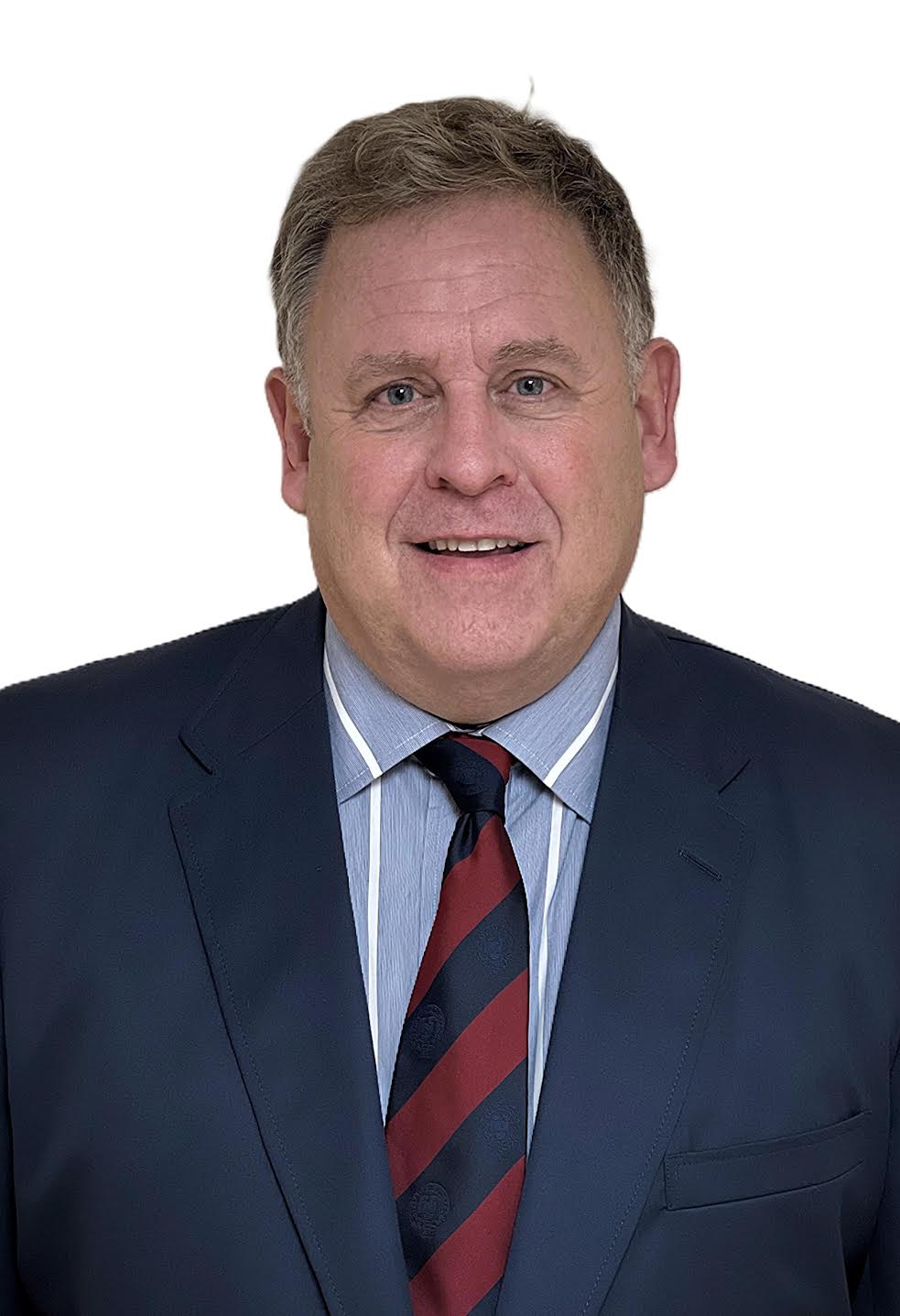
Robert Schultz is the Co-Founder and CEO of Direct Allergy, a nationally recognized leader in allergy immunotherapy services. With over three decades of executive success across both the pharmaceutical (Johnson & Johnson, Eli Lilly, GSK) and automotive (Ford) sectors, Robert is known as a cross-industry leader, market disruptor, and innovator.
What is your typical day, and how do you make it productive?
I have always been this way since I was a kid- very organized. They always say the key to success is being organized, and I believe that. I usually start my day by looking at how I ended the day before, with my to-do list, and I always have one.
I also begin each day with prayer and with the mindset of making every day your masterpiece, as was once said. I value each day and want to make sure I have a clear mission. Typically, I set three big goals- three major “bucket items” I want to check off by the end of the day. Each of those usually involves multiple smaller tasks, but having those three helps me stay focused. I also rank them in order of importance. That is how I get started: with prayer, my three big goals, and of course, a cup of coffee. If I even get two of the three done, I consider that a pretty good day.
How do you bring ideas to life?
Well, I think the challenge of being an entrepreneur is that sometimes you have too many ideas. That is precisely why I find it important to narrow them down. What I always try to do is be practical. My father used to say, “When you have an idea, ask yourself: Are you going after the masses, or are you going after the classes?” He always encouraged me to focus on ideas for the masses, because they tend to have a better chance of success. Once you identify that, the key is to develop focus around that mass market.
From there, you need to research the idea thoroughly. I have always been good at diving into research, and then I move on to developing a plan. After you have a plan, you need to test it, that is, get feedback from people who are smarter than you. Surround yourself with those people, gather their input, measure the results, and see if the idea truly has a future.
What’s one trend that excites you?
As of this moment, it has to be technology. It is the fastest-growing segment right now, and it is reshaping every market. Everyone is looking for ways to simplify life and make things easier, and technology is at the center of that.
In the allergy space, where we are in the service business, what excites me most is how technology can simplify and improve service. That naturally leads to software, how we can implement tools that not only improve the quality of service but also increase the speed of delivery. When you can do both, you create a better overall experience, which leads to stronger retention and even greater demand for that service. Therefore, for me, technology, and especially its ability to transform service, is what excites me most.
What is one habit that helps you be productive?
The habit that helps me remain productive is prioritizing. Just like with ideas, you can have plenty, but without prioritization, you’re in trouble. The same goes for tasks- you have to prioritize them, then focus on them. A lot of people feel anxious when they see a long list of things to do. I used to be that way too, wanting everything done quickly. But I have learned that it’s more important to get things done right than fast. That means slowing down and focusing on one task at a time until it’s done well. So, prioritizing, staying focused, and completing each task fully before moving to the next- that is the habit that really drives my productivity.
What advice would you give your younger self?
I would tell myself to always keep the big picture in mind. Whatever your goal is, you have to ask: What’s the bigger purpose behind it? When we started Direct Allergy, of course, we wanted to monetize and make sure our investors saw a return on their investment. That was important. But the real big picture was improving lives: helping patients breathe better, making sure allergies were treated as more than just a nuisance illness. Allergies are not trivial; they’re a serious, quality-of-life issue. For too long, they’ve been dismissed, and treatment has been subservient to what really should be done.
When you keep that big picture front and center, it puts an extra bounce in your step. It makes the mission more meaningful because you know there’s a greater good driving the work. In our case, remembering that allergy immunotherapy improves lives made the journey worthwhile. Whatever your mission is, focus on that big picture. The money will follow.
I would also remind myself to be patient. Not all goals are attainable right away, and some things are simply out of your control. In our journey, we faced three major uncontrollable challenges, two of which were black swan events. Regulatory dynamics, for example, can threaten your entire business model overnight, and you have no control over government decisions. Then there was the global pandemic, another factor far beyond our reach. These put a real vice grip on our ability to succeed, and yet, patience and persistence were key.
As Dr. Groke said in an interview yesterday, allergies aren’t going away. They’re serious, even debilitating. Allergic asthma, for example, can be life-altering. Most people don’t realize that over-the-counter medicines only treat the symptoms, not the cause. Allergen immunotherapy, on the other hand, addresses the underlying physiological defect. It is a curative, long-term solution. That’s what makes it far more efficacious.
The average primary care physician and the average patient may not know that yet, but we do. And if we hold onto that knowledge, it should excite us, remind us of why we do this, and keep us focused on the goal. That’s the advice I would give my younger self: keep the big picture in mind, be patient, and never lose sight of the greater purpose behind your work.
Tell us something you believe almost nobody agrees with you.
I wouldn’t say there’s something I have found where nobody agrees with me, but there are areas where my views are more controversial. Religion and politics, for instance. Those subjects can create division and hostility, but I believe how someone approaches them really shows their character. I respect people who handle such conversations without judgment. When I engage in them, I listen first, and then I’m not afraid to share my perspective.
In terms of religion, I’m Catholic and I believe in Jesus Christ, but I don’t think my faith, or any doctrine, is perfect. Some rules are man-made decisions by the Vatican, not teachings from Christ himself. For example, I believe priests should be allowed to marry. The first Pope, Peter, was married and had children. To me, that makes sense, and I’d change it if I could, though it doesn’t alter my overall faith. What matters to me are the shared values across Christianity and across many religions that unite rather than divide.
Politics is similar. I don’t identify fully with one side. On social issues, I often agree more with Democrats, while on fiscal and economic matters, I sometimes align with Republicans. That probably makes me more independent. But I always try to focus on policy rather than personal attacks. For me, it’s about ideas and impact, not tearing people down.
What is the one thing you repeatedly do and recommend everyone else do?
Stay out of the gray. My father made that very clear when I was growing up. He told me, “By the age of 12, you should know right from wrong. After that, if you make a mistake, it’s on you, because your mother and I have done our job.” He always warned me about situations where things felt uncertain or questionable. If I came to him saying, “It could have gone either way, it seemed okay, it looked fun, but maybe it wasn’t,” he would remind me: “Bob, remember the gray talk. If it’s gray, it’s not white. White is good. Black is bad. Gray means you need more information.” His advice was simple. When something feels gray, play the “do nothing” card until you know more. Gray isn’t safe; it’s a signal to pause. That lesson has stayed with me, and I recommend it to everyone.
When you feel overwhelmed or unfocused, what do you do?
I walk. I grab my dog and go for a long walk to clear my head. I make it a point not to think about work during that time. I just give myself space to reset. If I come back and I am still not clear, I will move on to a different task or project. That way, I stay productive even if one particular thing has me stuck. Later, I revisit the original problem and ask myself: Who can help me with this? That is when I turn to my team or my mentor circle. I’ll book time with the right person to talk it through. Sometimes I’ll even bring in more than one perspective. By problem-solving together, I usually get the clarity I need. For me, it is about giving yourself a timeout when you hit a wall. Step away, ask for input, and then return the next day ready to take action.
What is one strategy that has helped you grow your business or advance in your career?
As I said earlier, you should surround yourself with really good people and listen to them. You can never have enough smart people around you, especially those who’ve been there before, who are older, more experienced, and who have already succeeded. When I was at Ford Motor Company, I was told I was the youngest Grade Eight in that division- Ford Parts and Service Division. I had been hired into their Ford College Graduate Program, which was considered pretty elite and meant for high-potential talent right out of college. I was in world headquarters, alongside a group of really smart graduates from across the country. After nine months in the program, I was promoted out of it and into the Cleveland region.
In about four years, I had five promotions. By the time I was 26 or 27, I was the youngest Grade Eight in the division (the average age for that level was about 40). So things were moving very quickly for me. The downside of moving up fast, though, is you get impatient. You start to feel like the jobs are similar, just with greater responsibilities, and boredom can set in.
At the time, people told me I needed to settle in, that I had already advanced much faster than most, and it normally takes five or six years to get to that level. But that didn’t sit well with me. Now that I look back, this ties into another question about mistakes I made in my career. My mistake was not having the patience to settle into that role and continue building. I didn’t lean enough on mentors. If my father had been alive then, or if I had been smart enough to seek guidance from the mentors I did have at Ford, I probably would have made a different choice.
Instead, I made the decision on my own to leave Ford. Part of it was personal, a family tragedy, and part of it was wanting to do something in healthcare. People at Ford were shocked when I quit. My peers couldn’t believe it, because no one in my position would have walked away after the kind of early success I had. But that’s how I was wired, confident, not cocky, but certain I could succeed somewhere else.
In hindsight, I know that was a mistake from a business standpoint. Haste sometimes makes waste, and you really have to measure twice and cut once when it comes to big career decisions. But at the same time, I don’t regret it. Moving into healthcare ended up saving my life. Years later, I was diagnosed with prostate cancer, which I caught very early, something I likely wouldn’t have caught had I not been in healthcare. I was cured, and that experience gave me a different perspective on why things happen the way they do. So, from a career strategy perspective, surround yourself with good people and actually listen to them. Don’t make big decisions in isolation. And remember that patience is just as important as ambition.
What is one failure in your career, how did you overcome it, and what lessons did you take away from it?
You know, I have always been in the service business, and there is a reason for that. Everyone talks about intellectual property, patents, and proprietary technology because investors love IP. It is tangible, it has a patent life, and you can build a business around it. But here’s the truth: there is nothing wrong with the service business if you can truly build around service.
That lesson goes all the way back to my father’s company. I grew up in the catalog showroom business, and the kind of retail experience we offered back then doesn’t even exist anymore. My father’s stores were carpeted, filled with everything from toys and housewares to jewelry, cameras, sporting goods, and electronics. Everything was beautifully displayed. Employees dressed professionally, carried clipboards, greeted customers at the door, walked them directly to what they were looking for, demonstrated products, and even carried purchases out to the car.
It was an unmatched service. And you just don’t see that today. Walk into a big-box store now, and it is all self-service. High volume, do it yourself, no personal touch. That shift from high-touch service to self-service, was, in many ways, the “failure” of that retail model. The world moved to convenience and scale, and the kind of service my father built a business around disappeared.
But the lesson I carried from that so-called failure is powerful: if you can create an unmatched service experience today (in any industry) you’ll have a real advantage, because people simply aren’t used to it anymore. That’s why gift shops, specialty stores, and niche services often thrive. They provide something customers can’t get in a big-box environment: personal attention, care, and connection. The takeaway for me has been that IP may be attractive, but service is timeless. Build a business around service, and you can create something unique that people will remember.
What is one business idea you’re willing to give away to our readers?
For me, ever since COVID, it has to be telecommunication; tools like Zoom completely changed the game. In fact, they transformed my allergy business model. Suddenly, telemedicine became not only possible but widely accepted for allergy diagnosis. Through a simple survey conducted over a telemedicine platform, we could reach patients who otherwise might never have walked into the office.
That outreach matters. You can connect with patients who have an allergic history, show them that their doctor cares, and let them know that testing and immunotherapy are available within the practice. Even better, the initial survey helps identify which patients qualify for allergy testing without requiring them to come in first. That’s huge. It means greater access to care, fewer barriers, and the ability to serve more people.
On the corporate side, video conferencing tools like Zoom and Teams have also expanded opportunities, whether it’s meeting with investors or building brand relationships, I have been able to conduct more business activity than ever before. So if I had to give one idea away, it is not to underestimate the power of telecommunication platforms. For startups, they are not just a convenience; they can become the backbone of your business model.
What is the best $100 you recently spent?
Honestly, the best $100 I have spent is anything that goes toward my children or my grandchildren’s future. Whether it is putting money away for my grandchild or spending it on something meaningful for my kids, that always feels like the best investment. Nothing else compares to that sense of purpose.
Do you have a favorite book or podcast from which you’ve received much value?
Yes, my favorite book is The Four Agreements by Don Miguel Ruiz. I recommend it to everyone. It’s simple, yet profound, and the four lessons it offers can truly change your life: be impeccable with your word, don’t take anything personally, don’t make assumptions, and always do your best. Those four agreements have shaped the way I live and interact with others.
What’s a movie or series you recently enjoyed and why?
Forrest Gump. The character is just so likable, and to me, likability is everything. The real takeaway from that story is the power of authenticity, being yourself. Forrest is genuine, kind, and good to the core. If more of us lived that way, regardless of race, religion, career, or income, I think we’d all lead much better lives.