
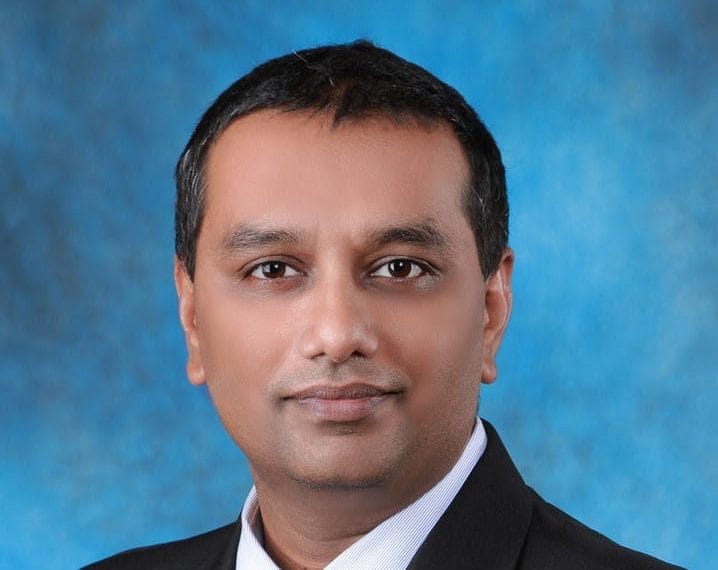
Executive chairman of The Quicksilver Group Rolph Balgobin is also a director of several social enterprises and companies. He was formerly the chairman of Point Lisas Industrial Port Development Company (PLIPDECO) and a director of the Telecommunications Services of Trinidad and Tobago (TSTT), Youth Business Trinidad and Tobago (YBTT) and the Central Bank of Trinidad and Tobago (CBTT).
Dr Balgobin is founder and current chairman of The Oxbridge International School (OXIS), which aims to embody educational excellence, give its students all the tools they need to excel academically, and build resilience and emotional skills. Located in San Fernando, Trinidad, the school offers an environment where students learn through exploration and play, unlocking each young person’s unique potential.
In terms of national service, Dr Balgobin acted as an independent senator in the Republic of Trinidad and Tobago’s parliament, chairing the Joint Select Committee on National Security and serving on the Public Accounts Committee and the Public Accounts Enterprises Committee. He also led the technical team responsible for pulling together the Vision 2020 National Strategic Plan for Trinidad and Tobago.
Dr Rolph Balgobin serves on the Finance Council of the Catholic Church (Archdiocese of Port of Spain) and chairs the organisation’s Real Estate Committee, which governs all the church’s landholdings. He is a lay minister of the Catholic Church.
A fellow of the Royal Society of Arts, Manufactures and Commerce, Dr Balgobin is also a member of the Trinidad and Tobago Manufacturers Association, the Turnaround Management Association and the Energy Chamber of Trinidad and Tobago. He has been married for 25 years and has three children.
What is your typical day, and how do you make it productive?
My primary work is leading my team to achieve breakthrough results in our work. This involves spending a lot of time understanding what they are struggling with, both objectively and subjectively, and helping them through it. A lot of leaders, particularly young ones, require handholding which looks very much like micromanaging to get them the wins they need to build confidence. Experience is the greatest teacher and my work involves de-risking experience so that they can build success. It also means understanding the issues well enough that I can build trust in their judgement and encourage them to ask for help, rather than see asking as weakness.
So I start my day with exercise and clearing emails between 5-7am. I tend to keep 8am to 3pm for meeting with people, getting updates. I avoid meetings or try to keep them objective focused if I must have them. I tend to have most meetings before lunch but occasionally have meetings as late as 5 or 6pm. We start all meetings with prayer and then objectives to keep everyone on the same page about what we are dong and why we are doing it.
I practice about 16 hours of intermittent fasting most days, so I tend not to eat lunch and just drink tea and water most of the day. I meet with people in person and on Microsoft Teams to help them keep focus. We set objectives and then chase those using a simple model of inputs, outputs and outcomes.
About 4pm, if I have no meetings, I begin to wind down and spend some time reflecting. This is a very important aspect of my day and I will often stop to reflect on work, life and God as I seek to reconcile the work I am doing with the purpose of my companies and my own purpose within all of that. I will often scan the environment between 12 and 4pm, getting up to speed on research and global trends that can impact us.
I head home between 5 and 7pm for dinner and to spend time with my family, and go to bed around 10pm most days, then am up at 5am the next day. There are of course days where I will do some work after the family goes to bed, and this can take me to midnight. This happens most often if I am wrestling with a problem. Since I usually go on about 5 hours of sleep this is usually fine.
How do you bring ideas to life?
I take a faily Jesuit approach to this. I spend a lot of time envisioning what the idea would look like if it were manifested before me. I never really look at the hard parts early on. I look at the possibilities and the outcomes of these. I see or sense how it would articulate with what my Group is doing, looking for the points of synergy that facilitate breakthrough performance across multiple dimensions moving from outputs to outcomes which are positive. I never look at profit at the outset. I look for truth, goodness and beauty, for things consistent with our purpose and which make sense for us to do from a financial standpoint. My reflection is a form of prayer, as I meditate on whether this is something I should be doing, and I search for guidance, for signs that this is what I should do.
As that forms in my mind, I get to the point where I sense it is mature enough, ripe enough, to share. It is important for me to share it at this stage because others should have a hand is shaping the idea, or may even improve it. Defending the idea from people who reflex to the negative is also important!
Only then do I decide if the timing is right, and if it is we proceed. The timing tends to be, otherwise I wouldn’t have had the idea in the first place! I prayerfully ask my heart, using a hypothetical method of hypothesis vs null. We only then assess the cost, but we also put ourselves in a position where we have to ensure that we find the resources we need. We trust ourselves to be able to do that. I could never wait to have all my ducks lined up before we begin, because it takes too long. In my experience, it is better to build the bridge as you cross it. My prayer and reflection are critical here, because if I know that I am meant to cross the bridge you can be sure I will build it.
Having a concrete vision is therefore important because it helps you to walk backward to where you are now, and to determine the next step you should take. Ideas are events of a moment, bringing them to life can take months or even years. So having the ability to vision, to bring it to Being inside your head first, is super important in those dark days when nothing goes right.
What’s one trend that excites you?
I am very excited about the possibilities of stem-cell and genetic medical research that can cure problems like diabetes, heart disease, cancer and hypertension. It would be great to conquer health problems that prevent people from living full lives before they die.
What is one habit that helps you be productive?
Whatever I have to do, I do right away. I used to have a tendency toward procrastination until I saw the terrible impact it can have. So now I tend to move quickly. I make lists each day and work systematically to cross things off it. Most days, I am able to do that. So that is my single most productive habit. Prayerfully make a list for the day and get it done. Over time it develops a habit of achievement. The prayer part is important because it helps to bring the list into perspective and establish outcomes links in your mind. It also injects God into your day! I tend to keep coming back to the list, crossing things out as I get them done. When you are in the heat of battle, it is easy to forget what else you have to do, and coming back to the list helps to bring you back to the things that need to be done.
What advice would you give your younger self?
I think there are streams of consciousness in the quantum realm that we have not yet understood. These spiritual streams and the waves, currents and eddies within them provide great confusion and, ultimately, direction to us. It makes sense to find them and cooperate with them, swimming in the direction of the flow. Swimming against the tide in our culture is heroic, but that just exhausts you and drowns you faster. So I’d tell myself to pray, meditate and reflect on what I should do next, and go with that. And then, over time, you learn to recognise them as necessary experiences – providential or painful as they are, and accept that we are created things and ultimately have far less control than we think.
And I would also say to treat the opposition that accompanies a thrust for excellence impersonally, brush off the attacks and carry on. Everybody isn’t going to like you. Find truth, keep few genuine friends, and do the best you can for the unfortunate. Don’t be in any rush at all to seek the validation of men, it’s not worth it.
Tell us something you believe almost nobody agrees with you on?
I don’t go about seeking validation for my views, and rarely express them now since I continue on my own journey of wonder and discovery. I think this is what life is, and we are each meant to learn by walking our own path, which eventually leads us back to the Source from whence we came, from God.
What is the one thing you repeatedly do and recommend everyone else do?
Pray. Develop a conversational relationship with God. Don’t treat prayer as a formality, or something to avoid. God sees everything anyway, and talking to Him helps. Unlike a psychologist or therapist, you don’t need an appointment.
Always have high standards. That’s always a moving target, as it should be. Never do anything less than your best.
When you feel overwhelmed or unfocused, what do you do?
I tend to sit back and pray. Settle myself and do Christian meditation. And I go for a drive, sit Jesus in the car next to me, and tell him everything.
What is one strategy that has helped you grow your business or advance in your career?
If I had to summarise what success I would say it was due to the Grace of God. I say this because I know many people who are smarter than me, more experiences, healthier, speak better and are generally better than me in every way I can deduce; yet God has still blessed me with material success. It’s incredible!
I see a lot of people credit themselves for their success, and sure there is that, but to me I could never be anything at all without God.
Secondary considerations would be that I work hard. I am willing to listen and to take criticism, hard as it may be, and even if I don’t like it! Especially important is to give as much charity as you can. Help the poor and less fortunate. Always in secret, and never for gain.
And finally, always, always have high standards. Excellence is not easy, but if you insist on it and demand it of yourself, you find it.
Get all this right and more and more opportunities open up for you, and the hummingbird of success makes itself your friend.
What is one failure in your career, how did you overcome it, and what lessons did you take away from it?
All the failures I have had have come from trusting people I shouldn’t. I learned that you trust but verify.
What is one piece of software that helps you be productive? How do you use it?
I tend to use technology a lot. The Microsoft universe – Office, Teams, email – I find to be quite helpful is getting the basics done. And business is all about the basics.
Do you have a favorite book or podcast you’ve gotten a ton of value from and why?
The Bible. Best book you could ever read. The new versions produced by Word on Fire are excellent because they focus on truth, goodness and beauty, bringing out the Bible to contemporary audiences.
What’s a movie or series you recently enjoyed and why?
I like Top Gun, because it shows that someone who cuts against the grain but is true to oneself can find success that conformists only wonder at or dream about. I’ve tried to love my life that way. You don’t keep many friends, and you carry your share of bruises, but you see sunrises and mountains and other things few ever could.
Key learnings
- Trust God first, and things have a way of going how they should.
- Work hard, always be grateful for what you’ve got, even if it’s the rain.
- Love and show your love through works of charity.