
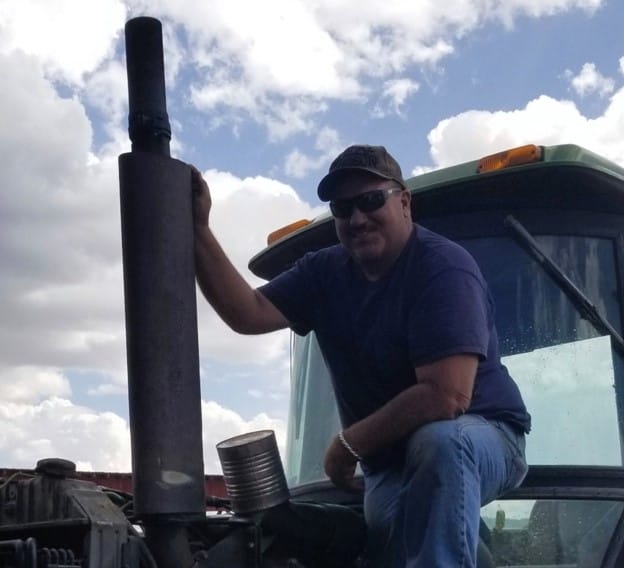
Rory Schmier is a ranch manager based in Arboles, Colorado, where he oversees a 300-acre premium hay operation in the Durango area. With deep roots in southwestern Colorado agriculture, Schmier brings more than three decades of land management experience to his current role, combining traditional ranching practices with modern efficiency.
Born in Durango and raised across the region, Schmier spent his formative years in Pagosa Springs before his family settled in Monte Vista, where he graduated from high school. His introduction to ranching came early, working for six years as a farmhand on a local family operation. That stretch shaped his understanding of soil, livestock, irrigation, and the rhythm of seasonal cycles that still guides his work today.
After several decades spent in construction, Schmier returned to agriculture in 2012 and has been managing hay production, property maintenance, and sales operations ever since. His responsibilities span everything from planting schedules and irrigation management to coordinating hay distribution and overseeing the rental properties on the ranch. The role draws on both his agricultural background and his hands-on building skills, which prove useful for keeping infrastructure in working order without outside help.
Outside of work, Schmier rides dirt bikes through Colorado’s backcountry trails, tours on his Harley-Davidson, and spends time hunting, camping, and boating across the region.
What is your typical day, and how do you make it productive?
Ranching was the first real work I ever did. I started as a farm hand on a family operation right out of school, and those six years taught me more about land and livestock than I realized at the time. The hours were long, the pay was modest, and the lessons stuck. When the chance came in 2012 to manage a 300-acre hay operation near Durango, it felt like circling back to where I belonged. I’d spent decades in construction by then, but the pull toward open ground had never really gone away.
How do you bring ideas to life?
I sketch first, on paper, before I do anything else. Whether it’s rerouting an irrigation line, building a new feed setup, or planning out a barn repair, I draw it before I order materials or pick up a tool. Once the design is on paper, I price it out, decide what I can handle myself, and figure out where I need help. The work always goes faster when the thinking is done up front.
What’s one trend that excites you?
Regenerative agriculture and the renewed focus on soil health. For a long stretch, hay production was treated purely as a yield game: more cuttings, more fertilizer, more output. What I’m seeing now is a shift back toward thinking about the land itself, rotating fields properly, paying attention to organic matter, and managing irrigation in ways that build soil rather than deplete it. Healthier soil produces better hay, which produces healthier livestock, which produces a more sustainable operation. That whole loop is finally getting the attention it deserves.
What is one habit that helps you be productive?
I write things down, by hand, every single day. A notebook and a pencil have never let me down. Phones die, apps update, and good ideas evaporate the moment you swipe to something else. A handwritten list keeps me honest about what got done and what didn’t.
What advice would you give your younger self?
Slow down and pay closer attention to the land. When I was younger, I treated agricultural work like a checklist: get the cutting done, get the bales in, move to the next field. I missed a lot of what the ground was actually telling me. Soil compaction, drainage problems, and weed pressure; those signals are always there if you know how to read them, and addressing them early saves enormous amounts of work later.
I’d also tell my younger self to take care of his body. Ranching is physical work, and the small habits, such as stretching before heavy lifting, drinking enough water, and wearing proper boots, add up across decades. You don’t feel it at 25, but you feel every shortcut at 55.
The third thing would be patience with relationships. The hay buyers, the equipment dealers, the neighbors who help you out when something breaks, those connections take years to build and minutes to damage. Treat every interaction like the long term matters, because in a rural community, it always does.
Tell us something you believe almost nobody agrees with you on?
Smaller, well-managed operations often outperform larger ones on a per-acre basis. The conventional thinking is that scale always wins in agriculture, but I’ve seen modest operations run by attentive owners produce better hay, healthier soil, and more reliable income than sprawling ranches running on autopilot. Size matters less than attention. The person walking the fields every morning sees things that no aerial survey or sensor will ever catch.
What is the one thing you repeatedly do and recommend everyone else do?
Show up when you say you will. In ranching, your reputation travels faster than any advertisement. If I tell a hay buyer the load goes out Thursday morning, it goes out Thursday morning. If a neighbor needs help moving cattle and I commit to being there at six, I’m there at five forty-five. Over the years, that consistency builds a level of trust that no marketing budget can match. Reliability is rare, and people remember the ones who have it.
When you feel overwhelmed or unfocused, what do you do?
I find it best to take a step back and gather my bearings. This generally helps collect my thoughts and refocus on the objective at hand.
What is one strategy that has helped you grow your business or advance in your career?
Building direct relationships with buyers rather than relying on middlemen. Early in my ranching career, I noticed that most hay producers sold through brokers and accepted whatever price the market handed them. I started taking the time to meet buyers face to face, deliver loads personally when it made sense, and ask what they actually needed from a hay supplier.
That changed everything. Buyers who knew me by name and trusted my consistency were willing to pay a small premium for the certainty of a clean, on-time delivery. They came back the next season without me having to chase them. They referred other operations to me. Some of those relationships are now more than a decade old, and they account for the bulk of our sales each year. Growth in this business doesn’t come from cold outreach. It comes from being the kind of person buyers want to do business with twice, and then ten times, and then for the rest of their careers.
What is one failure in your career, how did you overcome it, and what lessons did you take away from it?
A few seasons back, I misjudged a weather window during second cutting. The forecast looked clear, I made the call to cut, and we caught two days of unexpected rain that ruined a significant portion of the crop. The loss was real, and I felt every dollar of it. What I took from it was a hard lesson in not trusting any single forecast source. Now I cross-check three or four before I commit to cutting, and I’d rather lose a day waiting than lose a week’s worth of hay to a wet field.
What is one business idea you’re willing to give away to our readers?
A mobile hay testing and consulting service for small to mid-sized operations. Most ranchers know testing their hay would help them price it more accurately and feed it more efficiently, but the logistics of getting samples to a lab and waiting weeks for results keep a lot of people from doing it. A trained agronomist with a truck, basic field testing equipment, and a turnaround time of a few days could charge a fair fee per operation and stay booked through the entire growing season. The demand is real, and the competition is almost nonexistent in most rural areas.
What is one piece of software that helps you be productive? How do you use it?
A reliable weather service with hourly forecasting. In hay production, the difference between a quality cutting and a ruined one often comes down to a six-hour window of rain. Having granular, trustworthy forecasts on my phone has saved me thousands of dollars in lost crops over the years. It’s the closest thing to a crystal ball I’ve found in this line of work.
What is the best $100 you recently spent? What and why?/
A good pair of insulated work gloves. I’d been making do with cheaper gloves through Colorado winters and finally bought a pair built for serious cold. My hands work better, small jobs go faster, and I stopped losing time to numb fingers. Sometimes the best money you spend is on the unglamorous gear you use every single day.
Do you have a favorite book or podcast you’ve gotten a ton of value from and why?
Anything by Wendell Berry, but if I had to pick one, The Unsettling of America. He writes about land, farming, and community in a way that’s honest rather than romantic. You don’t have to be a rancher to get something out of it. The book makes you think about how the work you do connects to the place you live and the people around you, which is something a lot of us in agriculture quietly understand but rarely take time to articulate.
What’s a movie or series you recently enjoyed and why?
Nothing really comes to mind at the moment.
Key learnings
- Attention to detail at the ground level often produces better agricultural results than scale or sophisticated equipment.
- Direct relationships with buyers build a more stable and profitable operation than relying on brokers or commodity pricing.
- Weather awareness and conservative decision-making during harvest windows protect crop quality and long-term revenue.
- Soil health and regenerative practices produce compounding returns that aggressive short-term yield strategies cannot match.
- Reliability and consistent follow-through build a reputation in rural communities that no marketing effort can replicate.