
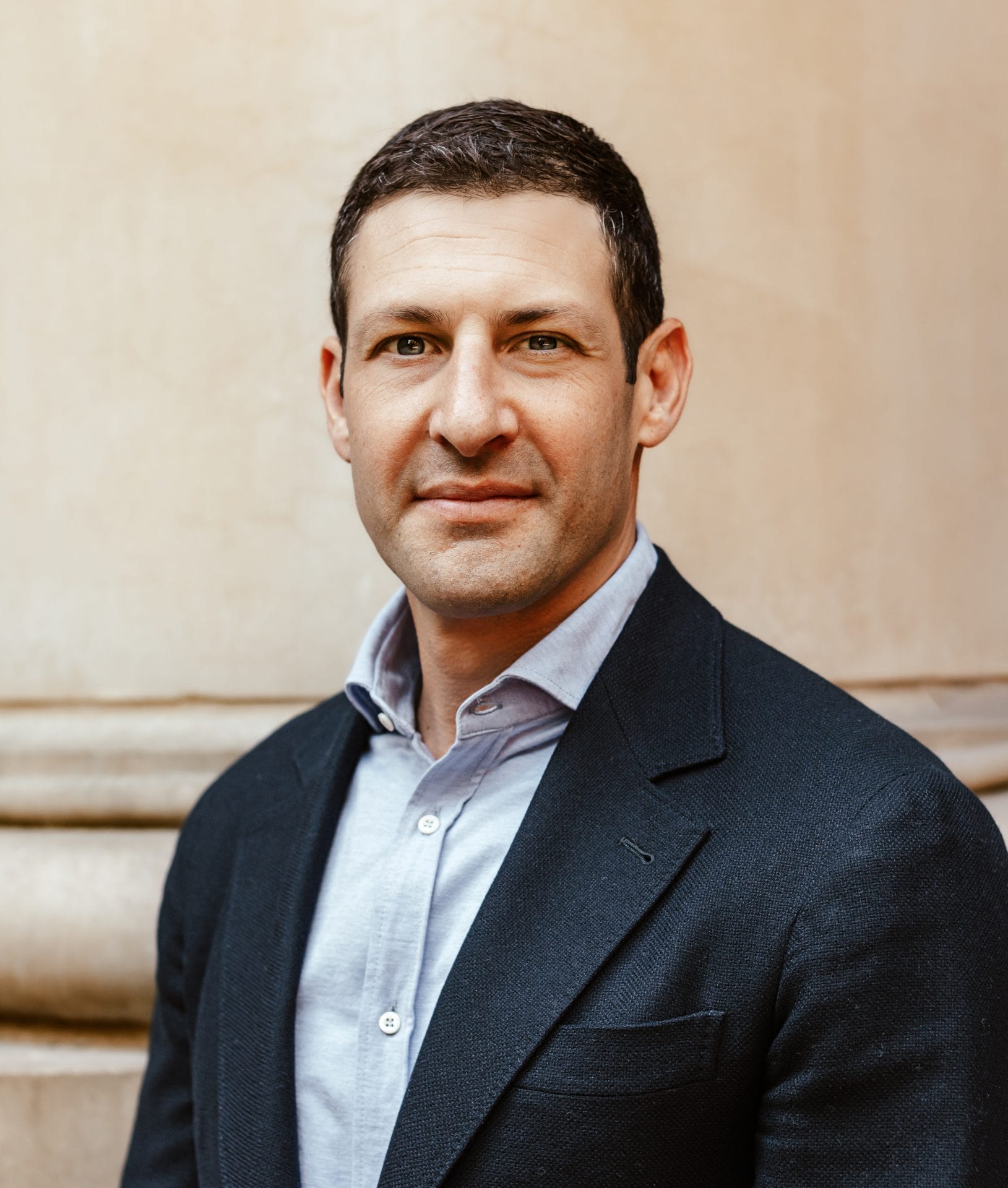
Ryan Podolsky is the founder and CEO of Rough Cut Entertainment, an independent film studio dedicated to creating entertaining, character-driven films that celebrate courage, responsibility, and the enduring American spirit. Before entering the entertainment industry, Ryan served three tours as an infantry officer in the United States Marine Corps, was an early employee at Palantir Technologies, and later led Theorem Technologies as CEO, growing the company into a multi-billion-dollar asset management platform before its acquisition in 2024. He holds a bachelor’s degree in Government from Stanford University and a law degree from Yale Law School. Ryan splits his time between Texas and Los Angeles, where he spends his days searching for great stories, working with writers and producers, and building a new kind of independent studio focused on films audiences will return to for generations.
What is your typical day, and how do you make it productive?
I spend my time hunting for stories and getting to know potential collaborators. We’re headquartered in Texas, and I’m in Los Angeles a lot. Some days I’m reading treatments, scripts, or books. Some days I’m listening to writers or producers share things that interest them. I’m always looking for stories that are worth telling and people who can help bring them to life.
How do you bring ideas to life?
I spend time alone thinking about why and then try to put that down in a way that will help me convey my enthusiasm to others. I try to make clear what we want things to feel like when the dust settles and, if I can, suggest some paths, almost certainly wrong, that could get us there. It could be a treatment, a mock opening credit sequence, or a trailer for a movie that doesn’t yet have a script. I’m trying to convey a feeling. I share that material with the people who can help make it real before I think it’s ready. Writers, producers, actors, investors, operators, whoever the idea needs to move one step forward. The goal is to give talented people something they can react to and build on.
What’s one trend that excites you?
Live formats. I go to the Dallas Symphony Orchestra a lot, but I very recently went to the first live country/rock music concert I’ve been to in a long time. I loved the energy of the crowd and the interaction between the band and the audience. Over the past two years, I’ve also gone to more sporting events. I think we were engineered to gather with each other. I find the atomization exhausting, and I think that all the vertical scrolling stuff is tiring and will wane. I believe an in-person revival is imminent. That’s good news for storytellers in any medium.
What is one habit that helps you be productive?
I tend to do whatever I think is the hardest thing, or the thing I’m most afraid of or most likely to put off, first thing Monday morning. Except for this interview. I did a great job of putting this off.
What advice would you give your younger self?
Start having children younger.
Tell us something you believe almost nobody agrees with you.
AI isn’t to be feared. It’s to be commanded. It holds the potential to bring those who care closer to the work they care most about.
What is the one thing you repeatedly do and recommend everyone else do?
Do the thing.
When you feel overwhelmed or unfocused, what do you do?
I can’t really compute that question. We’re making movies. We’re not at war. No one is in danger.
What is one strategy that has helped you grow your business or advance in your career?
Go to the place where things are getting done or made, the front line, or the proverbial factory floor. It’s admittedly easy advice for me to give, as that’s where I’m most comfortable. But truly, if you can bring yourself to go there, the learnings will make you better.
What is one failure in your career, how did you overcome it, and what lessons did you take away from it?
I don’t know if the failure matters as much as the cause, which was a lack of emotional control. Don’t do that.
What is one business idea you’re willing to give away to our readers?
They can have ’em all!
What is one piece of software that helps you be productive? How do you use it?
My calendar.
What is the best $100 you recently spent?
A round of drinks for the support team at Everest Base Camp.
Do you have a favorite book or podcast from which you’ve received much value?
I thoroughly enjoyed Richard Flanagan’s Narrow Road to the Deep North, which seems to me a masterpiece that will age very well. It’s a great read.
What’s a movie or series you recently enjoyed and why?
Andor. The individual and his family reigns supreme. Fight the bureaucratic rot. I sincerely appreciate how Tony Gilroy transcends what strikes me as maliciously over-simplified and boring traditional political narratives.
Key learnings:
- Do the thing. Action creates momentum. Most of the time, the answer is to start doing.
- Go to the place where the work is happening. You’ll learn more by being there than you ever will on a video call.
- Do the hardest thing first. Start the week by tackling the task you’re most likely to avoid. Everything else gets easier from there.