
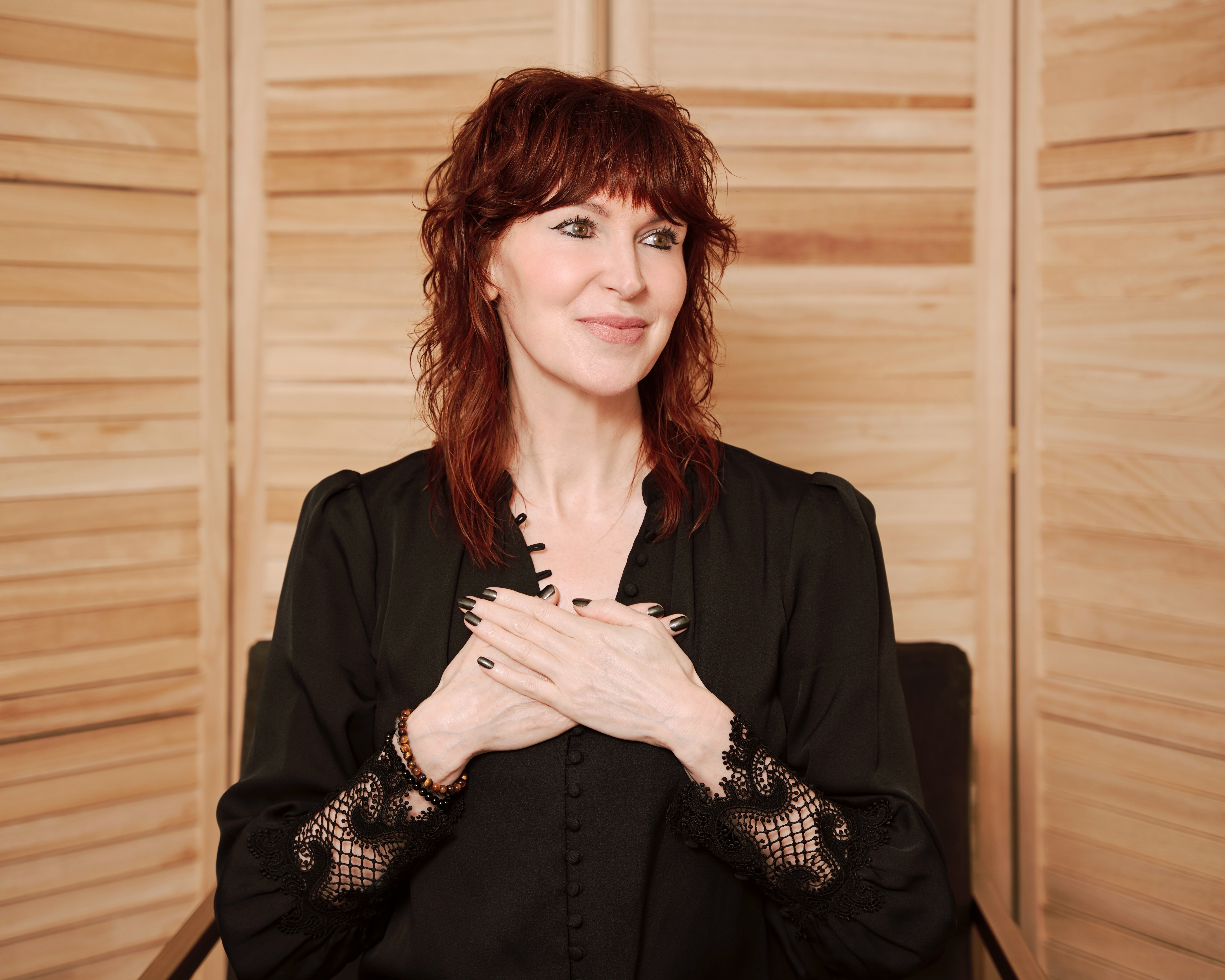
Sadie Nardini has spent her career helping women rethink what healthy aging can look like. Long before Face HIIT became a global facial fitness movement, she was studying anatomy, movement, and exercise physiology with one goal in mind: helping people better understand their bodies.
That passion eventually led her to create Face HIIT, or high-intensity interval training for the face and neck, an anatomy-based facial fitness method that teaches women how facial muscles, connective tissue, posture, and everyday habits all play a role in facial wellness. Instead of chasing quick fixes, Sadie encourages women to build simple routines they can maintain for years to come.
Today, Face HIIT has grown into a thriving community with more than 75,000 participants and over 2 million followers. Women from around the world have embraced the program not only for its practical approach to facial fitness but also for the confidence that comes from understanding how their bodies work. Many Sadie Nardini reviews reflect recurring themes of education, consistency, and feeling empowered to take an active role in healthy aging.
Throughout her work, Sadie has remained committed to making anatomy approachable and wellness accessible. Her teaching style combines science with everyday language, helping women feel informed rather than overwhelmed. She believes that lasting change begins with knowledge and that small, consistent habits often have the greatest impact over time.
Whether she is educating through Face HIIT, speaking with participants, or developing new resources, Sadie continues to inspire women to embrace aging with confidence, curiosity, and a deeper appreciation for the remarkable ways the human body is designed to move and thrive.
What is your typical day, and how do you make it productive?
Every day starts with movement. Before I answer emails or start meetings, I spend time checking in with my own body. I dance around, stretch, and do my face workout and releases for the day. That helps me stay grounded and reminds me why I do this work- for the love of physical freedom, and feeling at home in my body. From there, my day is usually split between walking to the ocean, sitting at my favorite local cafe working on social media content, then home to film lessons, working with my team, and communing with my Face HIIT community. Even though I have ADHD, and I love to multitask, it can burn me out. So I try to focus on one block of time for one task, instead of constantly switching between them. That keeps my energy from draining, and allows me to actually complete projects and produce better work.
How do you bring ideas to life?
Most of my ideas begin with a question from social media or my Age Fiercely online community. If I notice women asking the same thing over and over, I know there’s an opportunity to educate about it. I spend time researching, testing ideas myself, and simplifying complicated concepts into something anyone can understand. I don’t believe good ideas need to be complex. The challenge is making them practical enough that people can actually use them every day.
What’s one trend that excites you?
I’m encouraged by the growing interest in natural approaches to facial transformation. Instead of choosing injections or surgeries, women are beginning to ask, “Can I do this more naturally?” More people are asking how they can support their facial health rather than seeking instant solutions. I think we’re seeing a shift toward education and understanding instead of simply following trends, and I believe that’s a very positive direction.
What is one habit that helps you be productive?
I try to keep learning. I literally have a medical face anatomy training and a fascial release training sitting in the open tabs right now on my computer. Even though I’ve been a professional in facial anatomy and exercise physiology for 25 years, I will never stop gathering insights and new perspectives. It’s exciting for me to include learning as part of my routine. Staying curious helps me continue innovating both the Face HIIT method and the way I express it to my audience.
What advice would you give your younger self?
Don’t worry so much about convincing everyone. Focus on helping the people who are genuinely interested in learning. Not every idea is immediately understood, and that’s okay. If you stay committed to your values and continue improving your work, the right audience will find you. Today, when I read people talking about “Oh, Sadie Nardini’s reviews are so good, they must be written by people who know her” – I can tell you I don’t know thousands of women, and I’ve never asked for a positive review in my life.
And not every review is good! I learned the hard way that there’s this thing some influencers do to get followers from their perceived competitors. They go out and pretend to be unhappy customers, which is just so shocking to me. I had to realize that I have an open, free community where anyone can come and get my personal help to ensure they see the results from my programs they want. So anyone saying my method didn’t work for them has never let me help them, so I have to let those go.
But the overwhelmingly positive reviews of Face HIIT mean this is working for those who use it. And when I do read reviews, what I love the most isn’t someone saying they enjoyed the program. It’s when they say they understand their aging process better or feel more confident now because they’re improving, and they learned something freeing about their capacity to age well that they can use for years to come.
Tell us something you believe almost nobody agrees with you on?
I think we’ve mixed up the purpose of skincare with how to truly transform an aging face and neck. The Beauty Industry spends billions convincing women that sagging and wrinkles are a skincare problem, when anatomy specialists like me know that it’s more of a structural problem – and skincare can’t reach that layer.
Sometimes I felt like I was fighting the tide, a little voice in the sea of skincare and face tools marketing. Most conversations about aging revolve around skincare, but very few people talk about the underlying muscles or how daily movement and facial tension influence how we look. Sagging comes from tension patterns far more than collagen loss.
Just frown your mouth in the mirror, and you’ll activate the muscles that, when too tight, will cause the look of jowls. Skincare won’t solve that, but the right face workouts and muscle tension releases can.
That idea wasn’t widely accepted when I first started talking about it, but I’m encouraged that more people are becoming open to learning about the power of addressing the right layer for the right outcome.
What is the one thing you repeatedly do and recommend everyone else do?
Pay attention to the micro habits that add up to what looks like aging – but isn’t. Most people move through the day without noticing how they’re standing, breathing, or holding tension in their face. They don’t exercise or release their faces.
Many don’t know they have a skin barrier that needs nourishment, not punishment, like over-exfoliation or constant acids and retinols and scrubs. Simply becoming aware of those habits and patterns can change the way you look and feel. But awareness is often the first step toward meaningful improvement.
When you feel overwhelmed or unfocused, what do you do?
I move. Sometimes it’s a short walk, sometimes it’s stretching, and sometimes it’s practicing a few of the same techniques I teach. Movement helps me reset my thinking. Once I’m moving again, I usually have much more clarity than if I tried to push through while sitting there and feeling overwhelmed.
What is one strategy that has helped you grow your business or advance in your career?
Education has always been my strategy. I don’t want people to simply follow instructions. I want them to understand why something works.
When people feel informed, they’re more confident making decisions for themselves, and that creates lasting trust.
I’ve also learned that listening to my community is just as important as leading it. The experiences women share in their testimonials help me understand what resonates, what questions people still have, and how I can continue improving the way I educate.
Those women and their lived experiences have shaped the Face HIIT method just as much as my own research.
What is one failure in your career, how did you overcome it, and what lessons did you take away from it?
Early on, I assumed everyone would immediately understand the value of facial fitness. I quickly realized that many people had never thought about exercising their facial muscles. They would ask me about procedures and tools, and didn’t want to spend 10 minutes a day lifting their faces and necks if they could go get a shot for it, no matter what the cost.
I understood that, though – I went the medical route myself for a while, and all it did was drain my bank account and freeze some parts of my face, while the rest kept sagging because support was disappearing underneath the skin.
Instead of becoming discouraged, I focused on explaining the science more clearly and making anatomy and natural face transformation approachable. That experience taught me that innovation often requires patience and better communication. Sometimes the best idea isn’t enough on its own. You also have to help people understand why it matters and why the quick fix is actually something that is smoke and mirrors – and often is causing them to age faster.
What is one business idea you’re willing to give away to our readers?
Before you step out into social media, create a free resource and something to sell. A checklist, a PDF, a YouTube video explaining why your method is different, why it’s needed, and why it works.
Do not give the How away for free. But do describe the Why. Why you? Why your method? Why what they think is the solution isn’t the one that can truly help them. What will. The only How becomes how they can go deeper with you through your paid resource that you put together to guide them.
Always ask for their email to receive the free resource. This can easily be done on a platform like Stan Store. You can gather emails there, and they’re automatically sent the free resource, and you can email them then and any other time about a discount code for the full paid resource (a video course (Create this on Stan Store), an e-book (Create this in Canva and put it on Stan Store), membership in an online community (I use Circle for this).
You do not need a marketing pro-level sales funnel right now. What I just described above made me a high-six-figure earner before I got a fancy website and a team.
Answer the questions your audience is already asking with free and paid resources. Give a belief shift, bust a myth, talk about how you transformed yourself, give a few helpful tips, but too many tips attract freebie seekers, not buyers.
And you want them to buy your resource, because doing random free tips on the internet, even yours, is not going to give them the holistic how-to needed for them to create changes and be healthier and happier. You’re using your valuable time and education creating these solutions for them. They’re improving because of them. You’re financially free so you can keep doing this for them, and for your future clients. It’s a win-win.
Remember: every post has a call to action (CTA) to get a free resource that leads to a paid resource. I use ManyChat for this and ask them to comment a keyword to get an auto-DM with a link to my email capture.
Don’t give away your techniques. Educate people on why your techniques work better, differ, or will help certain people most. When people genuinely learn something valuable, or a light turns on about why what they’ve tried before isn’t working, trust develops naturally, and that’s a much stronger foundation than trying to persuade someone with marketing alone.
What is one piece of software that helps you be productive? How do you use it?
Google Docs is probably the tool I use most. It makes it easy to organize ideas, collaborate with my team, review educational content, put content in organized places, and refine new programs. It’s simple and reliable, and it helps keep everyone working from the same information.
Do you have a favorite book or podcast you’ve gotten a ton of value from and why?
One book I’ve returned to several times is Atomic Habits by James Clear. I appreciate how it focuses on small, consistent actions instead of dramatic changes. That philosophy aligns closely with how I think about wellness. Lasting results usually come from simple habits practiced consistently over time rather than trying to change everything overnight.
What’s a movie or series you recently enjoyed and why?
I’m watching House of the Dragon on HBO – since I spend my days nerding out on anatomy and exercises, I like to spend my nights on the couch with my partner and our kitties, in a fantasy land that I can escape to for some much-needed brain space. It’s a wonderful way to end the evening.
Key learnings
- Understanding the “why” behind a wellness habit makes it easier to stay consistent over the long term and leads to a larger audience.
- Small, repeatable actions often have a greater impact than dramatic lifestyle changes.
- Education and community help build confidence by giving people the knowledge to make informed decisions.
- New ideas often require patience and clear communication before they gain widespread acceptance. But being on the frontier means you’re more likely to be seen as unique.
- Becoming more aware of everyday dysfunctional movement, posture, lifestyle choices, and tension can be the first step toward healthier long-term habits. Change those habits, and you can change most things for the better.