
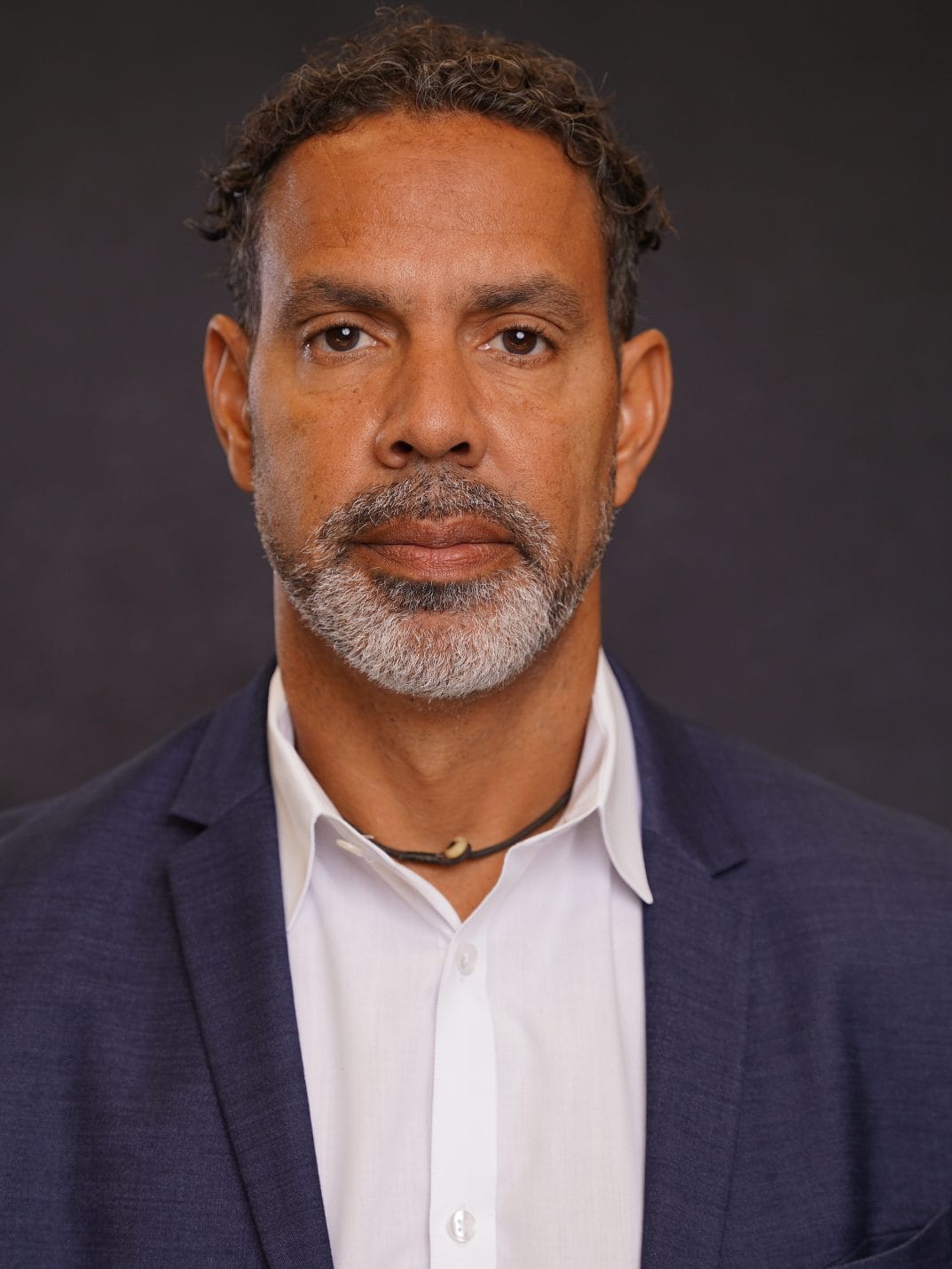
Scott H. Saffold, MD, MBA is a board-certified otolaryngologist, physician executive, and healthcare entrepreneur recognized for building scalable specialty care models that expand access without sacrificing clinical rigor. He is the Founder and Medical Director of Chesapeake Bay ENT and serves as Medical Director of the Virginia Sinus Center. Since establishing Chesapeake Bay ENT in 2001, Dr. Saffold has guided the organization through more than two decades of steady growth, transforming it into one of the most geographically distributed ENT practices in Southeastern Virginia.
From the outset, Dr. Saffold set out to challenge the assumption that advanced specialty care belongs only in large metropolitan centers. His practice model emphasized local presence, full insurance participation, and consistent quality standards across every site. By locating clinics in rural and medically underserved communities, Chesapeake Bay ENT reduced longstanding access gaps while maintaining the same evidence-based care patients would expect in major academic centers.
Anticipating workforce constraints well before they became a national concern, Dr. Saffold developed a structured advanced practice provider care model designed to scale access responsibly. Rather than relying on informal delegation, he built formal training pathways, competency benchmarks, supervision frameworks, and continuous quality monitoring. This approach allowed the organization to expand capacity, improve continuity of care, and remain resilient as demand increased. Many clinicians trained within this system have since advanced into leadership roles both inside and outside the organization.
Dr. Saffold’s leadership style is grounded in measurement and iteration. He established systems to track clinical outcomes, operational performance, patient experience, and financial sustainability, allowing innovation to be evaluated and refined rather than adopted on intuition alone. New technologies, workflows, and service lines are tested deliberately, ensuring progress remains aligned with safety, consistency, and long-term viability.
Clinically, Dr. Saffold focuses on sinonasal disease, minimally invasive sinus procedures, balloon sinus dilation, and complex inflammatory airway conditions. In 2014, he founded the Virginia Sinus Center to concentrate expertise, technology, and procedural innovation in advanced sinus care. More recently, he has led the integration of biologic therapies for type 2 inflammatory disease, pairing emerging treatments with structured clinical pathways and outcomes tracking. His interest in immunology and inflammation reflects an academic foundation that continues to shape his clinical decision-making.
Dr. Saffold earned his undergraduate degree in Cell Biology from the University of California, Berkeley, followed by a medical degree from Meharry Medical College, where he was inducted into Alpha Omega Alpha and received multiple honors for academic achievement and research. He completed a general surgery internship at the State University of New York at Buffalo, conducted NIH-funded tumor immunology research at the Cleveland Clinic Foundation, and completed his otolaryngology residency at Oregon Health & Science University.
His scholarly work includes peer-reviewed publications spanning otolaryngology and immunology, addressing surgical outcomes, immune response mechanisms, and tumor immunology. This research background continues to inform his emphasis on evidence-based practice and continuous quality improvement.
To complement his clinical training, Dr. Saffold earned an MBA from Old Dominion University, strengthening his expertise in healthcare operations, finance, and organizational strategy. He applies these skills to workforce development, capital planning, technology adoption, and value-driven growth in increasingly complex healthcare environments.
Beyond his practice, Dr. Saffold has served on hospital boards and advisory groups focused on rural access, physician engagement, and care coordination. He contributes regularly to professional and media discussions on healthcare delivery innovation, operational discipline, and the evolving role of technology in community-based medicine. He is also an active supporter of medical education through mentorship and scholarship initiatives.
At the core of Dr. Saffold’s leadership philosophy is a commitment to developing people. He views organizational strength as inseparable from individual growth and has mentored physicians, advanced practice providers, administrators, and staff throughout his career. His approach emphasizes accountability, transparency, and steady improvement, paired with the discipline to accept short-term challenges in pursuit of lasting excellence.
Outside of medicine, Dr. Saffold is an endurance athlete and lifelong learner who values resilience, consistency, and personal responsibility. He is a devoted husband and father and remains engaged in coaching, mentorship, and community service.
Looking ahead, Dr. Saffold’s vision extends beyond any single practice. He is focused on building durable healthcare organizations that prove high-quality, technologically advanced care can coexist with ethical stewardship, operational discipline, and human-centered leadership—leaving behind systems and leaders capable of sustaining progress for decades to come.
What is your typical day, and how do you make it productive?
Much of my day is spent mentoring advanced practice providers (APPs). That includes seeing complex patients together, reviewing and discussing charts, walking through mock cases, and performing office-based procedures side by side to reinforce clinical judgment and technique.
How do you bring ideas to life?
Generally, I’m an ideas guy. I tend to generate ideas, then work collaboratively to bring them forward. I partner closely with my wife, Detra, who serves as our Administrative Director, along with our office managers and lead advanced practice provider, to think through how those ideas can be implemented.
What’s one trend that excites you?
A trend that excites me is the move from surgery to biologic therapy for chronic rhinosinusitis.
What is one habit that helps you be productive?
I am reliable to my patients and to my team. I am always where I am scheduled to be. I don’t miss work. I work every day. I deliver what I promise.
What advice would you give your younger self?
Relax
Tell us something you believe almost nobody agrees with you.
College football was better before the CFP.
What is the one thing you repeatedly do and recommend everyone else do?
Ask why
When you feel overwhelmed or unfocused, what do you do?
I work. I stop looking too far ahead and just do the work that is in front of me.
What is one strategy that has helped you grow your business or advance in your career?
I develop the people who work for me. I invest in their growth and that creates opportunities for the company to grow. I spend a lot of time working with our APPs to ensure they maximize their clinical potential. I challenge our managers to lead and help them develop the tools to do so effectively.
What is one failure in your career, how did you overcome it, and what lessons did you take away from it?
My biggest failure was related to hubris. I believed that as long as I followed appropriate clinical guidelines and achieved good outcomes for my patients, I did not need to worry about the consequences of regulatory oversight. In fact, I welcomed it. I developed a service line that became one of the most popular in the U.S., with patients traveling from across the region to our offices. I failed to recognize that this level of utilization made me a target, and that high utilization alone—regardless of outcomes or clinical indication—can be treated as evidence of wrongdoing.
I addressed this by decentralizing care delivery so that I was no longer the only provider in the practice delivering those therapeutic interventions.
What is one business idea you’re willing to give away to our readers?
The most common request we hear from our referral sources is for greater availability. In response, we retooled our offices to offer evening and weekend hours. While this may not sound revolutionary, it is virtually nonexistent in specialty medical care, particularly in otolaryngology. We believe this creates a significant competitive advantage in our market.
What is one piece of software that helps you be productive? How do you use it?
ChatGPT. I use it every day. It helps me create policies and formalize oversight protocols. It helps me formulate strategies for the practice, and functions like an advisor/sounding board to flesh out ideas. It has dramatically improved my administrative and clinical efficiency.
What is the best $100 you recently spent?
I recently bought a Ford Bronco, and the automatic stop-start feature used to drive me crazy because I had to turn it off every time I got in the car. I spent under $100 on an auto stop eliminator from eBay and installed it myself. It works perfectly and removed a small but constant source of daily friction.
Do you have a favorite book or podcast from which you’ve received much value?
I mostly read and listen to podcasts for pleasure. One book that has stayed with me is The Kite Runner by Khaled Hosseini. He’s a powerful writer, and I completely lost myself in the story. I was especially drawn to the simple relationships of boyhood—friendships and parents—and how external circumstances can distort and complicate them.
What’s a movie or series you recently enjoyed and why?
Boondocks. It’s a hilarious parody of African-American pop culture.
Key learnings:
- Invest deeply in developing your people. Consistent mentorship, hands-on training, and leadership development not only raise individual performance but also create durable organizational growth.
- Focus on execution over abstraction. Reliability—showing up, doing the work in front of you, and delivering on commitments—builds trust faster and more sustainably than long-term theorizing.
- Design systems for success and scrutiny. As organizations scale, high utilization and visibility invite oversight; sustainable models require decentralization, clear governance, and attention to how success is perceived, not just achieved.