
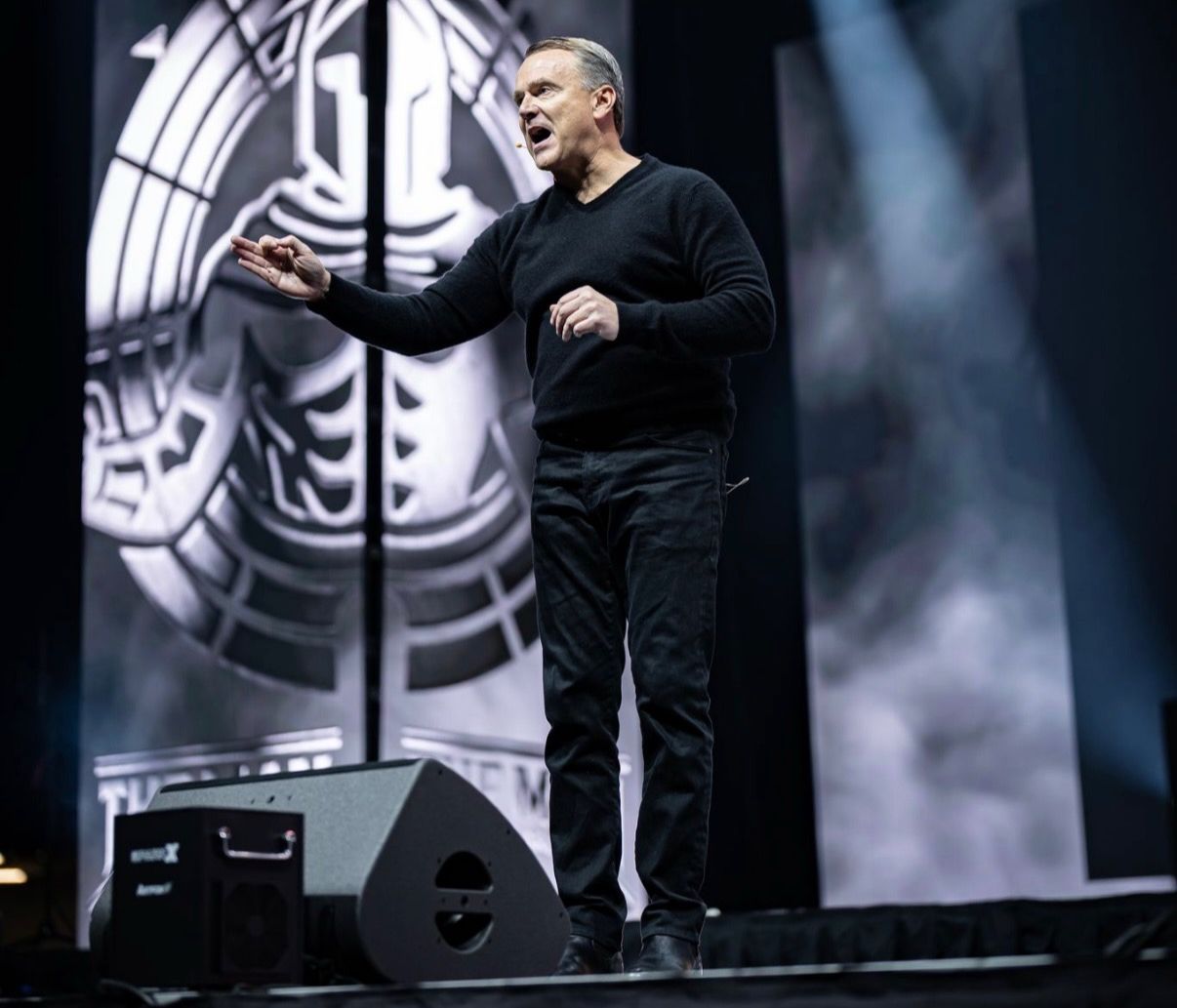
Sean Callagy is the founder of Callagy Law and the creator of Unblinded, known for developing the Unblinded Formula, a system centered on influence, process, and personal mastery. He built Callagy Law into a multistate firm of more than one hundred team members and has guided thousands of professionals in installing operational systems and communication frameworks that support sustainable growth. Callagy built his firm while blind and continues to expand his business ventures through Actualized Intelligence and other initiatives. He is on his way to being the first blind billion-dollar, self-funded unicorn.
What is your typical day, and how do you make it productive?
My days right now are not what I would recommend for everyone. I am in a very intense, committed growth mode. Most days I am up by 5 or 6 a.m. I start by working out while I am already on calls with my leadership team. At 7 a.m. Eastern we have our visioneer or ACTi call, then I take my four year old daughter to school and give her a big hug before she walks into class.
After that, I am on our Unblinded huddle, then internal ACTi calls, then calls all day with people in our certification, partnership, and LEAP programs. I often have one to three Hearts of Influence shows co-hosted with Bella Verita. On some nights, like Tuesdays and Thursdays, we run our 8 to 9 p.m. mastery session. In between, I am shooting videos, building ACTi optimizations, and working closely with the team.
I work about 80 hours a week right now. I do not watch television or the news. I will watch a meaningful movie with my family, but otherwise my time is directed toward building, leading, and serving. I also build movement into the day – sets of pushups, working out between calls, surfing when I can – so I stay physically energized and mentally clear.
How do you bring ideas to life?
For me, everything comes back to three things that I call the Formula:
Influence mastery – the mastery of causing yes.
Process mastery – deciding which yes to cause.
Self mastery – moving through fear and emotion so you actually use your influence and process mastery.
Whether I am building a law firm, a summit, or ACTi and our yes-causing AI agents, it is always the same structure. I get clear on the outcome, decide which yeses matter most, influence the right people, and then manage my own emotions so I keep taking action.
At a practical level, that looks like assembling the right team, having the hard and honest conversations, designing systems, and continually iterating based on feedback. But underneath all of it is the same formula.
What’s one trend that excites you?
The emerging wave of AI agents that actually cause yes, grounded in integrity.
We have launched ACTi inside Unblinded, and we believe we are building the top yes-causing agents. Lots of agents know things or do tasks. Ours are designed to cause meaningful, integrous yeses, built on the Unblinded Formula.
We have already had these agents participate in thousands of calls. For one event, they generated about 25 percent of the audience in a day and a half, compared to three months of human effort. The convergence of AI, decision intelligence, and influence, when done in integrity, is a trend I am deeply excited about.
What is one habit that helps you be productive?
Endorphin loading.
If someone listening did nothing but this, I believe it would change their life. I put endorphins into my body 12 or more times a day, for less than a minute at a time. This is separate from a normal workout. Between calls I drop and do about 60 pushups, or someone could do squats or crunches. I do not necessarily break a sweat, but I do shift my chemistry.
Cortisol is constantly being triggered by micro decisions, stress, and performance pressure. Endorphins help reset the system so you feel more joyful, strong, loving, and effective. I started this a few years ago and it has completely transformed my performance and energy.
What advice would you give your younger self?
Tell people the truth, with empathy, respect, precision, and directness.
I grew up in a family that was very loving, but also full of pleasing and avoiding. Things would be wrong, and people would say “nothing” when asked what was going on. That is lying, and I did a lot of that in my early life.
I would tell my younger self not to mistake pleasing and avoiding for being kind. When you avoid the truth, you are really protecting yourself from someone being mad at you, instead of serving them. I would have been far more precise and direct much earlier in my life, while still being deeply empathetic and respectful.
Tell us something you believe that almost nobody agrees with you on.
I believe that human influence is the only human attainable superpower and that everything we want is on the other side of yes.
Leadership, management, recruiting, marketing, selling, fundraising, every one of those things is just a different face of influence. In ancient times, the strongest person physically led the tribe. Today, the person who can most masterfully cause yes and compound yes leads the ecosystem.
A lot of people talk about tactics or luck or talent. I believe those matter, but influence – in alignment with truth and integrity – is the true superpower.
What is the one thing you repeatedly do and recommend everyone else do?
Endorphin loading 12 times a day.
Between calls, between meetings, between tasks, I put endorphins in my body. Pushups, squats, some short burst movement that changes my chemistry without needing to shower or change. Do that every hour, all day, and watch what happens to your clarity, your mood, your energy, and your effectiveness.
Most people try to fight cortisol with willpower or stimulants. I use my body. I recommend everyone at least try it.
When you feel overwhelmed or unfocused, what do you do?
I reset my physiology first.
If I wake up exhausted, stressed, or even on the verge of tears – which has happened in intense trial work where I was sleeping three hours a night – I get on the floor and start doing pushups. I do not think. I just move until the endorphins kick in and I feel human again.
On the mental and emotional level, I detach my worth from my performance. After what I considered my worst talk in 20 years at the Zenith Mastermind, I felt humiliated. I slept on it, grounded myself in the truth that I am not my performance, and then I told the truth publicly about what happened, what I learned, and how I will course correct.
So the short answer: change my state through movement, and then come back to truth, responsibility, and learning.
What is one strategy that has helped you grow your business or advance in your career?
The strategy is the Formula:
Master causing yes.
Decide which yes to cause.
Master yourself so you actually do it.
Everything I have built – Callagy Law, Unblinded, our programs, ACTi – came from applying that structure. If I wanted to build a club sports program for my kids, I influenced people to say yes, chose the right yeses to pursue, and managed myself through fear and doubt. Same for philanthropic projects, same for business growth.
It is simple, but not easy. The strategy works when you apply it relentlessly and consistently.
What is one failure in your career, how did you overcome it, and what lessons did you take away from it?
Recently, I had what I consider the worst speaking engagement of my last 20 years, at Tony Robbins and Dean Graziosi’s Zenith Mastermind.
I was supposed to speak on ACTi and Compound Influence to a room where people had invested $250,000 to be there. I wanted to make sure I did not step on Tony’s or Dean’s toes, and I slipped into pleasing and avoiding. I tiptoed around the truth, over-explained, and spent almost the entire hour on context instead of delivering the value I know I can deliver.
The lesson was simple and painful: when I avoid the truth to protect myself from potential conflict or disapproval, I fail to serve. It was selfish.
How I overcame it was by being radically honest. I made a video, shared publicly that it was my worst talk in two decades, explained what happened, and offered additional value and training. Then I recommitted to never letting pleasing and avoiding override the loving pursuit of the relevant truth.
What is one business idea you’re willing to give away to our readers?
Build AI or human systems that act like “yes-causing agents” grounded in truth and alignment, not pressure.
Stop thinking only in terms of tools that store information or automate tasks. Ask instead: how do I design a system – human or AI – whose job is to find and remove the real thorn in someone’s foot?
Find the authentic pain or desire, do not exaggerate it, do not create it, and then design your processes, your technology, and your conversations around serving that. That is how I think about ACTi, and it is a model anyone can apply.
What is one piece of software that helps you be productive? How do you use it?
Inside our ecosystem, ACTi itself is becoming a core productivity tool.
We are building and deploying yes-causing agents that assist with outreach, follow up, and supporting people in moving toward the decisions they already say they want. These agents help compress months of manual effort into days, so human teams can focus on higher level leadership, strategy, and service.
ACTi is really a combination of influence principles and AI that supports professionals in running their businesses more effectively.
What is the best $100 you recently spent? What and why?
The most meaningful $100 I spent recently was on a homeless man outside the Rainforest Cafe on the Atlantic City boardwalk.
My first thought was, “If I give him this, he might spend it on drugs or alcohol.” Then I felt convicted. I thought about all the blessings God has given me that I have squandered. Who am I to judge what another person will do with a gift?
So I gave him the money. I even recorded a video about it, because the real point for me was this: if God judged me the way I was judging that man, I would never receive another blessing. It was a small amount of money for me, but it could be life changing for him. Whatever he did with it is between him and God. My job was to give without judgment, with boundaries when appropriate, but with the same forgiveness and opportunity I hope to receive.
Do you have a favorite book or podcast you’ve gotten a ton of value from and why?
I have received enormous value from the teachings and events of Tony Robbins.
Before encountering his work, I understood physiology from being a peak performance athlete, but I did not realize I could bring that same level of physical state management into business, courtrooms, and leadership. Tony helped me see that I could use movement, energy, and state shifts in my office, in a bathroom stall before trial, or in any environment where performance matters.
That insight – that your state is a tool you can consciously manage in business, not just in sports – has been invaluable.
What’s a movie or series you recently enjoyed and why?
Recently, I went to see Wicked 2 with my daughter, and I loved it.
It was beautiful, meaningful, and a great shared experience with her. I do not spend time watching random television or the news, so when I do watch something, it is usually a movie that lets me be present with my family, especially my youngest daughter. Movies like that are a way to connect, to feel, and to enjoy a different kind of story together.
Key learnings
1. Blindness Became His Advantage, Not His Limitation
Sean shared how retinitis pigmentosa slowly took his vision over decades, yet instead of weakening his trajectory, it fueled an urgency that shaped his purpose. He now views blindness as an asset that opened people’s listening, pushed him to develop mastery in influence and communication, and ultimately inspired the creation of UNBLINDED.
2. Influence Is the Only Human Attainable Superpower
Sean explained that everything in leadership, business, and human interaction comes down to influence. He emphasized the UNBLINDED Formula: influence mastery, process mastery, and self mastery. He described influence as discovering the real “thorn in the lion’s foot” and helping remove it with truth and integrity. He believes causing aligned yeses drives all meaningful outcomes.
3. Radical Responsibility and Truth Over Pleasing
Sean revealed one of his biggest recurring challenges: avoiding discomfort by pleasing others. His story about what he considered his worst talk in 20 years showed his commitment to transparency and self correction. He stressed that pleasing is not kindness, truth must be paired with empathy and precision, and leaders must separate their self worth from performance so they can grow without fear.